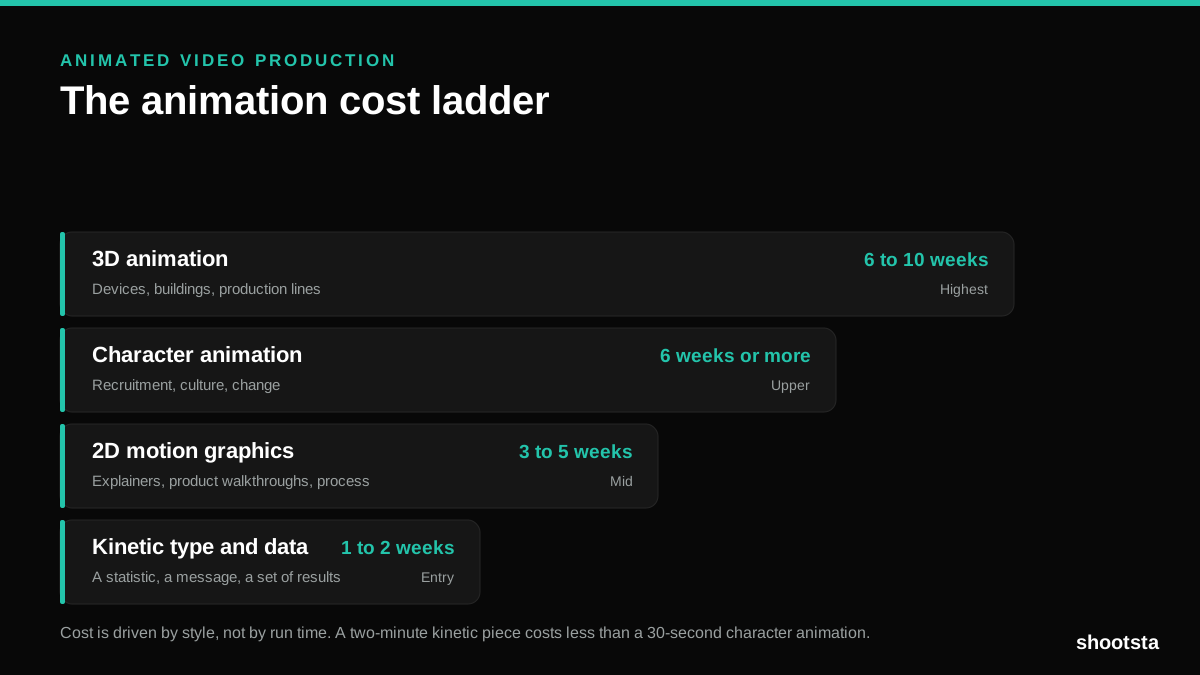
Animation Video Production in London
London teams produce animation for finance, professional services, and public sector audiences, often under regulation. Here is how to do it at scale from a London base.
Loading...
Discover the latest tips, tricks and news from the world of video creation.
From production techniques and camera kit reviews to video marketing strategy and ROI measurement, our team shares what we have learned helping hundreds of businesses build scalable video programs. Whether you run a one-person comms team or manage video across a global enterprise, you will find practical advice you can use this week.
Shootsta works with enterprise teams across healthcare, finance, technology, and professional services to produce video at scale. Our blog covers the strategies and workflows that make that possible. Browse by category above, search for a specific topic, or scroll through our latest articles below. Every post is written by people who produce video every day, not freelance content writers.
Animation Video Production in London
London teams produce animation for finance, professional services, and public sector audiences, often under regulation. Here is how to do it at scale from a London base.
Australian teams use animation to explain complex products, train distributed workforces, and keep content current without a shoot every time. Here is how to do it at scale.
Animation Video Production in Singapore
Singapore teams produce animation for audiences across APAC, often in several languages and under tight regulation. Here is how to do it at scale from a Singapore base.
Animation for Wealth Management & Advice
Wealth and advice firms have to explain complex strategies and build trust at scale, under regulation. Animation does both without putting an adviser in front of a camera every time.
Animation for Superannuation Member Comms
Super funds have to explain complex, regulated topics to millions of members who would rather not think about them. Animation is the format that makes that land.
The biggest marketing teams are falling behind on video, and it is not for lack of talent or ideas. Demand climbs every year while production capacity stays flat, so requests pile up, work stalls in review, and brand control slips across a growing vendor stack. Here is why the bottleneck forms and what it takes to break it.
Animation Use Cases for Internal Comms Teams
Internal comms teams have to make abstract, organization-wide messages land with a distributed workforce. Animation is built for exactly that. Here is where it works.
Companies that make five videos a year treat video as a project. Companies that make fifty a month run it as a system. The enterprise video operating model is that system, built on four pillars: capacity that flexes with volume, centralized intake, brand baked into the workflow, and measurement that ties output to outcomes. Here is how to define it and build it.
Animation Use Cases for Healthcare & Pharma
Healthcare and pharma teams explain complex, regulated subjects to many audiences at once. Animation handles both the complexity and the compliance. Here is where it fits.
In-house, agency, or a platform: three ways to make enterprise video, each good at something. In-house gives control at a fixed cost. Agencies bring craft on hero pieces at a per-project price. A platform carries always-on volume at a predictable cost with a 48-hour turnaround. Here is how a CMO should weigh the three and pick the mix that fits their demand.
Animation Use Cases for Customer Success Teams
Customer success teams repeat the same explanations all day. Animation turns those into reusable video that scales across every account. Here is where it works hardest.
Enterprise video costs more than the invoice shows. The visible half is agency fees or in-house salaries. The hidden half is idle capacity between spikes, rework from vague reviews, brand drift across vendors, and work that never ships. Here is how to reframe the question from cost per video to cost per finished minute at volume, and why per-project pricing and peak-sized headcount both overcharge.