
In-House, Agency, or Platform for Video
shootsta.
In-House, Agency, or Platform for Video
By Shootsta · Published July 2, 2026 · Updated October 2026
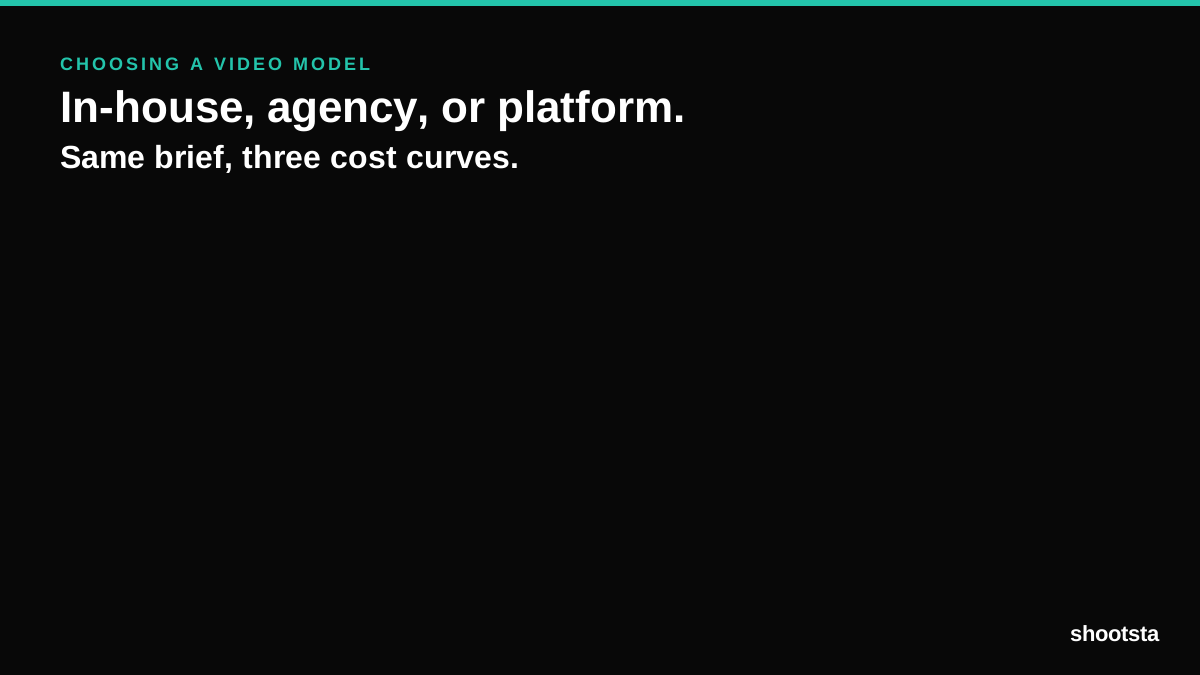
In-house, agency, or a platform: three ways to make enterprise video, each good at something. In-house gives control at a fixed cost. Agencies bring craft on hero pieces at a per-project price. A platform carries always-on volume at a predictable cost with a 48-hour turnaround. Here is how a CMO should weigh the three and pick the mix that fits their demand.
Short answer. There is no single right way to make enterprise video. In-house teams give you control and deep brand knowledge, but they carry fixed cost and cannot flex when demand spikes. Agencies deliver high craft on hero pieces, but they price per project and move slowly for always-on volume. Freelancers add flexibility but fragment your brand. For a large, always-on program, a platform or subscription model tends to fit best: on-demand capacity, a predictable cost, brand built into the process, and a 48-hour turnaround. Most enterprises end up using a mix, with the platform carrying the volume.
In-house
- Cost: fixed salaries and overhead
- Speed: fast for small, familiar asks
- Volume: limited once demand spikes
- Brand: strong, held by people who know it
Agency
- Cost: priced per project
- Speed: slower on always-on work
- Volume: absorbs one-off peaks well
- Brand: high craft on hero pieces
Platform
- Cost: predictable subscription
- Speed: 48-hour first cut
- Volume: flexes with demand
- Brand: built into the workflow
If you own the video budget, you probably already know video is worth it. The harder question is how to produce enough of it, on brand and on time, without the cost curve running away from you. Three models compete for that budget: an in-house team, a creative agency, or a platform that supplies production capacity on a subscription. Each is good at something, and the trick is matching the model to the shape of your demand.
This post walks through the three-way choice the way a CMO weighs it, on cost, speed, the ability to flex with volume and brand control. No option wins every category. What matters is which one fits the program you are running now.
What are the real trade-offs between in-house, agency, and platform video?
Each model is built around a different assumption about how much video you need and how steadily you need it. In-house is built for control. Agencies are built for standout single pieces. A platform is built for repeatable volume. When you pick one, you inherit its strengths and its limits together.
In-house: control and culture, at a fixed cost
An in-house team is the best option for brand control and speed on small, familiar asks. The people making your video sit inside the business, know the brand cold, and can turn a quick request around in a morning. That closeness is real value, and no external partner fully replaces it.
The limit is capacity and cost. Headcount is fixed, so an in-house team is expensive to keep idle between spikes and hard to flex when a launch week lands several campaigns at once. Hire for the peak and you carry cost you rarely use. Hire for the average and you miss the peaks, which is when the work matters most. We break the numbers down in the cost of in-house versus outsourced video production.
Agency: high craft, priced per project
An agency is the best option for a flagship piece where craft is the whole point: a brand film, a launch hero, a set-piece that has to be perfect. Agencies bring senior creative direction, specialist crews, and a polish that is hard to match internally. For a handful of standout pieces a year, that is money well spent.
The limit shows up with volume and speed. Agencies price per project, so cost scales directly with output and there is no volume relief as your program grows. Timelines built for a big set-piece rarely fit a program shipping every week. The model is excellent for hero work and a poor fit for always-on demand. We compared it directly in video agency versus video subscription.
Freelancers: flexible, but hard to hold together
Freelancers are the pressure valve teams reach for when in-house is full and the agency is too slow or too expensive. They add capacity fast and cost only when used. For a one-off gap, they work well.
The trouble is consistency. Every freelancer interprets the brand differently, availability is never guaranteed, and the coordination load falls back on your team. Run a program on a rotating freelance pool and brand drift and reliability become your problem to manage. Flexibility comes at the cost of a single, dependable standard.
Where does a platform or subscription model fit?
A platform sits where in-house and agency both struggle: steady, high-volume, on-brand production at a cost you can plan. It supplies production capacity on a subscription, so you get on-demand output without hiring for the peak or paying per project. It carries the always-on volume while your in-house team and your agency do what each does best.
The four things a CMO asks about line up well here. Cost is a predictable subscription rather than a variable invoice. Speed is fast, with a first cut in about 48 hours. Volume flexes with demand instead of being capped by headcount. And brand is built into the workflow through templates, brand kits, and a review step, so consistency is the default rather than a policing job. A platform does not replace craft on your hero films; it removes the volume problem so your best people are free for the work only they can do.
This is the operating-model shift the wider series is about. For how the pieces fit together across intake, production, and governance, read the enterprise video operating model. For the full picture of what enterprise video costs across each model, read the real cost of enterprise video production.
How should a CMO choose?
Start with the shape of your demand before you look at any model. Map how much video you need, how steady that demand is, and how much of it must be perfect versus simply good and on brand. Most of what a large business needs is the second kind: social cutdowns, product explainers, training, executive updates, event recaps, all on brand and on time.
From there the choice gets simpler. Keep an in-house team for the quick, close-to-the-business work and brand ownership. Bring an agency in for the few hero pieces where craft is the whole story. Put the platform underneath to carry the always-on volume at a predictable cost. So the real decision is what share of your volume each model should carry. We walk through when to bring production in-house at all in whether you should bring video in-house.
What does the platform model look like in practice?
DUAL, a specialty insurer, is a clear example of choosing the platform route for volume. Rather than build a full production team or brief an agency for every piece, they used a subscription model to ship on-brand video at scale without adding headcount. The result was more output, faster turnaround, and one consistent brand across all of it, with in-house effort reserved for the work that needed it most.
Enterprises that get this right tend to follow the same pattern. They run a mix of models, with a platform carrying the volume so the fixed cost of an in-house team and the per-project cost of an agency both get spent where they earn their keep.
Frequently asked questions
Is in-house or agency better for enterprise video?
Neither is better in every case; they solve different problems. In-house wins on brand control and speed for small, familiar work, but carries fixed cost and cannot flex to spikes. An agency wins on craft for a few hero pieces, but prices per project and moves slowly for always-on volume. For a large program, many CMOs use both plus a platform to carry the steady volume at a predictable cost.
What is a video platform or subscription model?
It is a service that supplies production capacity on a recurring subscription rather than per project or per hire. You send briefs and footage, and the platform edits and delivers on-brand video, typically with a first cut in about 48 hours. Because cost is flat and capacity flexes with demand, it fits always-on volume better than fixed headcount or per-project pricing.
Does a platform replace an in-house team or an agency?
Usually not. It carries the high-volume, always-on production so an in-house team can focus on close-to-the-business work and brand ownership, and an agency can focus on the hero pieces where craft is the point. Most enterprises run a mix, with the platform absorbing the volume that neither of the other models handles cost-effectively.
How do the costs compare as volume grows?
Agency cost rises with every project, so it climbs steadily as you make more video. In-house cost is fixed, which is efficient at high steady volume but wasteful when demand dips. A subscription platform holds a flat, known cost and flexes capacity with demand, which makes the per-video cost fall as volume rises. Research on video budgets shows production volume climbing year over year, which is why predictable cost matters more than it used to.
Sources and further reading
The trade-offs above line up with how industry researchers describe rising video demand and the in-house versus outsourced debate. For wider context:
- Wistia State of Video report on rising production volume and how businesses resource video.
- HubSpot research on video marketing on where teams invest and the pressure to produce more.
- Content Marketing Institute research on in-house versus outsourced content models in enterprise teams.
Where to go next
This post is part of a series for marketing leaders weighing how to run video at scale. For a like-for-like comparison of the two outsourced routes, read video agency versus video subscription. For the framework that ties the models together, read the enterprise video operating model. For the full cost picture, read the real cost of enterprise video production.
Whichever model you land on, the test is the same five measures. Grade your current setup with the CMO video scorecard before you switch, so you know which problem you are solving.
To work out which mix fits your volume and budget, book a free consultation.
Take this article with you
Read the latest at shootsta.com/blog/in-house-agency-or-platform-video
You might also like

How to Plan Video Team Capacity Around Leave
Your only editor just booked two weeks off, and you already know which projects will slip. Chad Lakin explains how to plan video team capacity so the work keeps moving when someone is away.
Corporate Video Editing Standards: Full Guide
A two-page editing standard does more for consistency than a forty-page brand book. Here is what it should cover, who owns each part, and how to enforce it with an in-house editor or an outside partner.
Quality Control in Outsourced Video Editing
When editing leaves the building, quality has to be checked by a system rather than by whoever happens to look. Here is the system: acceptance criteria, two QA gates, counted revision rounds and a quarterly audit.
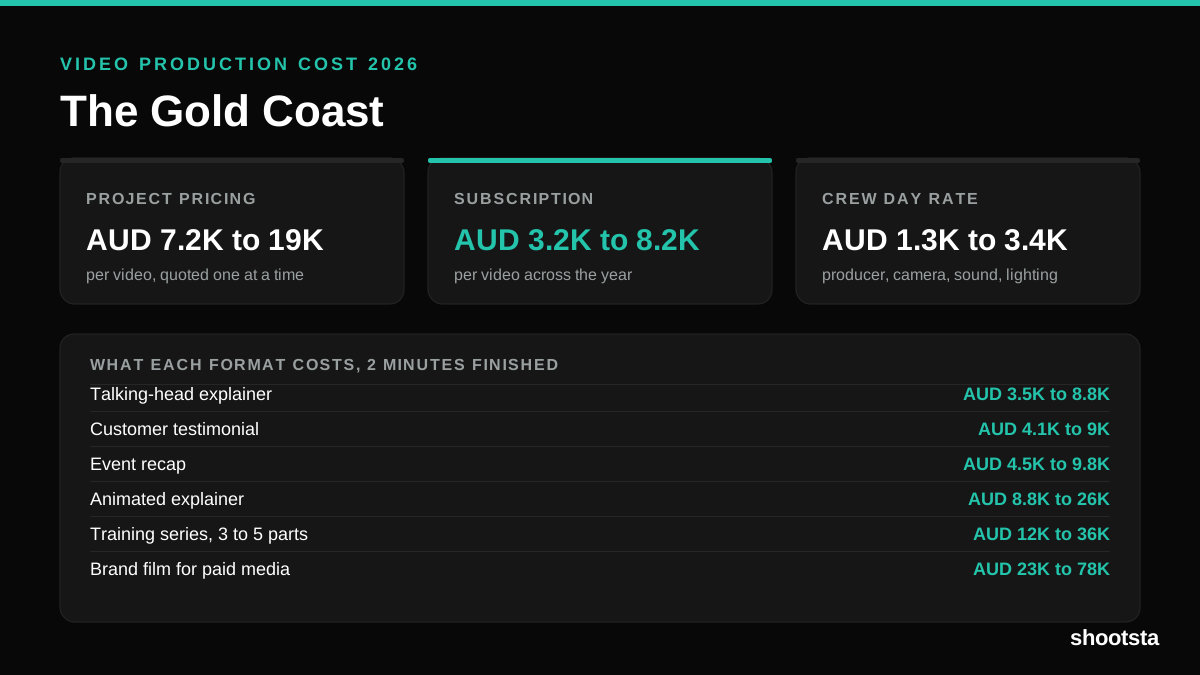
Video Production Cost on the Gold Coast 2026
Video production in the Gold Coast costs AUD 3,200 to AUD 8,200 per finished video on a subscription model, and AUD 7,200 to AUD 18,500 for one-off project work. Here is what you are paying for, and how the three pricing models compare.
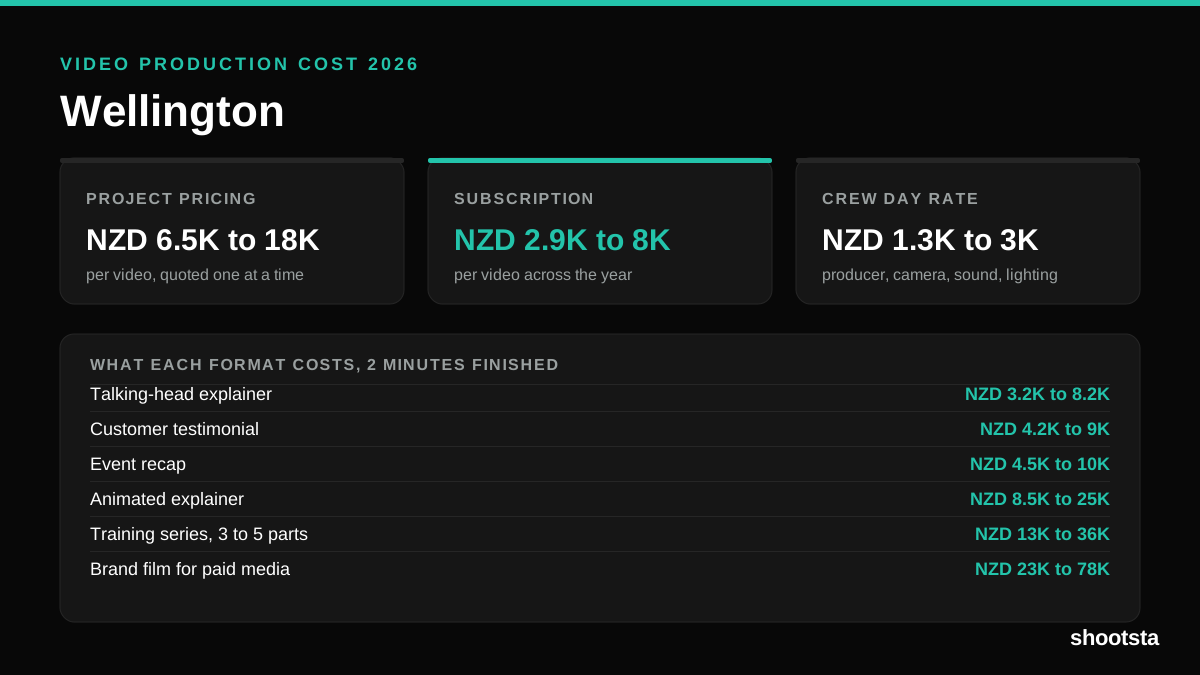
Video Production Cost in Wellington (2026)
Video production in Wellington costs NZD 2,900 to NZD 8,000 per finished video on a subscription model, and NZD 6,500 to NZD 18,000 for one-off project work. Here is what you are paying for, and how the three pricing models compare.
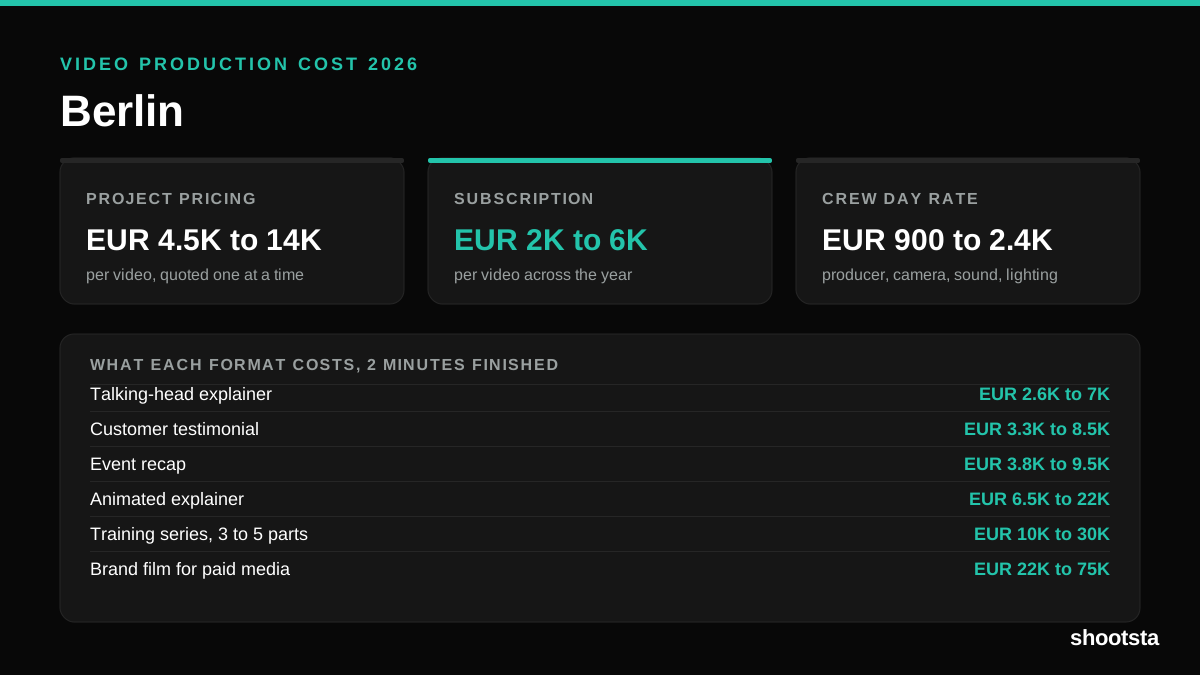
Video Production Cost in Berlin (2026)
Video production in Berlin costs EUR 2,000 to EUR 6,000 per finished video on a subscription model, and EUR 4,500 to EUR 13,500 for one-off project work. Here is what you are paying for, and how the three pricing models compare.