
Animation Video Production in Australia
shootsta.
Animation Video Production in Australia
By Shootsta · Published July 9, 2026 · Updated October 2026
Australian teams use animation to explain complex products, train distributed workforces, and keep content current without a shoot every time. Here is how to do it at scale.
Why do Australian teams turn to animation?
Australian enterprises have complex products to explain and staff spread across states to train, and their videos have to stay current as the business moves. Animation handles these pressures well. It explains abstract subjects a camera cannot show, it adapts across audiences, and it is far cheaper to update than re-shooting live action.
It also fits the sectors that dominate the Australian market. Financial services, superannuation, mining and resources, and professional services all produce complex, often regulated content where the scripted, reviewable nature of animation is an advantage. For broader context, see our guide to video production cost in Australia.
Where animation works hardest in Australia
- Financial services and superannuation member education, where the scripted format eases compliance review.
- Internal comms and training for teams spread across states and remote sites.
- Product and onboarding explainers for tech and professional services firms.
- Safety, process, and compliance content for mining and resources.
How does animation keep content current?
This is where it earns its place for Australian teams. When a product, a rule, or a stat changes, a 2D animation is a quick edit rather than a re-shoot. That makes a living library affordable, instead of leaving dated videos in market because redoing them costs too much. The maintenance economics are in animated explainer video cost.
What about regulated sectors?
For finance, super, and insurance, the scripted format keeps legal sign-off tight because every word is fixed before production. Australian teams can apply the same workflow we describe in how to plan FSI animations without losing six weeks to legal, and super funds specifically can see animation for superannuation member comms.
How do you produce at volume?
You build one style kit and produce every video from that shared foundation, so a lean team can keep a large library current across functions. To produce locally at scale, see our Sydney video production hub.
What does animated video production cost in Australia?
Animation is priced by the minute of finished video, not by the day of filming. That is the main reason quotes vary so widely. A 60-second 2D explainer built from an existing style kit sits at the low end, and a 60-second bespoke 3D piece with custom character rigs sits at the high end. The gap between the two can be large, so ask any quote to say which one it assumes.
Australian rates track close to UK and US rates for the same work, because animation is desk work rather than crew work. What moves the number is how much is being designed from scratch. Once a style kit exists, video two costs a fraction of video one.
- 2D motion graphics, 60 seconds, from a style kit: the cheapest repeatable format, and the one most enterprise libraries are built on.
- Whiteboard or kinetic typography: a similar range, useful when the script carries the message and the visuals only need to keep pace.
- Character animation with bespoke design: a step up, because every character needs designing and rigging before a single second animates.
- 3D product or process animation: the top of the range, and worth it when you need to show something a camera cannot reach, like the inside of a machine.
For the numbers behind each band, see the animated explainer video cost guide, or run your own scope through the video production cost calculator.
Which animation styles do Australian teams use most?
2D motion graphics
2D motion graphics is the workhorse style, with shapes, text, icons and brand elements moving in sync with a voiceover. It suits product explainers, member education and internal announcements, and it is the fastest style to update when a number or a rule changes.
Whiteboard animation
A hand draws the story as the narration runs. It reads as teaching rather than marketing, which is why L&D teams keep coming back to it for process and compliance modules.
Kinetic typography
The words are the visual. Good for quotes, values, policy summaries and anything that has to be exact, because there is no illustration to misread.
Character animation
Illustrated people carry the story. It works when the subject is a human situation, such as a member deciding what to do with their super, or a new starter finding their way through week one.
3D and technical animation
3D is used where a camera cannot go. Mining and resources teams use it for equipment and site process. Medical device and industrial firms use it to show internal mechanisms.
Screen and interface animation
Recorded product interfaces with motion graphics layered over the top. It is the default for SaaS onboarding and feature releases.
How long does animated video production take?
The script and storyboard take longer than the animation, which surprises a lot of first-time buyers. A 60-second 2D explainer from an approved script and an existing style kit can be back within days. The same video starting from a blank page takes several weeks, and most of that time goes on approvals rather than production.
Regulated sectors add a review cycle. In financial services and superannuation, budgeting for legal sign-off at the script stage rather than at the first cut is what keeps a project from doubling in length. Once the words are locked before anyone animates them, a legal change is an edit to a document rather than a re-render.
Animated video production in Australia: FAQs
Is animation cheaper than live action in Australia?
For a single video it often is not, but for a library it almost always is. Live action costs a crew day every time. Animation costs a style kit once, and each video after that draws on it, so the savings start to show after the first few videos.
Can animated video be produced without an Australian crew?
Yes. Animation has no shoot, so nothing has to happen on Australian soil. What matters is that whoever animates it understands the local context: the regulator, the terminology, and the accents in the voiceover.
How do you keep 50 animated videos looking like one brand?
Build the style kit first and treat it as the source of truth. Type, palette, motion rules, transitions and lower thirds are all decided once. Every video after that is assembled from approved parts rather than designed from scratch, which is how a library of fifty still looks like the work of one studio.
What does animated video production look like?
An animated campaign built from a style kit, produced end to end without a shoot day:
Where to start
Pick the one explainer your team repeats most and build the animated version first. To scope an Australian program, read The Business Animation Playbook or explore our animation production services. For the US market, see animated video production cost in the US.
Take this article with you
Read the latest at shootsta.com/blog/animation-video-production-australia
You might also like
How to Plan Video Team Capacity Around Leave
Your only editor just booked two weeks off, and you already know which projects will slip. Chad Lakin explains how to plan video team capacity so the work keeps moving when someone is away.
Corporate Video Editing Standards: Full Guide
A two-page editing standard does more for consistency than a forty-page brand book. Here is what it should cover, who owns each part, and how to enforce it with an in-house editor or an outside partner.
Quality Control in Outsourced Video Editing
When editing leaves the building, quality has to be checked by a system rather than by whoever happens to look. Here is the system: acceptance criteria, two QA gates, counted revision rounds and a quarterly audit.
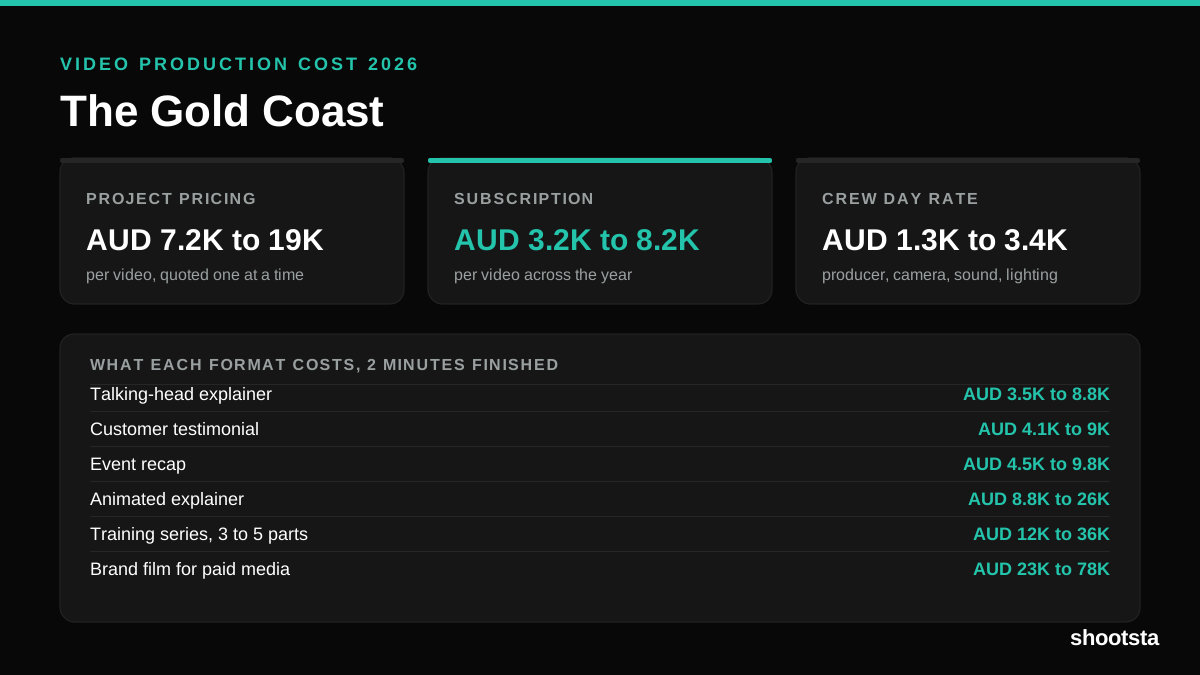
Video Production Cost on the Gold Coast 2026
Video production in the Gold Coast costs AUD 3,200 to AUD 8,200 per finished video on a subscription model, and AUD 7,200 to AUD 18,500 for one-off project work. Here is what you are paying for, and how the three pricing models compare.
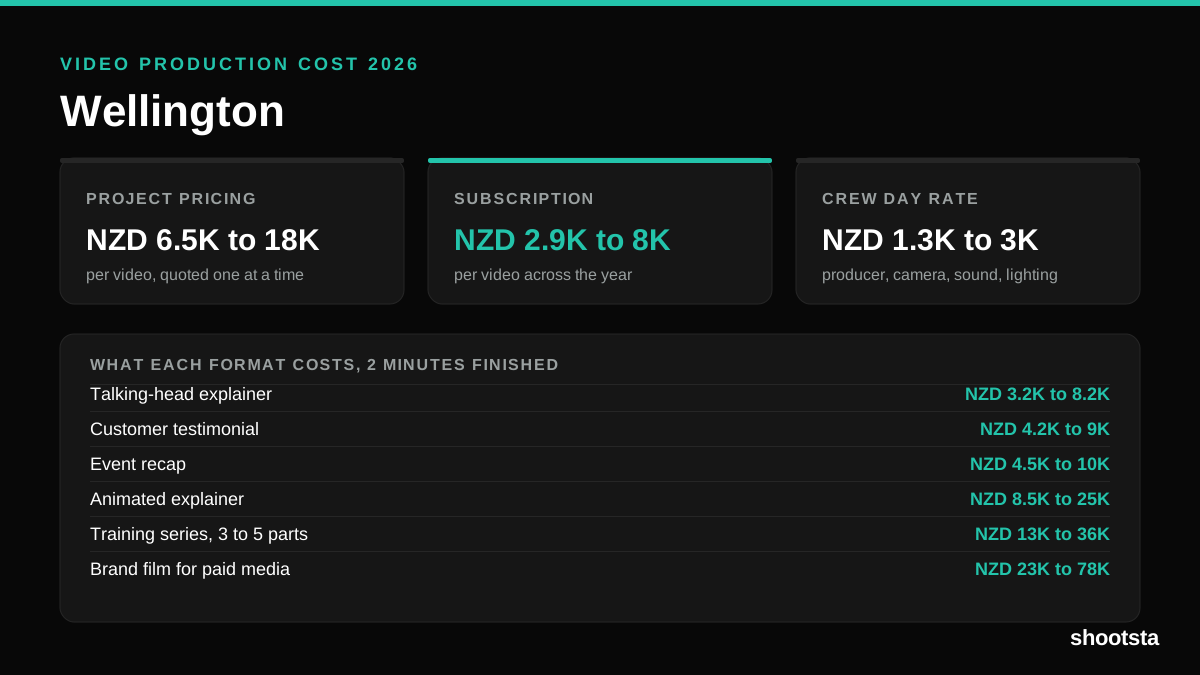
Video Production Cost in Wellington (2026)
Video production in Wellington costs NZD 2,900 to NZD 8,000 per finished video on a subscription model, and NZD 6,500 to NZD 18,000 for one-off project work. Here is what you are paying for, and how the three pricing models compare.
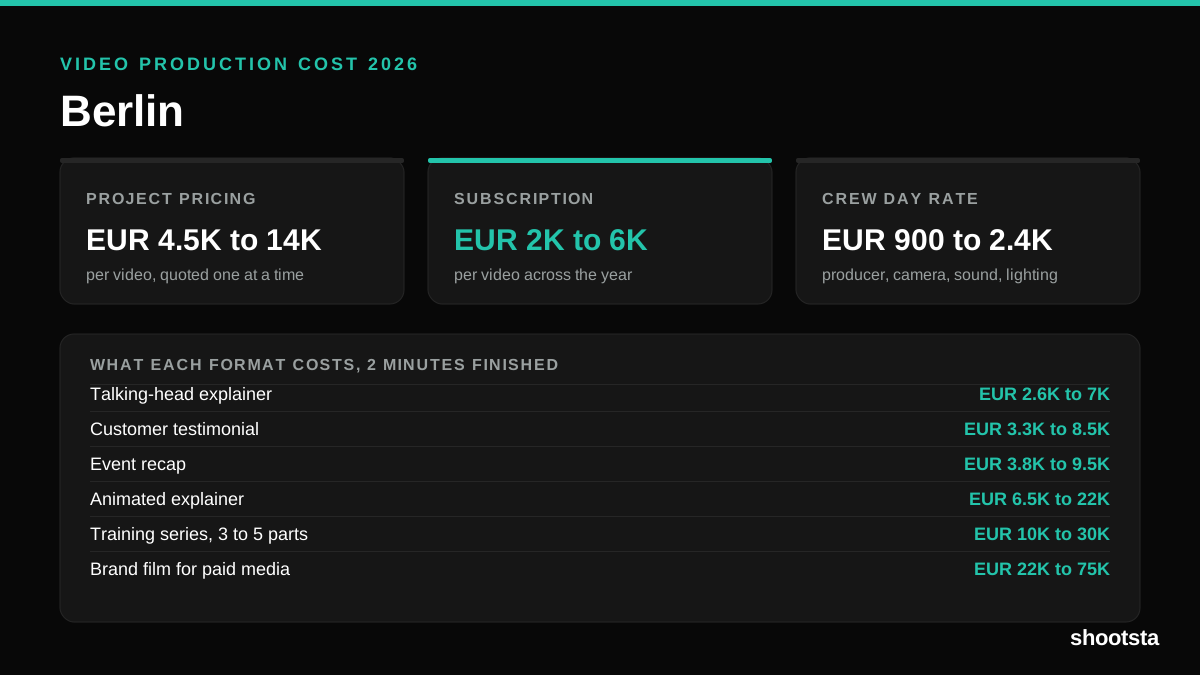
Video Production Cost in Berlin (2026)
Video production in Berlin costs EUR 2,000 to EUR 6,000 per finished video on a subscription model, and EUR 4,500 to EUR 13,500 for one-off project work. Here is what you are paying for, and how the three pricing models compare.