
Animation Use Cases for Customer Success Teams
shootsta.
Animation Use Cases for Customer Success Teams
By Shootsta · Published July 1, 2026 · Updated October 2026
Customer success teams repeat the same explanations all day. Animation turns those into reusable video that scales across every account. Here is where it works hardest.
Why does animation fit customer success?
Customer success teams answer the same questions across every account: how to get started, how to use a feature, why a result matters. Doing that live for each customer does not scale. Animated video says the same clear thing to every account, then the team spends its live time on what is specific to each one.
The same test applies as everywhere else in enterprise video. If the value is a real relationship moment, keep it human. If the value is explaining how something works, animation does it better and consistently. The broader case is in animation use cases for enterprise teams.
1. Onboarding and time-to-value
The fastest way to lose a new customer is a slow, manual onboarding. Animated onboarding content carries every account through the first key milestones consistently, without the success team rebuilding the same walkthrough for each logo.
2. Feature adoption nudges
Short animated clips that explain one underused feature, sent at the right moment, drive adoption better than a paragraph of text. Build one per key feature and the whole team sends the approved version instead of improvising.
3. Support deflection and how-to content
A library of short animated how-to videos in the help center answers common questions before they become tickets. This is the same support-deflection logic that makes help content one of the highest-return uses of video.
4. Quarterly business reviews
An animated summary of results and value delivered turns a dense QBR deck into something the customer's wider team, including the people who never join the call, will watch. It keeps the value story consistent across every account.
5. Renewal and expansion
A short animated piece that frames the value already delivered and what is next supports the renewal conversation, especially with the economic buyer who often never speaks to the success manager directly.
What should stay human?
Keep the relationship itself human. Check-ins, escalations, and strategic conversations are where the success manager earns trust, and a video does not replace them. Use animation to handle the repeatable explaining so the team has more time for the human work.
Where to start
Build the onboarding sequence first, since it touches every account and sets the tone for the whole relationship. To scope a success content program, read The Business Animation Playbook or explore our animation production services.
Take this article with you
Read the latest at shootsta.com/blog/animation-use-cases-customer-success
You might also like

How to Plan Video Team Capacity Around Leave
Your only editor just booked two weeks off, and you already know which projects will slip. Chad Lakin explains how to plan video team capacity so the work keeps moving when someone is away.
Corporate Video Editing Standards: Full Guide
A two-page editing standard does more for consistency than a forty-page brand book. Here is what it should cover, who owns each part, and how to enforce it with an in-house editor or an outside partner.
Quality Control in Outsourced Video Editing
When editing leaves the building, quality has to be checked by a system rather than by whoever happens to look. Here is the system: acceptance criteria, two QA gates, counted revision rounds and a quarterly audit.
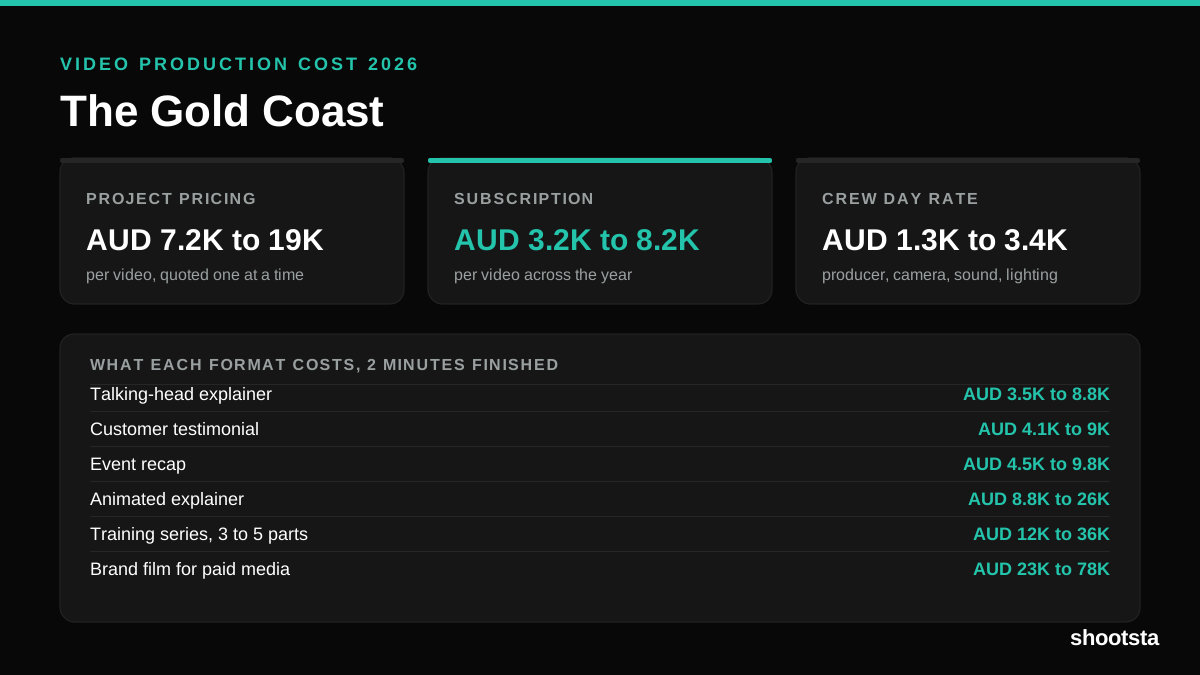
Video Production Cost on the Gold Coast 2026
Video production in the Gold Coast costs AUD 3,200 to AUD 8,200 per finished video on a subscription model, and AUD 7,200 to AUD 18,500 for one-off project work. Here is what you are paying for, and how the three pricing models compare.
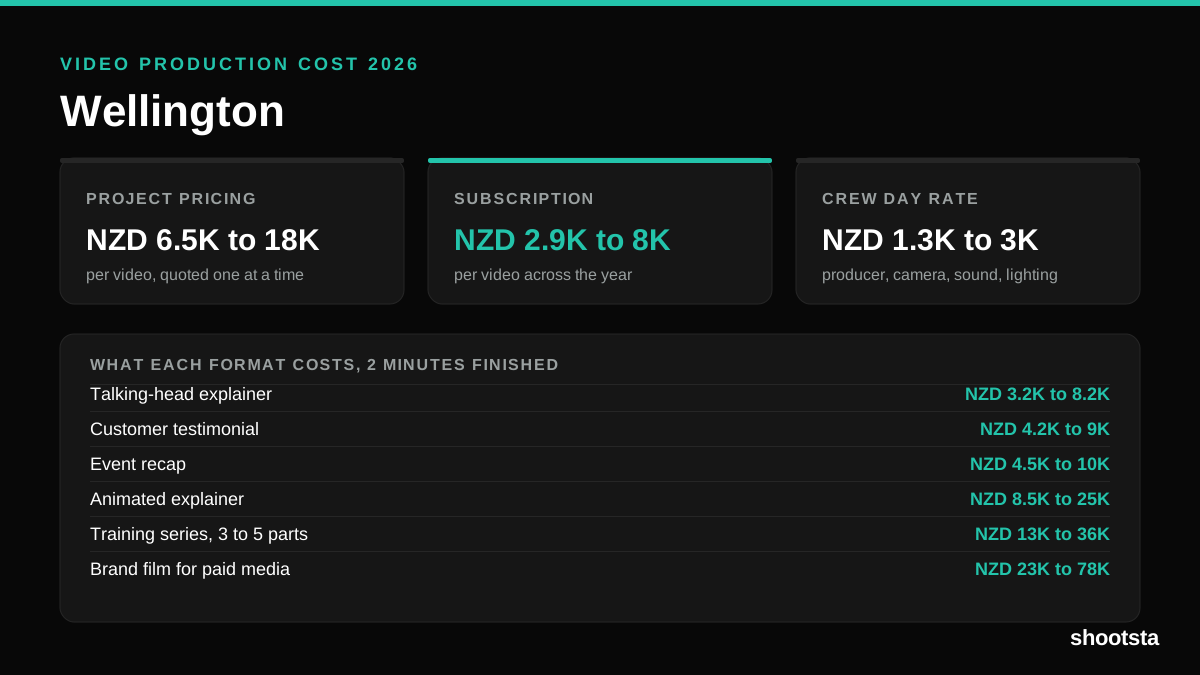
Video Production Cost in Wellington (2026)
Video production in Wellington costs NZD 2,900 to NZD 8,000 per finished video on a subscription model, and NZD 6,500 to NZD 18,000 for one-off project work. Here is what you are paying for, and how the three pricing models compare.
Video Production Cost in Berlin (2026)
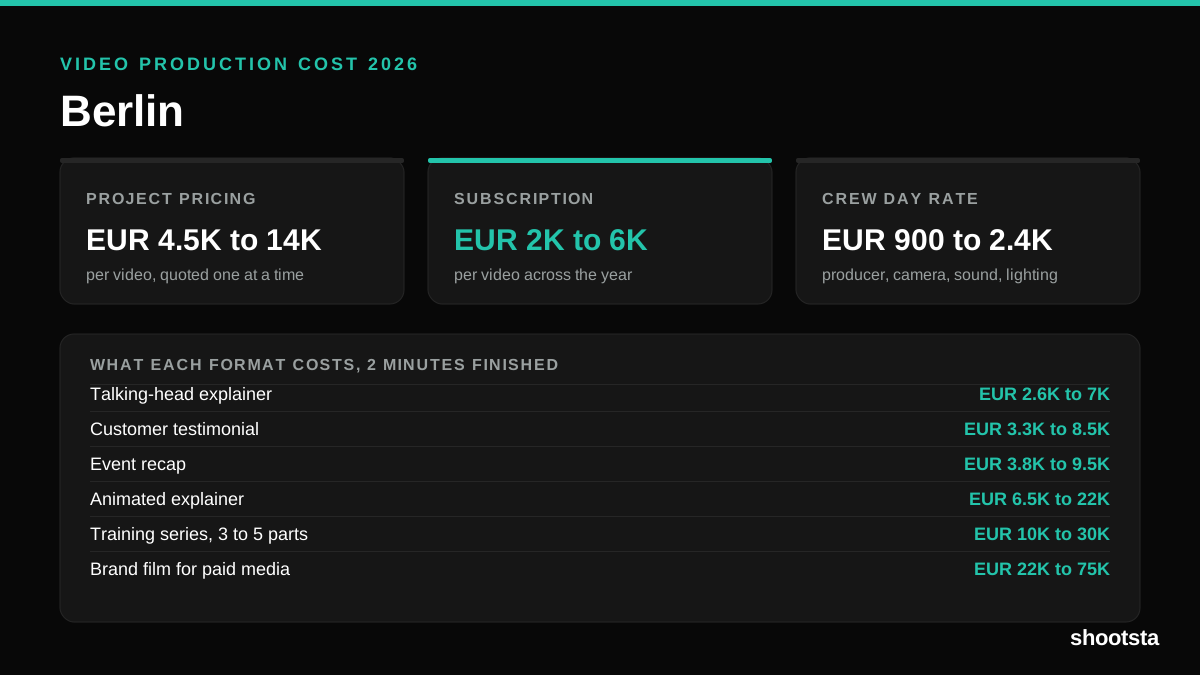
Video production in Berlin costs EUR 2,000 to EUR 6,000 per finished video on a subscription model, and EUR 4,500 to EUR 13,500 for one-off project work. Here is what you are paying for, and how the three pricing models compare.