
The Real Cost of Enterprise Video
shootsta.
The Real Cost of Enterprise Video
By Shootsta · Published July 1, 2026 · Updated October 2026
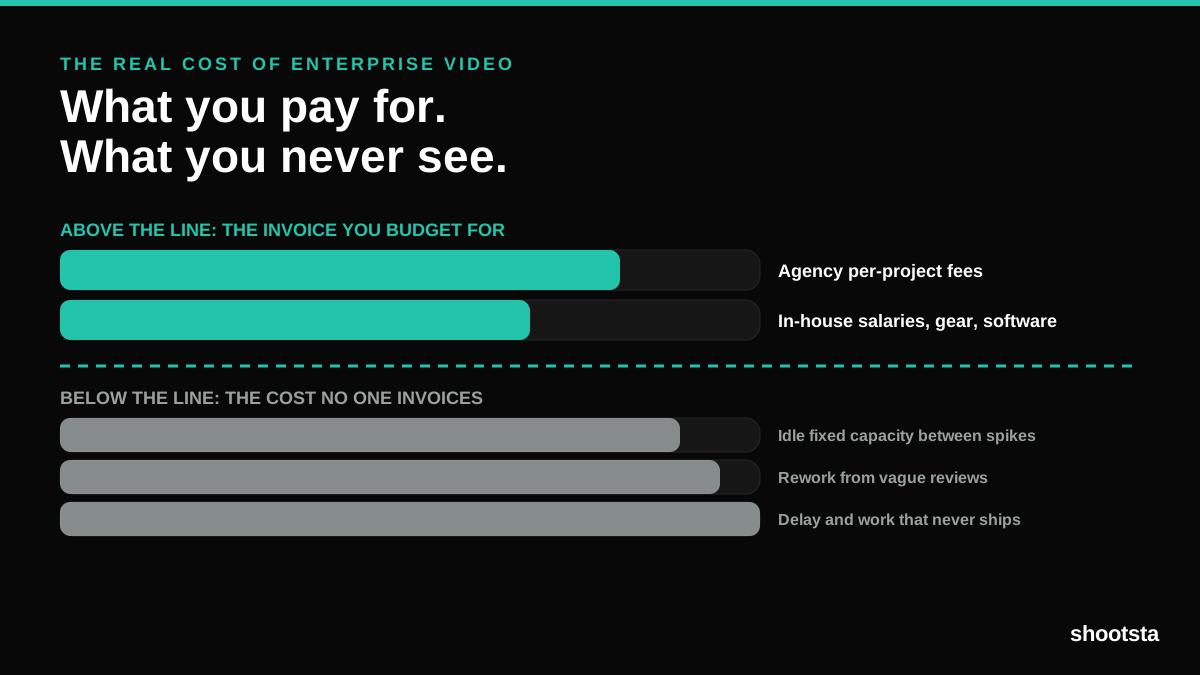
Enterprise video costs more than the invoice shows. The visible half is agency fees or in-house salaries. The hidden half is idle capacity between spikes, rework from vague reviews, brand drift across vendors, and work that never ships. Here is how to reframe the question from cost per video to cost per finished minute at volume, and why per-project pricing and peak-sized headcount both overcharge.
Short answer. Enterprise video production usually costs more than the invoice shows. The visible cost is easy to see: agency fees per project, or in-house salaries plus gear and software. The hidden cost is usually bigger. It includes fixed capacity sitting idle between spikes, rework from vague reviews, brand drift across vendors and the value of work that never ships. You overpay when you price by the video and staff for the peak. The number that matters for an always-on program is cost per finished minute at volume, and a capacity-on-demand model is what lowers it.
When a finance leader asks what video costs, they usually get a per-project quote or a headcount plan. Both answers leave things out. The quote covers the shoot and the edit, and the headcount plan covers a team's salary. Neither one counts everything a running video program uses, which is why the real bill so often comes as a surprise.
This post makes the business case and leaves the pitch for later. It breaks enterprise video into the cost you see and the cost you do not, then reframes the whole question so you can compare options honestly. If you own the budget, the goal is simple: stop paying for a program by the piece and start measuring it the way you measure any other function.
What does enterprise video production cost?
Enterprise video production has no single price, because "a video" ranges from a phone-shot update to a broadcast-grade brand film. A useful frame is a range. A simple internal or social video can be produced for a few hundred dollars in-house. A polished corporate piece from an agency typically runs from a few thousand to tens of thousands per finished minute, depending on crew, location, and post. A full year of an always-on program across every function reaches into six figures fast.
For the full menu of what drives a quote up or down, read the complete guide to video production costs. The sticker price matters less than you might think, because it only shows the visible half of the bill.
What are the visible costs of enterprise video?
Visible costs are the ones that land on an invoice or a payroll report. They are real, and they are the easy part to plan around.
Agency and per-project fees
Outsourcing to an agency gives you a clean line item per project. The trade-off is that price scales with output. A run of videos costs roughly that many times the price of one, because the model has no volume relief built in. For a handful of hero pieces a year that is fine. For a program that ships every week, the invoice climbs in lockstep with the calendar.
In-house salaries, gear, and software
Building a team in-house swaps the per-project fee for fixed cost: producer and editor salaries, cameras and lighting, licenses for editing and asset management, plus the overhead of managing all of it. That cost is stable, which finance likes. The catch is that it is fixed whether the team is flat out or waiting for the next brief. We put the two models side by side in in-house vs outsourced video production cost.
What are the hidden costs of enterprise video?
The hidden costs never appear on a quote, but they are usually the larger share of the bill. They are also the costs a program is least likely to measure. The four below are where the money quietly goes.
Idle fixed capacity between spikes
Video demand is spiky, because launch weeks, events and campaign pushes create bursts and the calendar is quiet in between. An in-house team sized for the peak sits partly idle the rest of the quarter, and you pay full salary for that idle time. A team sized for the average misses every peak, which is when the work matters most. Either way you are paying for a mismatch between capacity and demand.
Rework from vague reviews
An edit is a few hours of focused work. The revisions around it are where the hours pile up: feedback that arrives as vague paragraphs, an unclear approver, notes that contradict the last round. Every extra revision cycle is billable time from an agency or lost throughput from a team. The cost of that churn rarely gets attributed to the review process, so it hides in plain sight.
Brand drift across vendors
To keep up, teams add sources: an agency here, freelancers there, a separate vendor for training, another for sales. Each added source brings its own reading of the logo, the lower thirds and the tone. Policing consistency by hand across a stack of vendors is a real cost in someone's week, and the inconsistency itself erodes the brand equity the videos were meant to build.
The cost of delay and work that never ships
The most expensive video is the one that arrived too late to matter, or never shipped at all. A launch video that lands a week after the launch has lost most of its value. A backlog of approved-but-unfinished work is capital already spent with nothing to show. We put numbers on this timing problem in the cost of slow video production for enterprise teams.
Why do most enterprise teams overpay for video?
Teams overpay because both traditional pricing models are built for the wrong shape of demand. Per-project pricing charges you the same premium on the hundredth video as the first, so cost tracks volume with no economy of scale. Peak-sized headcount charges you for capacity you only use a few weeks a quarter. One model overcharges at volume; the other overcharges at rest.
Neither is a bad choice for the job it was built for. An agency is good at a high-end one-off. An in-house team is good at steady, predictable output. An always-on program that spikes and needs volume is a different job, and paying for it with a tool built for a different job is how the overpaying happens. We compare the three approaches in in-house, agency, or platform for video.
How should you measure the real cost of video?
Start by switching the unit you measure. Stop asking "what does this video cost" and start asking "what does a finished minute of on-brand video cost us at our real volume." Cost per finished minute at volume rolls the visible and hidden costs into one number you can compare across models and track over time.
Run your visible spend and your hidden losses through that lens and the picture changes. A cheaper-looking per-project quote can carry a high cost per minute once you add the review churn and the pieces that shipped late. To pressure-test your own numbers, the Video ROI Calculator lets you model spend, output, and return before you commit. For the full internal case, read the business case for a video production platform.
How does a capacity-on-demand model lower cost?
It attacks the hidden costs directly. Capacity that flexes with demand means you pay for output, not for idle salary between spikes. A single brand standard built into the workflow removes the manual policing and the drift. Faster, structured review cuts the rework. Because the model is built for volume, cost per finished minute falls as you produce more rather than rising.
DUAL, a specialty insurer, is a working example of the shift. Rather than hire a production team or brief a new agency for every piece, they built a repeatable model that ships on-brand video at volume without adding headcount. They get more output and faster turnaround with one consistent brand across all of it. The effective cost per minute is lower than either traditional route would have delivered.
Frequently asked questions
How much does video production cost for marketing?
It depends on production value and volume. A simple in-house social or internal video can cost a few hundred dollars. A polished agency piece typically runs from a few thousand to tens of thousands per finished minute. An always-on program across every function reaches six figures a year. The more useful question for a running program is cost per finished minute at volume, which counts the hidden costs the sticker leaves out.
What is the difference between visible and hidden video costs?
Visible costs are the ones on an invoice or payroll: agency fees, salaries, gear, and software. Hidden costs never get a line item but are usually larger: idle capacity between demand spikes, rework from unclear reviews, brand drift across multiple vendors, and the lost value of work that ships late or not at all. Budgeting only for the visible half is why the real bill surprises people.
Is it cheaper to produce video in-house or outsource it?
Neither is cheaper in every case. In-house is cheaper for steady, predictable output because the fixed cost spreads across constant work. Outsourcing is cheaper for occasional high-end pieces because you avoid carrying idle capacity. For spiky, always-on volume, both overcharge, and a capacity-on-demand model that prices by output tends to give the lowest cost per finished minute.
Why does cost per video mislead the budget?
Cost per video misleads because it ignores volume and the hidden costs. A low per-video quote can hide long review cycles, idle capacity, and late delivery that push the true cost per finished minute far higher. Measuring cost per finished minute at volume rolls the full bill into one comparable number, so a per-project quote and a platform model can be judged on the same basis.
Sources and further reading
Research on video and marketing spend supports the split between visible and hidden cost and the rise in demand behind it. For wider context:
- Wistia State of Video report on rising production volume and how teams invest in video.
- HubSpot on video production cost drivers and what shapes a quote.
- Gartner marketing budget research on where marketing spend is scrutinized and cut.
Where to go next
This post sits in a series for the person who owns the budget. To model your own numbers, open the Video ROI Calculator. To build the internal case, read the business case for a video production platform. To weigh the delivery models, read in-house, agency, or platform for video.
Cost per video is one of five measures of a healthy program, and it rarely fails on its own. Grade all five with the CMO video scorecard to see what else is pushing your number up.
To see where your own program is overpaying, book a free consultation.
Take this article with you
Read the latest at shootsta.com/blog/real-cost-of-enterprise-video-production
You might also like

How to Plan Video Team Capacity Around Leave
Your only editor just booked two weeks off, and you already know which projects will slip. Chad Lakin explains how to plan video team capacity so the work keeps moving when someone is away.
Corporate Video Editing Standards: Full Guide
A two-page editing standard does more for consistency than a forty-page brand book. Here is what it should cover, who owns each part, and how to enforce it with an in-house editor or an outside partner.
Quality Control in Outsourced Video Editing
When editing leaves the building, quality has to be checked by a system rather than by whoever happens to look. Here is the system: acceptance criteria, two QA gates, counted revision rounds and a quarterly audit.
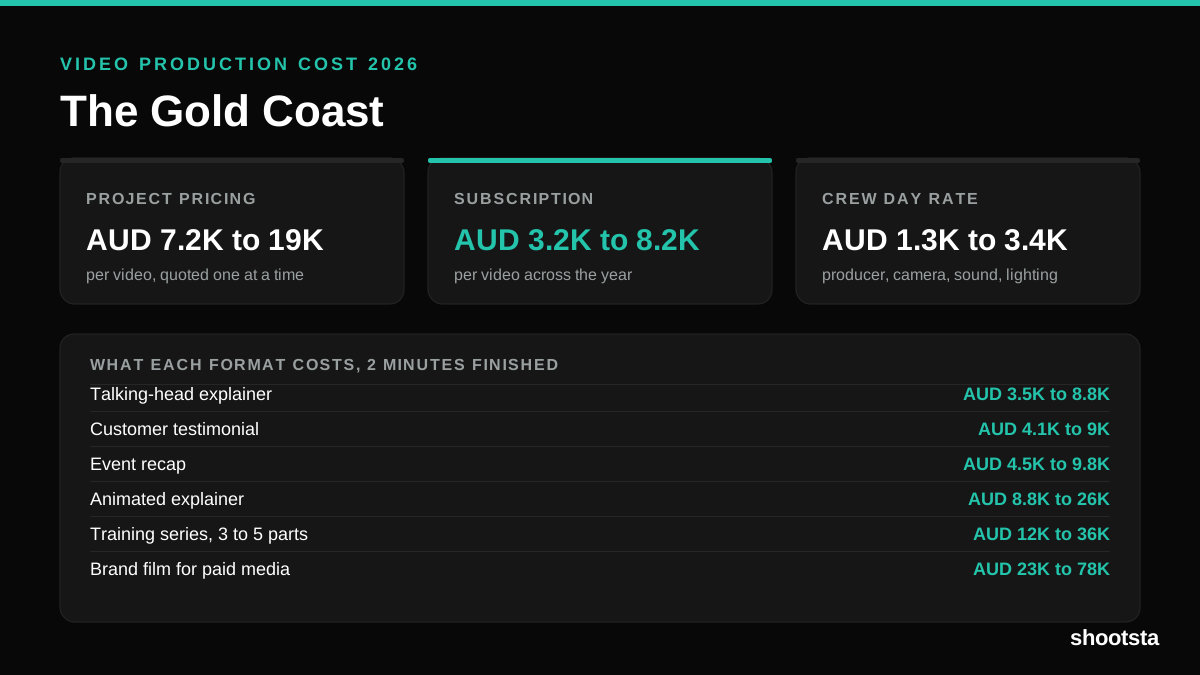
Video Production Cost on the Gold Coast 2026
Video production in the Gold Coast costs AUD 3,200 to AUD 8,200 per finished video on a subscription model, and AUD 7,200 to AUD 18,500 for one-off project work. Here is what you are paying for, and how the three pricing models compare.
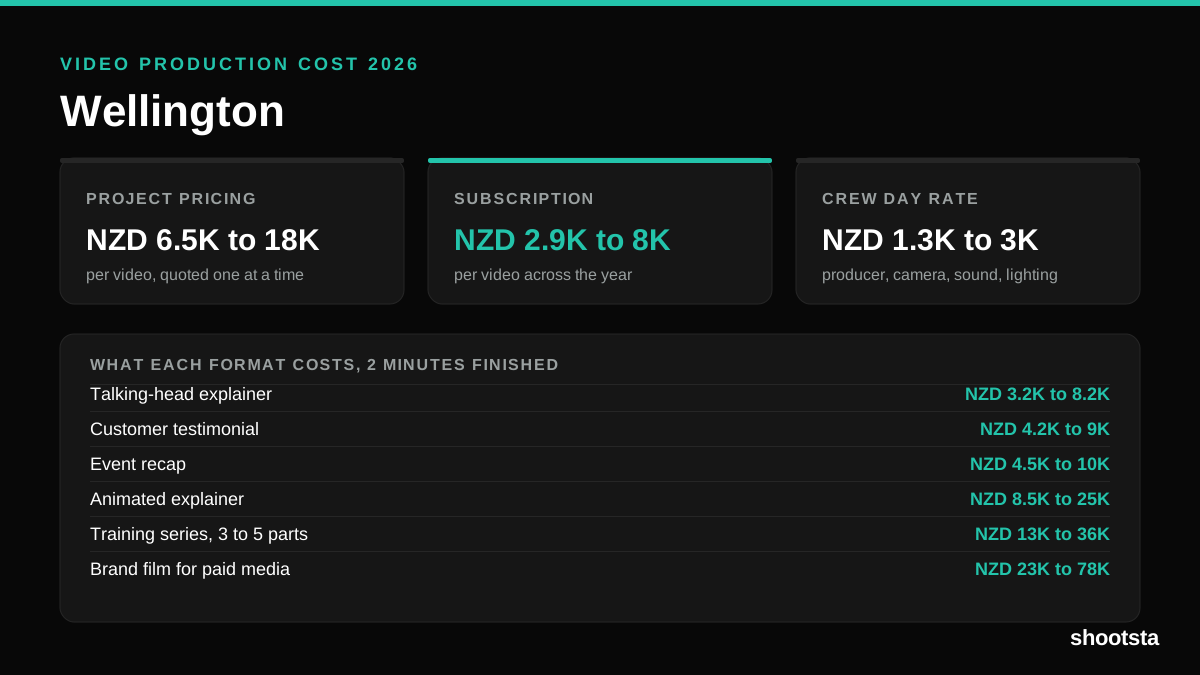
Video Production Cost in Wellington (2026)
Video production in Wellington costs NZD 2,900 to NZD 8,000 per finished video on a subscription model, and NZD 6,500 to NZD 18,000 for one-off project work. Here is what you are paying for, and how the three pricing models compare.
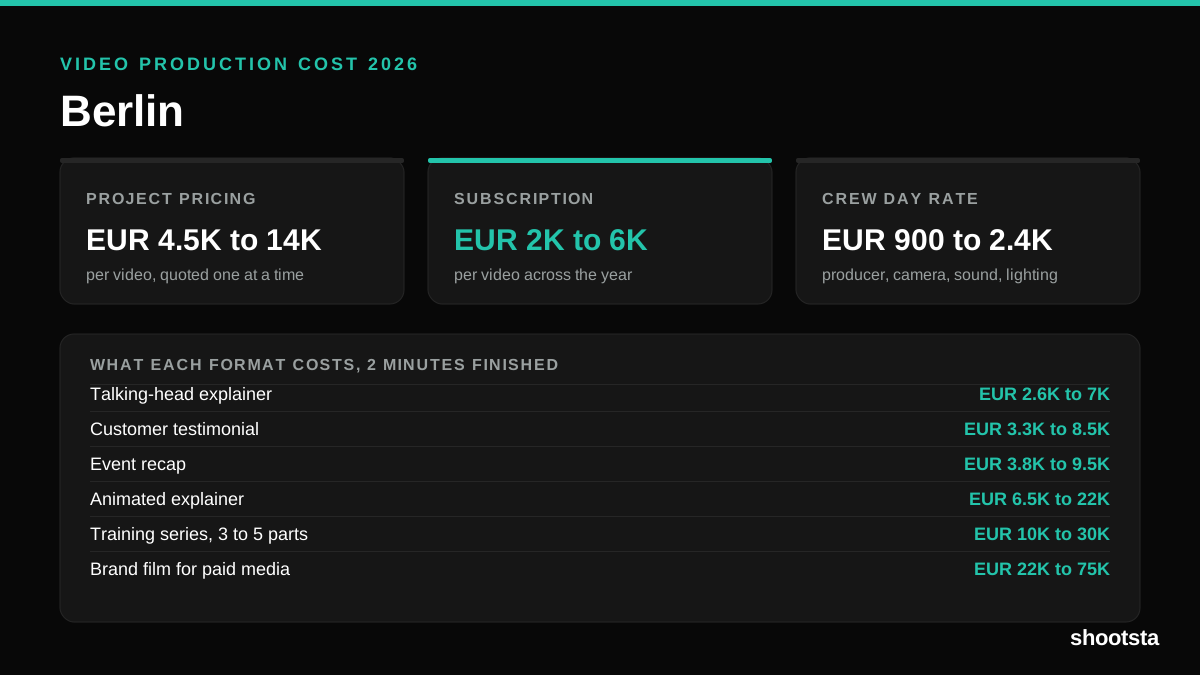
Video Production Cost in Berlin (2026)
Video production in Berlin costs EUR 2,000 to EUR 6,000 per finished video on a subscription model, and EUR 4,500 to EUR 13,500 for one-off project work. Here is what you are paying for, and how the three pricing models compare.