
Animation Use Cases for Healthcare & Pharma
shootsta.
Animation Use Cases for Healthcare & Pharma
By Shootsta · Published July 2, 2026 · Updated October 2026
Healthcare and pharma teams explain complex, regulated subjects to many audiences at once. Animation handles both the complexity and the compliance. Here is where it fits.
Why does animation fit healthcare and pharma?
Healthcare and pharma content is complex, regulated, and aimed at very different audiences: patients, clinicians, payers, and internal teams. Animation handles all three pressures at once. It explains a mechanism a camera cannot show, it adapts one visual story to multiple audiences, and its scripted nature makes regulatory review cleaner because every word is fixed before production.
That last point matters most. In regulated work, an error on screen can become a compliance problem. Because animation is scripted and easy to review line by line, it lowers that risk. The compliance workflow is similar to the one we describe for financial services in how to plan FSI animations without losing six weeks to legal.
1. Patient education
Conditions, treatments, and what to expect are hard to film and easy to get wrong in plain text. A clear animated explainer can ease anxiety and help patients stick to their treatment. It also answers the questions patients are too overwhelmed to ask. It also adapts across languages and literacy levels.
2. Mechanism of action and science communication
How a drug or a device works inside the body is the textbook case for animation. You cannot film it, and a static diagram loses people. Animated mechanism-of-action content explains the science to clinicians and to internal teams more clearly than slides or text can.
3. Medical and clinical training
Procedures, protocols, and systems training are process content, the natural home for animation. Short modules hold attention better than recorded lectures and are easier to update when a protocol changes, which keeps a large training library current without re-shooting. Our full guide to medical training animation covers how one gets made, what it costs, and how to clear medical review.
4. Compliance and regulatory comms
Policy changes, safety updates, and mandatory training reach staff better as short animated pieces than as another all-staff email. The scripted format also keeps the legal review tight, since reviewers approve fixed wording rather than improvised delivery.
5. Internal and field comms
Strategy updates, launch readiness, and field-team enablement are conceptual content that animation visualizes clearly across a distributed workforce. The same logic applies as in animation vs live action for internal comms.
What should stay live action?
Keep real clinician and patient stories on camera, since their credibility comes from a real person on screen. You should film leadership messages as well. Use animation to explain the science and the process, and keep the camera for the human proof.
Where to start
Begin with the one patient or training explainer that generates the most repeat questions, and build it through a compliant, scripted workflow. To scope a regulated program, read The Business Animation Playbook or explore our animation production services.
Take this article with you
Read the latest at shootsta.com/blog/animation-use-cases-healthcare-pharma
You might also like

How to Plan Video Team Capacity Around Leave
Your only editor just booked two weeks off, and you already know which projects will slip. Chad Lakin explains how to plan video team capacity so the work keeps moving when someone is away.
Corporate Video Editing Standards: Full Guide
A two-page editing standard does more for consistency than a forty-page brand book. Here is what it should cover, who owns each part, and how to enforce it with an in-house editor or an outside partner.
Quality Control in Outsourced Video Editing
When editing leaves the building, quality has to be checked by a system rather than by whoever happens to look. Here is the system: acceptance criteria, two QA gates, counted revision rounds and a quarterly audit.
Video Production Cost on the Gold Coast 2026
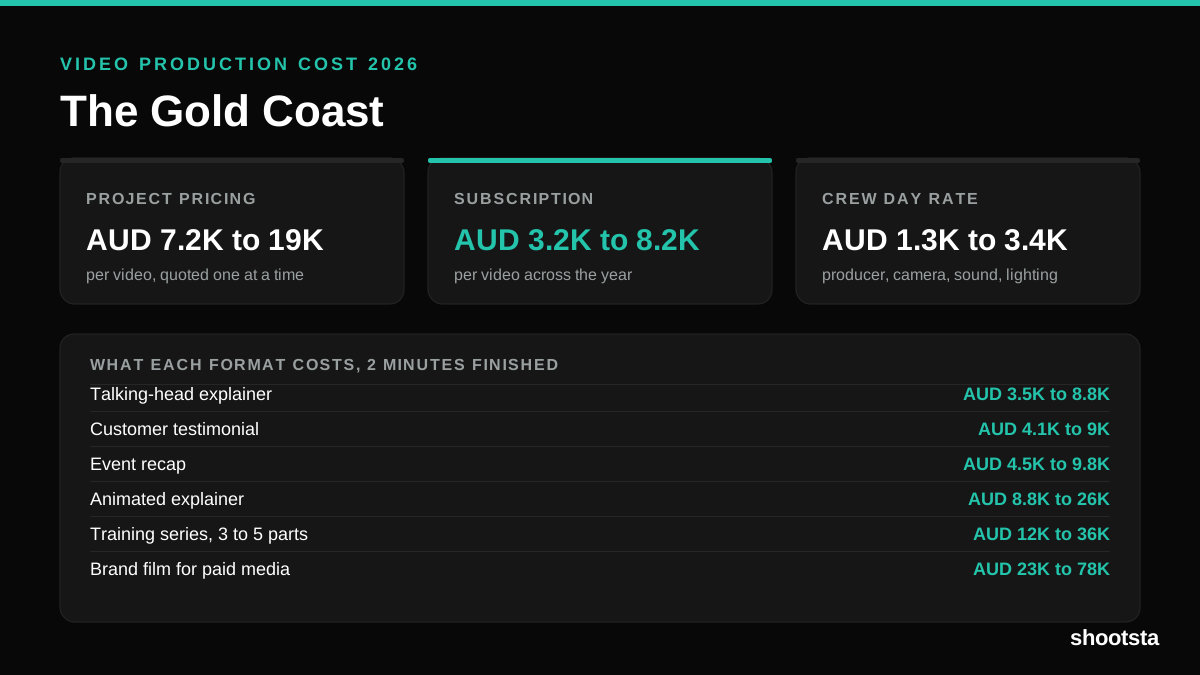
Video production in the Gold Coast costs AUD 3,200 to AUD 8,200 per finished video on a subscription model, and AUD 7,200 to AUD 18,500 for one-off project work. Here is what you are paying for, and how the three pricing models compare.
Video Production Cost in Wellington (2026)
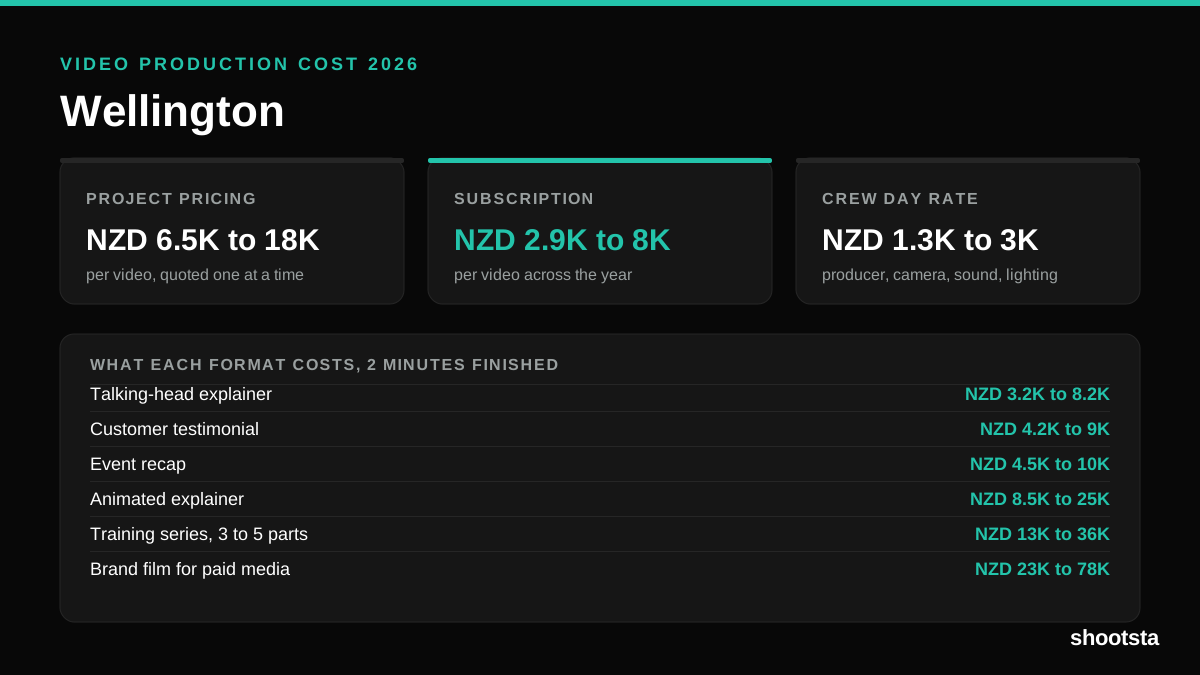
Video production in Wellington costs NZD 2,900 to NZD 8,000 per finished video on a subscription model, and NZD 6,500 to NZD 18,000 for one-off project work. Here is what you are paying for, and how the three pricing models compare.
Video Production Cost in Berlin (2026)
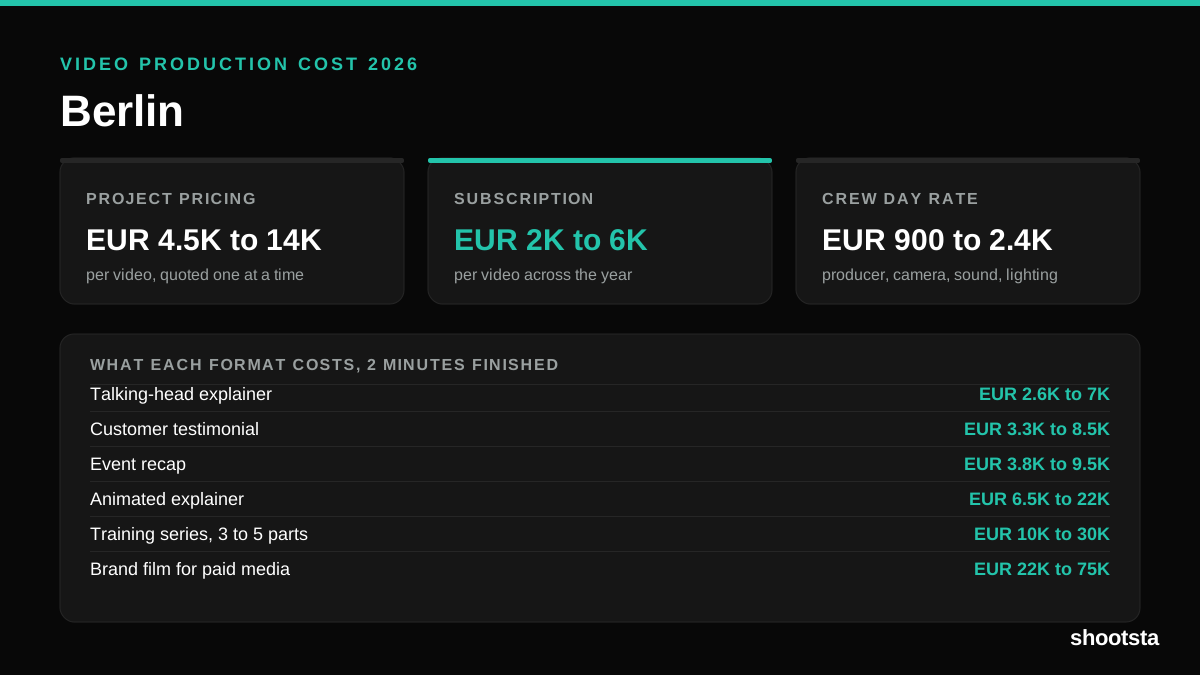
Video production in Berlin costs EUR 2,000 to EUR 6,000 per finished video on a subscription model, and EUR 4,500 to EUR 13,500 for one-off project work. Here is what you are paying for, and how the three pricing models compare.