
Animation Use Cases for Internal Comms Teams
shootsta.
Animation Use Cases for Internal Comms Teams
By Shootsta · Published July 3, 2026 · Updated September 2026
Internal comms teams have to make abstract, organization-wide messages land with a distributed workforce. Animation is built for exactly that. Here is where it works.
Why does animation fit internal comms?
Internal comms content is conceptual and structural: strategy, change, policy, values. That is exactly where talking-head videos lose people and where another all-staff email goes unread. Animation visualizes the message and lands it consistently with a distributed workforce, in headquarters and remote teams alike.
We compared the two formats directly for regulated teams in animation vs live action for internal comms, and the logic carries to any organization.
1. Change and transformation comms
Reorganizations, mergers, and operating-model changes are structural by nature. Animation draws the change clearly, building it up piece by piece, where a written memo leaves people guessing what it means for them.
2. Strategy and vision rollouts
Strategy is abstract until someone makes it concrete. An animated explainer turns a strategy deck into a 90-second story the whole organization can follow, consistently, instead of relying on every manager to interpret it the same way.
3. Policy updates and compliance
Policy changes and mandatory updates reach staff better as short animated pieces than as dense documents. The scripted format also keeps legal sign-off clean, since every word is fixed before production.
4. Technology and AI rollouts
Adoption fails when employees do not understand what a new tool does or what the rules are. Animation shows the workflow, the data flow, and the governance in a way a screen recording cannot. There is a full playbook in an animation-first approach to AI rollout comms.
5. Culture, values, and recognition
Company-wide campaigns and values rollouts carry better in a consistent animated style across a distributed workforce. Animation keeps the message on-brand whether it lands in one office or twenty.
When should a leader be on camera?
When the point is hearing it from a named person. A CEO addressing a hard moment, a leader sharing a personal message, recognition of a real team. Those depend on a face and a voice. Use animation for the structural content, and keep the camera for the moments where trust travels through a person.
Where to start
Take the next big change announcement and brief an animated version alongside the usual email, then compare how each performs. To scope an internal comms program, read The Business Animation Playbook or explore our animation production services.
Animation removes two of the seven delays that hold internal comms video up. The full list is in internal comms video editing delays and how to fix them.
Take this article with you
Read the latest at shootsta.com/blog/animation-use-cases-internal-comms
You might also like

How to Plan Video Team Capacity Around Leave
Your only editor just booked two weeks off, and you already know which projects will slip. Chad Lakin explains how to plan video team capacity so the work keeps moving when someone is away.
Corporate Video Editing Standards: Full Guide
A two-page editing standard does more for consistency than a forty-page brand book. Here is what it should cover, who owns each part, and how to enforce it with an in-house editor or an outside partner.
Quality Control in Outsourced Video Editing
When editing leaves the building, quality has to be checked by a system rather than by whoever happens to look. Here is the system: acceptance criteria, two QA gates, counted revision rounds and a quarterly audit.
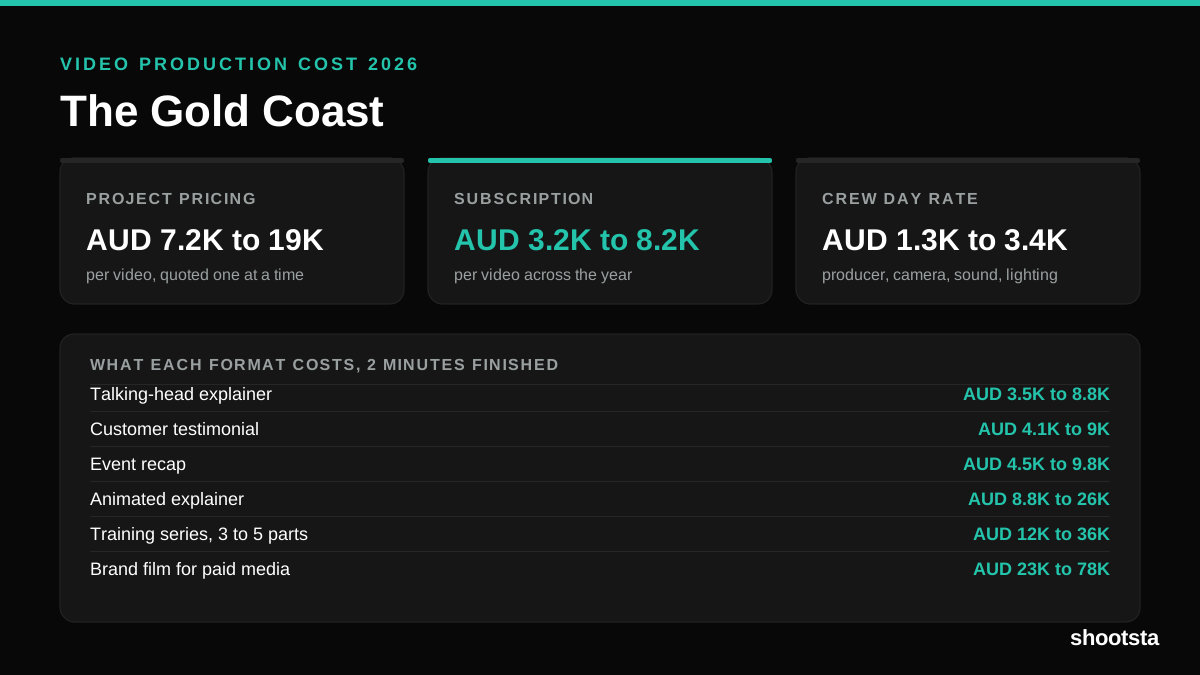
Video Production Cost on the Gold Coast 2026
Video production in the Gold Coast costs AUD 3,200 to AUD 8,200 per finished video on a subscription model, and AUD 7,200 to AUD 18,500 for one-off project work. Here is what you are paying for, and how the three pricing models compare.
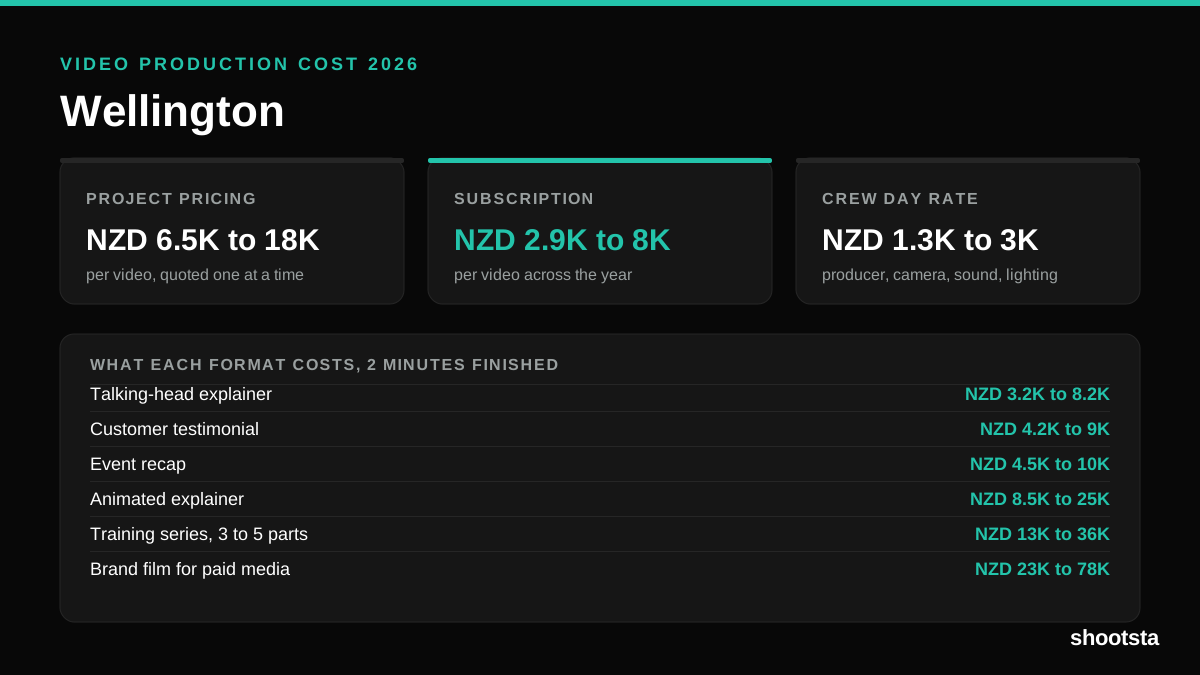
Video Production Cost in Wellington (2026)
Video production in Wellington costs NZD 2,900 to NZD 8,000 per finished video on a subscription model, and NZD 6,500 to NZD 18,000 for one-off project work. Here is what you are paying for, and how the three pricing models compare.
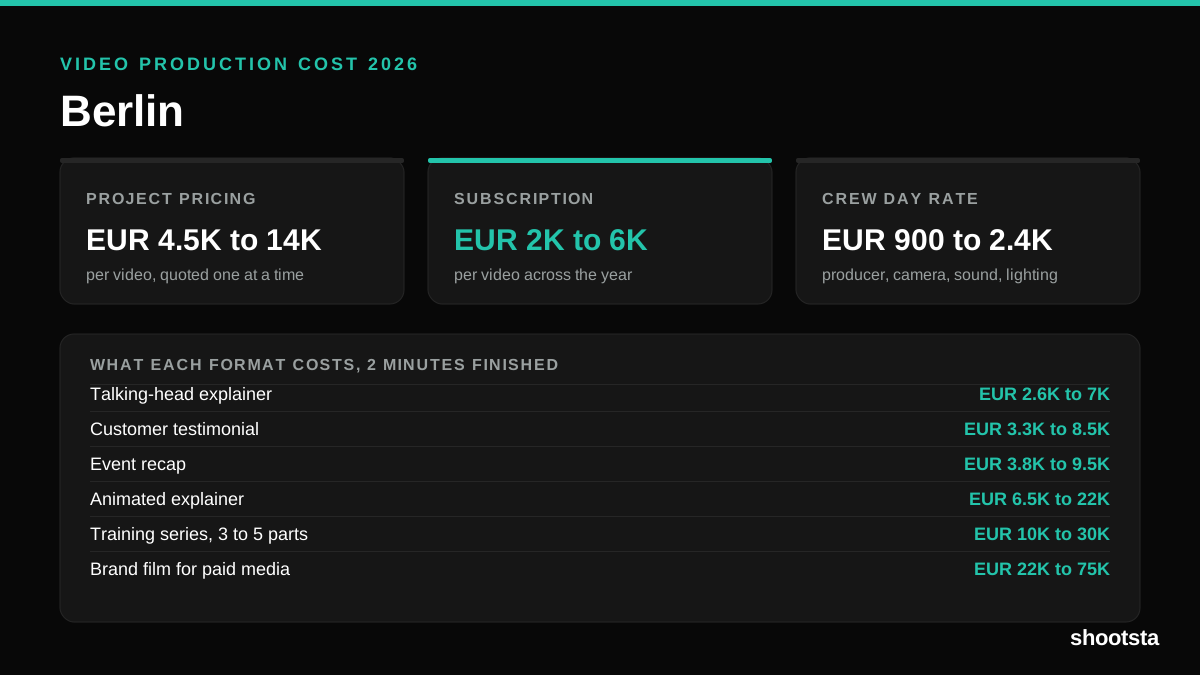
Video Production Cost in Berlin (2026)
Video production in Berlin costs EUR 2,000 to EUR 6,000 per finished video on a subscription model, and EUR 4,500 to EUR 13,500 for one-off project work. Here is what you are paying for, and how the three pricing models compare.