
How a CMO should think about enterprise video
shootsta.
How a CMO should think about enterprise video
By Shootsta · Published May 28, 2026 · Updated October 2026
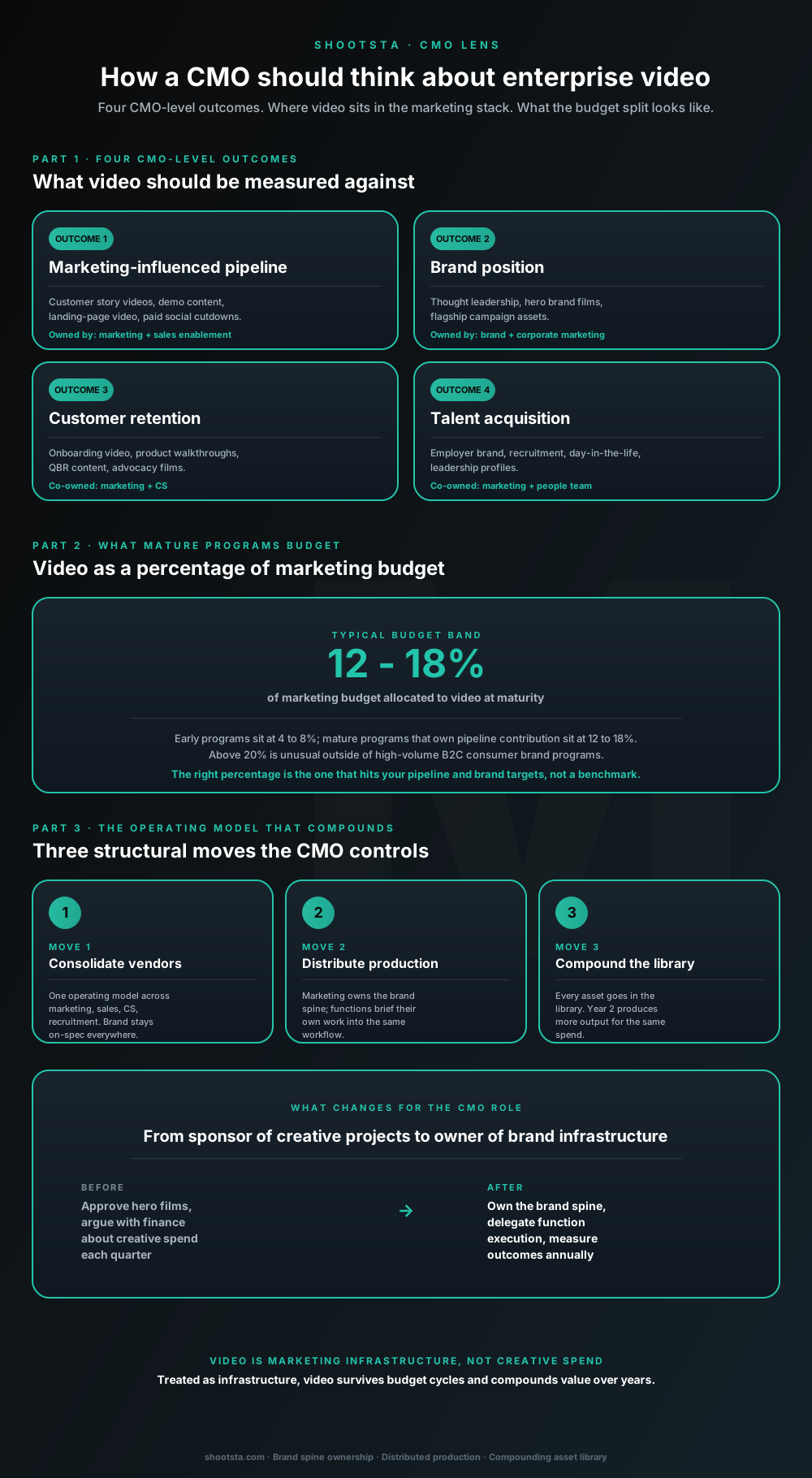
Most CMOs inherit a fragmented video footprint and treat it as a creative line item. The shift to treating video as marketing infrastructure changes the conversation with the CFO, the function leaders and the agency stack. Four outcomes to measure against, the 12 to 18% budget band mature programs allocate, and the operating model that compounds value over years.
The shift CMOs are making in 2026
If you inherited your video footprint, it probably looks like a fragmented vendor stack. An agency produces the hero pieces and a freelance pool handles social cutdowns. Sales runs its own video tool for follow-ups, and L&D quietly makes compliance modules with a different vendor. The total spend is real but hard to see, because no central budget line captures it, and the brand drifts because no one owns the brand spine across all those producers.
The shift CMOs are making is moving video from "creative line item that gets cut first when budgets tighten" to "marketing infrastructure that survives budget cycles and compounds value over years". The change is structural. It decides who owns each part of the program, how the budget is sized and how video shows up in the board pack.
The four CMO-level outcomes video drives
Video reports that reach leadership usually open with engagement metrics. As CMO, you need to open with the four business outcomes the rest of the C-suite already tracks.
Outcome 1: Marketing-influenced pipeline
This outcome covers customer story videos, recorded demos, landing-page video, paid social cutdowns and ABM video. It is your primary outcome and the one finance wants to see. Track the close rate on accounts that watched a customer story before the demo, and test landing pages with and without video to see the conversion difference. Marketing owns this outcome and works on it with sales enablement.
Outcome 2: Brand position
Brand position comes from thought leadership videos, hero brand films, flagship campaign assets and executive appearances on video. It is harder to tie directly to revenue, but the board and the rest of the leadership team can see it. You measure it through brand-tracker movement, share of voice in target segments and pulse surveys on brand attributes. Brand and corporate marketing teams own it.
Outcome 3: Customer retention
Retention video includes onboarding, product walkthroughs, QBR videos, advocacy films and renewal campaigns. CMO-led programs often skip it because it sits on the boundary with customer success. That is a mistake, because keeping a customer usually costs far less than winning a new one. Marketing and CS share ownership of this outcome.
Outcome 4: Talent acquisition
Talent video covers employer brand films, recruitment campaigns, day-in-the-life pieces and leadership profiles. The CMO often never sees it because it lives in the people function. Its return shows up as a lower cost per qualified hire, which is easy for finance to read. Marketing and the people team share ownership. We covered the format-by-format outcome mapping in how to measure enterprise video success.
What mature programs spend on video as a percentage of marketing
We do not publish a benchmark percentage for this, so start from your own budget. Add up every video line you can find across marketing, sales, L&D, internal comms and the people team, then divide the total by your marketing budget. That share is your real starting point. It can be higher than the line marked "video" suggests, because much of the spend sits outside marketing.
The right percentage is the one that hits your pipeline and brand targets. Ask two questions of it each year: which outcomes did the spend move, and would more output move them further? If you hit your outcomes with less spend, the program is efficient. If you need more, the outcome data gives you the case to take to the CFO.
Interactive budget allocator
Where does your video budget sit against mature programs?
Set your total marketing budget and the current share allocated to video. The allocator returns where you sit against the 12 to 18% mature-program band and what the gap means in production volume.
Current video spend
$300K
~120 videos / year
Mature band midpoint
$750K
~300 videos / year
Your position
Below band
+$450K to reach midpoint
What this means
You are spending 6% of marketing on video. Mature programs typically sit at 12 to 18%, which would put your video spend at $600K to $900K. The gap usually shows up as turned-down internal requests, fragmented vendor spend outside the central program, or stalled pipeline contribution because video volume is too low to compound.
Talk through your budget planMature band based on observed allocation across enterprise customers. Early programs (year 1 to 2) typically sit at 4 to 8%; mature programs with measurable pipeline contribution sit at 12 to 18%. Implied video volume uses a $2,500 average all-in per finished video. Numbers are guides.
The three structural moves the CMO controls
You control three moves that shift video from a creative line item to marketing infrastructure.
Move 1: Consolidate vendors
Map every vendor producing video for the business right now: agency for hero work, freelancers for social, sales SaaS tools, L&D producers, regional vendors. Procurement can pull the list from invoices. The list is usually longer than you expect, and once it is on one page the places to consolidate tend to stand out.
Consolidating into one operating model with a single brand custodian sign-off chain gives you a level of brand consistency that a fragmented vendor stack cannot reach. Cost per video also falls on the same output volume, because brand setup, account management and procurement overhead stop repeating with every vendor. We covered the consolidation case in how enterprise teams actually use video.
Move 2: Distribute production across functions
Marketing owns the brand spine, and each function (sales, comms, L&D, CS, recruitment) briefs its own work into the same workflow. The marketing-owned brand custodian signs off everything; the function leader retains creative direction over their function's content.
This structure stops the CMO from being the bottleneck on every video request from every function while keeping brand consistent. It also moves cost recovery off the central marketing line if internal accounting supports it: each function pays for their share of the production envelope.
Move 3: Compound the asset library
Every finished asset and every raw file goes into one searchable library. By year 2, a customer story produced for sales gets reused by marketing, then by CS for QBR content, then by recruitment for employer brand. The same source footage compounds across three or four functions instead of dying after one campaign.
Fragmented programs rarely build this library, because each vendor stores assets in its own system. Consolidated programs build it as a default, which is one of the reasons mature programs produce more output per dollar in year 2 than in year 1.
What changes for the CMO role itself
Before: the CMO approves hero films, argues with finance about creative spend each quarter, and gets pulled into vendor-management discussions whenever something goes wrong with a regional video shoot. The CMO's role in video is project sponsor.
After: the CMO owns the brand spine, delegates function execution to the function leaders, and measures outcomes annually against the four CMO-level metrics. The CMO's role in video becomes owner of marketing infrastructure. You spend less time on production decisions and more time on the outcomes the program is meant to deliver.
This shift is the structural reason video programs survive CMO transitions. Programs built around a specific CMO's personal involvement collapse when that CMO leaves. Programs built around an operating model with delegated execution survive because the next CMO inherits the infrastructure, not the project queue.
The conversation with the CFO
Your strongest move with finance is to present video as marketing infrastructure, in the same group as marketing automation, your CDP, the ABM platform and the attribution tool. Each of these is a multi-year operational investment with measurable contribution to marketing-influenced pipeline. Video sits in the same category, evaluated against the same criteria.
Framed this way, video budget is harder to cut at quarter-end because it sits in the operational bucket rather than the creative bucket. The CFO sees an annual subscription line item with a predictable per-dollar return, not a quarterly creative argument. We covered the framing in detail in how to get exec buy-in for video at scale.
The conversation with sales leadership
Sales typically funds its own video tools (Loom, Vidyard, Gong recording) outside the marketing budget. The right CMO move is not to take that budget over; it is to align the sales-funded video with the marketing-funded operating model so brand stays consistent and customer stories produced by marketing flow into sales enablement.
The conversation that works: marketing owns brand and demand-gen video; sales owns personalized outreach video; both use the same brand templates, the same library, and feed the same measurement. The CMO does not control sales spending on video; the CMO controls whether the brand layer holds across both.
The conversation with comms and CS leadership
Internal comms typically owns CEO videos, town halls and change comms. Customer success owns onboarding and product walkthroughs. Both functions have video budget that often gets sourced separately from the marketing program.
The right CMO move is to offer the operating model to both functions and let them opt in voluntarily. Most function leaders prefer the consolidated workflow once they see it (faster turnaround, lower per-video cost, brand handled centrally) but resist if it is forced. The infrastructure-not-mandate framing matters.
Frequently asked questions
How long does the shift from fragmented to consolidated typically take?
The timeline depends mostly on when your existing vendor contracts end. Move one function first as the proof point, and let the other functions follow as their contracts roll off. Procurement appreciates the staged approach because it avoids a single big procurement event.
Should the video budget sit in marketing or in a separate program budget?
A common setup is to run video budget inside marketing with internal cost recovery from the other functions based on usage. This keeps the CMO accountable for the program while distributing actual cost to the functions that use it. The alternative (separate program budget that none of the functions own) tends to lose CMO attention and become orphaned at the next reorg.
What is the right reporting cadence to the CEO and board?
Quarterly review of the four outcome metrics, with the annual budget-and-payback view going into the board pack once a year. The four metrics are pipeline contribution, brand position movement, customer retention impact and cost per qualified hire. View counts stay out of the board pack.
How do we handle hero brand films inside this model?
Subscription production handles the volume work (Pulse and Presence). Project-scale hero work (Peak) usually sits with a creative agency or a project specialist like Shootsta Premier. Both can coexist; the CMO's job is to keep the brand templates consistent across both layers so the hero work and the always-on layer feel like they came from the same brand.
What changes if we already have a strong in-house creative team?
The shift is easier because the in-house team owns brand and creative direction by default. The consolidation is the production layer (editing, multilingual versions, regional shoots, social cutdowns) rather than the creative direction layer. We covered this pattern in how a video partner extends your in-house team.
How do we measure brand position from video?
Use brand-tracker survey movement on target attributes, share of voice in target segments from media monitoring, and pulse surveys on brand familiarity in target buyer accounts. These metrics move more slowly than pipeline, so review them yearly and leave the quarterly pack to pipeline.
Where to go next
For the budget framing the CFO will ask for, read the business case for enterprise video. For the strategy framework that should sit above the budget conversation, read how to build a video strategy from scratch. For the consolidation case across functions, read how enterprise teams actually use video.
Before you restructure anything, it helps to know which part is weakest. Grade your program with the CMO video scorecard for a score out of 25 across coverage, brand, turnaround, cost and measurement, plus the one to fix first.
To structure a CMO-level video program for your business, book a free consultation.
Take this article with you
Read the latest at shootsta.com/blog/how-a-cmo-should-think-about-enterprise-video
You might also like
How to Brief an Animation Project
How to Brief an Animation Project
An animation brief is the document you send to your production partner before work starts. Get it right and you cut revision cycles in half. Get it wrong and you discover mid-production that everyone disagrees on what the video is for. This is what a complete brief looks like.
Animation for change management comms
Animation for change management comms
Animation handles change management communications better than live video for three reasons: no on-camera executives required during sensitive periods, scene-level updates when plans shift, and a single production that works across global teams with voiceover-only language swaps.
How sales leaders should use video at scale
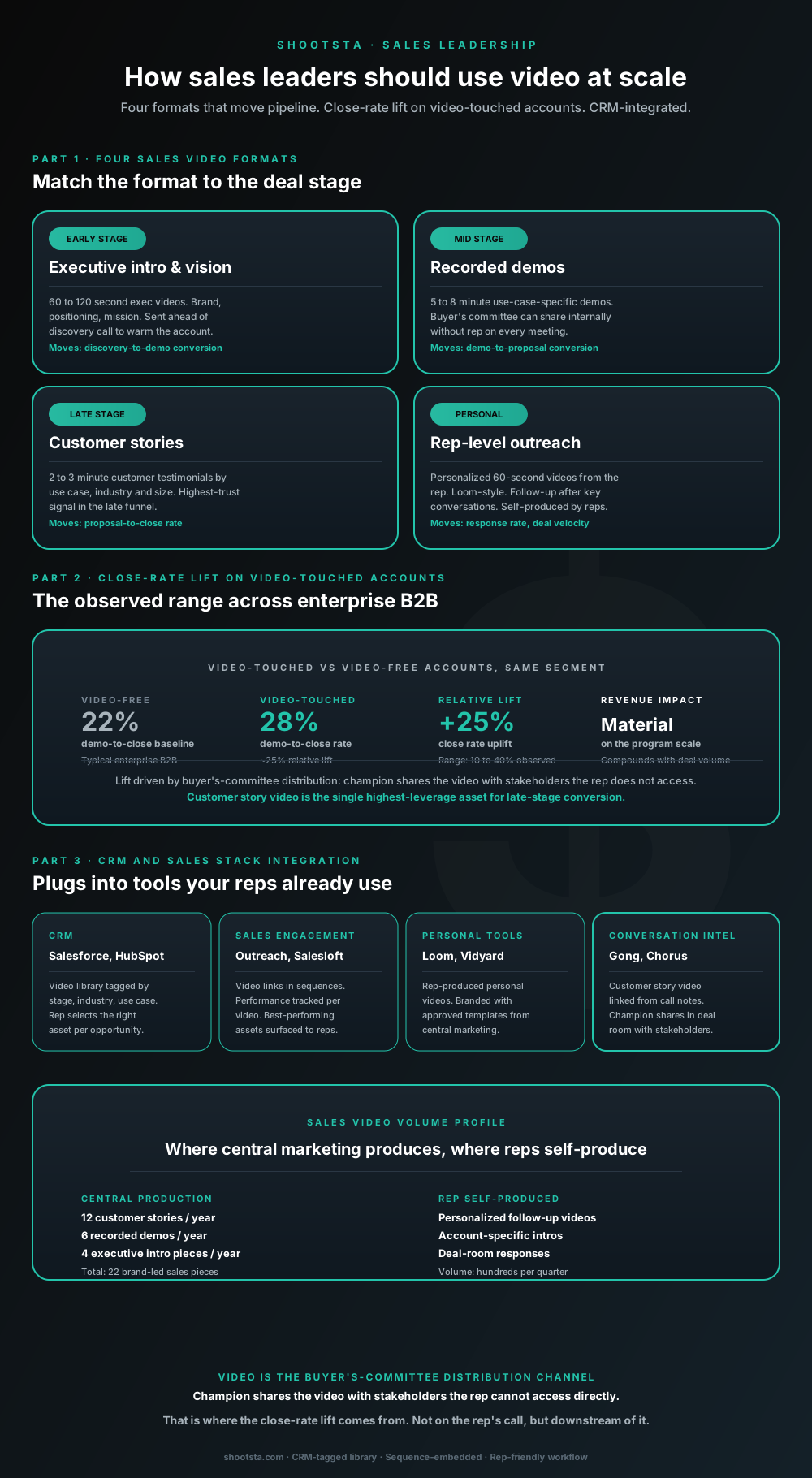
Sales leaders mostly think about video as personalized rep outreach (Loom, Vidyard) or as marketing-produced customer stories. Both are useful. The bigger opportunity is the buyer's-committee distribution layer: assets the champion shares internally with stakeholders the rep does not access directly. That is where the close-rate lift compounds.
How L&D leaders replace classroom with video
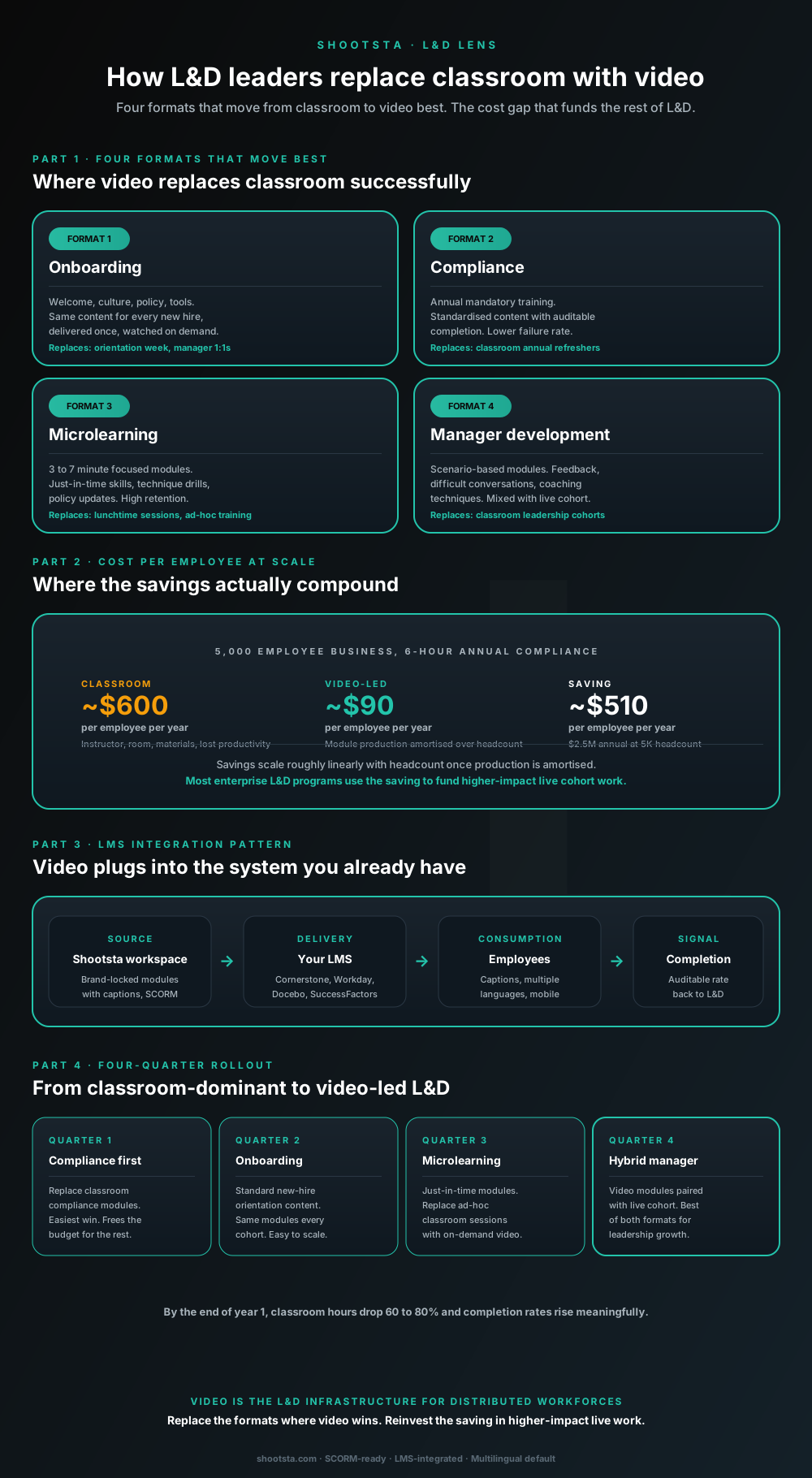
L&D leaders running classroom-heavy training programs typically have the largest single opportunity in the business to free budget through format change. Four training formats move from classroom to video cleanly; the savings fund higher-impact live work. Here is the rollout that compounds learner adoption over four quarters.
How customer success leaders should use video
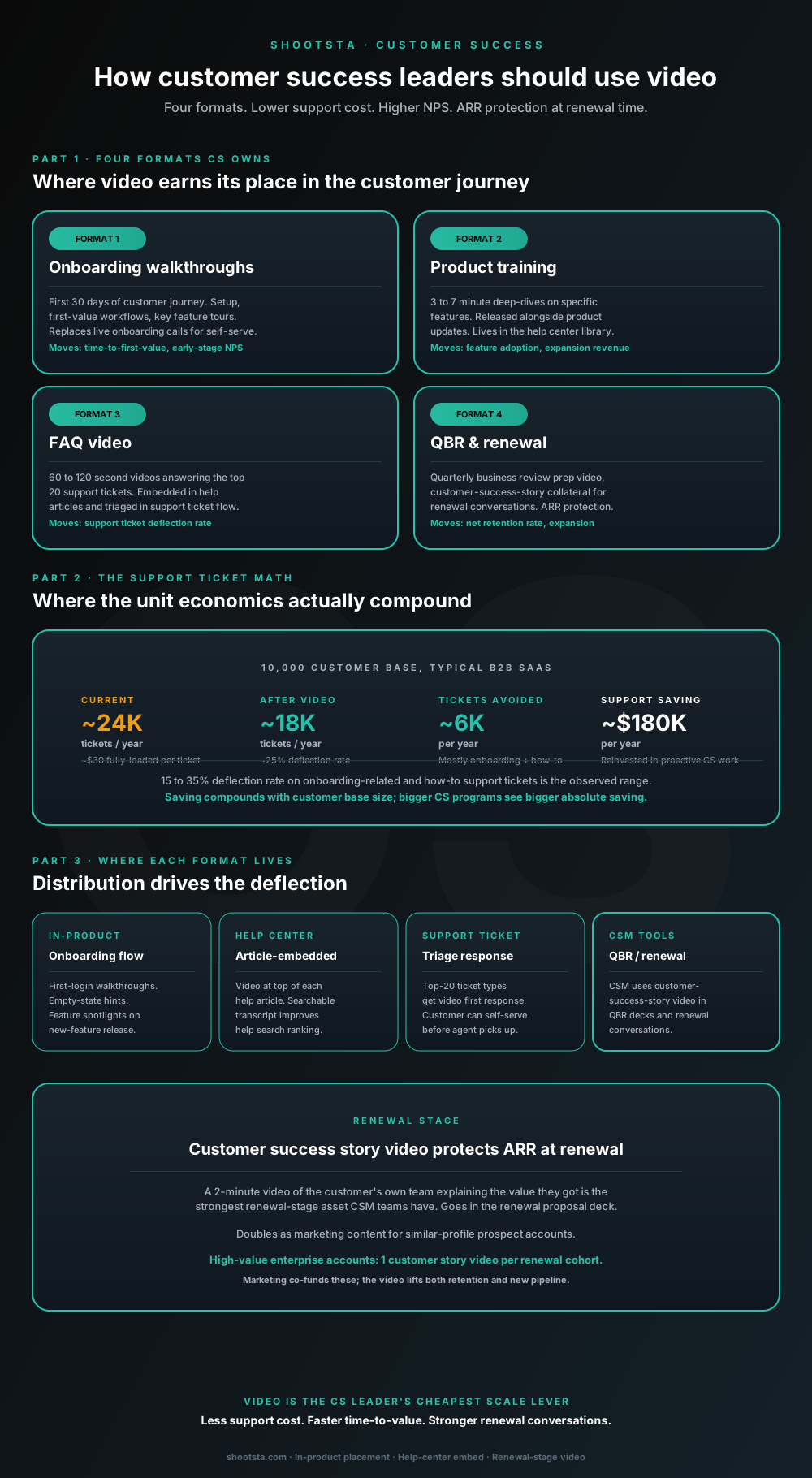
Customer success leaders are usually under-resourced for both reactive support volume and proactive retention work. Video is the cheapest lever to fix both - 15 to 35% deflection on onboarding and how-to tickets, faster time-to-value, and renewal-stage customer story video that lifts net retention. Here is the four-format model and where each piece earns its place.
How internal comms leaders should use video
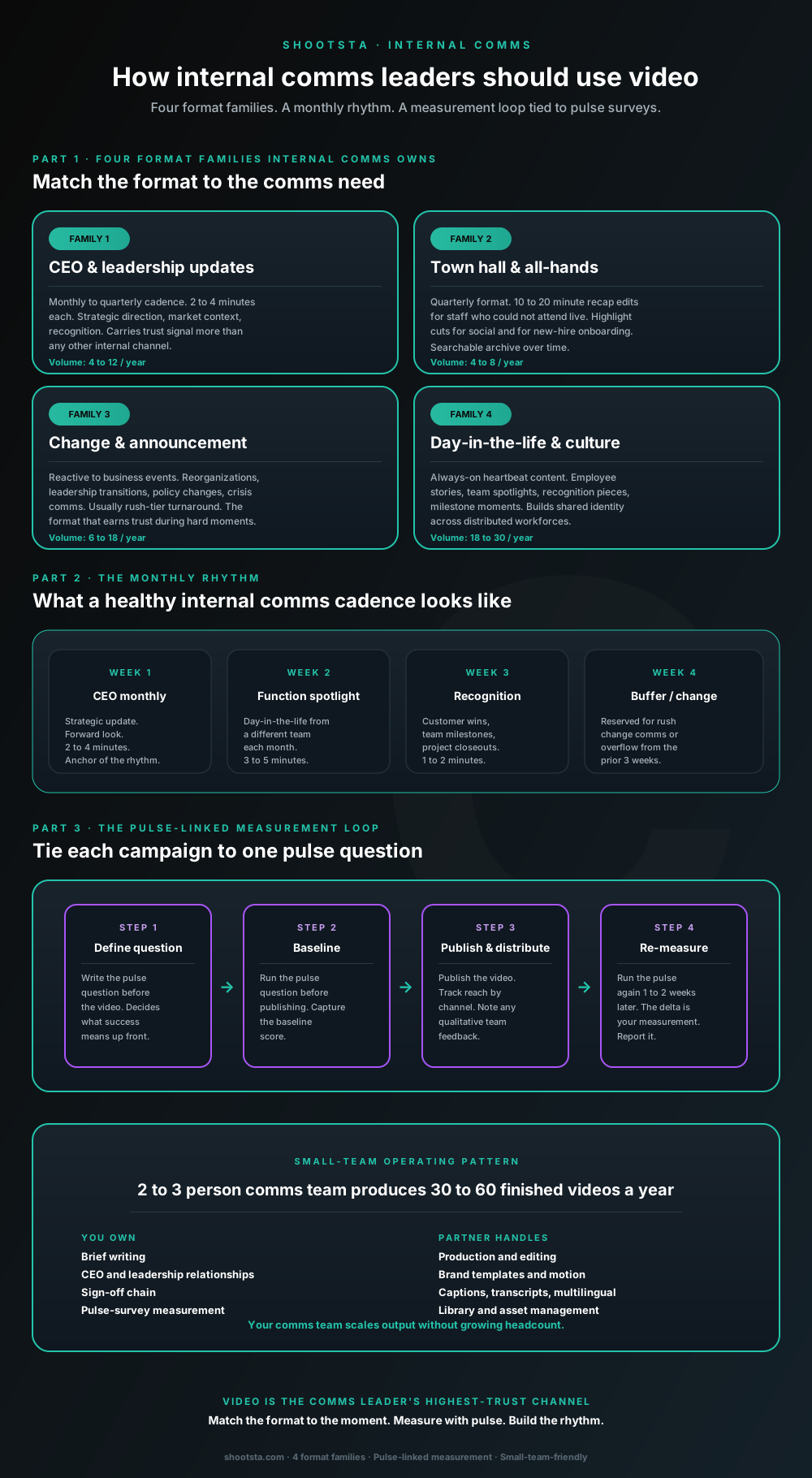
Internal comms leaders are usually under-resourced for the volume of video the business wants. The fix is not more headcount; it is structuring the program around four format families, a monthly rhythm, and a pulse-survey-linked measurement loop. Here is the operating pattern that lets a small comms team produce 30 to 60 finished videos a year.