
How sales leaders should use video at scale
shootsta.
How sales leaders should use video at scale
By Shootsta · Published June 2, 2026 · Updated October 2026
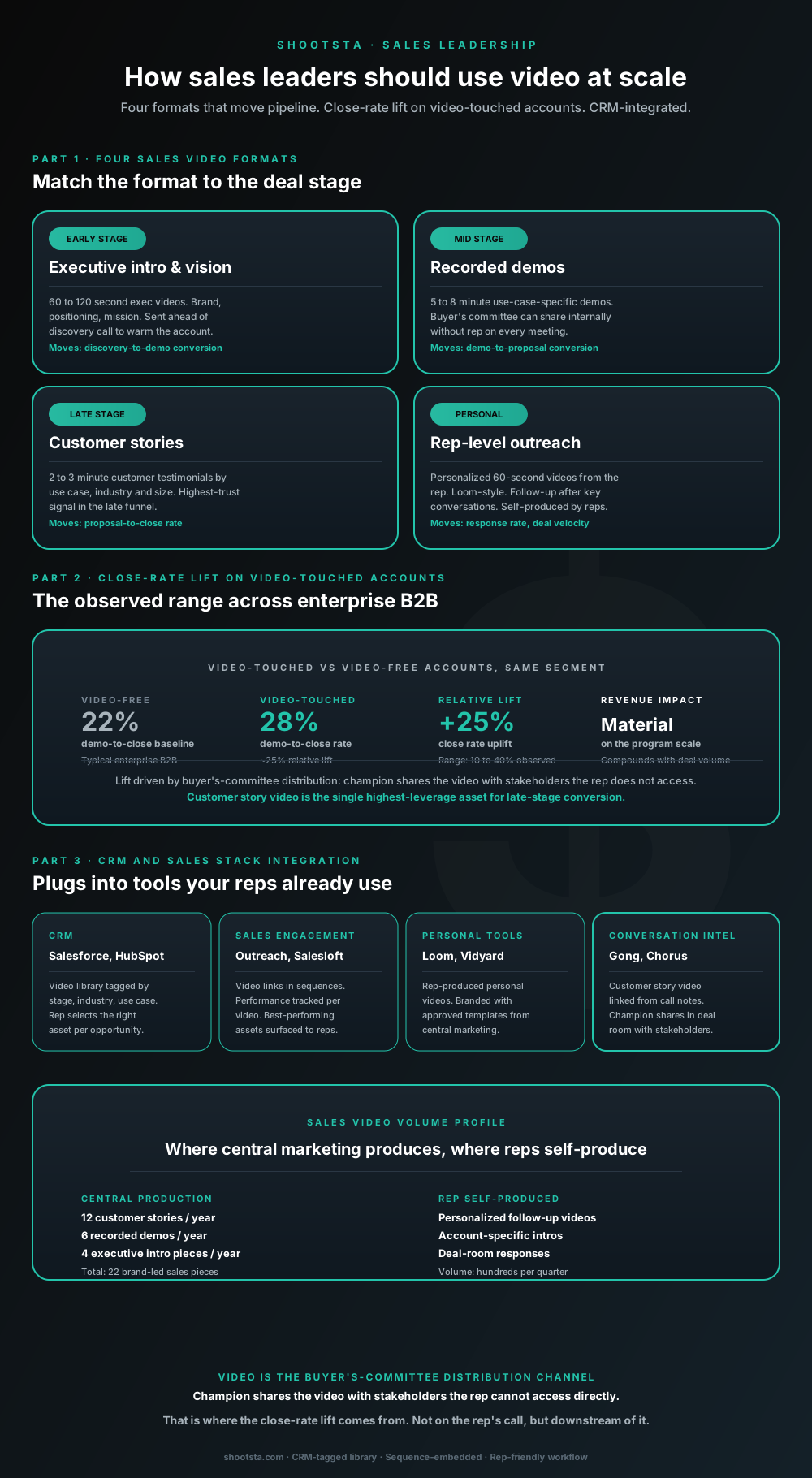
Sales leaders mostly think about video as personalized rep outreach (Loom, Vidyard) or as marketing-produced customer stories. Both are useful. The bigger opportunity is the buyer's-committee distribution layer: assets the champion shares internally with stakeholders the rep does not access directly. That is where the close-rate lift compounds.
Why sales leaders usually underestimate the video opportunity
If you lead a sales team, you probably think of video in two buckets. The first is one-to-one rep outreach, such as Loom-style follow-ups and Vidyard sequences, which sales usually pays for. The second is customer stories made by marketing, which marketing owns and sales keeps asking for more of. Both are real and useful.
What gets missed is the buyer's-committee distribution layer. The biggest gain from sales video comes from the assets your champion can share inside their company with stakeholders your rep never meets. That matters more than anything a rep records or marketing makes on its own. The video travels through the buying organization to places the rep cannot reach, and that is where the close-rate lift on video-touched accounts comes from.
The four sales video formats that move pipeline
Early stage: executive intro and vision videos
This is a 60 to 120 second video from an executive, who might be the CEO, founder, CRO or head of product depending on the segment. It covers the brand, the positioning and why the company exists. You send it ahead of the discovery call to warm up the account. It lifts discovery-to-demo conversion because the prospect arrives already knowing whether your approach interests them.
Mid stage: recorded demos
These are 5 to 8 minute recorded demos, each built around one use case. The champion can share the demo with stakeholders the rep cannot meet, such as procurement, IT security, legal and the people who will use the product every day. That removes the bottleneck where the rep only gets one or two meetings inside the buying committee, and it lifts demo-to-proposal conversion.
Late stage: customer story videos
These are 2 to 3 minute customer testimonial videos, sorted by use case, industry and customer size. They carry the most trust late in the funnel because another customer like the prospect explains the value they got. A good story answers the objections that come up at procurement time, and it lifts proposal-to-close rate.
Personal layer: rep-level outreach
These are 60-second videos from the rep in the Loom or Vidyard style, made for one account. Reps use them for follow-ups after key conversations, intros to a specific account, and deal-room answers to questions raised in committee. Reps record them using brand-approved templates from central marketing. They lift response rate and deal speed, but they do not move close rate on their own; the brand-produced layer does that.
How to estimate the close-rate lift on video-touched accounts
In multi-stakeholder B2B sales, video-touched accounts tend to close at higher rates than video-free accounts in the same segment. The size of the lift varies by segment and deal type, so treat any figure as a planning assumption until you have measured it in your own CRM.
Start with your video-free baseline. Pull the demo-to-close rate for opportunities that reached demo without any video in the last year. That is the number every comparison runs against.
Then set a planning lift for video-touched deals. Pick a modest relative lift for the plan, and check it against the first two quarters of real data before you scale the program.
The lift grows with pipeline volume. As a worked example, say you run $50M of annual pipeline at a 22% close rate, which gives $11M of revenue. If half that pipeline gets a 25% relative lift, you add roughly $700K. Run the same sum on a larger pipeline and the added revenue grows in step, so compare it with what your sales video program costs to see the payback period.
Interactive calculator
What could a sales video program produce in incremental revenue?
Set annual pipeline value, baseline close rate, and the share of deals that would be touched by sales video. The calculator returns incremental revenue from the observed 25% close-rate lift on video-touched accounts.
Baseline revenue
$11.0M
22% close on $50.0M pipeline
Incremental revenue
$1.4M
from 25% lift on 50% of pipeline
Net annual value
$1.2M
after $$150K video program cost
Where the lift actually comes from
The 25% close-rate lift is driven by buyer's-committee distribution. Champion gets a customer story video or a recorded demo, shares it internally with stakeholders the rep does not access directly. Those stakeholders pre-qualify the deal before the rep meets them, which shortens the cycle and increases the probability of getting to commercial close. The video does not replace the rep; it extends the rep's reach downstream of the call.
Scope a sales video programAssumptions: 25% relative close-rate lift is the observed midpoint across enterprise B2B (range 10 to 40%). Annual sales video program cost estimated at ~$150K for a subscription producing 22 brand-led sales pieces plus rep self-produced personal video. Numbers are guides; your actual lift depends on segment, deal complexity and stakeholder count.
Why the lift shows up (and where it does not)
The lift comes from buyer's-committee distribution. In an enterprise B2B deal with many stakeholders, the rep meets only a few of them. The rest form opinions based on what the champion shares inside the company. That is usually a deck or a brochure, sometimes a recorded call, and only now and then a customer story video. When a video version exists, the champion shares it and the stakeholders watch it, so the deal moves through the committee faster.
The lift does NOT show up when one person makes the decision, as in small business or transactional sales. There the rep is already talking to the buyer, so committee distribution does not apply. At that end of the market, sales video mostly supports rep outreach, such as one-to-one Loom videos and richer sequences, rather than customer stories passed around a committee.
How sales video integrates with the existing sales stack
CRM (Salesforce, HubSpot, Microsoft Dynamics)
Tag the video library by deal stage, industry, use case and customer size. Reps then pick the right asset for each opportunity from inside the CRM record. View tracking flows back to the opportunity, so the rep can see when the champion has shared the video and with whom. Sales ops can set this up in the CRM's own settings without custom code.
Sales engagement (Outreach, Salesloft, Apollo)
Embed video links in your sequences and track each video's open rate, watch completion and response rate. The assets that perform best get pushed to reps working similar accounts. Sales ops handles the setup, and the engagement platforms already track video links.
Personal video tools (Loom, Vidyard, BombBomb)
Videos that reps record themselves sit alongside the brand-produced library. They use approved templates from central marketing, so a rep's video looks consistent with the rest of the brand. The common personal video tools support brand template overlays without changing how the rep records.
Conversation intelligence (Gong, Chorus, Salesloft Conversations)
Link customer story videos from call notes after key conversations. When a rep talks to a champion about a specific use case, the conversation intelligence tool shows the most relevant customer story video in the call notes view. The champion then gets that video in the call follow-up.
The annual volume profile
For an enterprise sales video program, the central production layer is a moderate volume. A plan like the one below is a sensible starting point.
Make 12 customer story videos a year, covering your top 12 use cases and customer segments. Replace the oldest stories each quarter so the library stays current.
Make 6 recorded demos a year, covering the major use cases and product modules. Refresh them as the product changes, which usually means 1 to 2 per quarter.
Make 4 executive intro videos a year, and refresh them when leadership or strategic positioning changes.
On top of that, reps record their own personal videos. The volume depends on team size and adoption, and can reach hundreds per quarter at scale. Each extra piece costs very little because it only takes rep time.
That adds up to about 22 brand-led sales pieces a year in the central layer. It fits inside a single enterprise subscription tier without straining capacity.
What changes for sales operations
Sales ops usually owns the integration layer. That covers which CRM fields tag video assets, which sequences include video links, and how view tracking shows up in the opportunity record. You do not need new tools for this. The work is setting up your existing CRM and sales engagement tools so reps can find the video library.
The political question that often comes up is which team owns the video budget. The setup that works best has marketing own the production cost, because the assets double as marketing material, with costs charged back to sales based on usage. When sales owns the budget instead, it tends to overspend on personal video tools and underspend on the brand-led layer that moves close rate.
What changes for the rep
Your reps send more video and write less text in follow-ups. Their view shifts from "video is extra work" to "video is the quickest way to get the same point across". Reps who adopt the workflow tend to see better response rates and shorter call cycles, because the prospect arrives at the call already partway through the buying conversation.
The training is light, and a rep can usually learn a personal video tool like Loom or Vidyard within a week. Consistency is the harder part. Reps who send a one-to-one video early in their outreach to a new account tend to do better, but the habit fades after a few weeks unless sales leadership keeps reinforcing it.
Frequently asked questions
Does the close-rate lift actually hold up in our segment?
It depends on your segment. In multi-stakeholder enterprise B2B deals, the lift is the most reliable. In single-stakeholder transactional sales there is little lift, because the buyer's-committee effect does not apply. Mid-market deals with 3 to 5 stakeholders sit in between, so run a pilot in your own segment before you roll it out more widely.
How long does it take to see the close-rate impact?
Expect 2 to 4 quarters from the time the library is in market. You can see the lift on single deals as they move through stages, but the signal across the whole pipeline takes a full sales cycle to appear. Plan to judge the impact late in the rollout year and to see full payback in year 2.
What is the right way to measure?
Tag opportunities in the CRM as video-touched, meaning the champion shared the customer story or demo with the committee, or video-free. Compare close rate, average deal size, sales cycle length and stakeholder count between the two groups. That comparison is the simplest measure you can defend, and the lift shows up clearly in it even when you cannot credit specific videos. We covered the broader measurement framework in how to measure enterprise video success.
How do we handle reps who refuse to do personal video?
Some reps are uncomfortable on camera, and forcing personal video on them usually backfires. A better approach is to encourage it for reps who want to use it and give them brand-approved templates that make it easy to start. Rely on the central brand-produced layer for the close-rate lift. Personal video makes the reps who use it more productive, but the lift comes from the brand layer.
Who pays for the customer story video production?
Usually marketing pays, or marketing and sales share the budget. The assets serve new business for marketing, renewal and retention for customer success, and sales enablement for sales. That value across teams justifies marketing funding even when sales uses them most.
What about AI-generated personalized video?
AI tools are useful for reps inside their workflow, such as Loom AI features, Vidyard AI tools and AI-assisted scripting. They cannot yet stand in for a real customer story video, because the trust in a testimonial comes from the real customer telling it. We covered the broader AI framing in how AI fits inside enterprise video workflows.
Where to go next
For the CMO-level view of how sales video fits into a marketing-led video program, read how a CMO should think about enterprise video. For the broader operating model alongside an existing sales team, read how a video partner extends your in-house team. For the customer story production workflow at scale, read how enterprise teams actually use video.
To scope a sales video program for your pipeline volume, book a free consultation.
Take this article with you
Read the latest at shootsta.com/blog/how-sales-leaders-should-use-video-at-scale
You might also like
How to Brief an Animation Project
How to Brief an Animation Project
An animation brief is the document you send to your production partner before work starts. Get it right and you cut revision cycles in half. Get it wrong and you discover mid-production that everyone disagrees on what the video is for. This is what a complete brief looks like.
Animation for change management comms
Animation for change management comms
Animation handles change management communications better than live video for three reasons: no on-camera executives required during sensitive periods, scene-level updates when plans shift, and a single production that works across global teams with voiceover-only language swaps.
How L&D leaders replace classroom with video
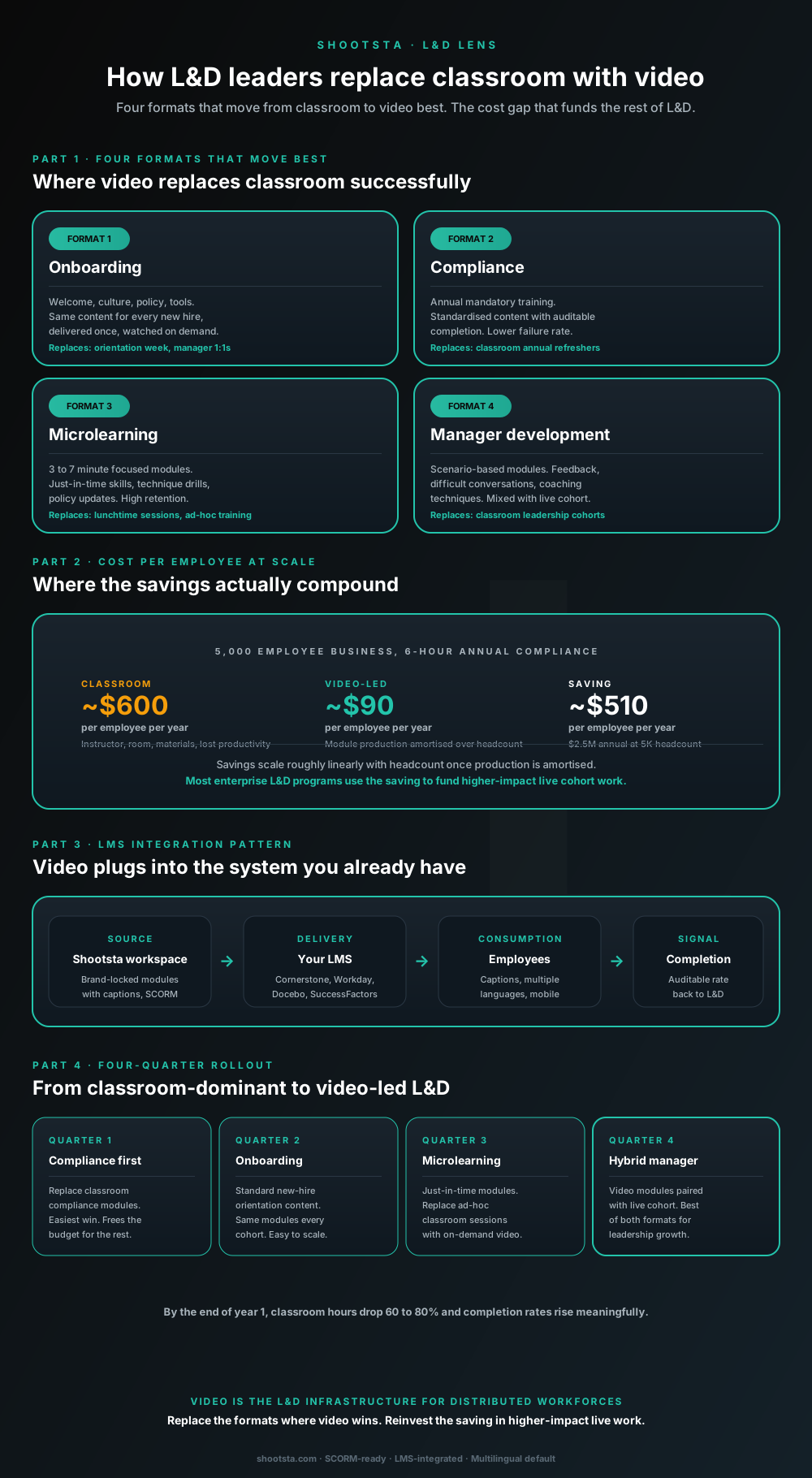
L&D leaders running classroom-heavy training programs typically have the largest single opportunity in the business to free budget through format change. Four training formats move from classroom to video cleanly; the savings fund higher-impact live work. Here is the rollout that compounds learner adoption over four quarters.
How customer success leaders should use video
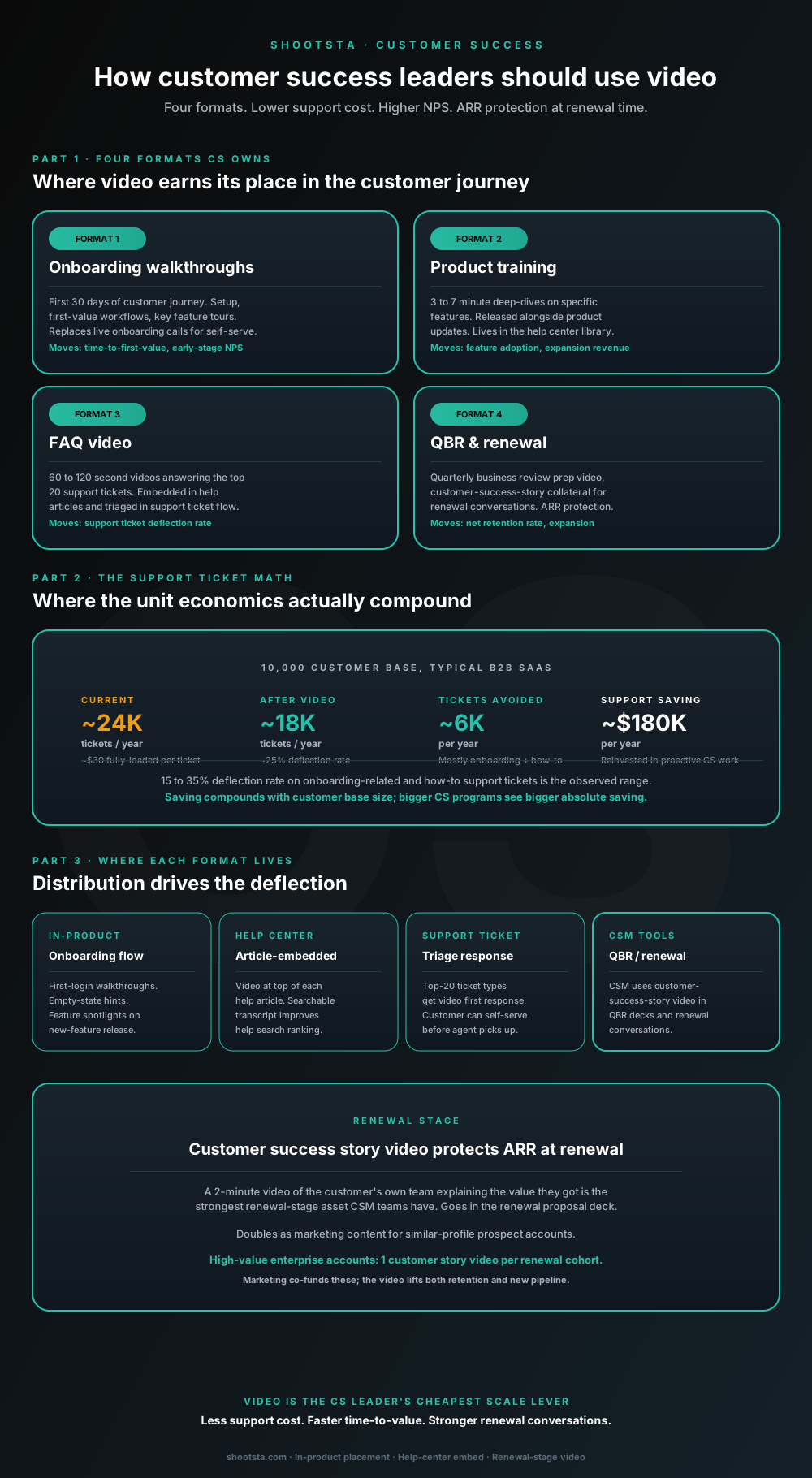
Customer success leaders are usually under-resourced for both reactive support volume and proactive retention work. Video is the cheapest lever to fix both - 15 to 35% deflection on onboarding and how-to tickets, faster time-to-value, and renewal-stage customer story video that lifts net retention. Here is the four-format model and where each piece earns its place.
How internal comms leaders should use video
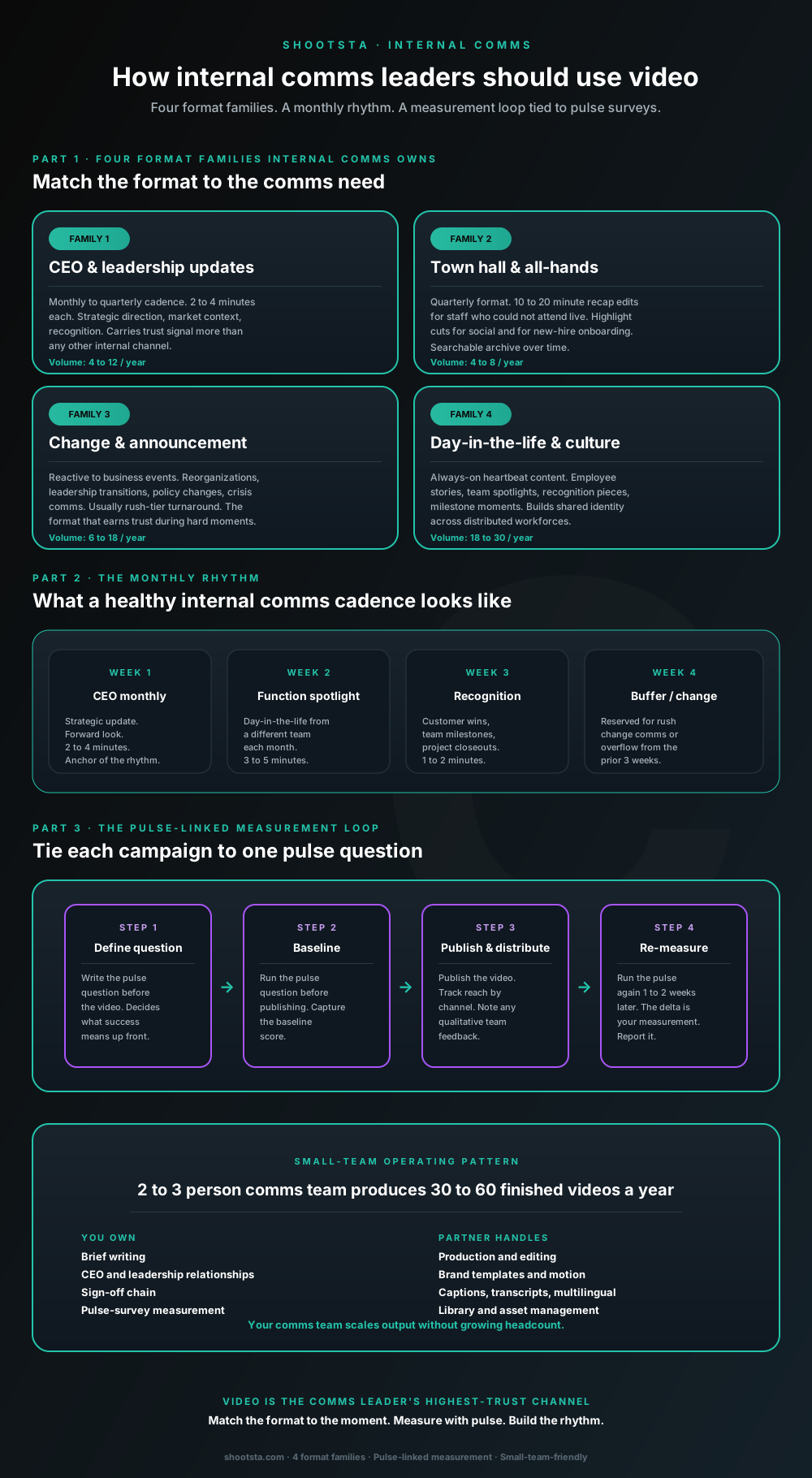
Internal comms leaders are usually under-resourced for the volume of video the business wants. The fix is not more headcount; it is structuring the program around four format families, a monthly rhythm, and a pulse-survey-linked measurement loop. Here is the operating pattern that lets a small comms team produce 30 to 60 finished videos a year.
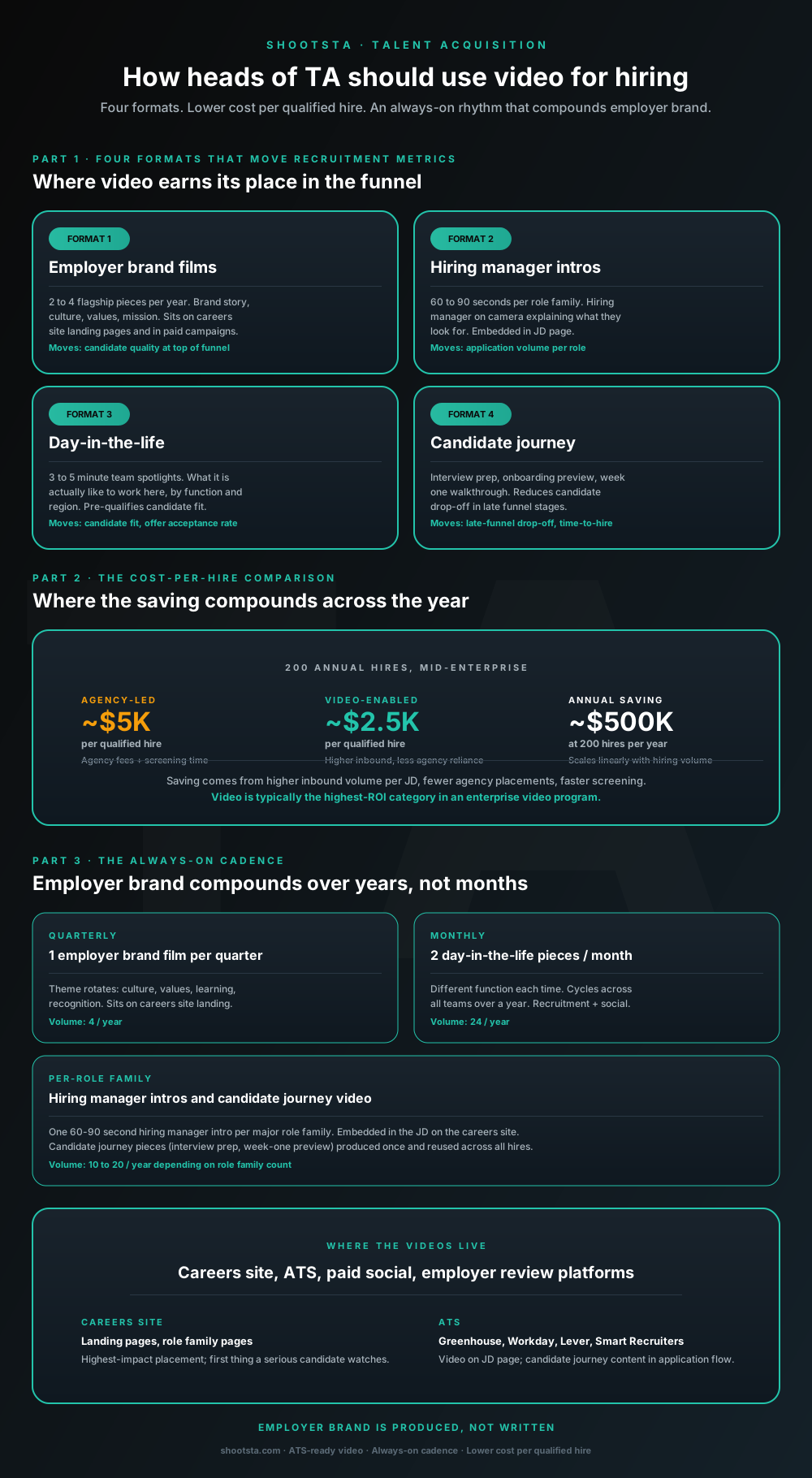
How heads of TA should use video for hiring
Heads of talent acquisition running agency-heavy hiring funnels usually have the highest-ROI video opportunity in the business. Four formats move recruitment metrics most, the cost-per-qualified-hire drops 35 to 60 percent at scale, and the rhythm compounds employer brand over years rather than months.