
How internal comms leaders should use video
shootsta.
How internal comms leaders should use video
By Shootsta · Published May 30, 2026 · Updated October 2026
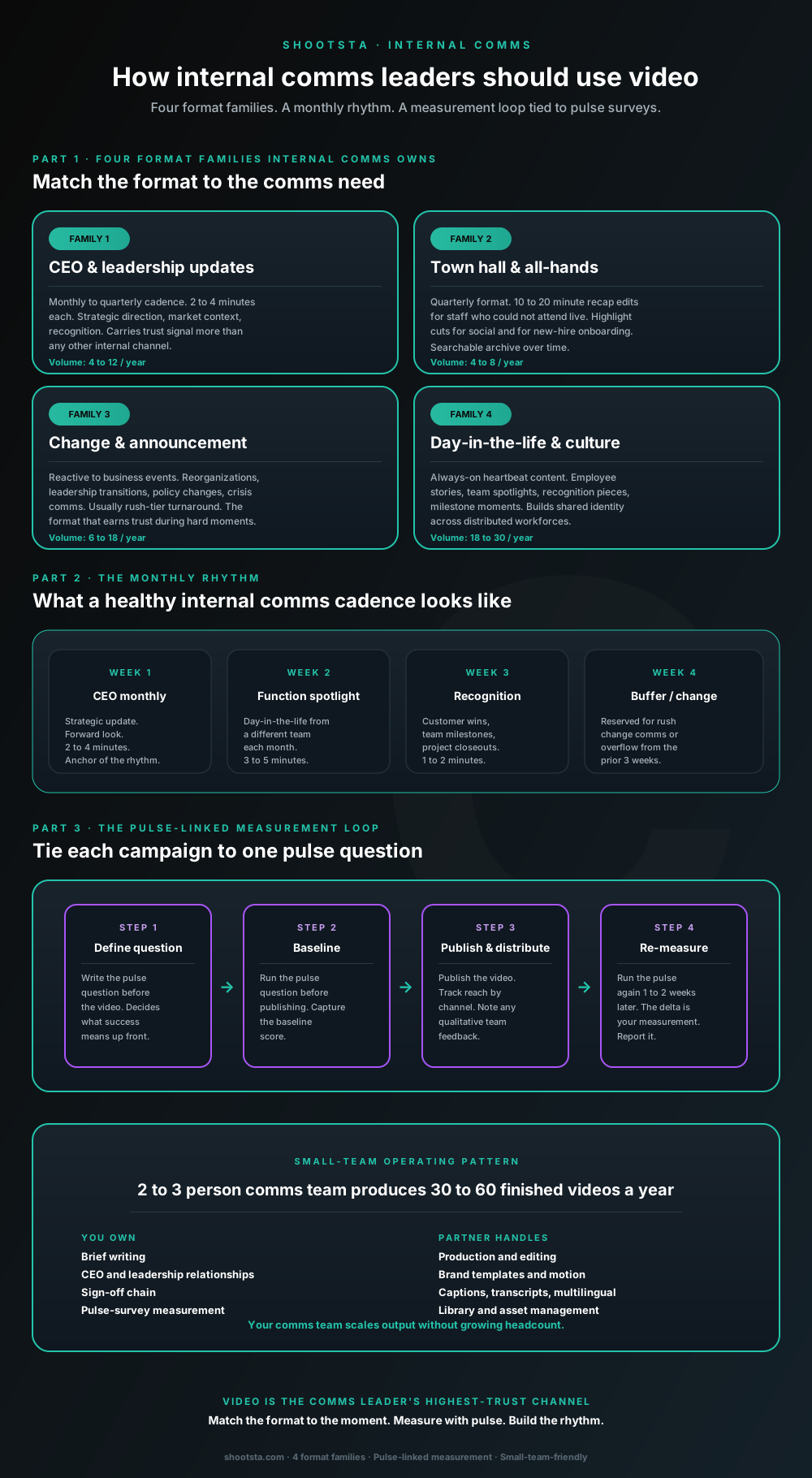
Internal comms leaders are usually under-resourced for the volume of video the business wants. The fix is not more headcount; it is structuring the program around four format families, a monthly rhythm, and a pulse-survey-linked measurement loop. Here is the operating pattern that lets a small comms team produce 30 to 60 finished videos a year.
Why internal comms is the most under-resourced video function
An enterprise internal comms team is often 2 to 5 people serving thousands of employees. They own CEO updates, town halls, change communications and culture content. They have the highest-trust channel in the business (video from leadership) and the smallest budget to produce it well. The gap between what the business wants and what the comms team can produce is structural.
The fix is structural too, and it does not start with headcount. It comes down to four format families with a clear cadence, a measurement loop tied to pulse surveys, and an operating model that lets a small comms team produce 30 to 60 finished videos a year without burning out.
The four format families internal comms owns
Most internal video content fits into four families. Each has its own cadence, length and trust signal.
Family 1: CEO and leadership updates
These run monthly to quarterly and last 2 to 4 minutes each. The content is strategic direction, market context and recognition. The format carries more trust than any other internal channel, because the audience sees and hears leadership directly. Typical volume is 4 to 12 a year, anchored on the CEO's natural rhythm plus 1 to 2 senior leadership updates per quarter.
Family 2: Town hall and all-hands
This is a quarterly format. The live town hall is the event, and the video deliverables are the 10 to 20 minute recap edit for staff who could not attend live, plus 60 to 90 second highlight cuts for social and new-hire onboarding. Over time the recap archive becomes a searchable resource for the rest of the business. Typical volume is 4 to 8 deliverables a year.
Family 3: Change and announcement
This family reacts to business events: reorganizations, leadership transitions, policy changes and crisis communications. It usually needs a rush-tier turnaround. It is the format that earns trust during hard moments, because the alternative (an email-only announcement) signals that leadership is not willing to take questions on camera. Typical volume is 6 to 18 a year, and it varies a lot from year to year depending on the state of the business.
Family 4: Day-in-the-life and culture
This is the always-on heartbeat of the program: employee stories, team spotlights, recognition pieces and milestone moments. It builds shared identity across a distributed workforce. Typical volume is 18 to 30 a year for an enterprise with a healthy culture program. This family does the most for employee NPS over time, yet it tends to be the first thing cut when comms is under-resourced. Putting it back near the top of the list is usually the best move a comms leader can make.
The monthly rhythm that builds trust
The most-effective internal comms cadence we see in enterprise programs is week-by-week within the month rather than fortnightly or quarterly bursts. The rhythm becomes predictable, which is what builds trust. Employees know that something will land each week and the channel earns attention.
Week 1: CEO monthly
The CEO gives a strategic update plus a forward look, in 2 to 4 minutes. This is the anchor of the rhythm. The point is consistency more than scale: a 3-minute CEO update every month outperforms a 15-minute one every quarter on every measurement we have seen.
Week 2: Function spotlight
Week 2 is a day-in-the-life piece from a different team each month, running 3 to 5 minutes. It rotates across functions on a 12-month calendar so every team gets a turn within the year. If it is cleared for external use, it doubles as recruitment content.
Week 3: Recognition
Week 3 covers customer wins, team milestones and project closeouts in 1 to 2 minutes. It is often the easiest format to produce, because the SME (the team being recognized) wants to be on camera. These pieces also sit well in the always-on culture layer.
Week 4: Buffer and change
Week 4 is reserved for rush change communications, crisis comms, or overflow from the prior three weeks. Not every quarter uses all four weeks; the buffer is for the quarters that do. Without the buffer, change comms competes with the rhythm and the rhythm breaks.
The pulse-survey-linked measurement loop
Internal comms video is the easiest enterprise format to measure honestly because the audience (employees) already takes pulse surveys. The trick is structuring the loop so each campaign has a specific measurement.
Step 1: Define the pulse question before the video
"I understand the rationale for the recent reorganization" is a pulse question. "I feel informed about company direction" is a pulse question. Decide the question before writing the brief. The video is then designed to move that specific question.
Step 2: Baseline before publishing
Run the pulse question in your normal cadence the week before the video publishes. Capture the baseline score. A standard enterprise pulse tool allows this without a custom survey deployment.
Step 3: Publish and distribute with reach tracking
Publish the video. Track reach by channel (intranet views, email-embedded plays, Teams/Slack views, internal LMS plays). Note any qualitative feedback from the team that surfaces during the week.
Step 4: Re-measure 1 to 2 weeks later
Run the pulse question again. The delta is your measurement. Report it as part of the next monthly comms review. Over a year of campaigns, the pattern of pulse movement is your operating evidence that the program is working. We covered the broader measurement framework in how to measure enterprise video success.
Interactive pulse estimator
What pulse lift could your internal comms video program produce?
Set headcount, your current pulse score on the relevant question, and planned annual video volume. The estimator returns implied reach and a realistic pulse-score lift band based on enterprise benchmarks.
Average reach per video
1,375
~55% of headcount
Annual viewer impressions
41,250
across 30 videos
Projected pulse lift
+3 to +10
62 -> 65-72
How to read this
At 30 videos a year reaching roughly 1,375 employees per video, most enterprise internal comms programs see a +3 to +10 point lift on the primary pulse question covered. The honest read: lift only materialises if you tie a single pulse question to each campaign and re-measure. Without the measurement loop, the program ships content but does not produce defensible attribution.
Talk through your comms cadenceReach estimate uses ~55% of headcount as the typical average per-video reach when distributed natively in primary internal channels. Pulse lift bands come from observed enterprise customer movement on specific pulse questions tied to video campaigns. Numbers are guides.
The small-team operating pattern
A 2 to 3 person comms team can produce 30 to 60 finished videos a year if the work splits cleanly between what the comms team owns and what a production partner handles.
What the comms team owns
The comms team owns the brief writing, the CEO and leadership relationships, and the coordination of the sign-off chain. It also owns pulse-survey measurement and internal stakeholder management. This is the judgment work that needs institutional knowledge and political sensitivity.
What the partner handles
The partner handles production and editing, along with brand template enforcement and motion graphics. It also covers captions, transcripts and multilingual versions, plus library and asset management. This is the volume work that needs editor capacity and brand-trained execution.
This split is what lets a small comms team scale output without growing headcount. The team's hours go into the strategic and relationship work; the production layer absorbs the editor hours. We covered the working pattern in how a video partner extends your in-house team.
What changes for the CEO when video becomes the comms default
A CEO tends to say yes to monthly video updates once they understand the time commitment is bounded. The honest framing is that a monthly CEO update averages 30 to 45 minutes of total CEO time including prep, captured in a single shoot day per quarter. That is 2 to 3 hours per quarter of CEO time across 3 to 4 finished videos.
The framing that does not work is "the CEO needs to be on camera constantly". The framing that does work is "the CEO commits to 2 to 3 hours of video per quarter, scheduled as one shoot day, captured efficiently". A CEO will usually agree to that once the time bound is explicit and the comms team books the days well in advance.
How to handle rush change communications
Rush change comms is the hardest format for an under-resourced comms team. A senior leader needs to make a video statement on a sensitive topic in 24 hours, and the comms team is already running the standard rhythm.
The pattern that works has three parts. Pre-loaded brand templates let the production partner absorb a rush brief without starting brand setup from scratch. SME phone-capture training lets the senior leader record without waiting for a crew. Pre-agreed compliance review steps in the workflow let legal review run in parallel rather than at the end. We covered the rush tier in how rush video production actually works.
Frequently asked questions
How do we handle CEO video for a CEO who is uncomfortable on camera?
There are three pragmatic moves. First, format the video so the CEO talks for 90 seconds and the rest is supporting context narrated by comms (still a CEO update, just lighter on solo screen time). Second, keep recording days quarterly so the CEO does not feel they are always on camera. Third, invest in a comfortable recording environment: good lighting, a good camera setup, and a comms person they trust off-camera. Discomfort on camera usually fades by the third or fourth recording.
What is the right length for internal video?
Internal video should be shorter than instinct suggests. CEO updates run 2 to 4 minutes and recognition pieces 60 to 90 seconds. Town hall recaps can run 10 to 20 minutes, because that audience self-selects into a longer format. Internal video competes with email and Slack for attention rather than with TV.
How do we handle multi-region internal comms with different languages?
Put subtitles in each language on every regular update, and use voiceover replacement for major regional audiences on flagship pieces. A subscription production model handles routine language versions at scale. We covered the multi-region operating model in how to scale video across global offices.
Where should internal videos live?
Pick one primary channel the business already uses heavily, such as the intranet, Teams, Slack or the internal LMS. Distribution to other channels happens afterwards. The biggest distribution mistake we see is publishing to five channels equally; reach drops because nobody knows where to find the latest piece.
How do we measure return on internal comms video?
Measure pulse-survey movement on the topics covered, employee NPS movement over the year on "I feel informed about company direction" and similar attributes, and the reduction in time-to-information across the organization on major changes. None of these are revenue metrics, but all of them are the kind of evidence leadership respects.
Will this volume of video fit a 2 to 3 person comms team?
Yes, when a partner handles the production layer. The comms team's time on each video is brief writing (30 to 60 minutes), one shoot day per quarter (consolidated across several pieces), and review and approval (15 to 30 minutes per piece). That adds up to 6 to 10 hours per month of comms team time for the program, which a small team can manage alongside its other responsibilities.
Where to go next
For the working pattern alongside an existing comms team, read how a video partner extends your in-house team. For the measurement framework that maps to the pulse loop above, read how to measure enterprise video success. For the rush model that handles change comms, read how rush video production actually works.
To structure an internal comms cadence for your team, book a free consultation.
Take this article with you
Read the latest at shootsta.com/blog/how-internal-comms-leaders-should-use-video
You might also like
How to Brief an Animation Project
How to Brief an Animation Project
An animation brief is the document you send to your production partner before work starts. Get it right and you cut revision cycles in half. Get it wrong and you discover mid-production that everyone disagrees on what the video is for. This is what a complete brief looks like.
Animation for change management comms
Animation for change management comms
Animation handles change management communications better than live video for three reasons: no on-camera executives required during sensitive periods, scene-level updates when plans shift, and a single production that works across global teams with voiceover-only language swaps.
How sales leaders should use video at scale
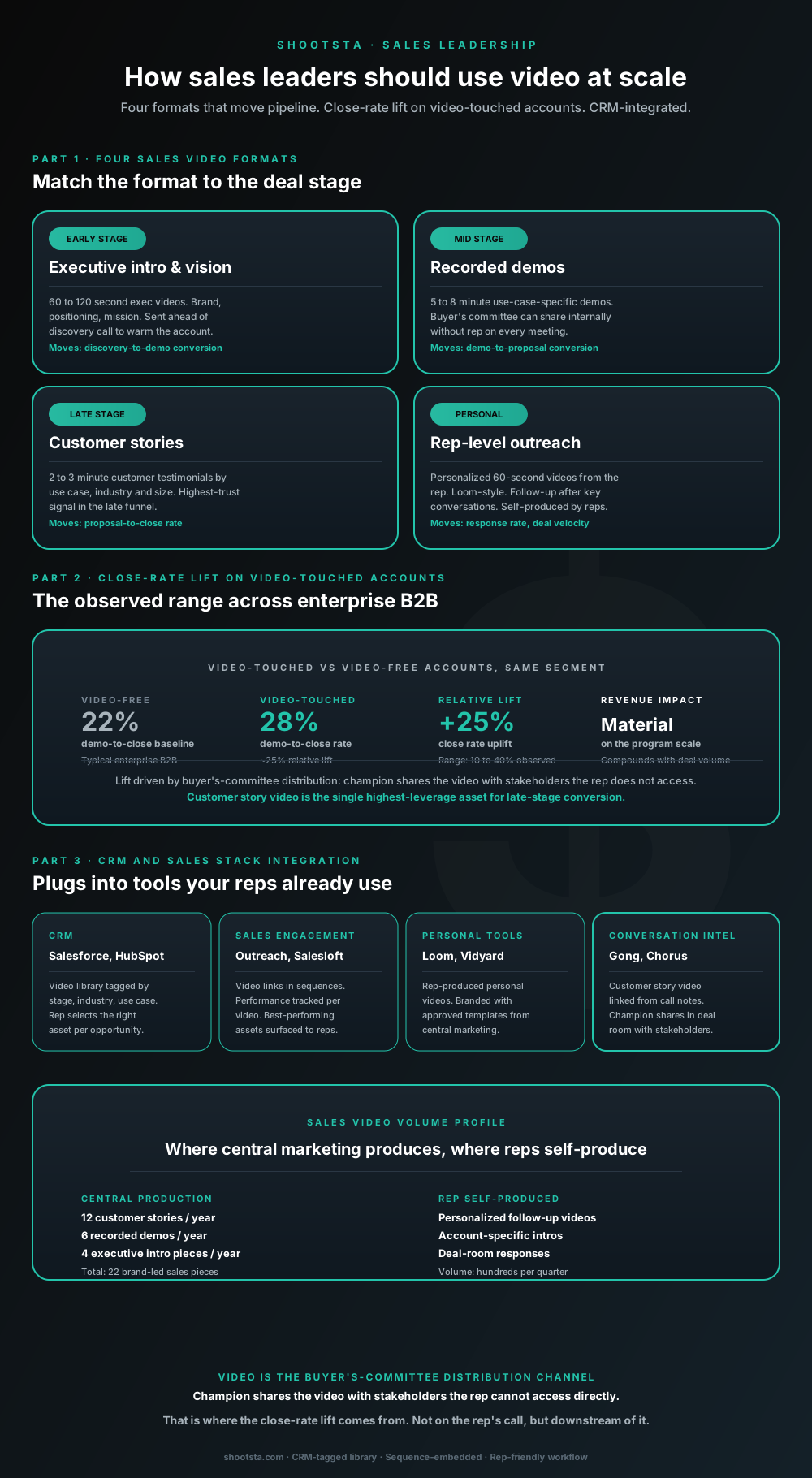
Sales leaders mostly think about video as personalized rep outreach (Loom, Vidyard) or as marketing-produced customer stories. Both are useful. The bigger opportunity is the buyer's-committee distribution layer: assets the champion shares internally with stakeholders the rep does not access directly. That is where the close-rate lift compounds.
How L&D leaders replace classroom with video
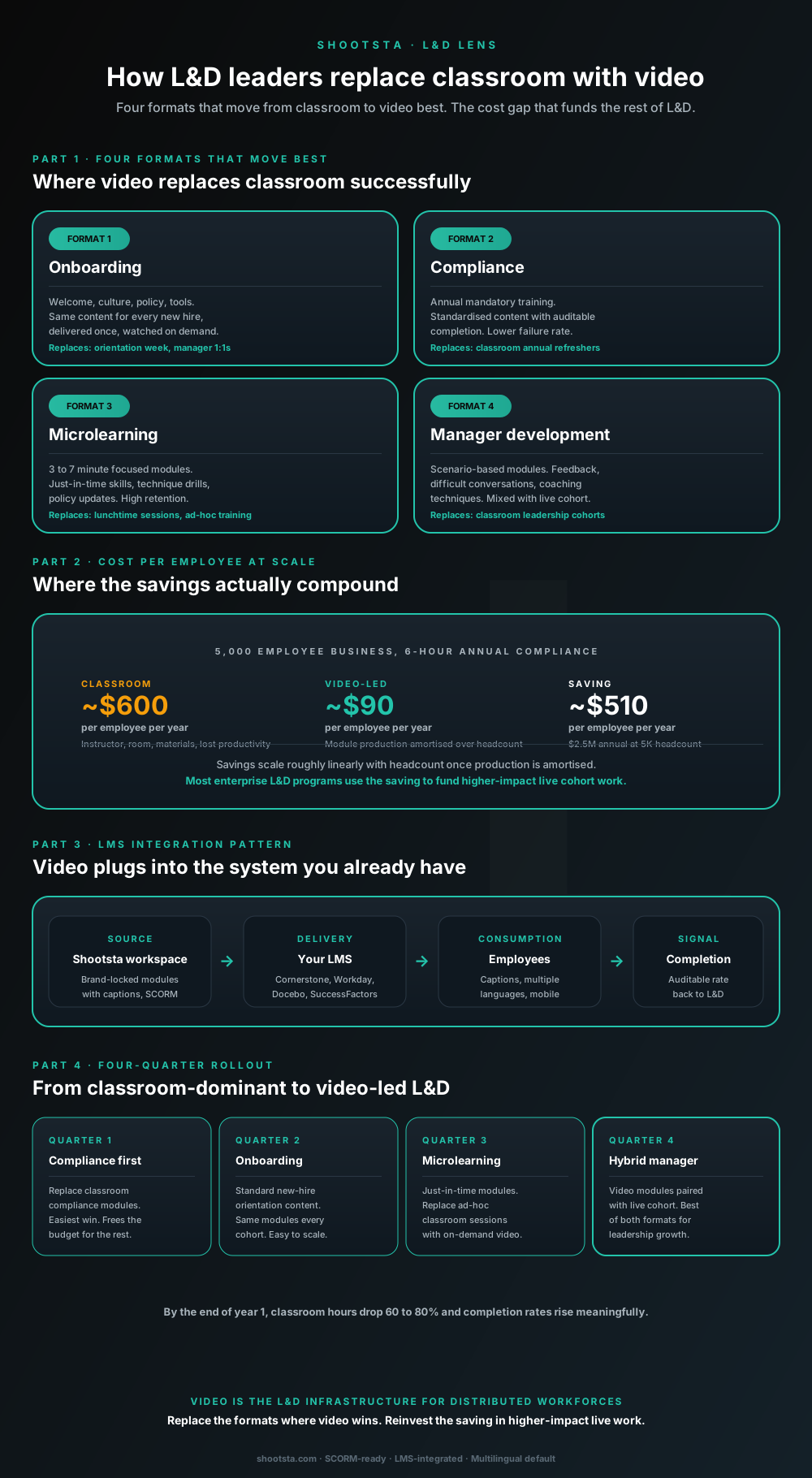
L&D leaders running classroom-heavy training programs typically have the largest single opportunity in the business to free budget through format change. Four training formats move from classroom to video cleanly; the savings fund higher-impact live work. Here is the rollout that compounds learner adoption over four quarters.
How customer success leaders should use video
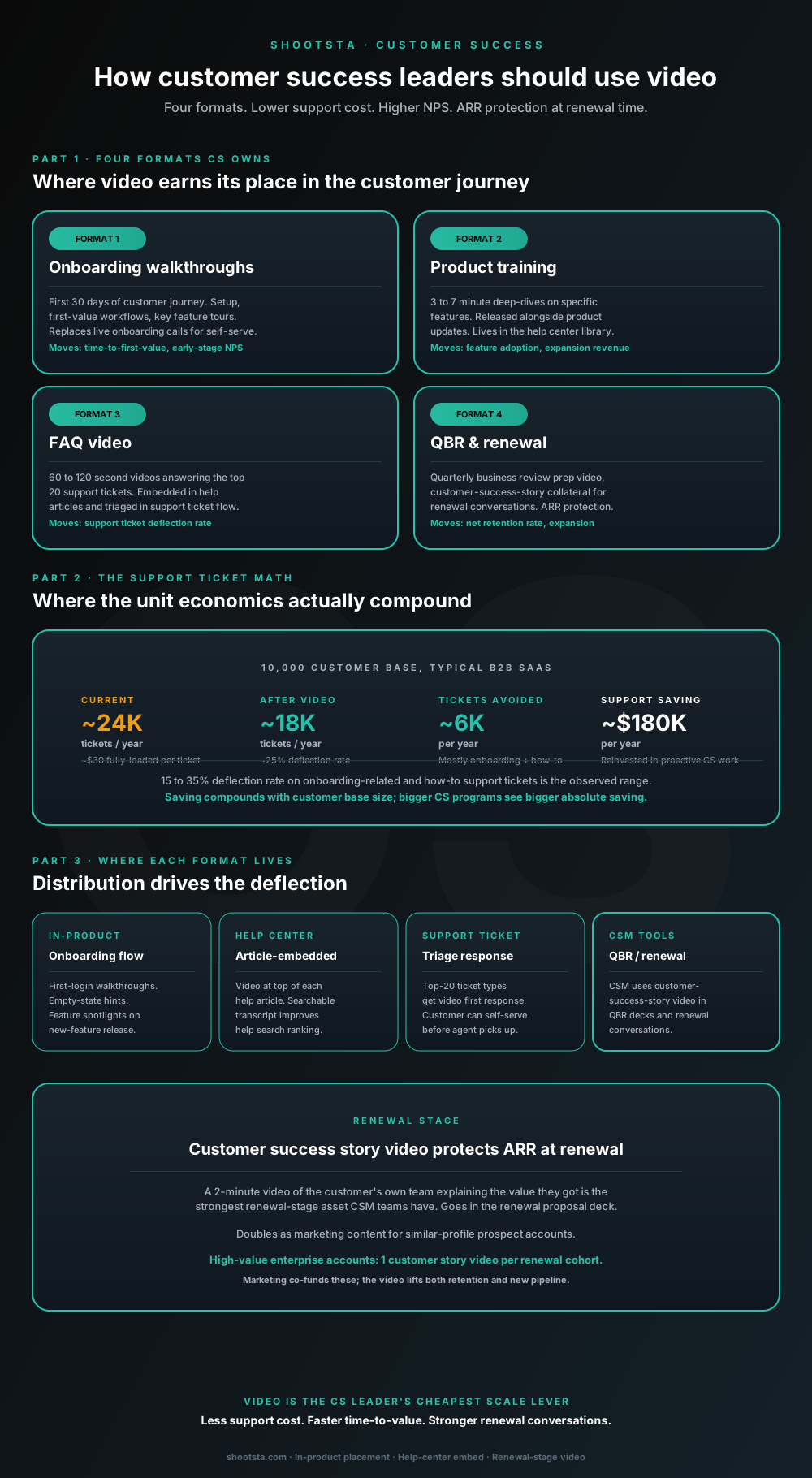
Customer success leaders are usually under-resourced for both reactive support volume and proactive retention work. Video is the cheapest lever to fix both - 15 to 35% deflection on onboarding and how-to tickets, faster time-to-value, and renewal-stage customer story video that lifts net retention. Here is the four-format model and where each piece earns its place.
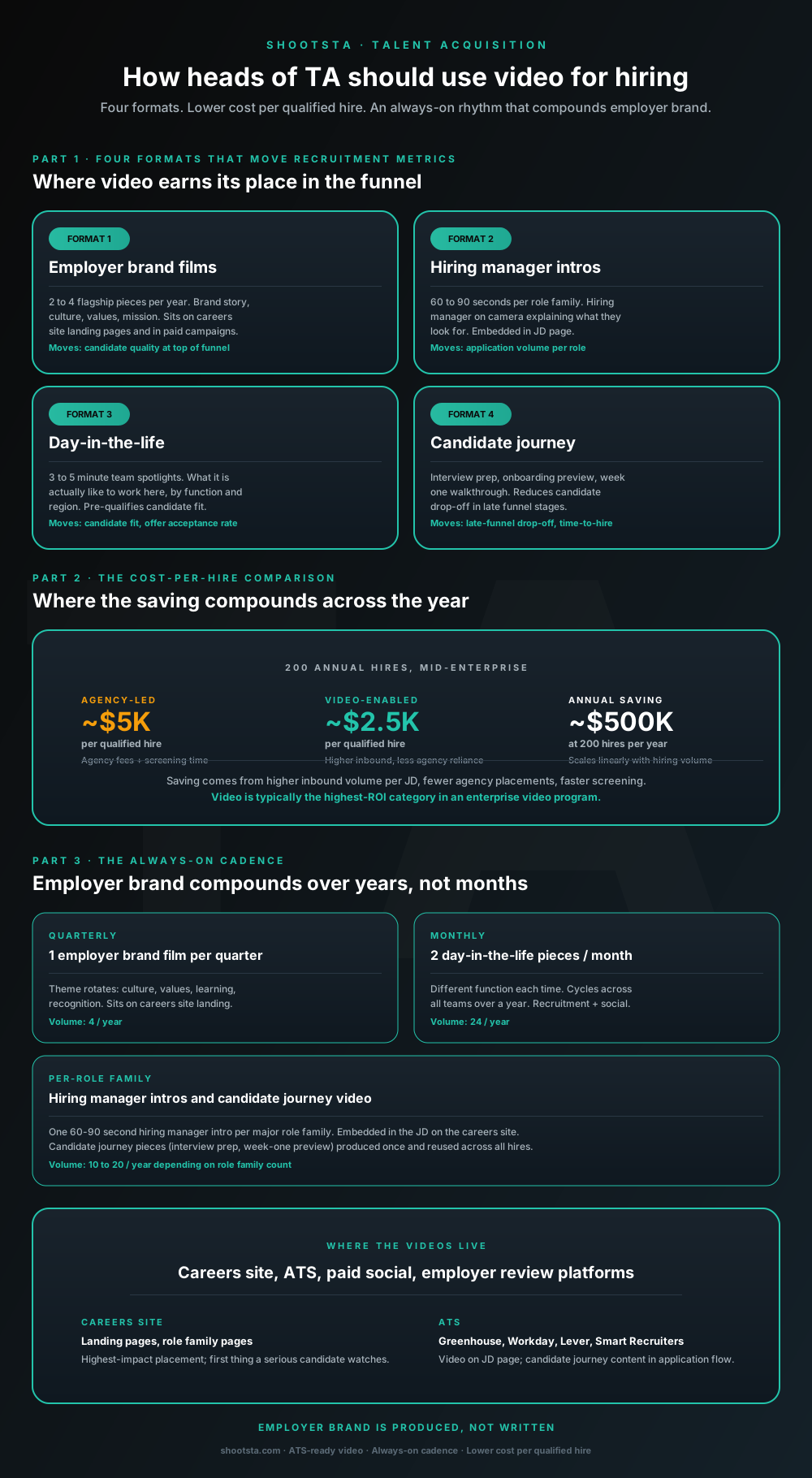
How heads of TA should use video for hiring
Heads of talent acquisition running agency-heavy hiring funnels usually have the highest-ROI video opportunity in the business. Four formats move recruitment metrics most, the cost-per-qualified-hire drops 35 to 60 percent at scale, and the rhythm compounds employer brand over years rather than months.