
How to build a video strategy from scratch
shootsta.
How to build a video strategy from scratch
By Shootsta · Published May 22, 2026 · Updated May 2026
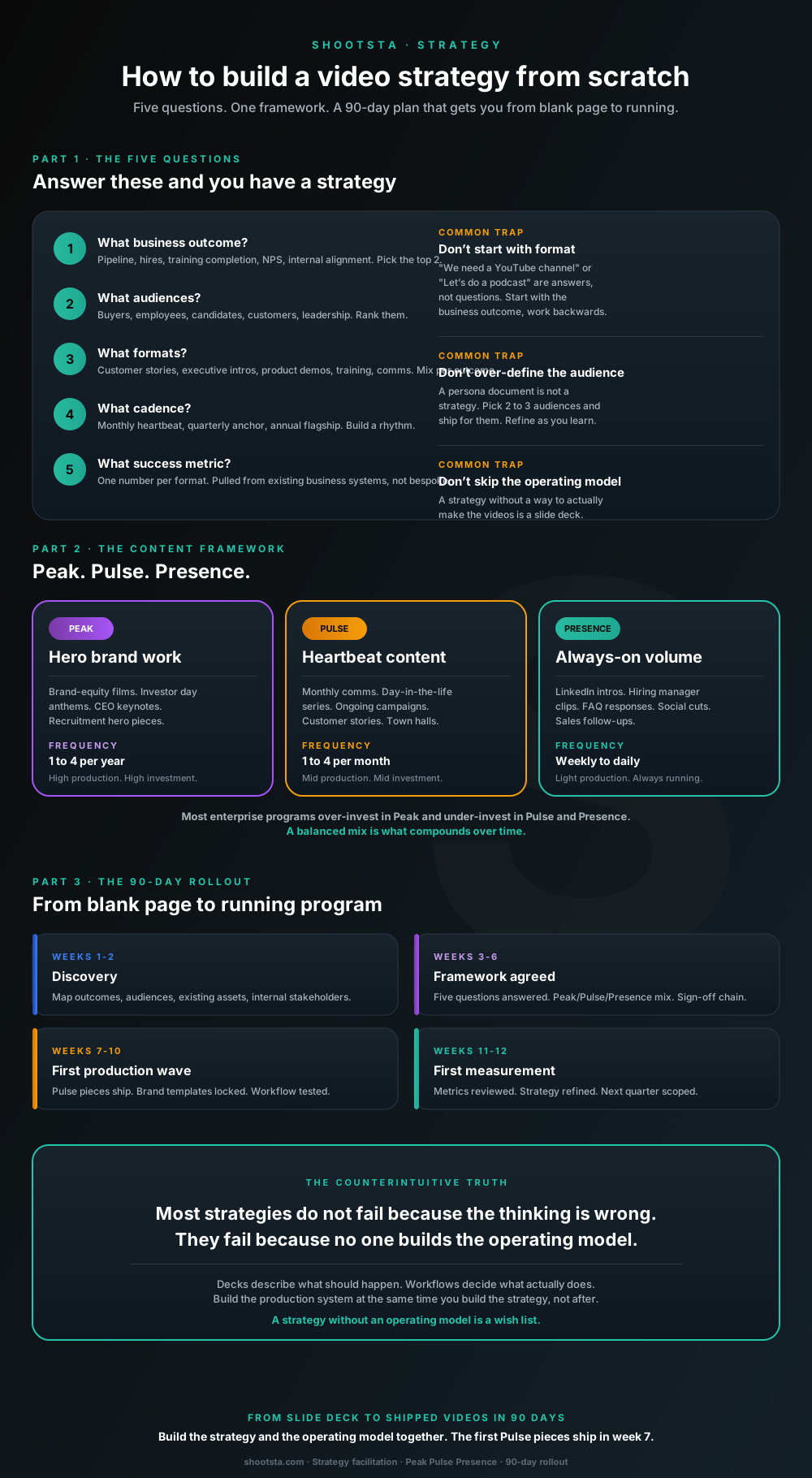
Most enterprise video strategies fail not because the thinking is wrong, but because nobody builds the operating model alongside the slide deck. Here are the five questions every strategy has to answer, the content framework that holds the rhythm, and the 90-day plan that gets you from blank page to shipped videos.
Why most enterprise video strategies stall
Most enterprise comms and marketing leaders who set out to build a video strategy end up six months later with a thoughtful slide deck and no videos. The strategy describes audiences, formats, themes, KPIs and quarterly themes. What it does not describe is how the videos actually get made: who writes the briefs, who signs them off, who edits the footage, where the finished work lives, and how the brand stays consistent across regions.
The pattern repeats often enough that it is structural rather than personal. Strategy work is fun and unambiguous; operating-model work is unglamorous and political. Teams instinctively spend more time on the first and skip the second. The result is a strategy without a way to actually run it.
The five questions every video strategy has to answer
A useful strategy is shorter than you think. Five questions, answered cleanly, are enough to start producing. Anything beyond this is detail that should refine the strategy after it is running, not before.
1. What business outcome?
Pick the top 1 to 2 business outcomes video should drive. Pipeline. Hires. Training completion. NPS movement. Internal alignment scores. The outcomes have to be metrics the business already measures, so video can show up in the same reports as everything else. Vague aims like "build the brand" are not outcomes. They are excuses for not measuring.
2. What audiences?
Rank 2 to 3 target audiences and stop. Buyers. Employees. Candidates. Customers. Leadership. The temptation is to define seven personas with their own JTBD frameworks. That is a deliverable for the persona team. A video strategy needs 2 to 3 audiences it can actually ship for, and the discipline to come back and refine later.
3. What formats?
Map formats to outcomes. Customer stories for pipeline. Employer brand and day-in-the-life for hires. Microlearning for training. Product walkthroughs for customer success. Town halls and CEO updates for internal alignment. One sheet with outcomes on the left and formats on the right is the whole exercise.
4. What cadence?
Decide the rhythm of Peak, Pulse and Presence content (covered below). Annual flagship pieces, monthly heartbeat content, weekly always-on volume. Map the rhythm onto a 12-month calendar with the predictable spike windows already accounted for. We covered this in how to absorb video demand spikes.
5. What success metric?
One downstream metric per format, pulled from systems the business already runs. CRM for pipeline. ATS for hires. LMS for training completion. Analytics for conversion. Pulse surveys for internal sentiment. Skip the bespoke engagement dashboard. Use the metrics finance and the function leaders already trust.
Interactive scorecard
How mature is your video strategy today?
Toggle the five strategy questions you can already answer cleanly. The scorecard shows your maturity stage and the specific gap to close next.
Which of these are true today?
Maturity
0%
0 of 5 questions answered
Stage
Blank page
No formal strategy yet
Gaps to close
5
see suggested next steps
Your next moves
- 1
We have agreed on the top 1 to 2 business outcomes video should drive
Workshop with leadership on the top 2 outcomes (pipeline, hires, training completion, NPS, internal alignment). Pick the ones already measured in the business.
- 2
We have ranked 2 to 3 target audiences for the program
Pick the 2 to 3 audiences the outcomes depend on. Buyers, employees, candidates, customers, leadership. Skip the 9-persona deck.
- 3
We know which formats map to which outcomes
Match formats to outcomes: customer stories for pipeline, employer brand for hires, microlearning for training. One sheet, not a strategy doc.
- 4
We have a rhythm of Peak, Pulse and Presence content
Decide the cadence per format. 1 to 4 Peak pieces per year, 1 to 4 Pulse per month, weekly to daily Presence. Map it onto a 12-month calendar.
- 5
We know the one success metric we will track per format
Assign one downstream metric per format, pulled from systems you already have (CRM, ATS, LMS, analytics). Skip the engagement dashboard.
Start with the outcome
Most enterprise teams over-think this stage and end up producing nothing. The fix is to start with one outcome and one audience, ship 3 to 5 Pulse pieces against it, measure honestly, and refine from there.
Work through the gaps with ShootstaThis scorecard is the same five-question framework Shootsta uses in enterprise discovery. It is intentionally short; the goal is to find the gap, not produce a 40-slide strategy doc.
The Peak, Pulse, Presence framework
Once the five questions are answered, the content framework that holds the program together is Peak, Pulse, Presence. It is modelled on Google's Hero, Hub, Hygiene, but reads better for enterprise B2B comms.
Peak: hero brand work
The big-investment pieces. Brand-equity films. Investor day anthems. CEO keynote videos. Recruitment hero pieces. Annual flagship campaigns. Frequency is low (1 to 4 per year) but each piece carries significant brand weight and usually has senior leadership directly involved. Production investment is high per piece.
Pulse: the heartbeat
Monthly comms. Day-in-the-life series. Ongoing campaign content. Customer story episodes. Town halls. Mid-year recap pieces. Frequency is medium (1 to 4 per month). Production investment is mid-range. This is where most enterprise programs under-invest, because Pulse work does not feel as exciting as Peak, but it is what compounds into a real presence in the market.
Presence: always-on volume
LinkedIn intros. Hiring manager clips. FAQ video responses. Sales follow-ups. Social cutdowns from longer pieces. Frequency is high (weekly to daily). Production investment per piece is low; volume and consistency are the point. This is the layer that disappears in most enterprise programs because it does not justify a separate creative process, even though it is what shows up most often in front of the audience.
A balanced program runs all three. Most enterprise programs over-invest in Peak (the visible, high-status work) and under-invest in Pulse and Presence (the work that compounds). Rebalancing is usually the highest-impact strategy move available.
The 90-day rollout that gets you from blank page to running
Strategy is not a quarter of slide-deck refinement. It is roughly two weeks of discovery, two to four weeks of framework agreement, and then the first production wave. The full timeline from "we should have a video strategy" to "the first Pulse pieces are shipping" is 10 to 12 weeks.
Weeks 1 to 2: Discovery
Map the current state. What outcomes are leadership measuring? What audiences does the business already prioritize? What assets exist in the wild (regional campaigns, sales enablement, training modules)? Who are the internal stakeholders who will sign off, brief, or block? Most discovery is just talking to people who already know the answer and writing it down.
Weeks 3 to 6: Framework agreed
The five questions get answered, in writing, with senior sign-off. The Peak/Pulse/Presence mix is decided. The sign-off chain is mapped. The brand templates are scoped. The first 90-day production wave is briefed. This is the strategy work, and it should not take longer than four weeks.
Weeks 7 to 10: First production wave
Pulse pieces start shipping. Brand templates are locked into the workflow. The first customer story or product video or internal comms piece tests the operating model end to end. Things break: a stakeholder forgot they were a reviewer, the brand custodian wants a tweak, the legal team wants an extra round. Fix them now while the volume is low.
Weeks 11 to 12: First measurement
Review the metrics from the first wave. Adjust the strategy where the measurement says it should change. Scope the next quarter. The strategy becomes a living thing instead of a frozen artifact. From week 12 onward, the program runs on a quarterly review cycle rather than an annual one.
Three common traps that kill video strategies
Three patterns turn up almost every time a strategy fails to launch.
Starting with format
"We need a YouTube channel." "Let's do a podcast." "We should be on TikTok." These are answers, not questions. They jump past the outcome and the audience and lock the strategy into a format that may or may not serve the business. Always start with the outcome, work backwards to format. The format question is the last one to answer, not the first.
Over-defining the audience
A nine-persona document with primary, secondary and tertiary segments per region is not a strategy. It is a delay tactic. Pick 2 to 3 audiences and ship for them. Watch what works. Refine the audiences after you have data, not before.
Skipping the operating model
The biggest one. A strategy without an operating model is a wish list. Decks describe what should happen; workflows decide what actually does. Build the production system at the same time you build the strategy: who briefs, who edits, who approves, where the assets live, who scores brand match. We covered the brand-control mechanics in brand control with a video production partner.
What "Shootsta helps with the strategy work" actually means
We have run discovery, framework agreement and first-wave rollout enough times with enterprise customers to know the patterns. The strategy work is offered as part of onboarding for subscription customers, not as a separate consulting line item.
In practice that means: a half-day discovery workshop with the comms or marketing lead, a draft framework circulated for senior sign-off, a Peak/Pulse/Presence calendar mapped to the next 12 months, an operating-model design that maps to the Shootsta platform, and a first 90-day production plan that gets Pulse pieces shipping by week 7. The deliverable is a running program, not a slide deck.
Frequently asked questions
Do we need an outside facilitator to build a video strategy?
Not strictly. Many enterprise teams build a credible strategy internally with the right five questions in front of them. Where outside facilitation helps is in the discovery phase (asking the questions that internal teams skip because they are too close to the work) and in the framework agreement (getting senior sign-off without three months of meetings). If you already have a strong internal lead, the strategy can be your team's; the operating model is where a partner adds most.
How do we handle multiple business functions wanting their own strategy?
Make one strategy with the function priorities ranked, not 5 separate strategies. Marketing, sales, comms, L&D and HR all have legitimate video needs. The integration of those needs into one program is what makes brand consistent across functions. Separate strategies fragment brand and double the operating cost.
What is the right Peak/Pulse/Presence mix?
A reasonable enterprise starting point is 10 to 20% of budget on Peak, 50 to 60% on Pulse, 20 to 30% on Presence. Most teams arrive with the inverse: 60 to 70% on Peak (because hero work feels safer to fund) and almost nothing on Presence. Rebalancing toward Pulse and Presence is usually the highest-ROI shift available.
How do we measure a video strategy in the first 90 days?
Avoid the temptation to set big year-1 ROI targets in the first 90 days. The first quarter is about validating the operating model: is the cadence holding, are first cuts on-brand, are the metrics actually flowing from the business systems into the dashboard. Quantitative outcome metrics take 2 to 4 quarters of consistent production to produce reliable signal.
What if leadership wants the strategy to start with a hero film?
This is a common pattern and not always wrong. A flagship piece can anchor the strategy launch and create internal momentum. The risk is the rest of the program never gets built because the hero film consumes the budget. If the strategy starts with Peak, scope the Pulse and Presence rollout in the same plan so the program does not end with the hero film.
How does this strategy work for a global business?
The strategy stays one strategy. Regional adaptation happens at the Pulse and Presence layer where local audiences, local languages and local cultural references matter. Peak work is usually global. We covered the multi-region operating model in how to scale video across global offices.
How we built the numbers in this post
The strategy framework, rollout timeline and budget mix here are drawn from Shootsta's own onboarding work with enterprise customers plus the Peak/Pulse/Presence content framework adapted from Google's Hero/Hub/Hygiene model. Sources by claim.
- 10 to 12 weeks from blank page to first Pulse pieces shipping. Shootsta onboarding benchmark across enterprise customers: ~2 weeks discovery, 3 to 4 weeks framework agreement, first production wave in weeks 7 to 10, first measurement in weeks 11 to 12.
- 10 to 20% Peak / 50 to 60% Pulse / 20 to 30% Presence budget mix. Shootsta benchmark for mature enterprise programs. Most programs arrive with the inverse weighting (60 to 70% Peak, almost nothing on Presence); rebalancing toward Pulse and Presence is typically the highest-ROI shift in the first year.
- Peak/Pulse/Presence framework. Adapted from Google's published Hero/Hub/Hygiene content framework, restated in language that maps to enterprise B2B comms rather than YouTube-native creator content. The structure (large brand pieces / regular cadence / always-on volume) is consistent across both frameworks.
- 5-question strategy structure. Shootsta's onboarding framework with enterprise customers. Refined across hundreds of strategy workshops with comms and marketing leaders in financial services, professional services, technology, aviation and pharma.
- Quarterly review cadence. Shootsta operational benchmark. Most enterprise customers settle into quarterly strategy review by quarter 4 of year 1, then run on quarterly review through the rest of the program.
Editorial standards
- Numbers cited are the most up-to-date figures we had at the time of writing. The "last updated" date on this page is when the numbers and sources were last reviewed.
- External benchmarks come from publicly available salary, labor and industry data. We name the source where possible and summarize where the underlying data sits behind a paywall.
- Internal benchmarks come from Shootsta's own production data across 70,000+ videos delivered for enterprise customers since 2015. Ranges reflect the middle 80% of customer outcomes; outliers excluded.
- Where ranges are given, they cover variability across sector, geography and program maturity. Treat them as starting hypotheses for your own program, not warranties.
- Spotted a number you would challenge? Let our editorial team know what you are seeing in your business and the data behind it. Material updates get credited in the post footer.
Where to go next
For the budget framing that usually runs alongside strategy work, read the business case for enterprise video. For the operating model that turns a strategy into shipped videos, read how a video partner extends your in-house team. For the brand-control discipline that holds the program together once volume rises, read brand control with a video production partner.
If you want help running the discovery and framework workshops for your team, book a free consultation.
Take this article with you
Read the latest at shootsta.com/blog/how-to-build-a-video-strategy-from-scratch
You might also like
How to Brief an Animation Project
How to Brief an Animation Project
An animation brief is the document you send to your production partner before work starts. Get it right and you cut revision cycles in half. Get it wrong and you discover mid-production that everyone disagrees on what the video is actually for. This is what a complete brief looks like.
Animation for change management comms
Animation for change management comms
Animation handles change management communications better than live video for three reasons: no on-camera executives required during sensitive periods, scene-level updates when plans shift, and a single production that works across global teams with voiceover-only language swaps.
How sales leaders should use video at scale
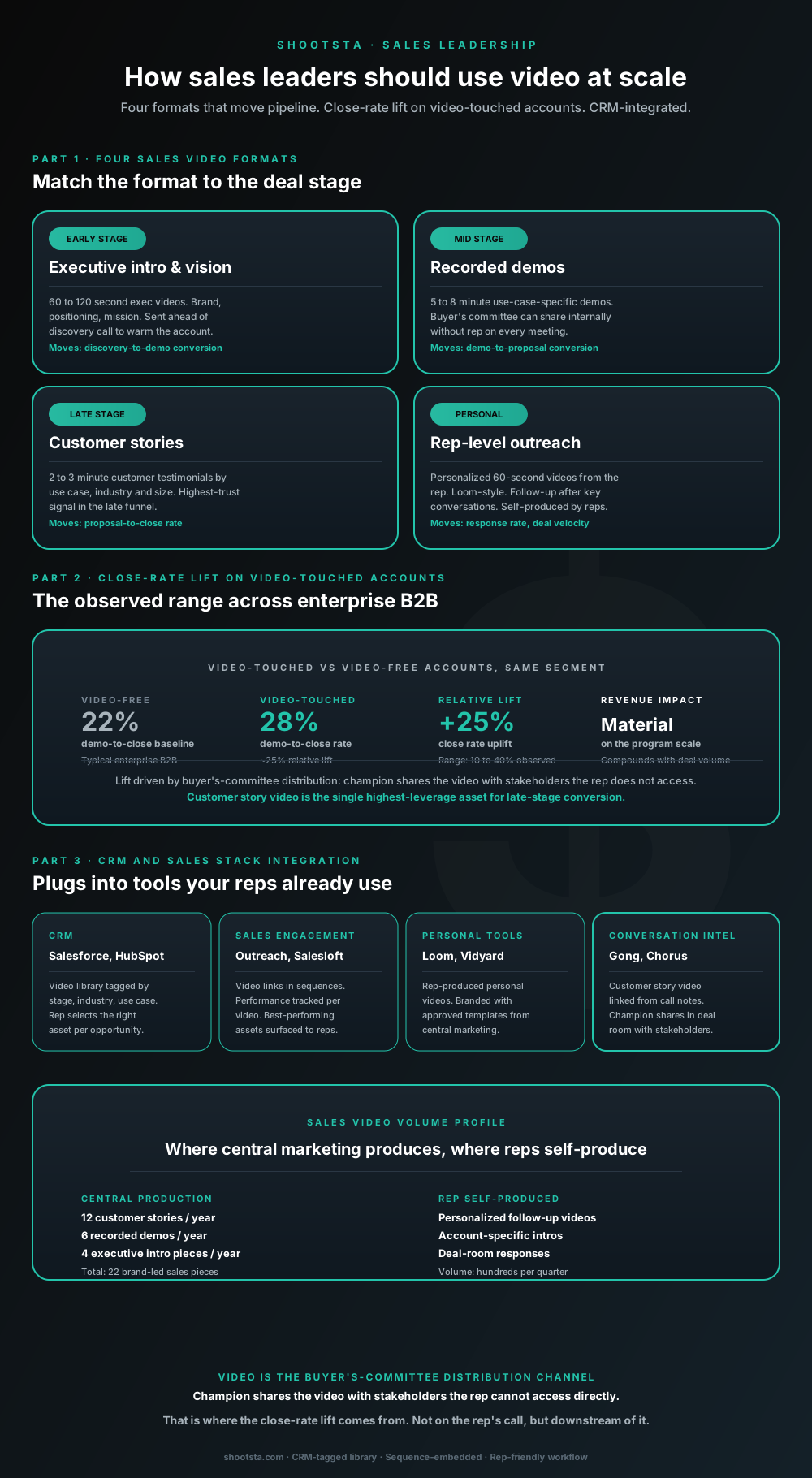
Sales leaders mostly think about video as personalized rep outreach (Loom, Vidyard) or as marketing-produced customer stories. Both are useful. The bigger opportunity is the buyer's-committee distribution layer: assets the champion shares internally with stakeholders the rep does not access directly. That is where the close-rate lift compounds.
How L&D leaders replace classroom with video
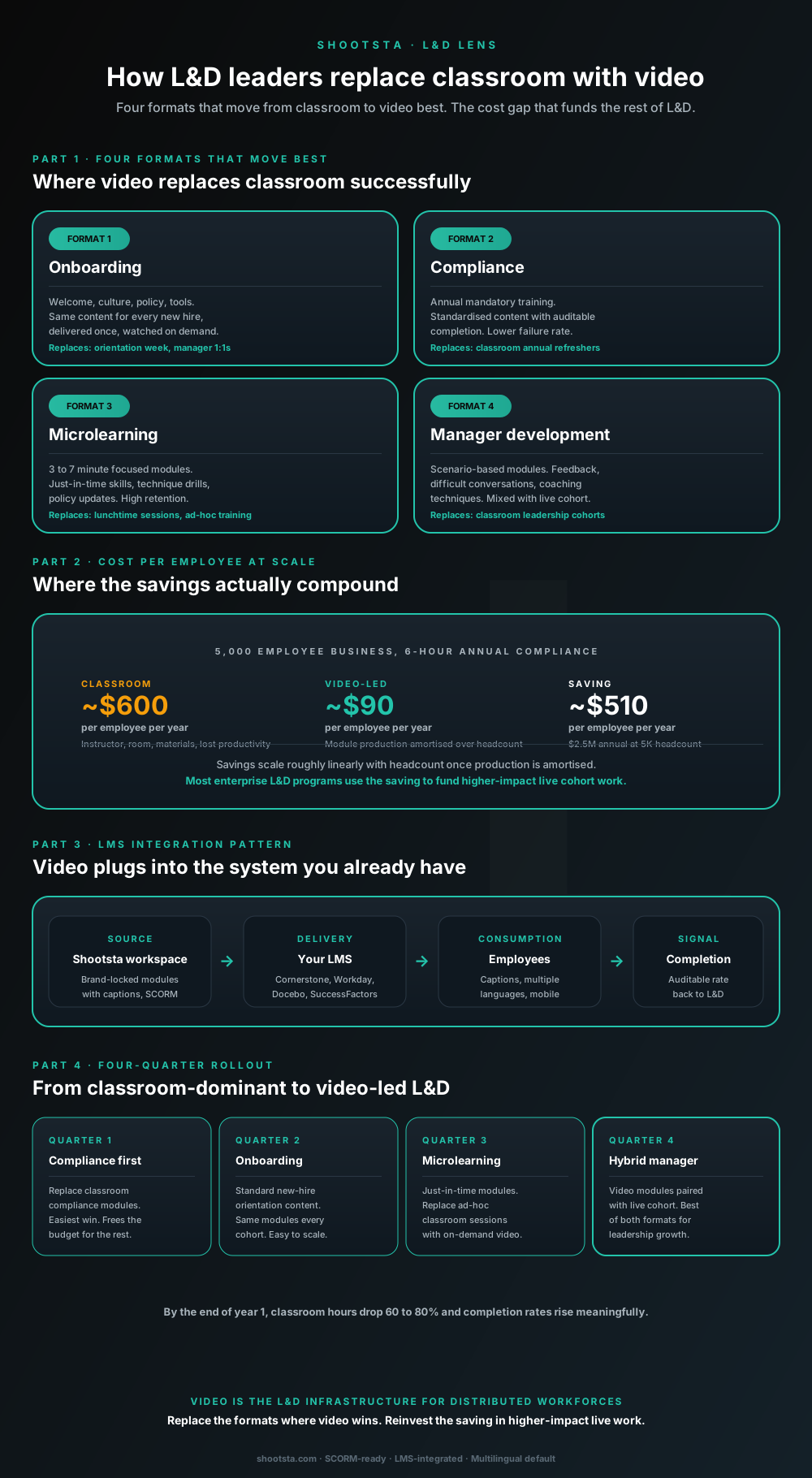
L&D leaders running classroom-heavy training programs typically have the largest single opportunity in the business to free budget through format change. Four training formats move from classroom to video cleanly; the savings fund higher-impact live work. Here is the rollout that compounds learner adoption over four quarters.
How customer success leaders should use video
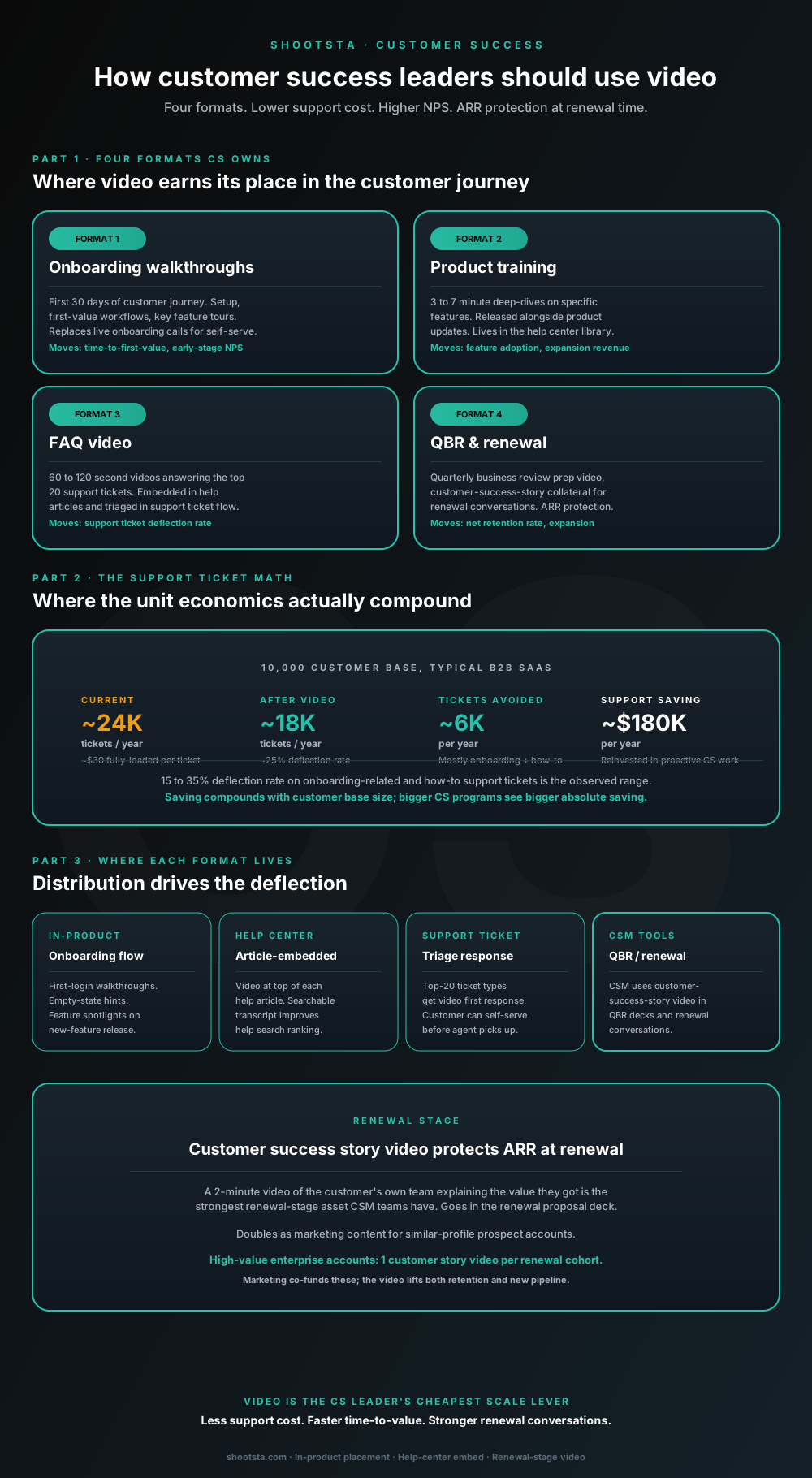
Customer success leaders are usually under-resourced for both reactive support volume and proactive retention work. Video is the cheapest lever to fix both - 15 to 35% deflection on onboarding and how-to tickets, faster time-to-value, and renewal-stage customer story video that lifts net retention. Here is the four-format model and where each piece earns its place.
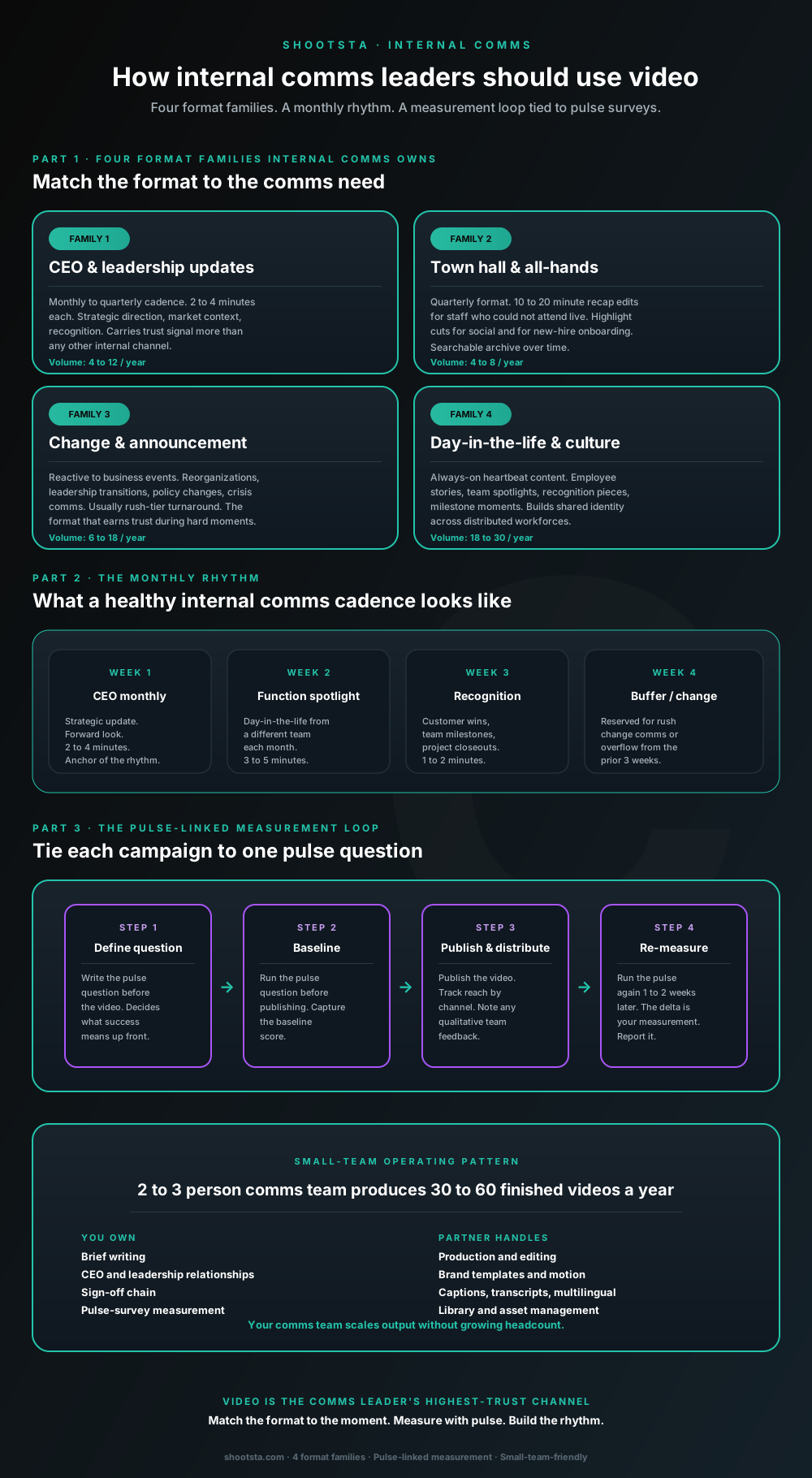
How internal comms leaders should use video
Internal comms leaders are usually under-resourced for the volume of video the business actually wants. The fix is not more headcount; it is structuring the program around four format families, a monthly rhythm, and a pulse-survey-linked measurement loop. Here is the operating pattern that lets a small comms team produce 30 to 60 finished videos a year.