
How a video partner extends your in-house team
shootsta.
How a video partner extends your in-house team
By Shootsta · Published May 8, 2026 · Updated October 2026
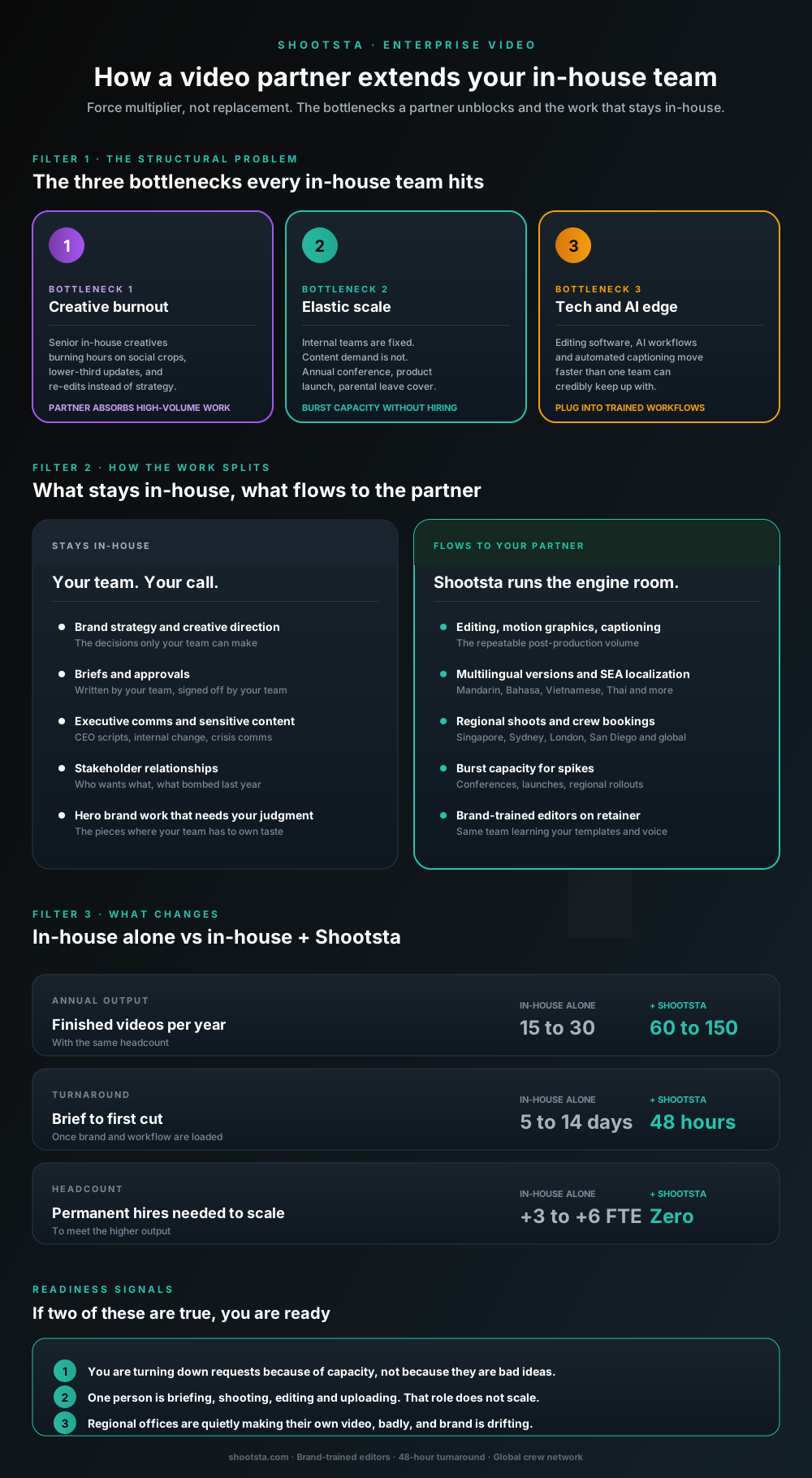
Most enterprise comms and marketing leaders already have an in-house video team. A partner is not a replacement, it is a force multiplier that absorbs production volume around them. Here is how the work splits, the three bottlenecks every internal team hits, and the signals that say you are ready.
What does it mean to extend an in-house video team?
Extending an in-house video team means keeping the internal team in charge of brand, story and creative direction, and using a production partner to absorb the volume around them. The partner runs the editing, motion graphics, multilingual versions, regional shoots and burst capacity that the in-house team does not have the hours to do themselves. Your output goes up while your headcount stays where it is.
This is the opposite of outsourcing. Outsourcing hands the work over and hopes the brief survives the handoff. The partnership model keeps your in-house team in charge of every project and uses the partner as the rest of the engine room. Most enterprise customers call this a "force multiplier" relationship, and it is the most common shape we see across financial services, professional services and aviation.
Why most enterprise in-house video teams hit a wall
Most comms and marketing leaders know the symptoms. The internal team is producing good work, but a queue is forming. Sales is waiting on a customer story. The CEO wants a new town hall video by Thursday. Three product launches are queued for next quarter. A regional office in Singapore needs the same training video in Bahasa and Vietnamese. The video team is two people and a part-time editor.
The two usual responses both go badly. The first is to hire more people. That takes 3 to 6 months, locks in a permanent cost and assumes the volume holds forever. The second is to push back on requests, which teaches the rest of the business that video is slow and expensive, so they stop asking. Many in-house teams cycle between the two for years without breaking out.
The three bottlenecks every in-house video team hits
These three patterns turn up almost every time we sit down with an enterprise team that already has video in-house. They come from how the team is set up, and they say nothing bad about the people in it.
1. Creative burnout
Your in-house creatives are senior and expensive. You do not want them burning a Tuesday afternoon on a 20-second social crop or another lower third update. A partner takes the high-volume, low-judgment work off their plate so they stay focused on brand, executive comms and the campaigns only your team can credibly run.
2. Elastic scale and burst capacity
An internal team is a fixed size, while demand for video rises and falls. A partner gives you elastic capacity for the spikes (the annual conference, the product launch week, the regional rollout, the team member on parental leave) without forcing you to hire before the work arrives. When the spike ends, the cost ends with it.
3. Tech and AI edge
The pace of change in editing software, AI-assisted workflows, automated captioning and motion templates is faster than any one in-house team can keep up with. We already have brand-trained editors running the latest AI workflows. Instead of your team spending months learning new tools, you plug straight into ours and use us as your innovation layer.
Interactive calculator
What is the gap between your team and your demand?
Move the sliders to see how much video your in-house team can absorb, where the gap opens up, and what it costs to close it with a hire vs a partner.
Your in-house capacity vs monthly demand
300% utilized20 videos a month are getting turned down, delayed, or pushed onto regions to make themselves. That is 240 videos a year the business is asking for and not getting.
Close the gap by hiring
4 new editors
$440K
per year, loaded
- 3 to 6 months to recruit and ramp
- Permanent cost even when volume drops
- Still capped at editor output once hired
Close the gap with a partner
20 videos / month absorbed
$90K
per year, all-in
- Brand-trained team within 2 to 3 weeks
- Flexes up for spikes, down between them
- In-house team stays in charge of brief and brand
What this means
At this volume, a partner closes the same gap for around $350K less per year than hiring, with capacity available in weeks instead of quarters. Your in-house team keeps owning the work and gets the volume off their plate.
Get a free consultationAssumptions: $110K USD loaded annual cost per in-house editor (salary, benefits, gear, software, management). Partner monthly pricing based on Shootsta volume tiers. Per-editor output is a benchmark from enterprise teams producing brand-led video at quality.
How a partner works alongside your in-house team in practice
The in-house team stays small and senior. Strategy, brand, creative direction, executive scripts, sensitive internal comms - those stay in-house. Volume work flows through Shootsta: editing, motion graphics, multilingual versions, regional crew bookings, captioning, social cutdowns, brand template builds.
Your in-house team still writes the briefs and still signs off every approval, and finished work comes back through the team that owns the brand. The result is one team that looks much bigger than its headcount, without the cost or risk of being one.
Who works on your videos
You get a dedicated Production Team Lead and a small group of named editors who are brand-trained on your account and stay with you for the duration of the engagement. That is the same team learning your brand templates, your voice, your sign-off chain and your stakeholder preferences over time. The fifth video is faster to produce than the first because they already know how you sign off the grading and what the legal team will flag.
You work with the same people each time rather than a rotating pool. Customers usually know their PTL by name and stay with them for years.
What about training our team?
If you have an in-house team, we will not retrain them on filming or editing. They are already good at that. What we will do is share how to brief into a production workflow effectively, which is the part internal teams tend to underestimate. Better briefs equal better first cuts, fewer revisions and shorter project timelines.
We also train non-video staff inside your business (subject-matter experts, regional managers, comms juniors) on how to capture usable phone or kit footage that your in-house team and our editors can finish to brand. That is how a comms team of two in Sydney ends up with usable footage from a Manila office without flying anyone there.
Will our team adopt this?
Your team will adopt it if the partnership is set up so they keep ownership. Teams that resist a video partner are almost always teams who were brought into the decision late, or who fear they are being replaced.
Teams that adopt quickly are teams who were involved in scoping, who keep ownership of brief and brand, and who get back the time they were burning on production work. We have run this enough times to know the pattern. If we are positioned as their force multiplier, your in-house team is the one driving the partnership six months in. If we are positioned as their replacement, the partnership does not last.
How to know your team is ready for a production partner
There are three honest signals to look for. The first is that you are turning down internal requests because there is no capacity, even though the requests are good ideas. The video team has quietly become the bottleneck on other people's plans.
The same person is briefing, shooting, editing and uploading. That role does not scale, and it stops being a good job to do once volume hits a certain level. You are at risk of losing whoever is doing it.
Other regions or business units are starting to make their own video, badly, because central cannot serve them fast enough. The brand drifts and the central team loses oversight. This is the most expensive failure mode of all.
If any two of those are true, a partnership is the next move. The in-house team stays, and the output grows without the headcount growing with it.
Frequently asked questions
Does Shootsta replace our in-house video team?
No. The model only works when the in-house team is in place and owns brand, strategy and creative direction. Shootsta absorbs the production volume around them. Customers who try to use a partner as a full replacement get worse results than customers who use them as a force multiplier, because the strategic judgment and brand ownership has to live inside the business.
What does the partnership look like on day one?
Day one is setup. Your brand templates, voice and approval chain are loaded into the workflow, and your in-house team briefs the first project. Once that groundwork is in place, edits run to the 48-hour turnaround that every plan includes. From there, output grows with your plan's video credits and the pace your in-house team can brief.
Who owns the brief and the brand?
You do. Shootsta does not write briefs on behalf of customers. The brief is the part of the process that only your in-house team can credibly do, because they know the audience and the strategic intent. The partnership only works when the in-house team owns it.
Can our team be trained to use the workflow?
Yes. We onboard your in-house team into the Shootsta platform and walk through how to brief, review and approve so you get the best work possible out of the partnership. We also train your non-video staff on how to capture usable footage from a phone or a Shootsta kit, so your editors have something good to start with.
What happens to existing freelancers and contractors?
You can keep the ones you rely on. Specialty work - long-form documentary, broadcast TVCs, a particular animation style - often stays with named freelancers. Shootsta replaces the part of the freelance roster doing repeatable production work: editing, cutdowns, captioning, motion templates, regional shoots. Those are the slots where reliability and brand consistency matter more than artistic signature.
How is this different from a project agency?
A project agency builds a team for one job and disbands it on delivery, so what it learned about your brand resets each time. Shootsta locks one team and one set of brand templates against your account for the year, with capacity flexed up or down across burst periods. Cost per video lands 50% to 60% lower than agency project work for enterprise customers producing 24+ videos a year.
How we built the numbers in this post
The interactive calculator above and the cost comparisons in this piece are anchored to public salary data, published time-to-hire benchmarks and Shootsta pricing. We quote no Shootsta customer outcome figures, and here is where each input comes from.
- $110K USD loaded annual cost per in-house video editor. Public salary data (US Bureau of Labor Statistics for film and video editors, plus aggregated postings from Glassdoor and LinkedIn Talent Insights) puts a mid-level base salary in the $90K to $105K range across US, UK and AU markets. Senior editors load to $146K to $157K. The $110K figure used here is a mid-level base plus typical employer overhead: benefits and payroll tax, gear (camera, computer, grading display), software (Adobe Creative Cloud, plugins, asset libraries) and management time. It is a defensible midpoint. If you would hire at senior level, the gap to a partner widens.
- 5 finished videos per editor per month. Benchmark for an in-house editor producing brand-led video at quality: 1 to 3 minute pieces with revisions, brand templates, captions and social cutdowns. This is a planning estimate, and it is not a measured average from Shootsta customers. Quick phone clips push this higher; long-form documentary, broadcast spots or animated explainers push it lower.
- 3 to 6 months to recruit and ramp. Time-to-hire data for specialist creative roles (SHRM and LinkedIn Talent Insights) typically lands at 6 to 10 weeks. Add 4 to 8 weeks for a new editor to learn brand templates, sign-off chain and tooling before they are productive on your account.
- Partner monthly cost. The partner figures in the calculator are planning inputs rather than a quote. Shootsta plans are a fixed monthly fee that includes a set number of video credits. Every plan includes the platform, professional editing with 48-hour turnaround, brand template setup, five rounds of feedback on every project and dedicated account support. See the Shootsta pricing page for current plans.
- 50 to 60% lower cost per video versus agency project work at 24+ videos a year. Shootsta's standard comparison of its pricing against agency project rates, calculated on cost per finished video at the same brand and quality standard.
Editorial standards
- Numbers cited are the most up-to-date figures we had at the time of writing. The "last updated" date on this page is when the numbers and sources were last reviewed.
- External benchmarks come from publicly available salary, labor and industry data. We name the source where possible and summarize where the underlying data sits behind a paywall.
- Figures and ranges come from the public sources cited on this page and from published market rates. We do not quote any Shootsta customer outcome figures here.
- Where ranges are given, they cover variability across sector, geography and program maturity. Treat them as starting hypotheses for your own program rather than as warranties.
- Spotted a number you would challenge? Let our editorial team know what you are seeing in your business and the data behind it. Material updates get credited in the post footer.
Where to go next
If you are still deciding whether to keep building internally or hand work to a partner, our guide on whether to bring video production in-house works through the cost and capacity math.
If your team is at capacity and you want to see how the force multiplier model works in practice, read our deeper piece on how Singapore video teams scale without hiring. For a view of how the production platform sits underneath the partnership, the Shootsta platform page walks through the end-to-end workflow. If you would rather see how this looks for a specific function inside your business, the how internal comms teams use Shootsta page is the most common starting point.
If you are weighing whether to extend the team, start with where the gaps are today. Grade your program with the CMO video scorecard and it names the measure to fix first.
If you want to talk through how this would fit your team, book a free consultation with the Shootsta team.
Take this article with you
Read the latest at shootsta.com/blog/how-a-video-partner-extends-your-in-house-team
You might also like
How to Brief an Animation Project
How to Brief an Animation Project
An animation brief is the document you send to your production partner before work starts. Get it right and you cut revision cycles in half. Get it wrong and you discover mid-production that everyone disagrees on what the video is for. This is what a complete brief looks like.
Animation for change management comms
Animation for change management comms
Animation handles change management communications better than live video for three reasons: no on-camera executives required during sensitive periods, scene-level updates when plans shift, and a single production that works across global teams with voiceover-only language swaps.
How sales leaders should use video at scale
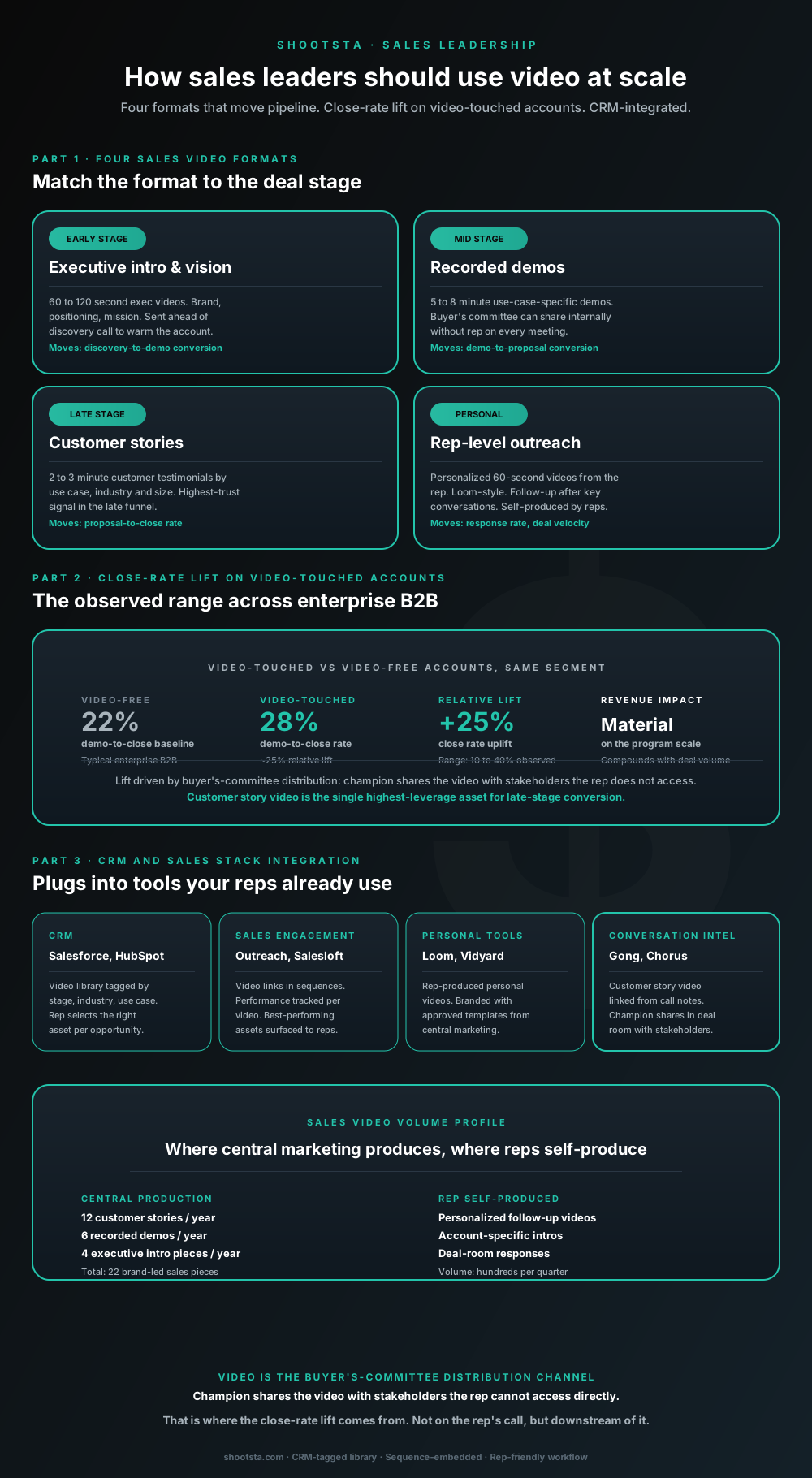
Sales leaders mostly think about video as personalized rep outreach (Loom, Vidyard) or as marketing-produced customer stories. Both are useful. The bigger opportunity is the buyer's-committee distribution layer: assets the champion shares internally with stakeholders the rep does not access directly. That is where the close-rate lift compounds.
How L&D leaders replace classroom with video
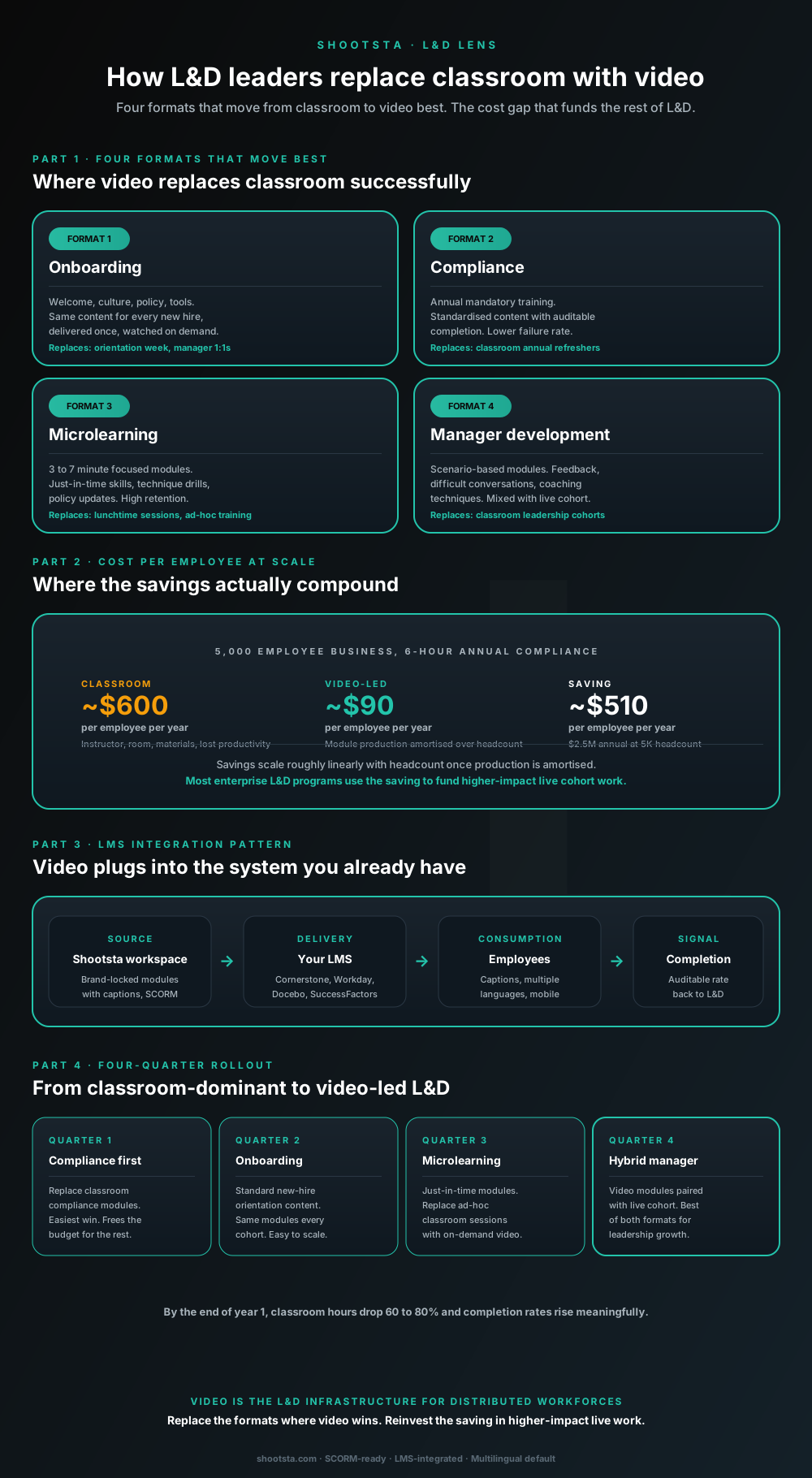
L&D leaders running classroom-heavy training programs typically have the largest single opportunity in the business to free budget through format change. Four training formats move from classroom to video cleanly; the savings fund higher-impact live work. Here is the rollout that compounds learner adoption over four quarters.
How customer success leaders should use video
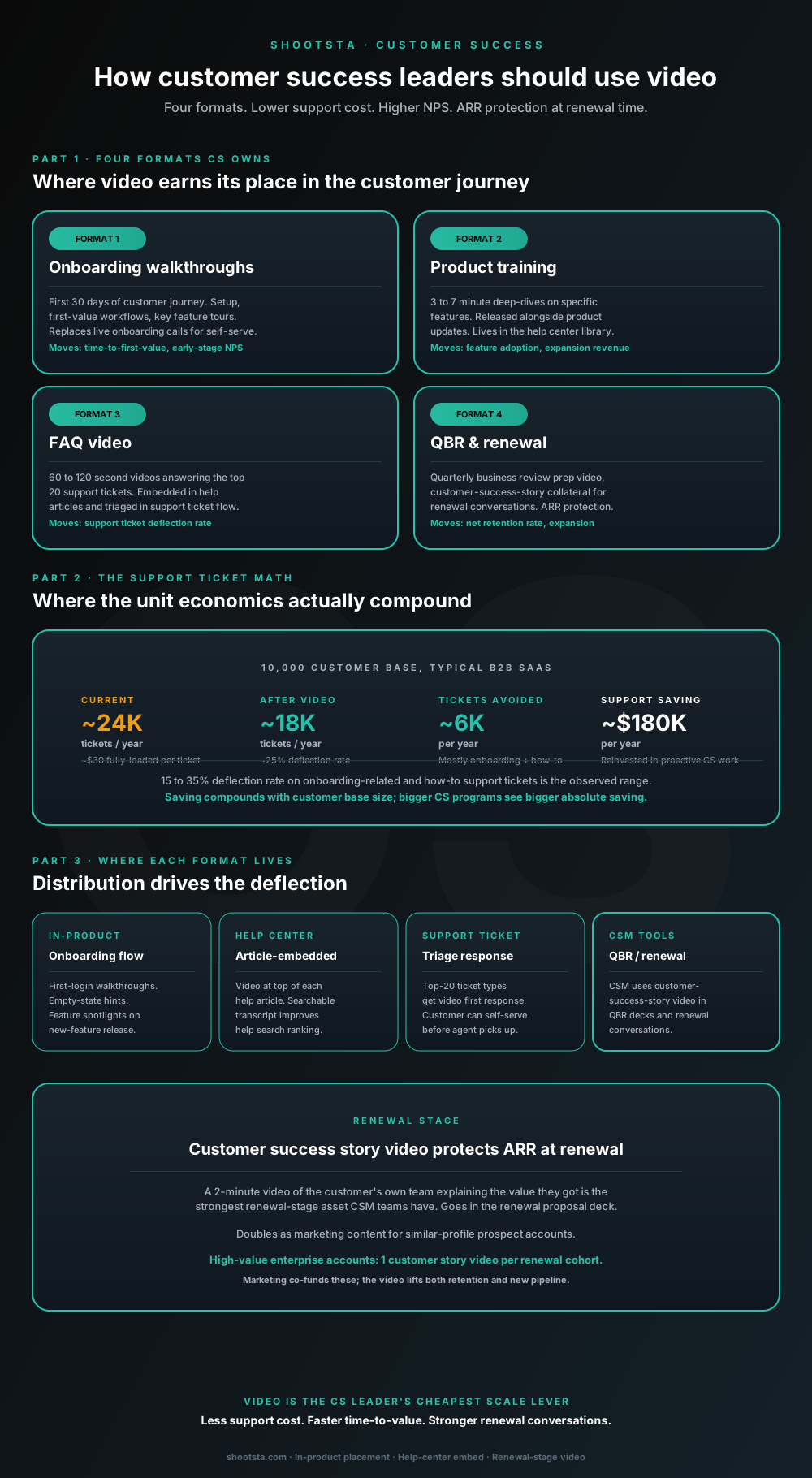
Customer success leaders are usually under-resourced for both reactive support volume and proactive retention work. Video is the cheapest lever to fix both - 15 to 35% deflection on onboarding and how-to tickets, faster time-to-value, and renewal-stage customer story video that lifts net retention. Here is the four-format model and where each piece earns its place.
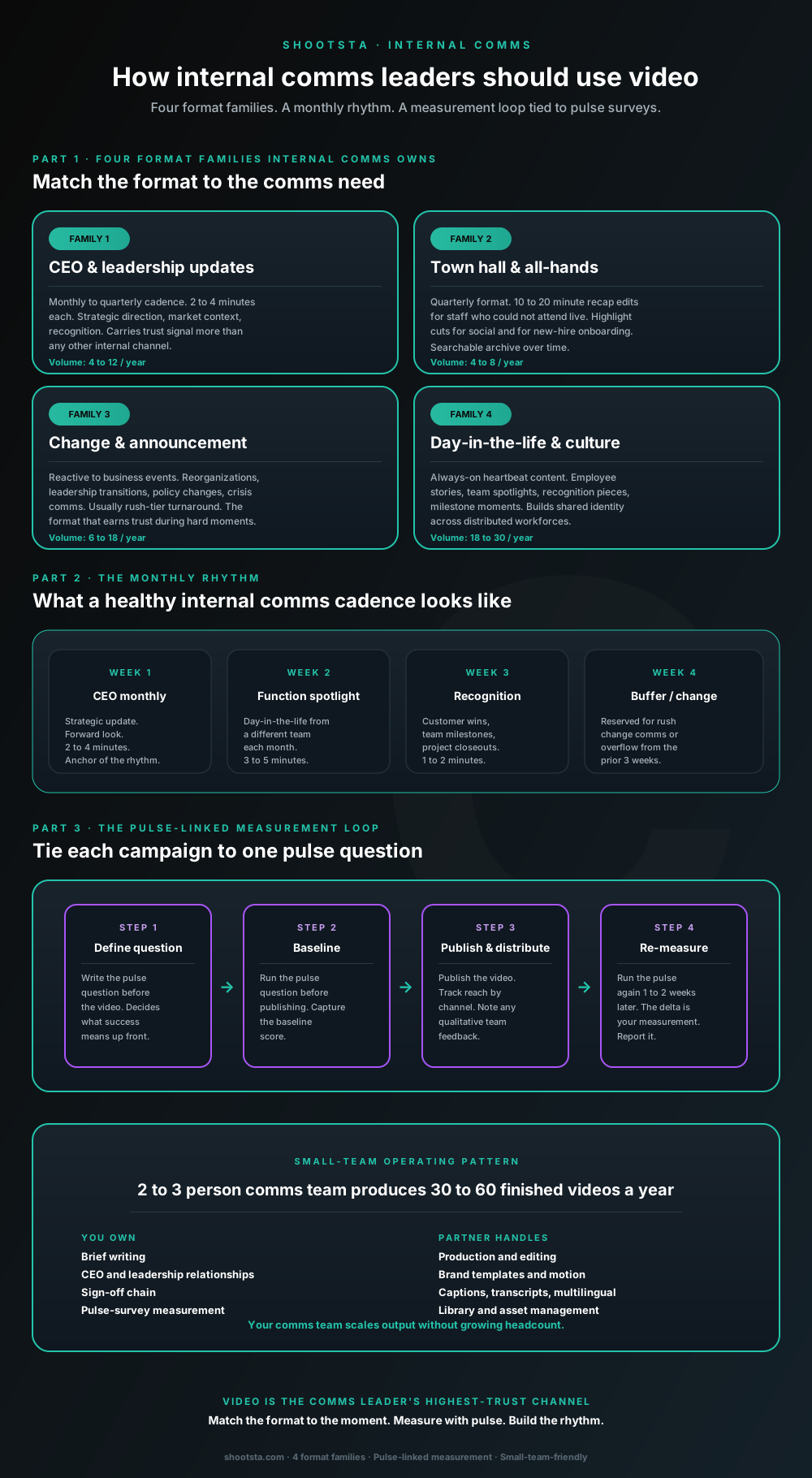
How internal comms leaders should use video
Internal comms leaders are usually under-resourced for the volume of video the business wants. The fix is not more headcount; it is structuring the program around four format families, a monthly rhythm, and a pulse-survey-linked measurement loop. Here is the operating pattern that lets a small comms team produce 30 to 60 finished videos a year.