
The business case for enterprise video
shootsta.
The business case for enterprise video
By Shootsta · Published May 11, 2026 · Updated October 2026
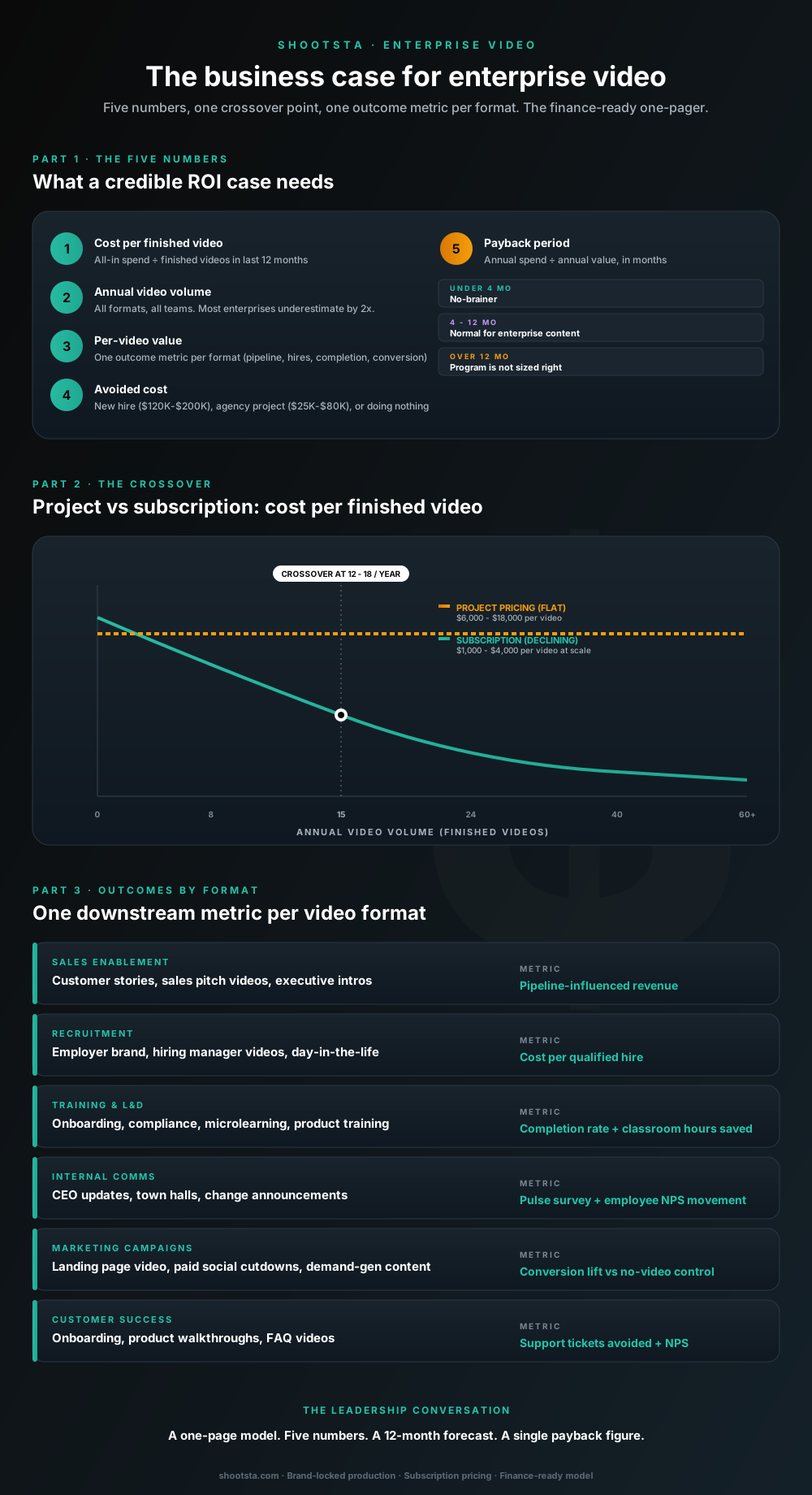
Most video ROI conversations fail because the proxy metrics (views, watch time, engagement) do not connect to a number leadership cares about. Five numbers fix that, and one crossover point decides whether project or subscription pricing is right. Here is the finance-ready model.
What is the real ROI on enterprise video?
Real ROI on enterprise video has three components. Output is how many finished videos you produce per dollar, and reach is how many people they get in front of. Outcome is the business result they drive, such as pipeline, hires made, training completed or conversions. Output is easy to count and outcome is the hardest, so it is usually the one left out. Closing that gap turns the business case for video from a guess into a forecast leadership will sign off.
Why most video ROI conversations fail
Most video ROI conversations fail because the proxy metrics (views, watch time, social engagement) do not connect to a number leadership cares about. A view does not look like pipeline, and a strong retention rate does not look like a hire. The CFO asks "and so?" and the conversation ends.
The fix is to stop trying to make proxy metrics carry the business case and instead tie each video format to a downstream outcome the rest of the business already tracks. Pipeline, hires and training completion all qualify. So do conversion, support tickets and NPS, because those numbers already sit in board packs.
The five numbers that make the case credible
Five numbers make a video ROI case credible. None of them require fancy analytics.
1. Cost per finished video
Average all-in spend (production, briefing, review time, opportunity cost of internal hours) divided by finished videos in the past 12 months. Enterprise teams typically land at $4,000 to $25,000+ per video on project pricing and $1,000 to $4,000 on subscription. If you do not know this number, your business case has no anchor.
2. Annual video volume
This is how many finished videos the business needs in the next 12 months. Add up marketing, sales, comms, L&D, HR and customer success. The total usually comes in low, because people count the formal program and miss the ad-hoc work other teams are quietly outsourcing.
3. Per-video value
Pick one outcome metric per format. That means pipeline per sales video, hires per recruitment video, training completion per L&D module, conversion lift per landing-page video. If you do not have the number, estimate conservatively from one good benchmark. Even a 70% confidence interval is more useful than a vague "engagement" target.
4. Avoided cost
This is what the alternative would cost you. It could be a new hire ($120K to $200K loaded), an agency project ($25K to $80K per piece), or doing nothing (the cost of the meetings, emails and decks the videos replace). A CFO tends to respond better to "this replaces X" than to "this is worth Y in upside".
5. Payback period
Total annual spend divided by total annual value, expressed in months. Under 4 months is an easy decision, and 4 to 12 months is normal for enterprise video. Over 12 months means the program is not sized right (either too small to amortize setup, or too big for the outcomes you can realistically attach).
Interactive calculator
Where does your program sit on the project vs subscription curve?
Move the sliders to see your annual spend on project pricing vs a subscription model at the same output, and whether your volume is past the crossover.
Annual spend at this volume
Past the crossoverSubscription pricing is $120K cheaper per year (63% less) at 24 videos a year, while delivering the same finished output through a brand-trained team. Per-video cost drops as volume goes up.
Per-video cost
$3.0K
on subscription, all-in
Annual saving
$120K
63% less than project
Payback
3 - 9 mo
for most enterprise programs
What this means for the business case
At 24 videos a year, subscription pricing gives leadership a fixed annual line item, a known unit cost, and capacity that flexes for peaks. Hand them a one-page model with these numbers and the conversation stops being about creative spend and starts being about operational investment.
Get a free consultationAssumptions: subscription per-video cost declines with volume, from around $4,000 at 12 videos a year to under $2,000 at 60+. Mirrors public Shootsta tier pricing. Project per-video cost is your input. Numbers are guides, not quotes.
Subscription vs project: where the maths lands
Project pricing is straightforward but expensive per video. Each engagement absorbs brand setup, briefing time, project management and account management costs that do not amortize because the work resets every time. For teams producing under 8 videos a year, this is the cheapest model.
Subscription pricing amortizes brand learning, templates and dedicated team time across a year of output. The first video costs more (setup), the 24th costs much less (no setup). For teams producing 24+ videos a year, subscription lands 50% to 60% cheaper per finished video.
The transition point usually falls between 12 and 18 videos a year. Below that, subscription capacity goes unused. Above that, project work is overpaying for setup costs you keep repeating. The Video ROI Calculator shows where your team falls on the curve, and the how to calculate video ROI guide walks through the full model.
What outcome to attach to each video format
This is where business cases usually come apart. The fix is to assign one downstream metric per format, rather than a generic engagement target across the whole program.
Sales enablement videos
Outcome: pipeline-influenced revenue. A 2-minute customer story video used in 50 sales calls a quarter at a 15% influence rate on average deal size carries real revenue weight that can be calculated and reported alongside any other sales initiative.
Recruitment and employer brand videos
Outcome: hires made and quality of pipeline. The right metric is cost per qualified candidate, compared to your current agency or job board cost per hire. If employer brand video brings cost per hire down in a high-volume function, it can pay back inside a quarter.
Internal training and L&D
Outcome: training completion rate vs the previous format, plus reduction in classroom hours. A 5-minute microlearning video that replaces a 45-minute classroom session has a per-employee cost saving that compounds across thousands of staff and shows up clearly in any L&D budget review.
Internal comms (town halls, CEO updates)
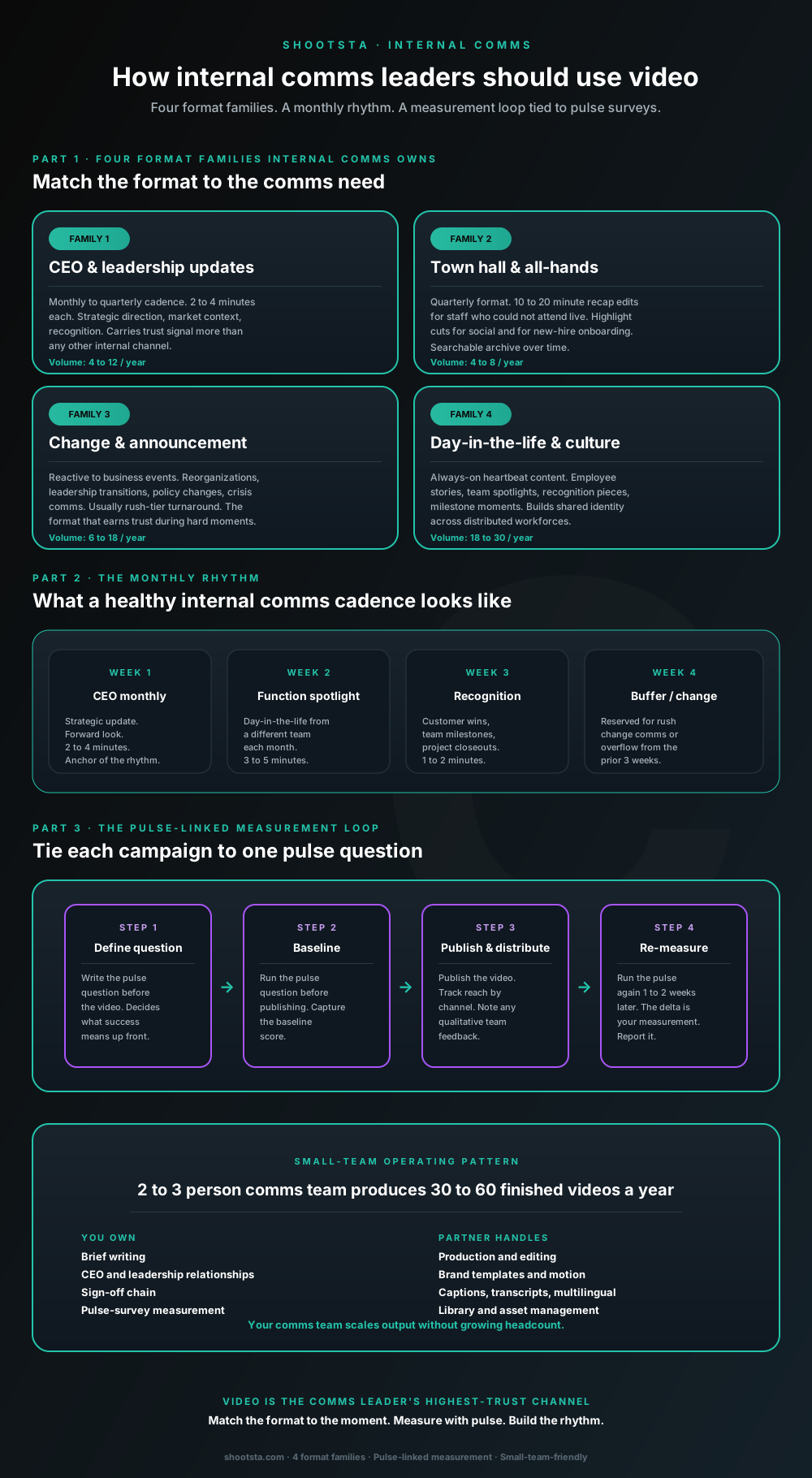
Outcome: employee engagement scores, pulse-survey movement on the topic covered, and reduced time-to-information across the organization. Tie a CEO video update to the next pulse question on "I feel informed about company direction" and the metric is yours.
Marketing campaigns
Outcome: conversion lift on landing pages with video vs without. Published research consistently shows 20% to 80% lift; even at the low end, the per-video value is high if you have meaningful page traffic. Run a 50/50 split for one campaign and you have a number you can scale across the rest of the program.
Customer success videos
Outcome: support tickets avoided, time-to-onboard reduction, NPS movement. A 3-minute product onboarding video can take a share of repeat support requests off the queue, which is a hard-dollar saving at any meaningful support cost.
Showing it to leadership
Leadership wants a one-page model with the five numbers above, a 12-month forecast and a single payback figure. A long slide deck or a creative reel will not get you there. They want to see that the program is sized right and pays for itself inside the budget cycle.
Build the model once, then update it each month with the same five metrics. It is the same model finance teams use to justify any other annual program: marketing automation, training systems, customer success platforms. Once video shows up in that format, it stops competing with creative line items and starts sitting alongside other operational investments.
What changes when you switch from project to subscription
Three things change in the budget conversation. First, per-video cost drops as volume goes up, so the marginal video gets cheaper instead of staying flat. The model goes from linear (a fixed price per piece) to declining (cheaper per piece after the first 10 or so).
Second, forecasting gets easier. Annual subscription cost is a known number that fits annual budgets. Project cost is unpredictable: a heavy quarter blows the line item, a quiet quarter underspends and gets cut next year. Subscription removes the volatility, which procurement and finance both prefer.
Third, headcount conversations get easier. Instead of "we need to hire", you can say "we have more capacity for less than the cost of one editor". A CFO finds that an easy yes, especially when the alternative is the slow drip of agency project invoices.
Frequently asked questions
What is a reasonable ROI for enterprise video?
Payback depends on what the video replaces. A program that replaces an existing cost (agency project work, training delivery, support tickets, new hires) shows its saving on a budget line you already track. A program that drives net-new pipeline or hires takes longer to prove, because the value arrives later. Model both cases with your own numbers, and use the payback bands in step 5 as a sense check.
How do I justify video to a CFO who has never bought video?
Use a like-for-like benchmark from inside the business. Compare cost per qualified candidate with your current recruitment agency spend, or cost per training hour with your LMS. You can also set cost per pipeline-touched account against your current outbound program. CFOs respond to comparisons inside categories they already understand, and engagement stats from another category rarely move them.
Should we measure views?
Yes, but as a leading indicator only. Views tell you whether the content is reaching the audience, which validates distribution. They do not justify spend on their own. Pair views with one downstream business metric per format to make views meaningful.
What happens to ROI in year 2?
Per-video cost drops and per-video value goes up. By year 2 your brand templates and approval chains are set, and the team has learned which formats work. Your distribution channels are already running too. Most year-2 subscription customers produce more videos than year 1 for the same spend, and convert at a higher rate on each one because they have stopped relearning what works.
How do you measure ROI on internal comms videos?
Run pulse surveys before and after a campaign, with the topic covered as the explicit question. CEO video updates can be tied to employee NPS movement on "I feel informed about company direction". Town hall recap videos can be tied to attendance and recall scores compared to live-only formats.
Can Shootsta help me build the model?
Yes. Every plan includes dedicated account support, and your account manager can help you plan the content calendar the model is built on. The five numbers come from your own budget and output, so the finished model is yours to take into leadership.
How we built the numbers in this post
The ROI ranges and cost benchmarks in this piece blend Shootsta's pricing with published industry research and standard finance and HR benchmarks. We quote no Shootsta customer outcome figures, and the sources for each claim are below.
- $4,000 to $25,000+ per video on project pricing, $1,000 to $4,000 on subscription. Shootsta pricing plus enterprise RFP benchmarks shared by procurement teams. Project pricing varies widely by agency tier and region.
- New hire $120K to $200K loaded. Senior video producer or video manager roles in US, UK and AU markets, plus benefits, equipment, software and management overhead. Sourced from Glassdoor, LinkedIn Talent Insights and SHRM compensation benchmarks.
- Agency project $25K to $80K per piece. Enterprise agency rates for 2 to 5 minute branded video (research, scripting, crew, edit, motion, two rounds of revisions). The lower end is mid-market agencies; the upper end is creative shops with brand heritage.
- 20% to 80% conversion lift on landing pages with video. Published industry research including Wyzowl's annual State of Video Marketing report, HubSpot's marketing research, and Unbounce conversion benchmarks. The wide range reflects vertical, traffic source and video format. Treat as a starting hypothesis until you have your own A/B data.
- Payback by program type. We give no customer payback figures. The point is about timing: a cost-replacement program shows its saving on an existing budget line, so it is easier to prove early than a net-new pipeline or hiring program.
- 50 to 60% cheaper per finished video on subscription at 24+ videos a year. Shootsta's standard comparison of its per-video cost against agency project rates, at the same brand and quality standard.
Editorial standards
- Numbers cited are the most up-to-date figures we had at the time of writing. The "last updated" date on this page is when the numbers and sources were last reviewed.
- External benchmarks come from publicly available salary, labor and industry data. We name the source where possible and summarize where the underlying data sits behind a paywall.
- Figures and ranges come from the public sources cited on this page and from published market rates. We do not quote any Shootsta customer outcome figures here.
- Where ranges are given, they cover variability across sector, geography and program maturity. Treat them as starting hypotheses for your own program rather than as warranties.
- Spotted a number you would challenge? Let our editorial team know what you are seeing in your business and the data behind it. Material updates get credited in the post footer.
Where to go next
To put numbers behind your own program, the Video ROI Calculator walks through the five-number model with editable inputs. For the conceptual frame on how to calculate video ROI from scratch, the how to calculate video ROI guide is the longest piece on the site. For the partner-side view (what changes about cost when in-house plus a production partner replaces project agency work), read how a video partner extends your in-house team.
A business case lands harder with a number attached. Score your program with the CMO video scorecard first, then build the case around whichever measures come back lowest.
If you want help building the model for your team, book a free consultation with the Shootsta team.
Take this article with you
Read the latest at shootsta.com/blog/business-case-enterprise-video
You might also like
How to Brief an Animation Project
How to Brief an Animation Project
An animation brief is the document you send to your production partner before work starts. Get it right and you cut revision cycles in half. Get it wrong and you discover mid-production that everyone disagrees on what the video is for. This is what a complete brief looks like.
Animation for change management comms
Animation for change management comms
Animation handles change management communications better than live video for three reasons: no on-camera executives required during sensitive periods, scene-level updates when plans shift, and a single production that works across global teams with voiceover-only language swaps.
How sales leaders should use video at scale
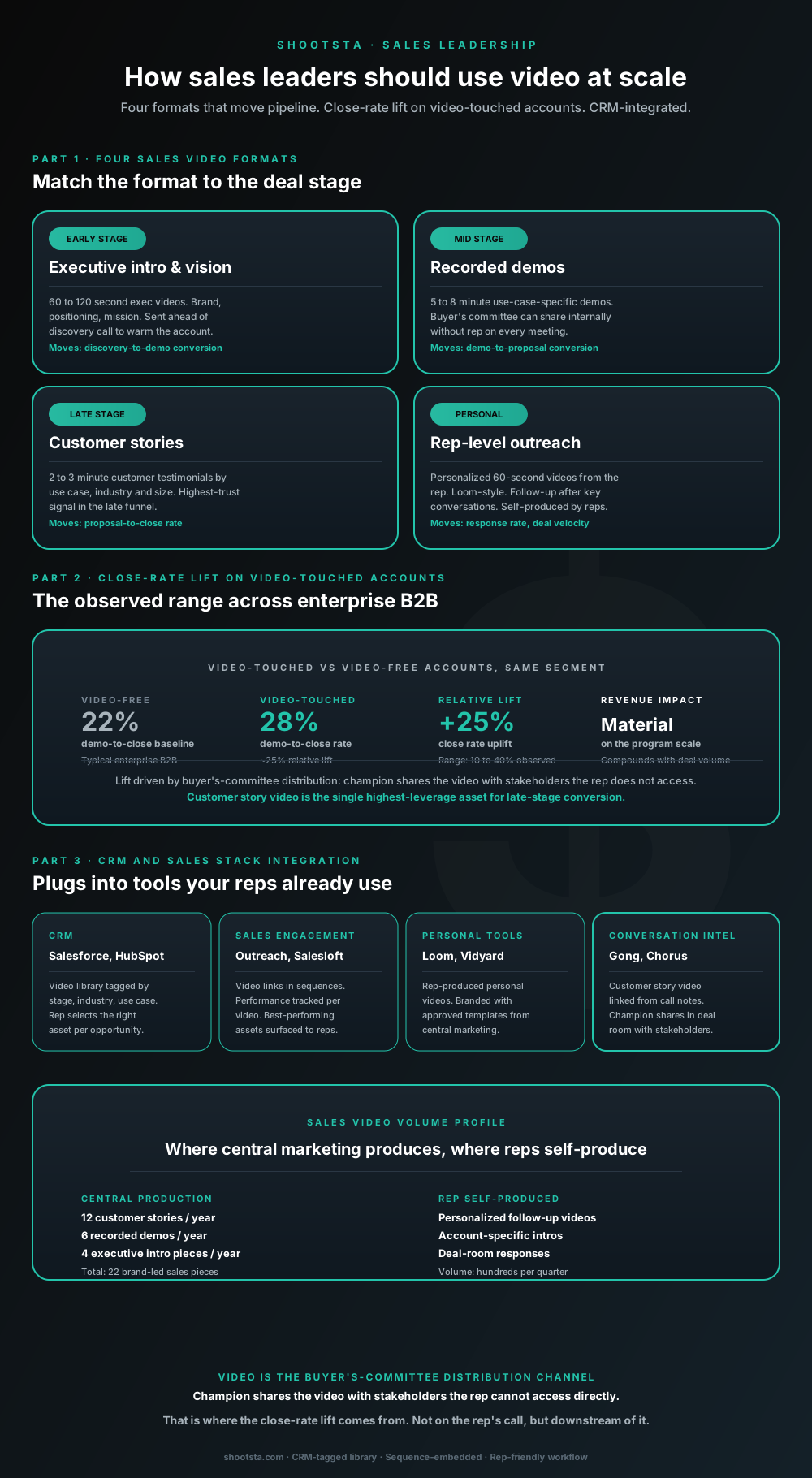
Sales leaders mostly think about video as personalized rep outreach (Loom, Vidyard) or as marketing-produced customer stories. Both are useful. The bigger opportunity is the buyer's-committee distribution layer: assets the champion shares internally with stakeholders the rep does not access directly. That is where the close-rate lift compounds.
How L&D leaders replace classroom with video
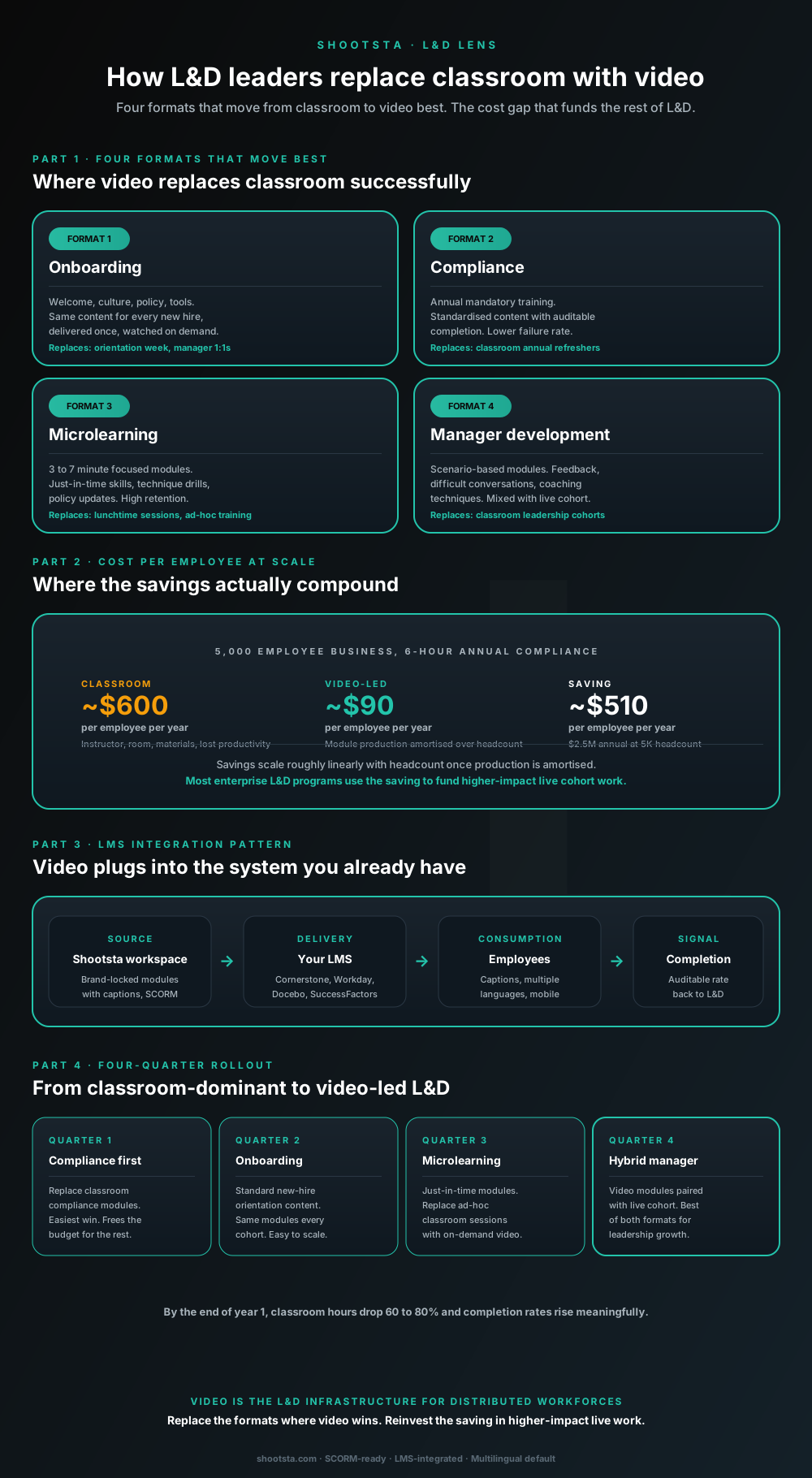
L&D leaders running classroom-heavy training programs typically have the largest single opportunity in the business to free budget through format change. Four training formats move from classroom to video cleanly; the savings fund higher-impact live work. Here is the rollout that compounds learner adoption over four quarters.
How customer success leaders should use video
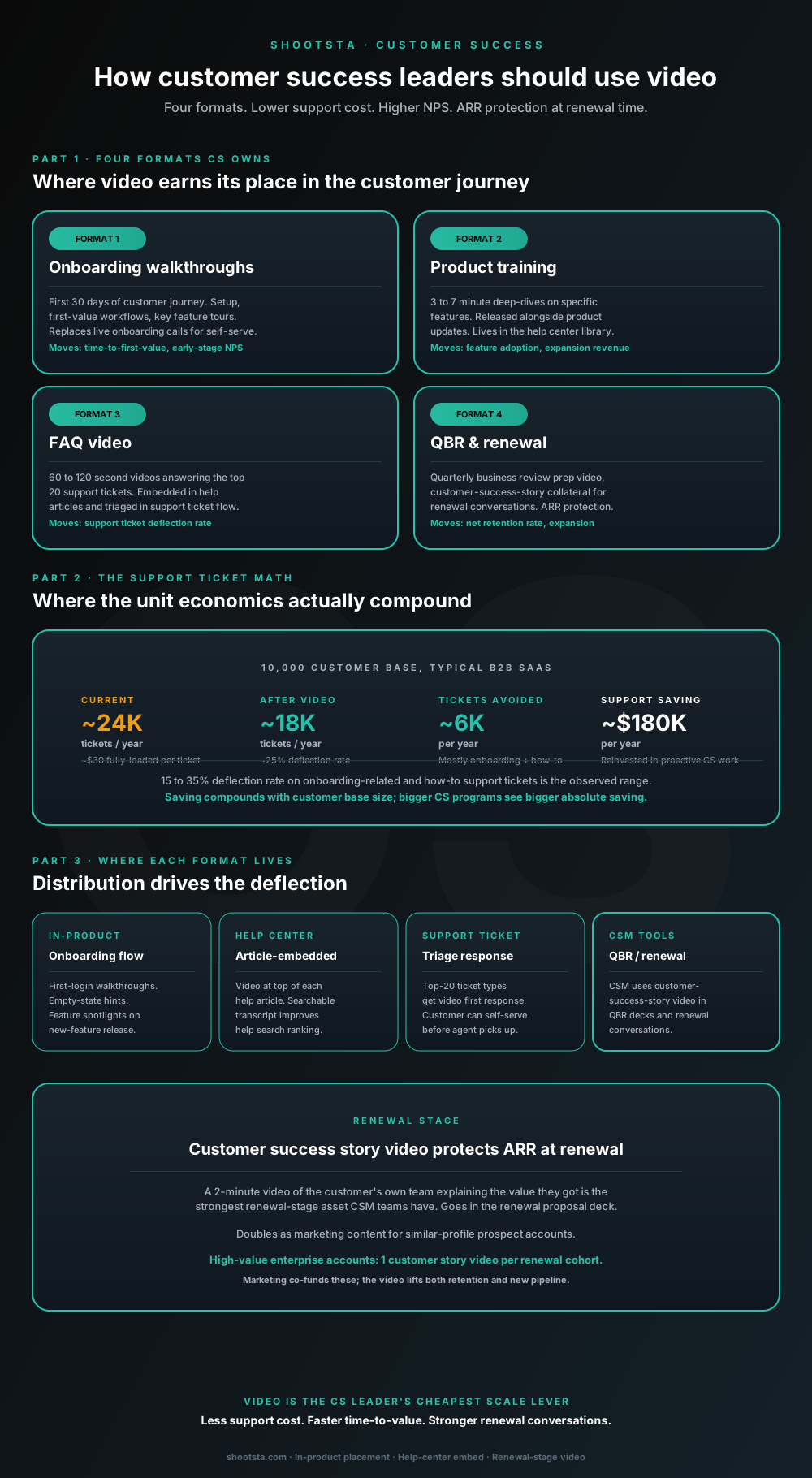
Customer success leaders are usually under-resourced for both reactive support volume and proactive retention work. Video is the cheapest lever to fix both - 15 to 35% deflection on onboarding and how-to tickets, faster time-to-value, and renewal-stage customer story video that lifts net retention. Here is the four-format model and where each piece earns its place.
How internal comms leaders should use video
Internal comms leaders are usually under-resourced for the volume of video the business wants. The fix is not more headcount; it is structuring the program around four format families, a monthly rhythm, and a pulse-survey-linked measurement loop. Here is the operating pattern that lets a small comms team produce 30 to 60 finished videos a year.