
Phones vs a video production partner
shootsta.
Phones vs a video production partner
By Shootsta · Published May 27, 2026 · Updated October 2026
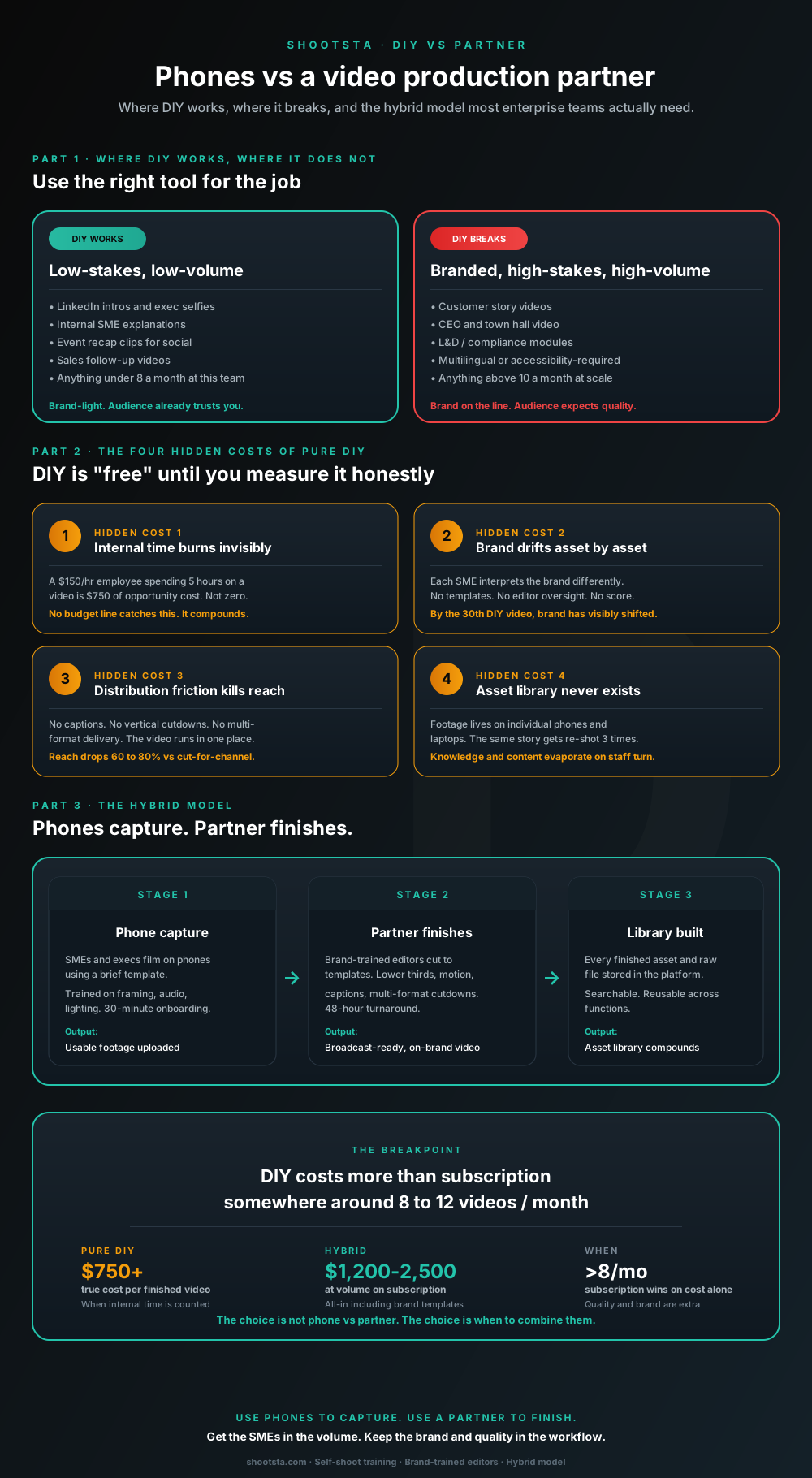
Most enterprise teams who try pure DIY phone video hit a wall somewhere around 8 to 12 videos a month. The honest answer is not phones vs partner. It is the hybrid model: phones capture the footage, the partner finishes to brand. Here is where each one earns its place.
Why "we'll just do it with phones" is a reasonable starting point
It is a fair place to start. Modern phones shoot 4K, audio quality is acceptable with a $40 lavalier, and the bar for "professional-looking" video has dropped because audiences are used to vertical, hand-held, lower-production content from creators. For low-stakes, low-volume videos, DIY phone video works well.
The mistake is treating DIY as the whole answer for an enterprise video program. DIY scales until it doesn't, and the breakdown happens fast once volume rises or brand expectations harden. The useful questions are where DIY works, where it breaks, and which model gets you the best of both.
Where DIY phone video works at enterprise scale
LinkedIn intros and executive selfies
Pure DIY is the right call in five categories, and this is the first. Founder commentary, exec opinions and quick takes on industry news are meant to feel informal. Viewers expect little polish here and a lot of authenticity. A phone-shot, lightly edited LinkedIn video from a CEO often performs better than a fully produced version because it feels human. Production quality past a certain point hurts the format.
Internal SME explanations
Here a subject-matter expert explains a topic to colleagues. Engineering might walk through a design choice, product might demo a feature, or finance might explain a policy change. The audience cares about what is said far more than how it is framed. DIY is fine and often better because the SME is not performing for a camera.
Event recap clips for social
These are 30-second clips of conference moments, customer event highlights and partner summit reactions, posted within hours of the event. Often the best version is hand-held and unpolished because it captures the live moment. A production crew shot of the same thing feels staged.
Sales follow-up videos
These are tailored 60-second videos a salesperson sends after a discovery call. "Hi name, thanks for the call, here is what I took away..." Tools like Loom, Vidyard, BombBomb are built for this. The format only works if it is personal, which means it has to be DIY.
Anything under 8 videos a month at this team
If the function is producing fewer than 8 videos a month, the operating cost of bringing a partner in is hard to justify on volume alone. The exception is hero pieces (Peak content), which usually warrant a partner regardless of volume because brand exposure is high.
Where DIY breaks at enterprise scale
Customer story videos
Pure DIY falls short of enterprise expectations in five categories, starting with customer stories. These are multi-stakeholder videos with a customer on camera, sales involved, marketing approving and a legal team reviewing the final cut. DIY produces footage that the customer is embarrassed to share, which kills the asset's reuse value. The customer expected professional production. A phone-shot version often sits unused.
CEO and town hall video
The CEO is the brand. A phone-shot CEO video usually looks fine to the team that captured it and feels off-brand to everyone outside that team. Lighting, sound, framing and editing matter at the CEO level because the audience expects them. What the audience wants at that level is consistent professionalism rather than creative artistry.
L&D and compliance modules
Anything destined for the LMS, especially compliance training. Phone-shot training looks unserious, which undermines the training's authority. Captions, accessibility, multilingual delivery and version control are all hard to do in pure DIY. Regulated teams usually want compliance content to look consistent and official, and phone footage rarely gets there on its own.
Multilingual or accessibility-required content
Anything that needs subtitles, closed captions, voiceover replacement, or multiple language versions. DIY can produce one language. Scaling to four languages with quality control turns into a part-time job for whoever is in charge of DIY production. Without a workflow, the extra language versions slip.
Anything above 10 videos a month at scale
The volume breakpoint is where DIY stops being cheaper than a partner. Above about 10 videos a month, the time cost of DIY (covered below) overtakes subscription production cost, and that is before you count brand, distribution and library value. A serious program tends to reach this point within its first year.
The four hidden costs of pure DIY
DIY looks free in the budget, but four costs hide underneath it.
1. Internal time burns invisibly
Internal time is the biggest hidden cost. Say a subject-matter expert spends 5 hours on a video at a fully loaded $150/hr rate. That video carries $750 of opportunity cost, even though no budget line catches it because the time is already paid for. But the SME is not doing what they were hired to do, and at high volume the math compounds.
A DIY program that looks like a win in its first quarter can look like a quiet drain by the end of the year. The drain stays hidden until someone adds up how many SME hours went into video instead of the work those people were hired to do.
Interactive calculator
What is your DIY phone video actually costing?
Set your monthly DIY volume, hours per video, and the fully-loaded rate of the staff doing it. The calculator surfaces the time cost most DIY programs ignore and shows where subscription production becomes cheaper per finished video.
DIY per finished video
$750
internal time only
DIY annual cost
$72K
96 videos / year of internal time
Subscription per video
$1,600
at this annual volume, all-in
You are below the breakpoint
At this volume, pure DIY is cost-effective on time alone. The case for a partner here is brand consistency, distribution reach and asset library, not cost. If brand and reach are not issues yet, keep the DIY workflow and revisit when volume picks up past 8 to 12 videos a month.
Assumptions: hours per video is the total internal time across brief, capture, edit and approval; not just record time. Hourly rate is fully-loaded (salary, benefits, overhead) of the staff doing the work. Subscription per-video rate declines with annual volume, from around $4,000 at 12/year to under $2,000 at 60+/year. Numbers are guides.
2. Brand drifts asset by asset
Each SME interprets the brand differently, with no locked templates and no editor enforcing consistency. A few dozen DIY videos in, the brand has visibly shifted. The marketing team starts complaining and the brand custodian schedules a meeting. The fix usually involves either re-shooting (expensive) or accepting brand drift (also expensive, just paid in equity rather than dollars).
3. Distribution friction kills reach
A DIY video usually ships without captions, vertical cutdowns or other formats. It runs in one place, usually a single LinkedIn post or one Slack channel. Cut for channel (vertical for TikTok, square for Instagram, captioned for silent autoplay, short for paid social), the same piece of footage reaches a far bigger audience. DIY teams rarely do that cut-for-channel work because it is the part that requires editor hours.
4. Asset library never exists
DIY footage lives on individual phones and laptops. When someone leaves the team, their archive leaves with them. The same customer story gets re-shot a year later because nobody knows the first version exists. The asset library that should be compounding into a real content library never compounds, because the assets are scattered across personal devices.
The hybrid model: phones capture, partner finishes
The pattern that scales is hybrid: phones do the capture and the production partner does the finish. The in-house team or SMEs stay in front of the camera; the brand, editing, captions, motion graphics and asset management stay in the workflow.
Stage 1: Phone capture
SMEs and execs film on phones using a brief template. A 30-minute training covers the basics of framing, audio and lighting, so the footage is usable without being broadcast-grade. The output of this stage is usable footage uploaded to the platform.
Stage 2: Partner finishes
Brand-trained editors cut the footage to your templates and add lower thirds, motion graphics, captions, multi-format cutdowns and multilingual versions. The first cut comes back in about 48 hours. You get broadcast-ready, on-brand video delivered through the workflow you already approved.
Stage 3: Library built
Every finished asset and every raw file is stored in the production platform, searchable and reusable across functions. Sales footage gets used by marketing. L&D footage gets cut for recruitment. The asset library compounds instead of evaporating.
The hybrid model captures the speed and authenticity of DIY (phones in the hands of the people closest to the content) while keeping brand control, distribution reach and library value (the things that break in pure DIY).
The volume breakpoint where the math flips
At low volume (fewer than 8 videos a month for a function), pure DIY is cheaper than subscription production on cost alone. Internal time still costs money, but the gap is too small to justify a partner.
Somewhere between 8 and 12 videos a month, the breakpoint hits. Internal time cost climbs in a straight line with volume, while the subscription cost per video falls as volume rises. At a $150/hr internal rate and 5 hours per DIY video, the true DIY cost per finished video is $750. On a subscription, the per-video price of partner finishing drops the more you make each month, with phone capture still done by your team.
A straight price comparison can make DIY look like the winner. The $750 buys a weaker video, though, with no brand templates, captions, cutdowns, library or compliance review. A fair comparison sets that rough phone video against a hybrid video with phone capture, a brand-locked finish, multi-format delivery and a library. Above 8 to 12 a month, hybrid wins once you count what each dollar buys, and below that range pure DIY is fine.
How to train your team to capture good phone footage
The capture side of the hybrid model needs a short training, not a film school. The basics are:
Frame the subject at eye level, because a phone at chest height pointing up is the most common DIY mistake. Either prop the phone on a stack of books or hold it at eye level.
Audio matters more than video. A $40 lavalier mic (Rode or DJI) clipped to the speaker's shirt fixes most audio issues, since internal phone mics pick up too much room noise.
Put the light in front of the speaker. A window in front of them gives you free, even lighting, while a window behind them turns them into a silhouette. Poor lighting ruins more DIY phone video than the camera does.
Shoot horizontal as the master, then crop vertical or square for social. Vertical-first capture limits what an editor can do later.
Record three takes instead of one, because speakers warm up as they go and the third take is usually the keeper.
On the hybrid model, one 30-minute training session with your SMEs is usually enough. After that, the SMEs capture usable footage and the partner does the finishing. We covered the training and kit options in the Shootsta video kit overview.
Frequently asked questions
Can we just buy a SaaS DIY video tool instead of a partner?
Yes, and many enterprise teams do for specific use cases. Loom, Vidyard, BombBomb work well for sales follow-ups and async internal updates. They do not solve the brand consistency, multi-format distribution or asset library problems that hybrid solves. Plenty of enterprise programs use both: a DIY SaaS tool for the personal-message use cases and a partner for the brand-led work.
What is the minimum kit for good phone capture?
A current iPhone or Android phone, a $40 lavalier mic, a $20 tripod, and a window for natural light. That covers most enterprise phone video use cases. Past that, a Shootsta kit (camera, lighting, audio, tripod) shipped to the office or regional team upgrades the capture quality without adding much complexity.
What happens when our DIY content needs to scale fast?
This is when the hybrid model pays off. You already have phone capture trained internally; the partner already has brand templates and editor capacity. Moving from a handful of DIY videos a month to a much larger hybrid volume takes a few months of adjustment rather than a full rebuild. We covered the spike pattern in how to absorb video demand spikes.
Do we still need an in-house video producer if we use the hybrid model?
It depends on volume and complexity. For programs over 30 videos a month with multiple stakeholders, yes - the in-house team owns brand, strategy and stakeholder relationships. For smaller programs the partner can be the production team and the marketing or comms lead owns the brief. We covered the split in how a video partner extends your in-house team.
What about AI tools that auto-edit phone footage?
They are useful for first-pass cuts at low stakes, but they cannot yet replace an editor on branded content. AI handles the timing, the cuts, and the captions; it does not yet handle brand templates, voice match, stakeholder feedback, or the judgment calls that make finished video feel intentional. The hybrid model uses AI inside the editor's workflow rather than instead of it.
Will our team resist using a partner if they have been doing DIY?
Less than you would think, especially if you position it as "we will keep the things you love about DIY (speed, authenticity, control of the brief) and offload the things you hate (editing, captions, multi-format delivery, brand approvals)". Teams that resist a partner are usually teams who were not consulted. Bring them into the scoping early.
How we built the numbers in this post
The cost comparisons, volume breakpoints and DIY hidden-cost calculations here are worked examples built on standard finance benchmarks for fully loaded internal time. The assumptions behind each claim are listed below.
- $150 per hour fully loaded internal time for a subject-matter expert. This is a common finance benchmark for a senior internal contributor (salary + benefits + overhead) at typical enterprise pay. Finance teams use a rate like this to value internal time on cross-functional projects.
- 5 hours of SME time per DIY video. This is a working assumption for pure-DIY production, covering capture, retakes, file management, basic editing, upload and distribution. The five hours rarely shows up on a budget line because the SME is already on payroll.
- $750 hidden cost per DIY video. Calculated from 5 hours of fully loaded SME time at $150 per hour. Excludes brand drift, distribution friction and asset library evaporation, which are real but harder to put a dollar number against.
- Subscription cost per finished video falls as monthly volume rises. A subscription covers a brand-trained editor team, captions, motion graphics, multi-format cutdowns, a brand template library and platform access. Your team does the phone capture and the partner finishes the video.
- Volume breakpoint at 8 to 12 videos a month where hybrid wins on cost alone. Calculated from the crossover between rising internal time cost (linear with volume) and falling per-video subscription cost (declining with volume). Below 8 a month, pure DIY is cheaper. Above 12 a month, hybrid wins even before counting brand and distribution value.
- Wider distribution reach with cut-for-channel delivery. Each platform rewards its own format. Vertical, square, captioned and short-form cutdowns of the same master footage can run in places a single horizontal post never reaches.
Editorial standards
- Numbers cited are the most up-to-date figures we had at the time of writing. The "last updated" date on this page is when the numbers and sources were last reviewed.
- External benchmarks come from publicly available salary, workforce and industry data. We name the source where possible and give a summary where the underlying data sits behind a paywall.
- Figures and ranges come from the public sources cited on this page and from published market rates. We do not quote any Shootsta customer outcome figures here.
- Where ranges are given, they cover variability across sector, geography and program maturity. Treat them as starting hypotheses for your own program rather than warranties.
- Spotted a number you would challenge? Let our editorial team know what you are seeing in your business and the data behind it. Material updates get credited in the post footer.
Where to go next
For the working pattern that combines an in-house team with a partner, read how a video partner extends your in-house team. For the budget conversation that justifies the shift, read the business case for enterprise video. For the speed model that lets phone footage become a finished video in 48 hours, read how a video partner ships in 48 hours.
To scope a hybrid model for your team, book a free consultation.
Take this article with you
Read the latest at shootsta.com/blog/phones-vs-a-video-production-partner
You might also like
How to Brief an Animation Project
How to Brief an Animation Project
An animation brief is the document you send to your production partner before work starts. Get it right and you cut revision cycles in half. Get it wrong and you discover mid-production that everyone disagrees on what the video is for. This is what a complete brief looks like.
Animation for change management comms
Animation for change management comms
Animation handles change management communications better than live video for three reasons: no on-camera executives required during sensitive periods, scene-level updates when plans shift, and a single production that works across global teams with voiceover-only language swaps.
How sales leaders should use video at scale
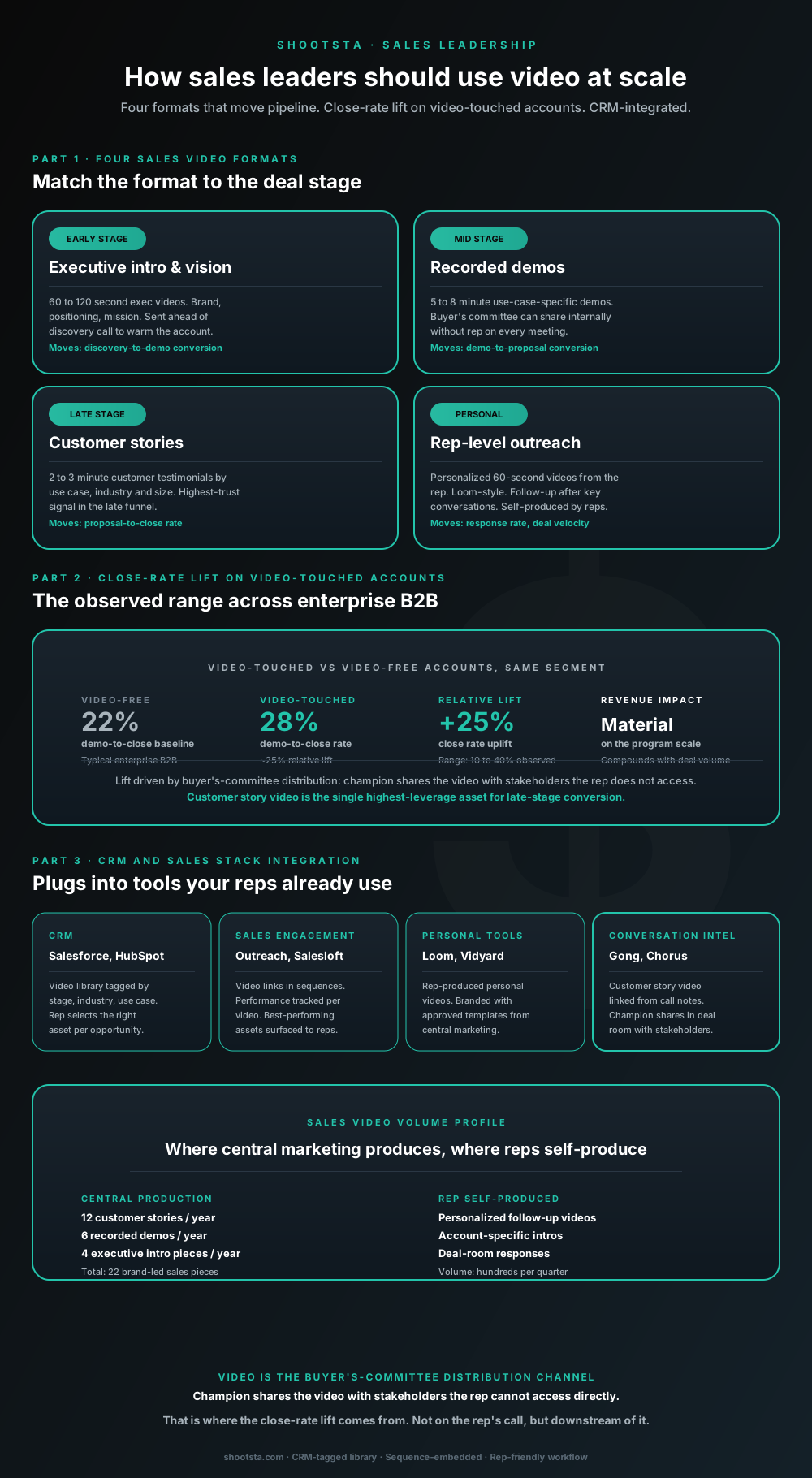
Sales leaders mostly think about video as personalized rep outreach (Loom, Vidyard) or as marketing-produced customer stories. Both are useful. The bigger opportunity is the buyer's-committee distribution layer: assets the champion shares internally with stakeholders the rep does not access directly. That is where the close-rate lift compounds.
How L&D leaders replace classroom with video
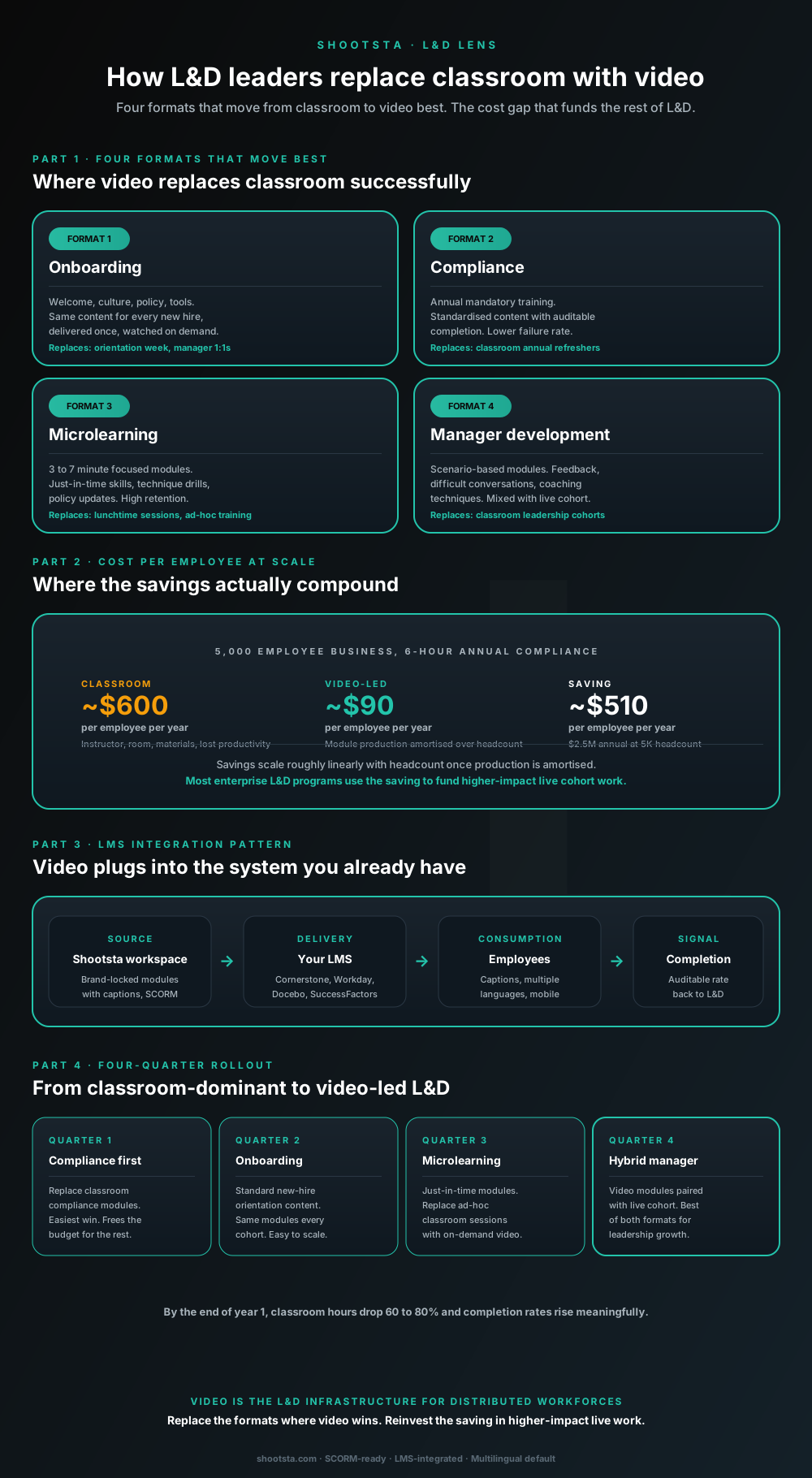
L&D leaders running classroom-heavy training programs typically have the largest single opportunity in the business to free budget through format change. Four training formats move from classroom to video cleanly; the savings fund higher-impact live work. Here is the rollout that compounds learner adoption over four quarters.
How customer success leaders should use video
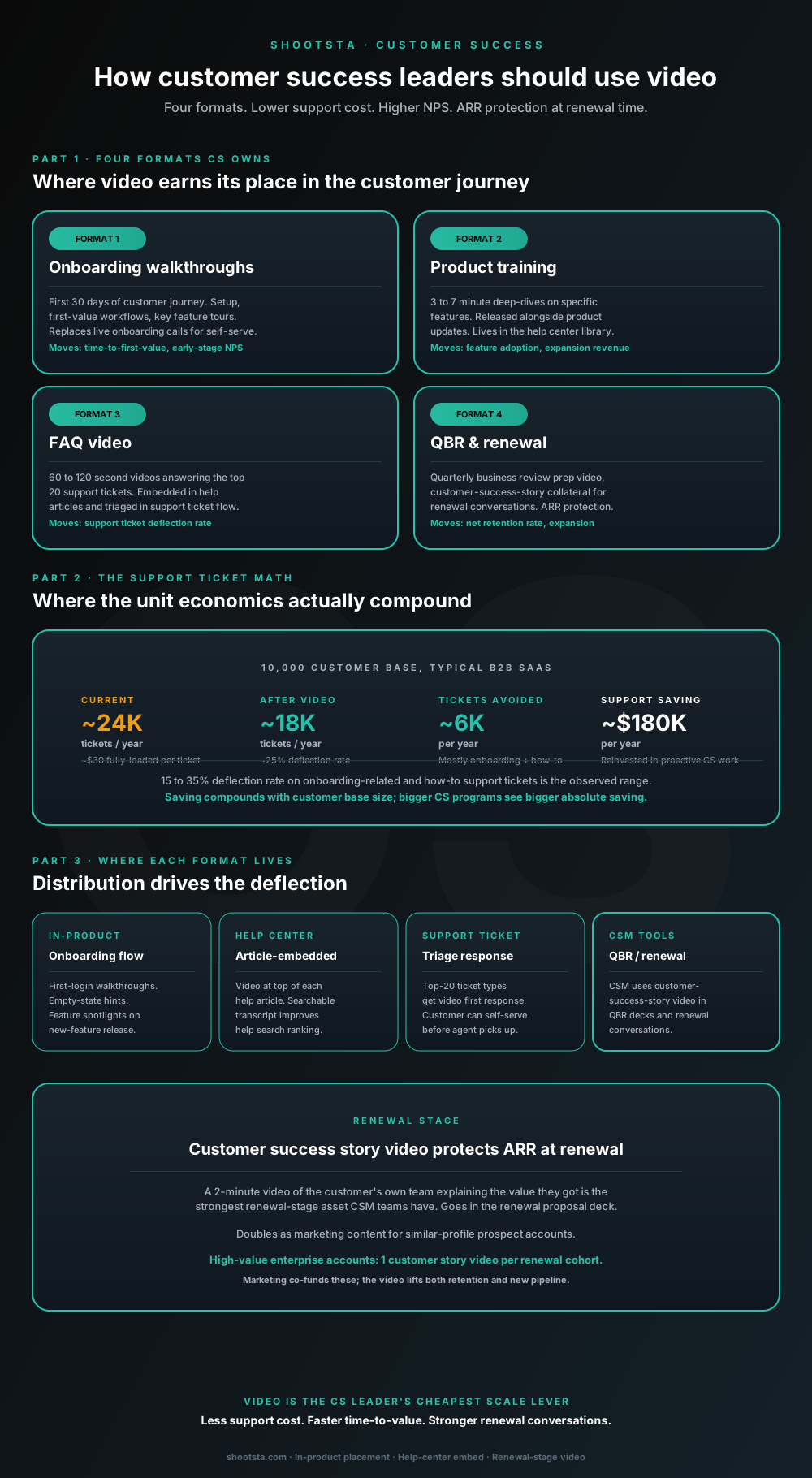
Customer success leaders are usually under-resourced for both reactive support volume and proactive retention work. Video is the cheapest lever to fix both - 15 to 35% deflection on onboarding and how-to tickets, faster time-to-value, and renewal-stage customer story video that lifts net retention. Here is the four-format model and where each piece earns its place.
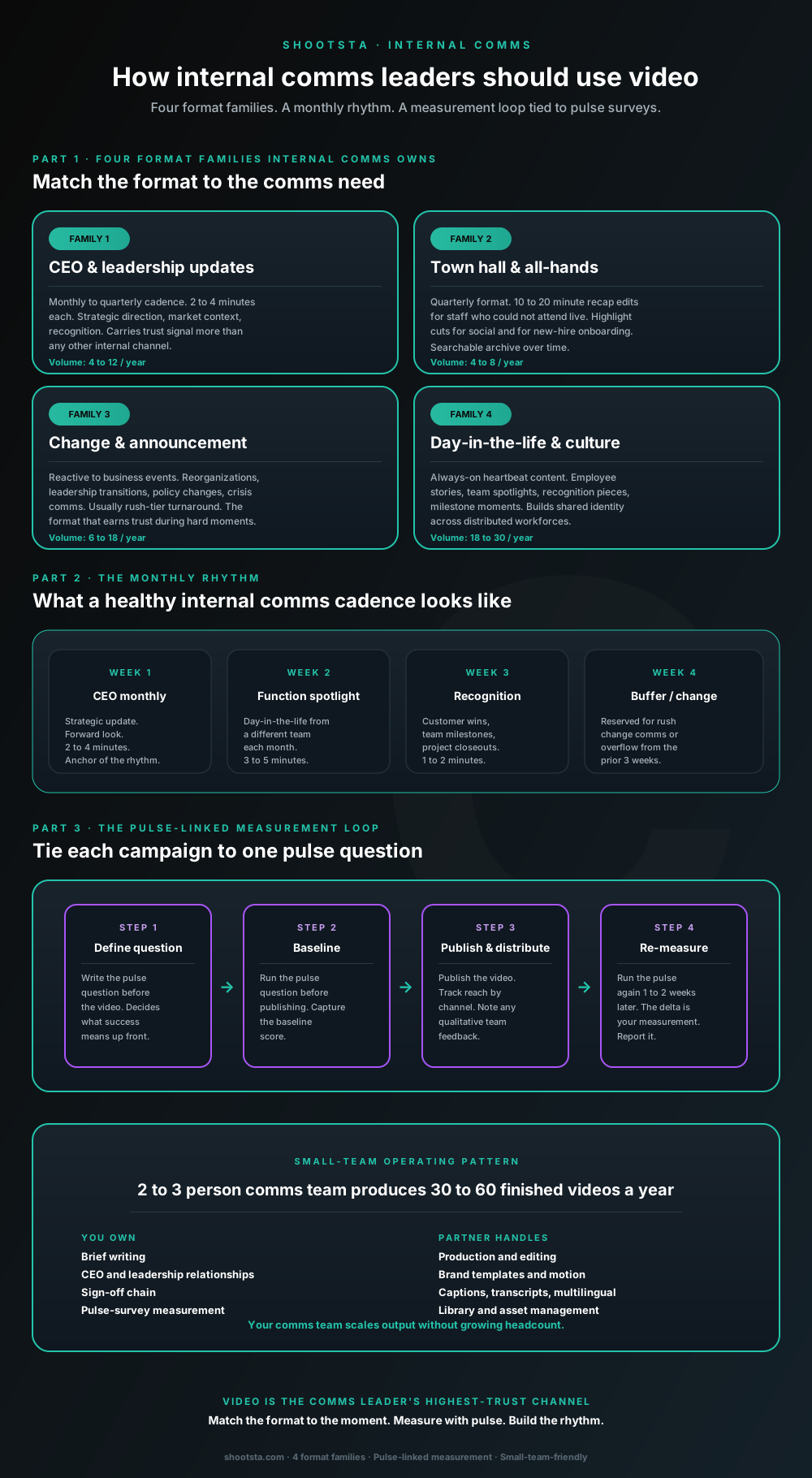
How internal comms leaders should use video
Internal comms leaders are usually under-resourced for the volume of video the business wants. The fix is not more headcount; it is structuring the program around four format families, a monthly rhythm, and a pulse-survey-linked measurement loop. Here is the operating pattern that lets a small comms team produce 30 to 60 finished videos a year.