
How heads of TA should use video for hiring
shootsta.
How heads of TA should use video for hiring
By Shootsta · Published May 29, 2026 · Updated October 2026
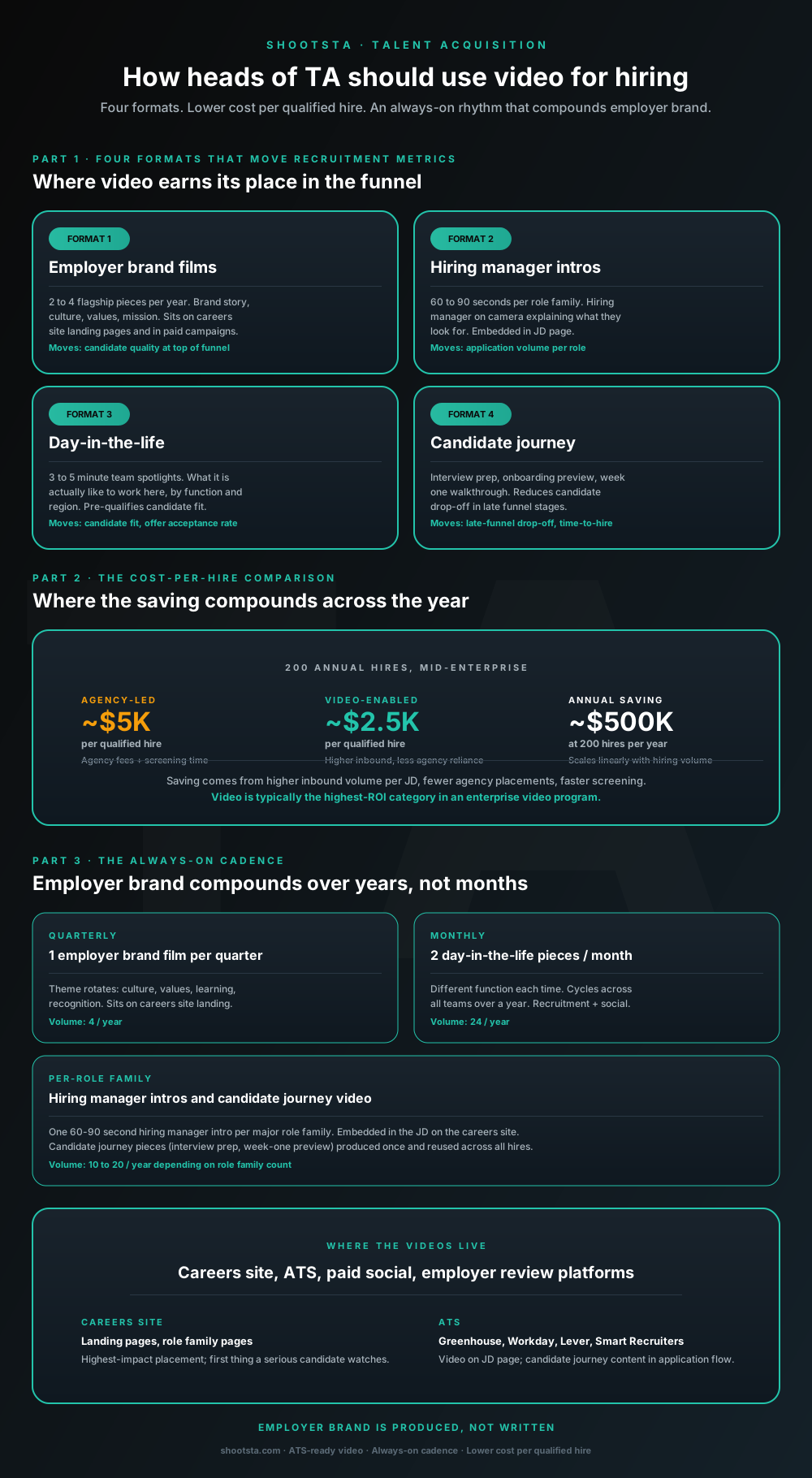
Heads of talent acquisition running agency-heavy hiring funnels usually have the highest-ROI video opportunity in the business. Four formats move recruitment metrics most, the cost-per-qualified-hire drops 35 to 60 percent at scale, and the rhythm compounds employer brand over years rather than months.
Why TA usually has the highest-ROI video opportunity in the business
If you run an agency-heavy hiring funnel, talent acquisition may hold the highest-ROI video opportunity in your business. Recruitment agency fees commonly sit at 20 to 30 percent of first-year base salary, and specialist or executive search runs higher. Even at the low end of that range, a 200-hire enterprise spends several million dollars a year on agency placement alone. Video-enabled inbound hiring can bring the per-hire cost down while it widens the candidate pipeline.
Your recruiters, agency relationships and assessment process all stay in place. Video changes the shape of the funnel further up. It raises inbound application volume, helps candidates judge their own fit and cuts late-funnel drop-off. The cost saving comes from those three shifts working together.
The four video formats that move recruitment metrics most
Format 1: Employer brand films
Plan on 2 to 4 flagship pieces a year that tell your brand story and show your culture, values and mission. They sit on the careers site landing page and run in paid recruitment campaigns. This is the work that takes a serious candidate from "I have heard of this company" to "I want to work there before I look at the JD". It lifts candidate quality at the top of the funnel. Spend on production quality here, since candidates watch these first.
Format 2: Hiring manager intros
Make one 60 to 90 second video per major role family. The hiring manager explains on camera what they look for, what success in the role looks like and what the team is like to work with. The video is embedded in the JD page in the ATS. Candidates often skim many JDs before they apply to a few. A manager-intro video helps the right ones see that they fit, and that tends to lift application volume per JD.
Format 3: Day-in-the-life
These are 3 to 5 minute team spotlights that show what daily work looks like in each function and region. Each one works for internal comms as well as recruitment. A rotation covers every team over the course of a year. The format improves candidate fit and offer acceptance rate because the candidate self-screens before they apply rather than during the interview process.
Format 4: Candidate journey video
Candidate journey videos cover interview prep, an onboarding preview and a week-one walkthrough. They reduce drop-off late in the funnel because the candidate knows what is coming and the process holds no surprises. Enterprise hiring teams lose accepted offers to "I changed my mind" or "I accepted a different offer". A candidate journey video makes those late exits less likely.
The cost-per-qualified-hire comparison
Here is a worked example with assumed figures for a 200-hire mid-enterprise running an agency-heavy funnel.
Agency-led: ~$5,000 per qualified hire. That figure covers agency fees, internal screening time, multiple-round assessment and the cost of late-funnel drop-off. The model assumes heavy reliance on the agency for top-of-funnel and a smaller portion of inbound from passive applicants.
Video-enabled inbound: ~$2,500 per qualified hire. Higher inbound volume per JD reduces reliance on agency placement for non-executive roles. Candidates who have already judged their fit move through screening faster, and fewer of them drop out at the offer stage.
Net annual saving at 200 hires: ~$500,000. That is after an assumed $80,000 to $150,000 a year to produce the TA video program. On these inputs the saving scales roughly in line with hire volume, so a 500-hire business would save closer to $1.25M and a 50-hire business around $125K.
The saving compounds because video-enabled inbound keeps working long after the shoot. Once an employer brand film is on the careers site and a hiring manager intro is on every JD, the cost of producing the videos is absorbed across every subsequent hire. Year 2 produces more saving than year 1 for the same production cost.
Interactive calculator
What could a video-enabled hiring funnel save?
Set annual hires, current cost per qualified hire, and the share you currently source via agency. The calculator returns the expected saving from moving to a video-enabled inbound model.
Current annual cost
$1.0M
200 hires at $5.0K each
Net annual saving
$380K
after $$120K video program cost
Video program payback
3 mo
months to break even
How the saving compounds
Video-enabled hiring funnels reduce cost per qualified hire by roughly 50% versus agency-led hiring at scale. The two drivers are higher inbound application volume per JD (employer brand video raises awareness and pre-qualifies fit) and reduced agency reliance for the role families where inbound volume becomes self-sustaining. At 200 annual hires that nets to roughly $380K per year after the cost of producing the video program.
Scope a TA video programAssumptions: video-enabled cost per qualified hire approximated as 50% of agency-led baseline (observed range 35% to 60% across enterprise customers). Annual video program cost estimated at ~$120K for a full TA video subscription including 4 employer brand films, 24 day-in-the-life pieces, and hiring manager intros across role families. Numbers are guides.
The always-on cadence that compounds employer brand
A common mistake in TA-led video programs is treating video as a project (produce one big employer brand film, distribute for 6 months, forget about it). The pattern that compounds is steady cadence across multiple formats.
Quarterly: 1 employer brand film per quarter
Theme rotates: culture in Q1, values in Q2, learning and development in Q3, recognition in Q4. Each piece sits on the careers site landing page for the quarter it was produced and gets reused in paid campaigns, which gives you 4 a year.
Monthly: 2 day-in-the-life pieces per month
Feature a different function each time and cycle across teams over the year: engineering one month, sales the next and customer success the month after. These pieces also give internal comms a steady stream of team stories. That adds up to 24 a year.
Per role family: hiring manager intros and candidate journey content
One 60 to 90 second hiring manager intro per major role family (engineering, sales, customer success, operations, etc). Each one is produced once and reused for every JD in that family until the role description changes in a real way. Candidate journey videos (interview prep, week-one preview) are also produced once and embedded in the application flow. Expect 10 to 20 a year, depending on how many role families you have.
At this cadence your total annual TA video volume comes to 38 to 48 pieces. A steady production plan handles that volume better than a string of one-off projects.
How video plugs into your existing ATS
Integration is usually simpler than it looks. Three placements cover most of the impact. The first is the careers site landing page. Put the employer brand film at the top, with role family pages below that carry day-in-the-life pieces and hiring manager intros. It has the most impact, since a serious candidate watches it first.
The second is the JD page in your ATS, where the hiring manager intro is embedded on every JD in the role family. Platforms such as Greenhouse, Workday Recruiting, Lever and SmartRecruiters support video embeds in JD templates. Setting this up is a configuration task and needs no custom code.
The third is paid recruitment campaigns. The employer brand film is the creative anchor for paid social and programmatic campaigns, and the day-in-the-life pieces become variants for specific audiences. Video creative tends to earn a lower cost per click on recruitment ads than text-only or static creative.
What changes for the recruiter on the team
Your recruiters spend less time on top-of-funnel sourcing for roles with high inbound volume. They spend more time on assessment, executive search and the role families where inbound video does not solve the problem (specialist roles, senior leadership, niche technical hiring). The team's role shifts toward strategic talent work and away from volume screening.
TA teams tend to welcome this shift, because volume screening is the least interesting work a recruiter does. How you introduce it matters. Position the video program as a tool that helps recruiters do more of the work they were hired for.
Frequently asked questions
Will video lift application volume per JD?
It usually does, and you can test it yourself by comparing the same JD with and without an embedded hiring manager video. The lift is highest on roles where candidates do not know the company well. It is lowest for well-known brands where inbound is already strong.
How long does it take to see the cost-per-hire reduction?
Plan on 2 to 4 quarters from the time the first employer brand film and hiring manager intros go live. Quarter 1 produces the assets. Over quarters 2 to 4 the funnel rebalances as inbound volume rises and you lean less on agencies.
Should we still use recruitment agencies after the video program is in market?
You should keep them for executive and specialist roles. The video program works best for high-volume role families (engineering, sales, customer success, operations) where inbound application volume is the bottleneck. Executive search and niche specialist hiring still benefit from agency relationships because the candidate pool is small and access matters more than volume.
What does the senior leadership need to do on camera?
Senior leaders appear once or twice a year for an employer brand film cameo. Hiring managers do the role-specific intros (60 to 90 seconds each) on a quarterly recording day; one shoot day usually covers 6 to 10 hiring manager intros across the function. The CEO commitment is small and bounded.
How do we measure recruitment video success?
Track cost per qualified hire from the ATS and application volume per JD with and without video. Add offer acceptance rate and time-to-hire for high-volume role families. Your TA team already tracks these metrics, and the video program moves them without adding new ones. We covered the measurement framework in how to measure enterprise video success.
What about employer review platforms like Glassdoor and Indeed?
You can post the same video assets on those platforms directly. Many of them support employer brand video in the company profile section. Adding video to a Glassdoor or Indeed profile alongside the careers site placement extends reach without producing additional content.
Where to go next
For the broader CMO-level view of how TA video fits into a marketing-led video program, read how a CMO should think about enterprise video. For the working pattern alongside an existing TA function, read how a video partner extends your in-house team. For the use cases overview across functions, read how enterprise teams actually use video.
To scope a TA video program for your hiring volume, book a free consultation.
Take this article with you
Read the latest at shootsta.com/blog/how-heads-of-ta-should-use-video-for-hiring
You might also like
How to Brief an Animation Project
How to Brief an Animation Project
An animation brief is the document you send to your production partner before work starts. Get it right and you cut revision cycles in half. Get it wrong and you discover mid-production that everyone disagrees on what the video is for. This is what a complete brief looks like.
Animation for change management comms
Animation for change management comms
Animation handles change management communications better than live video for three reasons: no on-camera executives required during sensitive periods, scene-level updates when plans shift, and a single production that works across global teams with voiceover-only language swaps.
How sales leaders should use video at scale
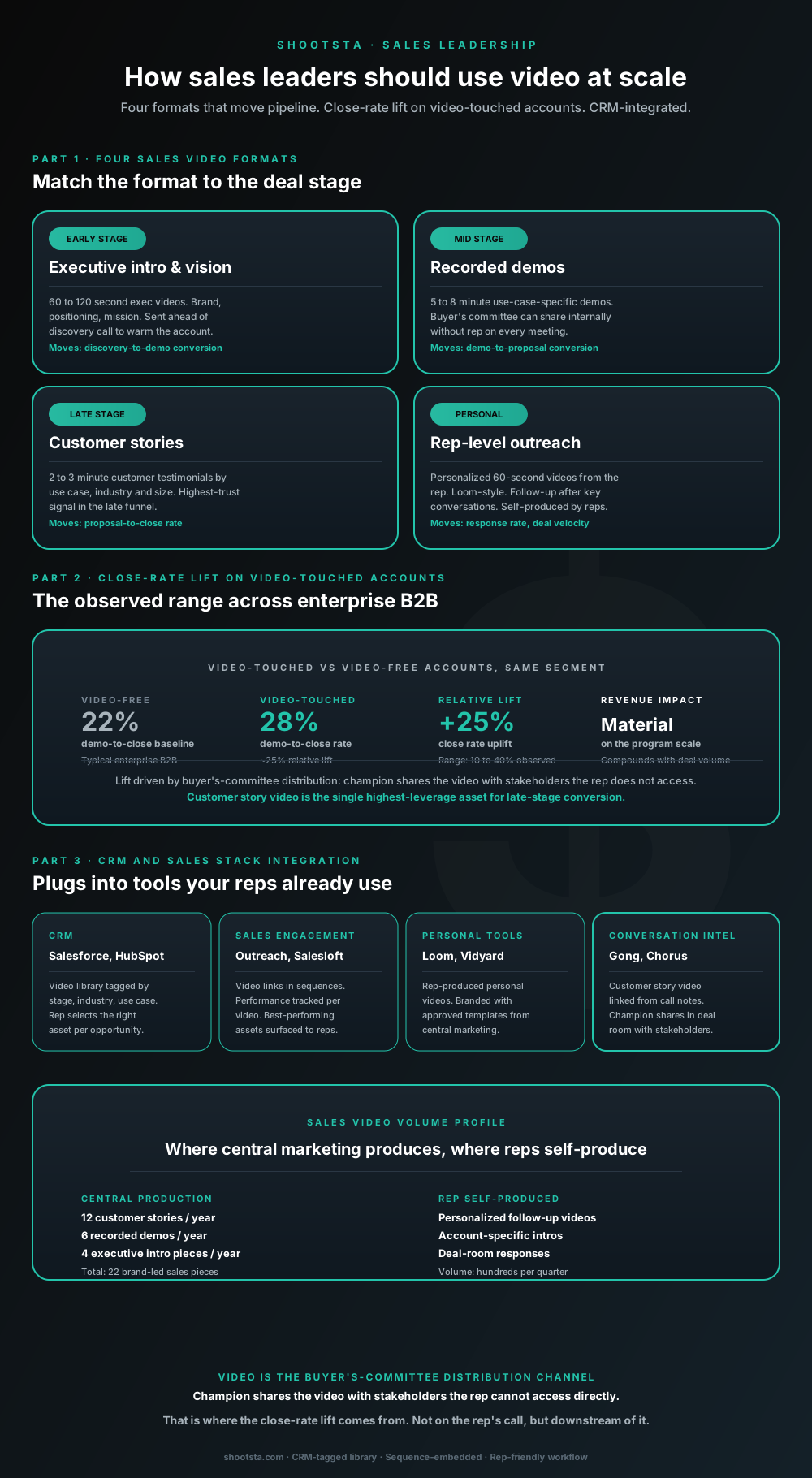
Sales leaders mostly think about video as personalized rep outreach (Loom, Vidyard) or as marketing-produced customer stories. Both are useful. The bigger opportunity is the buyer's-committee distribution layer: assets the champion shares internally with stakeholders the rep does not access directly. That is where the close-rate lift compounds.
How L&D leaders replace classroom with video
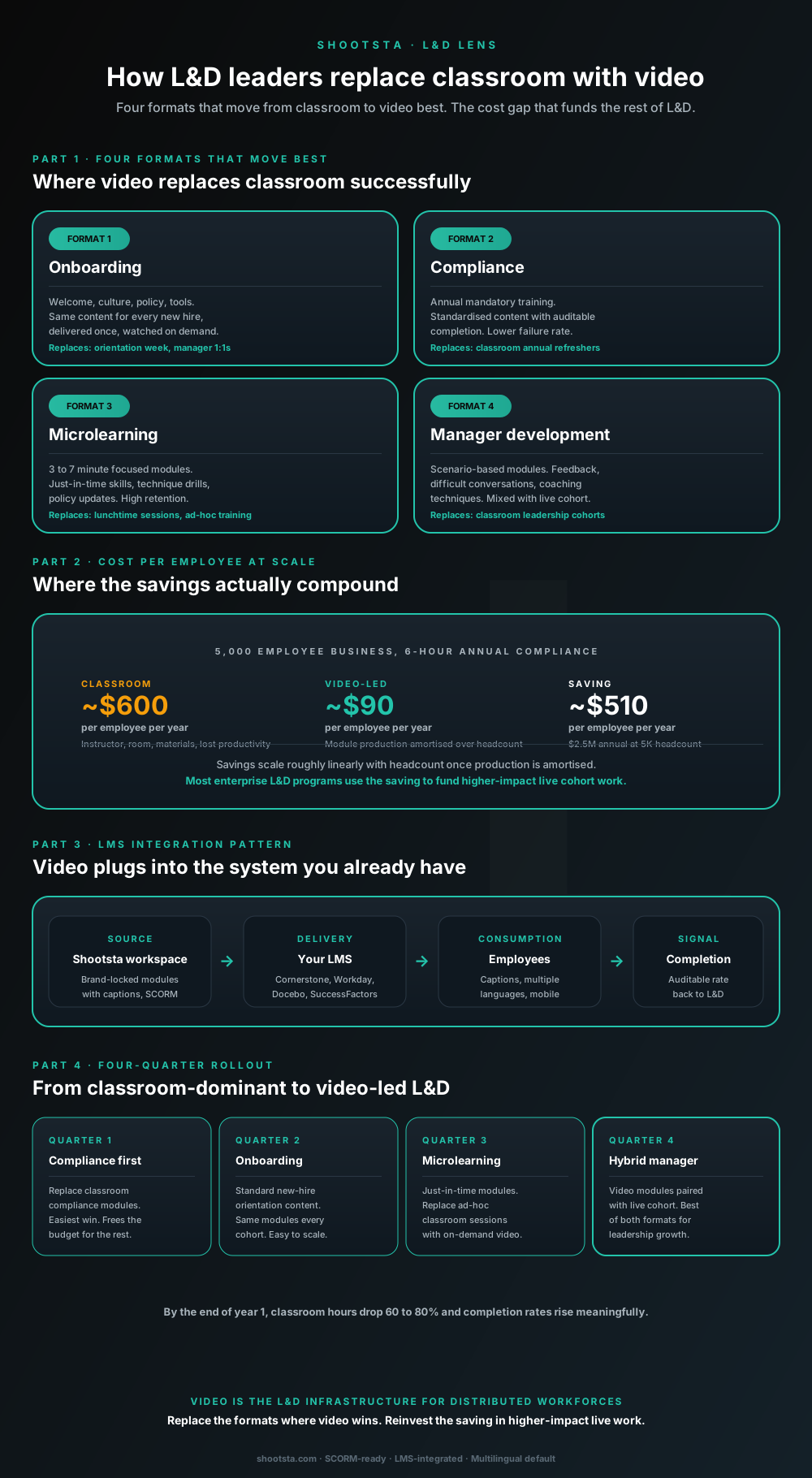
L&D leaders running classroom-heavy training programs typically have the largest single opportunity in the business to free budget through format change. Four training formats move from classroom to video cleanly; the savings fund higher-impact live work. Here is the rollout that compounds learner adoption over four quarters.
How customer success leaders should use video
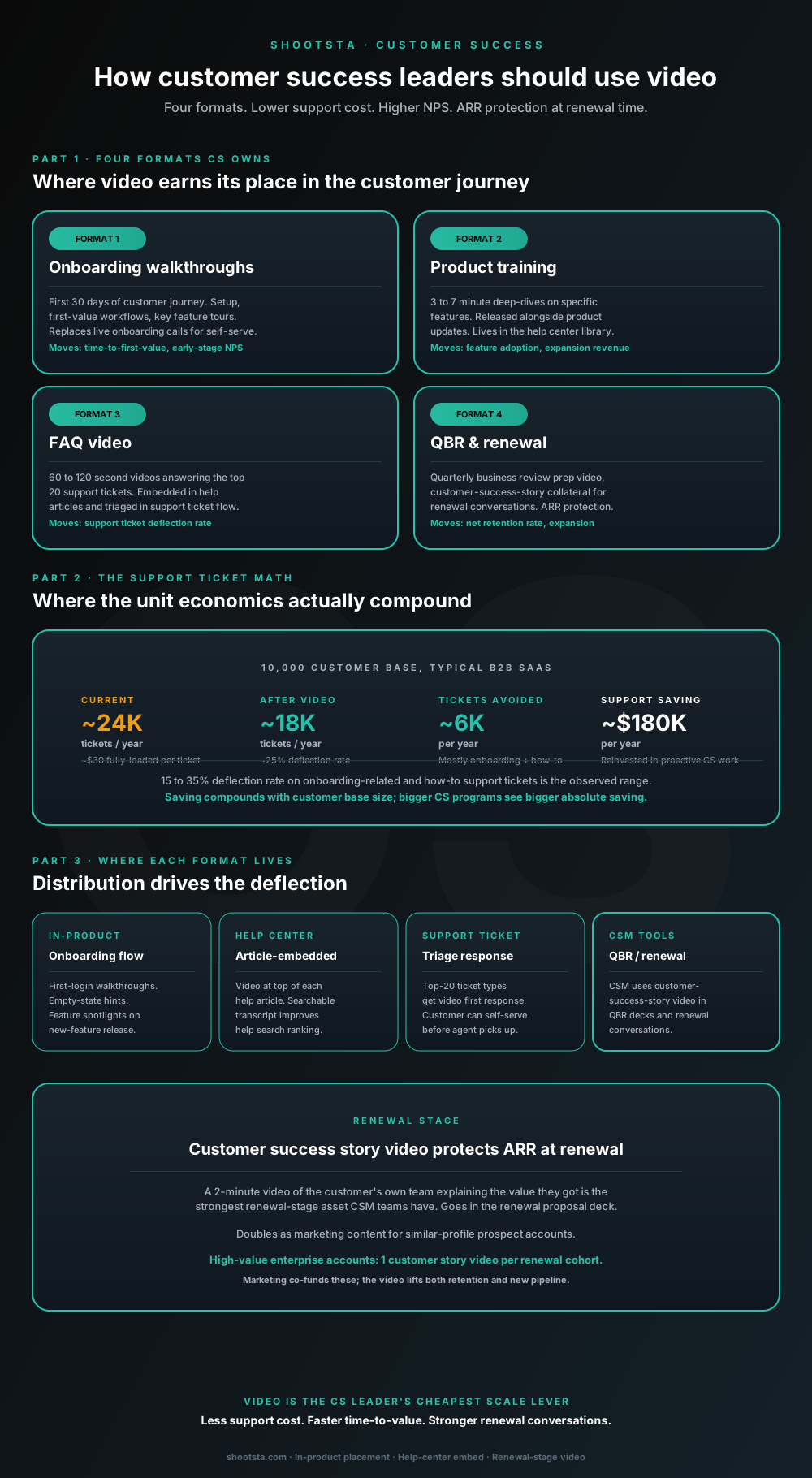
Customer success leaders are usually under-resourced for both reactive support volume and proactive retention work. Video is the cheapest lever to fix both - 15 to 35% deflection on onboarding and how-to tickets, faster time-to-value, and renewal-stage customer story video that lifts net retention. Here is the four-format model and where each piece earns its place.
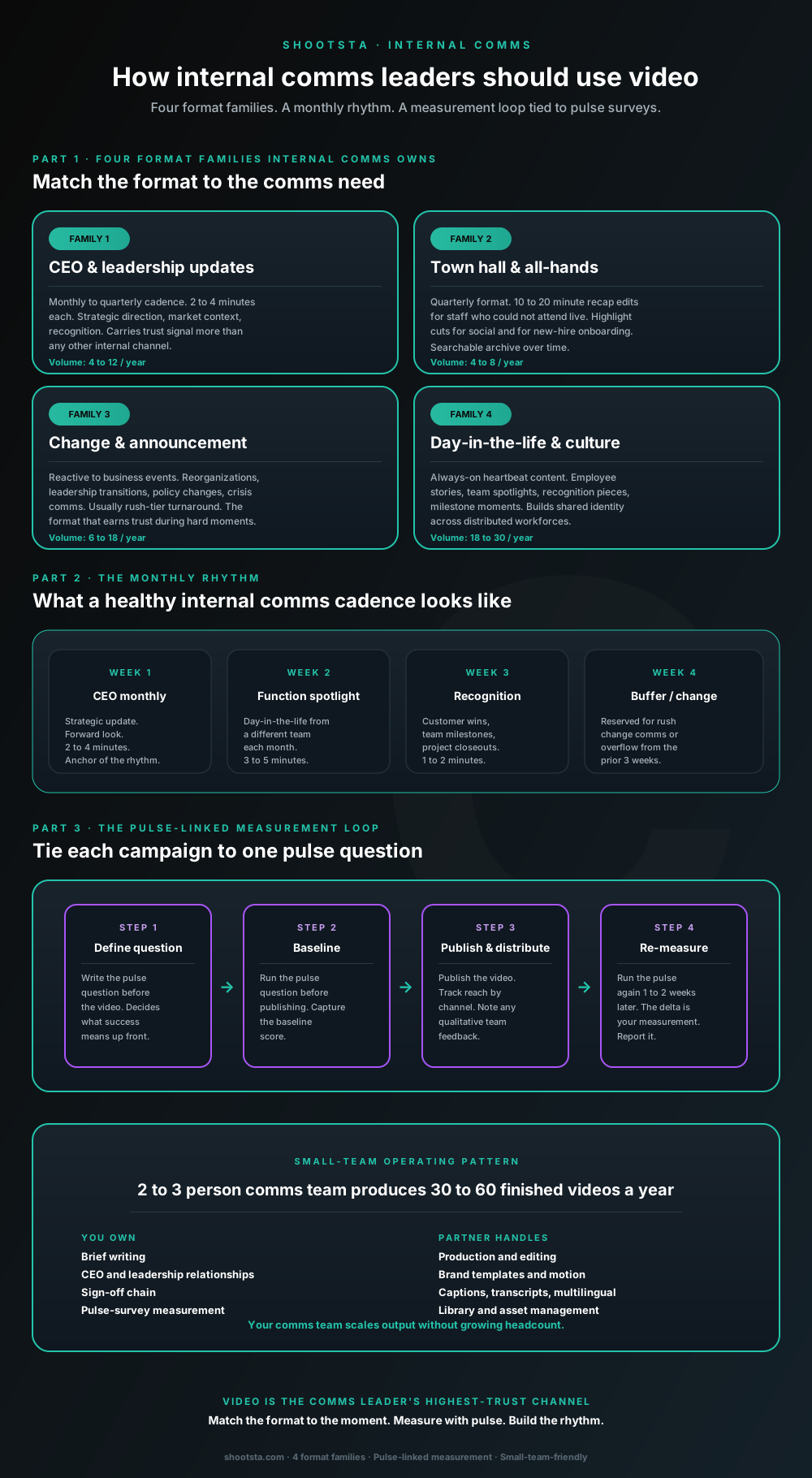
How internal comms leaders should use video
Internal comms leaders are usually under-resourced for the volume of video the business wants. The fix is not more headcount; it is structuring the program around four format families, a monthly rhythm, and a pulse-survey-linked measurement loop. Here is the operating pattern that lets a small comms team produce 30 to 60 finished videos a year.