
How to get exec buy-in for video at scale
shootsta.
How to get exec buy-in for video at scale
By Shootsta · Published May 12, 2026 · Updated October 2026
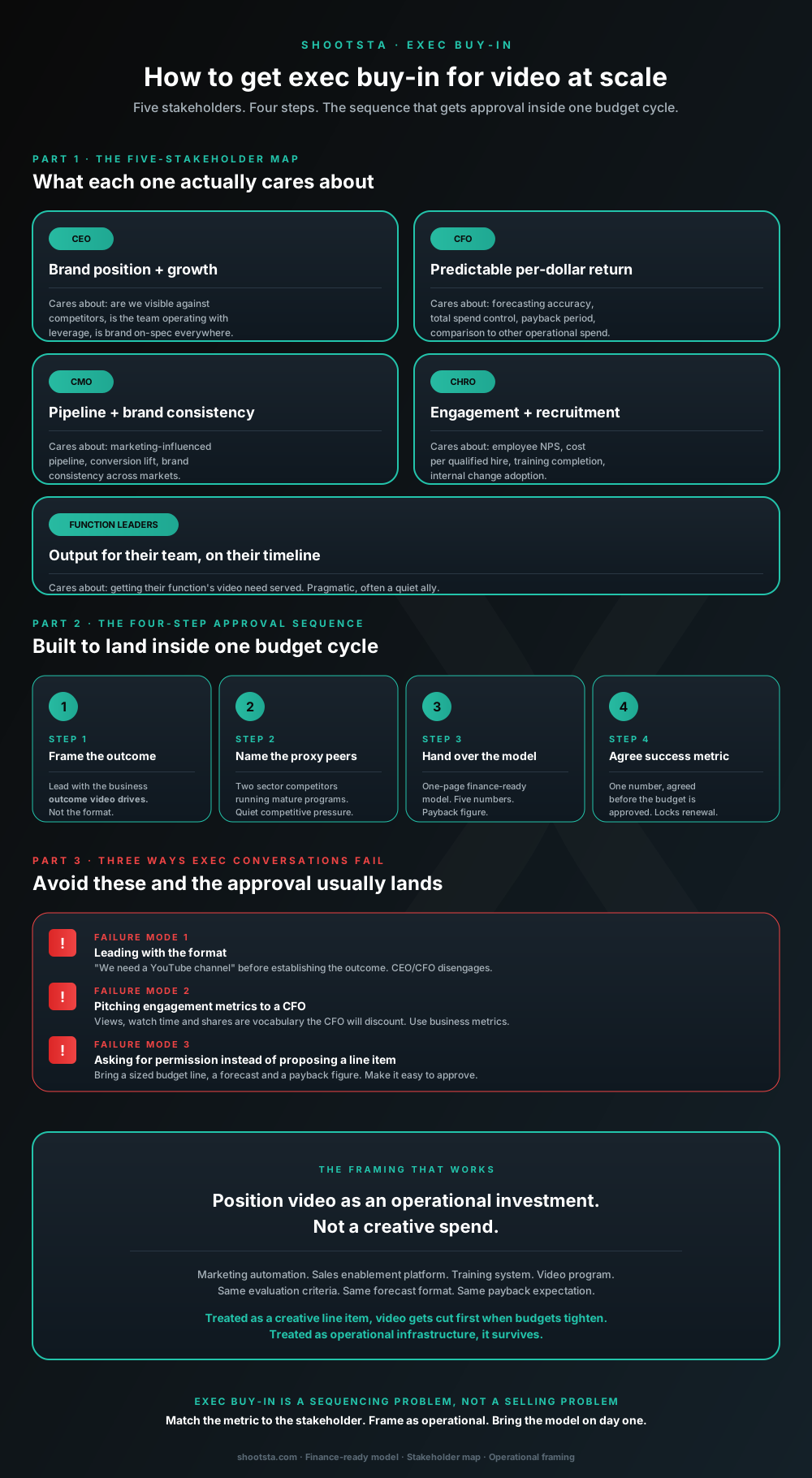
Exec buy-in for a video program is a sequencing problem more than a selling problem. Five stakeholders, each with a different concern. Lead with the one that opens the gate. Here is the order that gets approval inside one budget cycle.
Why exec buy-in for video stalls more often than the case justifies
A video program can get the numbers right and the politics wrong. The business case holds up, the payback figures are credible and the peer benchmarks are clear. The proposal can still sit in approval limbo for two quarters, because the framing was wrong for the people in the room.
Exec buy-in for video is a sequencing problem more than a selling problem, because each stakeholder cares about something different. If you lead with the wrong point for the person in front of you, the conversation goes nowhere. Match the point to the person and the approval can land inside a single budget cycle.
The five-stakeholder map
The typical enterprise approval chain has five stakeholder roles. Each one evaluates the same program against a different metric.
CFO / Finance
Cares about predictable per-dollar return, total spend control, payback period, and how video compares to other operational investments. The CFO has heard "engagement metrics" enough times to discount them. Lead with the one-page model, the annual line item, the payback figure in months. We covered the model itself in the business case for enterprise video.
CMO / Marketing
Cares about marketing-influenced pipeline, conversion lift on video-enabled assets, brand consistency across markets. The CMO often wants the program to succeed because video makes marketing's existing work perform better. Lead with the specific format-to-outcome mapping (customer stories drive pipeline, landing-page video drives conversion) and sector benchmarks from peer marketing programs. Frame video as marketing infrastructure, not as competing for marketing budget.
CHRO / People
Cares about employee NPS, cost per qualified hire, training completion rates, internal change adoption. Recruitment and L&D often have the highest video ROI in the program, which makes the CHRO a strong ally if pulled in early. Lead with cost-per-hire reduction from employer brand video, training completion lift from microlearning, pulse-survey movement on internal comms topics.
CEO
The CEO cares about brand position against competitors and whether the business is running like a serious enterprise. Lead with sector benchmarks that show what peers are doing. Add a one-line vision (operationalize video across every business touch-point) and a plain answer to what the CEO will be asked to do on camera. CEOs say no when they fear the time commitment has no limit.
Function leaders (sales, L&D, customer success, etc.)
Cares about output for their function on their timeline, without losing control of the brief. Function leaders are usually quiet allies because the consolidated program makes their function's work easier (faster turnaround, lower per-video cost, brand handled centrally). They do not need to be sold; they need to be brought into scoping early.
Interactive stakeholder map
Who needs to say yes for your video program?
Toggle the stakeholders you need to win over. The map orders them by typical approval sequence and surfaces what each one cares about, what to lead with, and what to avoid.
Stakeholders in your approval chain
Toggle one or more stakeholders to see the approval sequence and per-stakeholder framing.
The principle behind the sequence
Win the CFO first with the model. Win the CMO and CHRO second with the outcome metrics they already track. Bring the CEO in last with the proposal ready to approve, not as a question. Function leaders are usually quiet allies because the program makes their function's work easier; they do not need to be sold, they need to be brought into scoping early.
Get help building the internal pitchSequence is the typical approval order across enterprise customers we work with. Your business may have a different politics map - the order matters less than matching each stakeholder's metric to what they actually evaluate against.
The four-step approval sequence
This sequence is built to land the approval inside a single budget cycle, so run the steps in order.
Step 1: Frame the outcome
Open every conversation with the business outcome video will drive, and leave the format for later. "We need to grow marketing-influenced pipeline" is an outcome, while "We need a YouTube channel" is a format. The first one opens the conversation and the second one closes it. CEOs and CFOs tune out of format-led pitches within the first minute.
Step 2: Name the proxy peers
Pick two sector competitors that run mature video programs, and name them where you can. The CEO does not want to be behind their direct comparables; the CFO wants to know the spend is rational compared to peers; the CMO wants to know their team is operating at a credible standard. Peer naming creates quiet competitive pressure without explicit advocacy.
Step 3: Hand over the model
The one-page finance-ready model with five numbers: cost per finished video, annual volume, per-video value, avoided cost, payback period. Same format finance uses to evaluate any other annual operational program. Once video sits inside that template, the conversation stops being about creative spend and starts being about operational investment. The model itself is the proof you have done the work; the numbers earn approval.
Step 4: Agree the success metric
Agree one number in writing before the budget is approved. "We will measure engagement" and "we will track multiple metrics" are too loose to defend later. Pick one outcome metric per program and map it to a system the business already uses. When the metric is locked up front, renewal at the end of year one becomes a math problem rather than a political one.
The three common ways exec conversations fail
Three patterns turn up often enough to be predictable. Avoid them and the approval usually lands.
Failure mode 1: Leading with the format
"We need a YouTube channel." "We should do a podcast." "Let's launch a LinkedIn video series." These pitches always lose CEO and CFO attention inside the first minute, because they sound like ideas before strategy. The format is the answer; lead with the question (the business outcome) and the format becomes obvious.
Failure mode 2: Pitching engagement metrics to a CFO
Views, watch time, share rate, comment volume are vocabulary the CFO will quietly discount. They are useful metrics for the video team to optimise content; they are not metrics that justify spend. Pipeline, hires, completion rates, conversion lift, support ticket reduction are the vocabulary that lands. We covered the three-tier metric ladder in how to measure enterprise video success.
Failure mode 3: Asking for permission instead of proposing a line item
"What do you think about us doing more video?" is a question. "Here is the proposed annual budget line for the video program, here is the model, here is the success metric, ready to approve" is a proposal. The first goes into a parking lot for next quarter. The second goes into the budget review. Bring the proposal at the proposal stage, not at the conversation stage.
The framing that does most of the work
Position video as an operational investment instead of a creative spend. The framing is the difference between a program that survives budget cycles and a program that gets cut first when budgets tighten.
Operational investments at most enterprises include marketing automation, sales enablement platforms, training systems, customer success platforms, HR systems, payroll systems. They share three characteristics: predictable annual line item, measurable outcome contribution, finance-ready evaluation format. Video, framed correctly, fits the same template.
Creative spend lives in a different bucket: campaign costs, agency project fees, brand work, event sponsorships. It is the bucket that gets cut first when budgets tighten because it is evaluated quarter-by-quarter on subjective grounds. If your video program is in that bucket, the politics will repeat every quarter. If it is in the operational bucket, it survives.
What to do when one stakeholder is the blocker
Here are the three blockers we see most often, with a fix for each stakeholder.
CFO blocker
The model is not landing. Usually means the per-video cost looks high relative to other operational investments, or the payback assumption is too vague. The fix is usually to switch the comparison reference (compare to recruitment agency cost-per-hire, not to "creative spend"), or to tighten the payback claim with a specific outcome benchmark from the function-leader work.
CMO blocker
The CMO sees video as a threat to existing marketing spend or to existing agency relationships. Frame it as marketing infrastructure (like marketing automation) rather than as a separate program. Show how the existing marketing spend performs better with video underneath it (landing pages convert higher, paid social performs better, agency creative gets more reuse).
CEO blocker
Usually fear of personal time commitment. "If we do more video, the CEO has to be on camera more" is the unstated worry. Be explicit up front about how much CEO video the program needs. It is often less than expected, and it can be batched into one shoot day a quarter. CEOs tend to say yes once they see the time has a limit.
How to handle the "we tried video before and it didn't work" objection
You will hear this at enterprises that ran an unstructured video effort a few years ago and gave up. The honest answer is usually that the previous attempt failed on the operating model (no consistent workflow, no brand templates, no measurement) rather than on the idea of video itself.
Show what changes: a consolidated operating model, brand templates loaded once, scored brand custodian sign-off, business-metric attribution. The previous failed attempt usually becomes the credibility for the new attempt - "we tried this without a real operating model, here is what the operating model looks like, here is what it changes". A CFO tends to welcome the story of the prior failure, because it shows you have learned from it.
Frequently asked questions
How long should the exec approval take?
A program sized inside an existing budget category can move from first conversation to approved line item in a few weeks. A program that needs a net-new budget line takes longer, because it usually has to wait for the annual budget cycle. A very fast approval often means the proposal is being approved on momentum rather than scrutiny, which often unravels at renewal.
Should we present to the full exec team or stakeholder-by-stakeholder?
Stakeholder-by-stakeholder first, then a confirmation in the full exec forum. The full forum is for ratifying decisions that are already substantively agreed in the one-to-ones. Surprises in the full exec forum almost always slow the decision down.
What if the CEO wants to fast-track approval?
Welcome it, but still do the CFO conversation before the approval lands. CEO-fast-tracked approvals that bypass the CFO often unravel at the first quarterly review when the CFO sees the spend without having engaged with the model. Run the CFO conversation in parallel rather than skip it.
How do we handle multiple budget owners (marketing, HR, comms)?
One option: a central budget owned by comms or marketing with internal cost-recovery from the other functions based on usage. Other option: each function owns a sub-tier of the program in their own budget, with one operating model across all of them. Procurement and finance usually have a strong preference between the two; we adapt to whichever fits the internal accounting.
What if our exec team is split on whether to do video at all?
Run a pilot, because the 90-day pilot model is built for exactly this situation. Approve a small structured pilot, score it against agreed metrics, decide at day 90 whether to scale. The pilot bypasses the "should we do video" debate by producing actual evidence in three months. We covered the structure in how to pilot a video production partner.
Will Shootsta help us build the internal pitch?
Yes. We have done this enough times that the patterns are clear. We will work through the model, the peer benchmarks, the stakeholder-by-stakeholder framing and the proposal template with your team. The deliverable is your own pitch with your data in it, ready for your exec team, and it carries no Shootsta sales branding.
Where to go next
For the model the CFO will ask for, read the business case for enterprise video. For the peer benchmarks that frame the CEO conversation, read what companies like yours are doing with video. For the measurement plan that locks the success metric, read how to measure enterprise video success.
Exec conversations go better when you open with a diagnosis instead of a request. Score your program out of 25 with the CMO video scorecard and take the PDF into the meeting.
To work through your specific stakeholder map and approval sequence, book a free consultation.
Take this article with you
Read the latest at shootsta.com/blog/how-to-get-exec-buy-in-for-video-at-scale
You might also like
How to Brief an Animation Project
How to Brief an Animation Project
An animation brief is the document you send to your production partner before work starts. Get it right and you cut revision cycles in half. Get it wrong and you discover mid-production that everyone disagrees on what the video is for. This is what a complete brief looks like.
Animation for change management comms
Animation for change management comms
Animation handles change management communications better than live video for three reasons: no on-camera executives required during sensitive periods, scene-level updates when plans shift, and a single production that works across global teams with voiceover-only language swaps.
How sales leaders should use video at scale
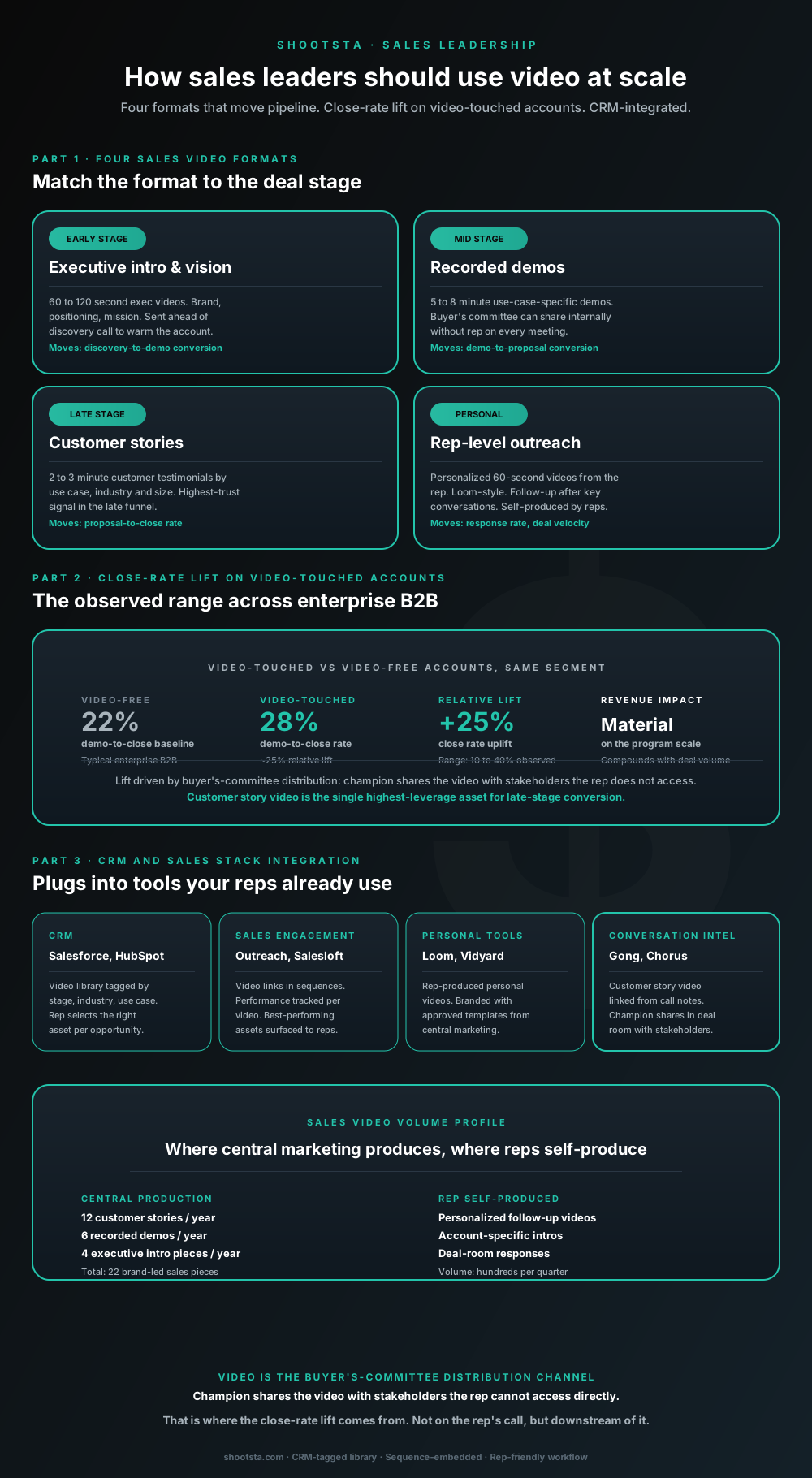
Sales leaders mostly think about video as personalized rep outreach (Loom, Vidyard) or as marketing-produced customer stories. Both are useful. The bigger opportunity is the buyer's-committee distribution layer: assets the champion shares internally with stakeholders the rep does not access directly. That is where the close-rate lift compounds.
How L&D leaders replace classroom with video
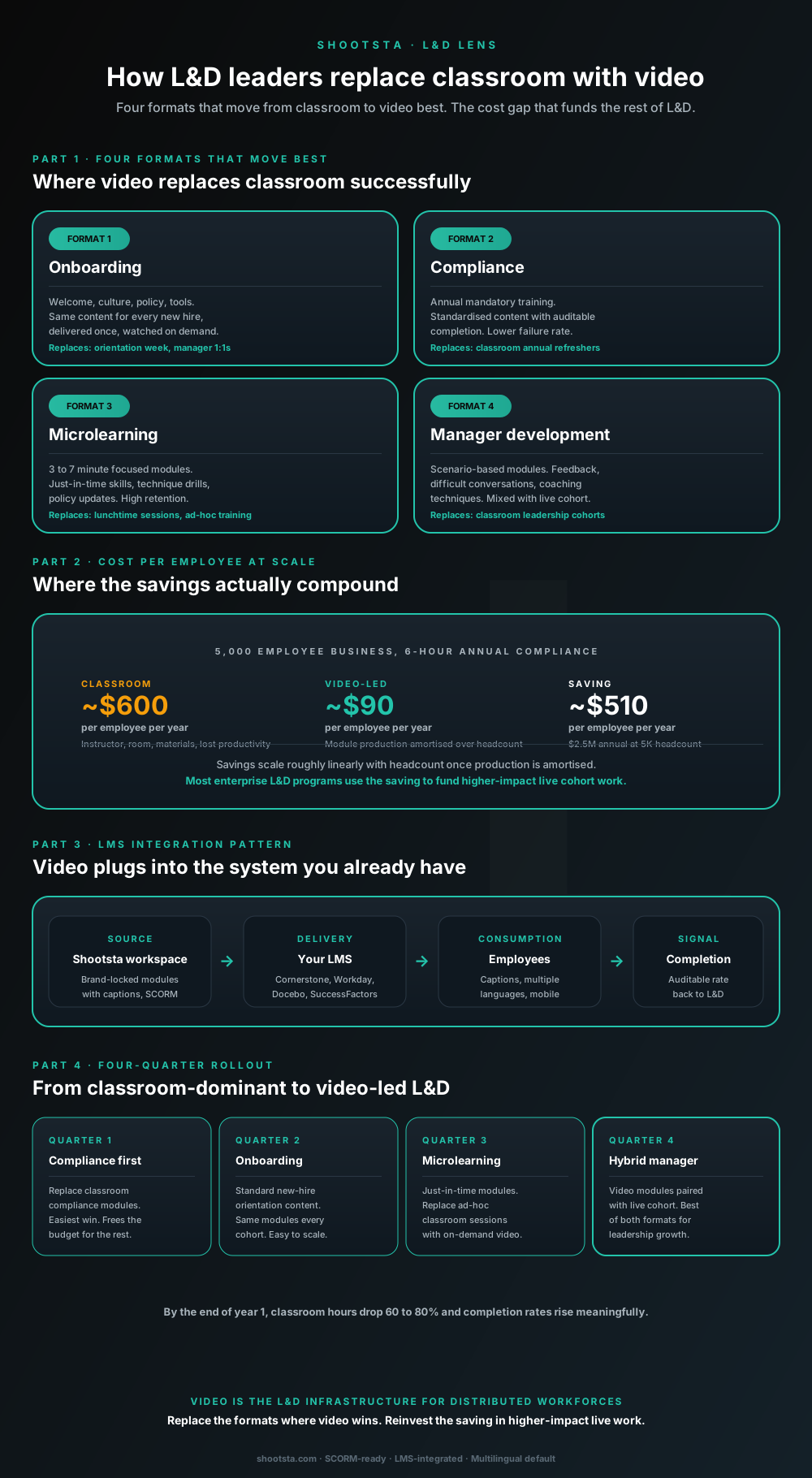
L&D leaders running classroom-heavy training programs typically have the largest single opportunity in the business to free budget through format change. Four training formats move from classroom to video cleanly; the savings fund higher-impact live work. Here is the rollout that compounds learner adoption over four quarters.
How customer success leaders should use video
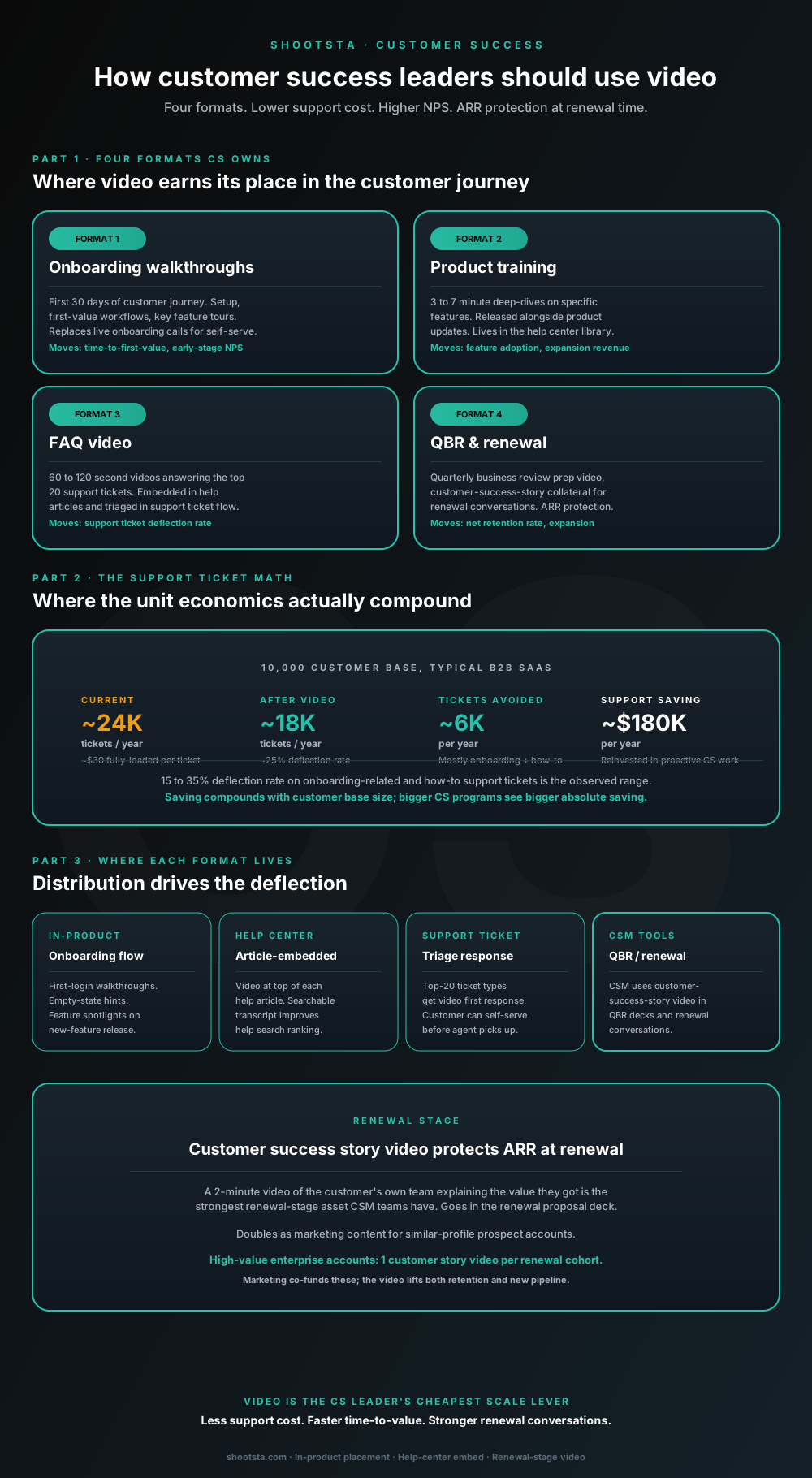
Customer success leaders are usually under-resourced for both reactive support volume and proactive retention work. Video is the cheapest lever to fix both - 15 to 35% deflection on onboarding and how-to tickets, faster time-to-value, and renewal-stage customer story video that lifts net retention. Here is the four-format model and where each piece earns its place.
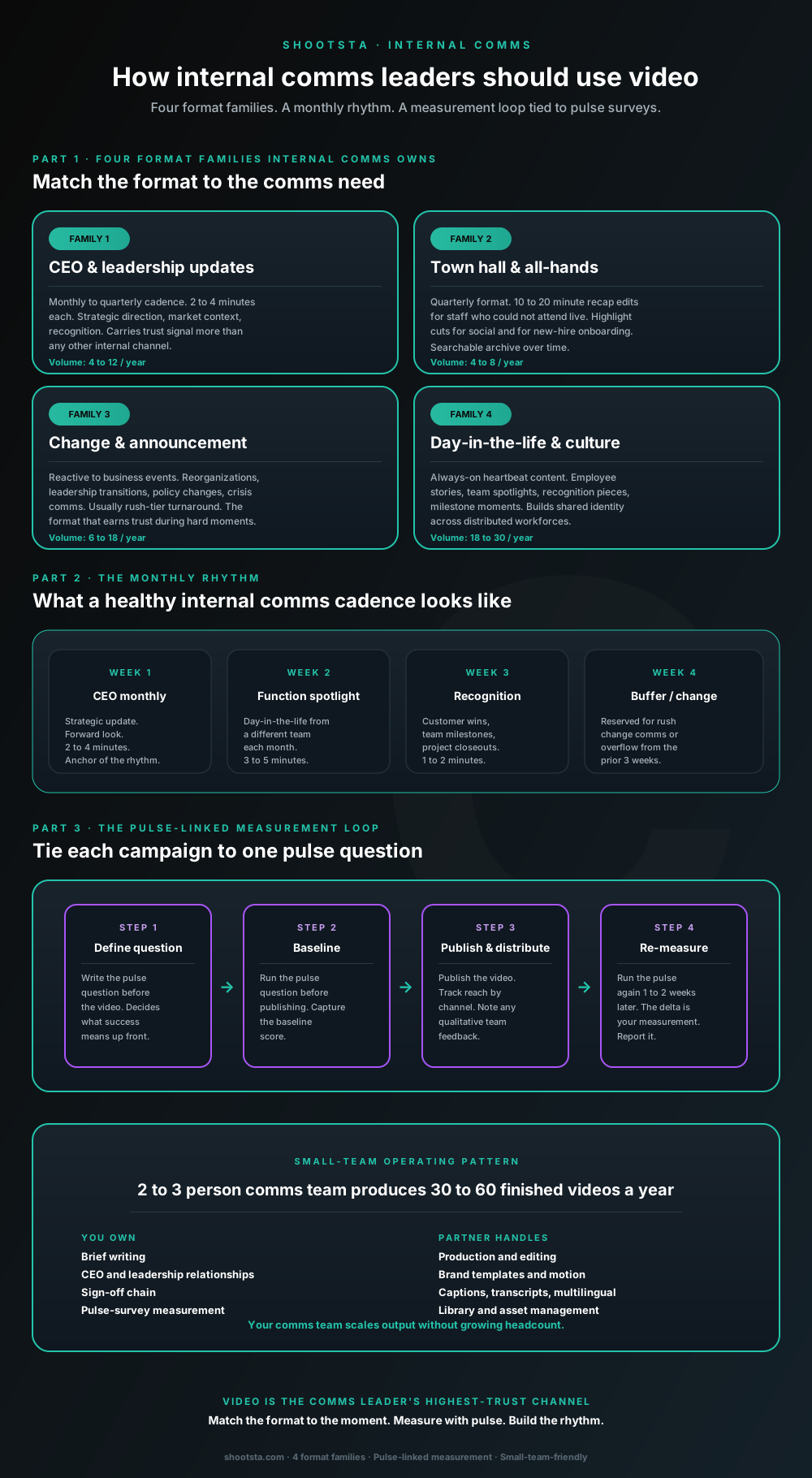
How internal comms leaders should use video
Internal comms leaders are usually under-resourced for the volume of video the business wants. The fix is not more headcount; it is structuring the program around four format families, a monthly rhythm, and a pulse-survey-linked measurement loop. Here is the operating pattern that lets a small comms team produce 30 to 60 finished videos a year.