
How enterprise teams actually use video
shootsta.
How enterprise teams actually use video
By Shootsta · Published May 25, 2026 · Updated October 2026
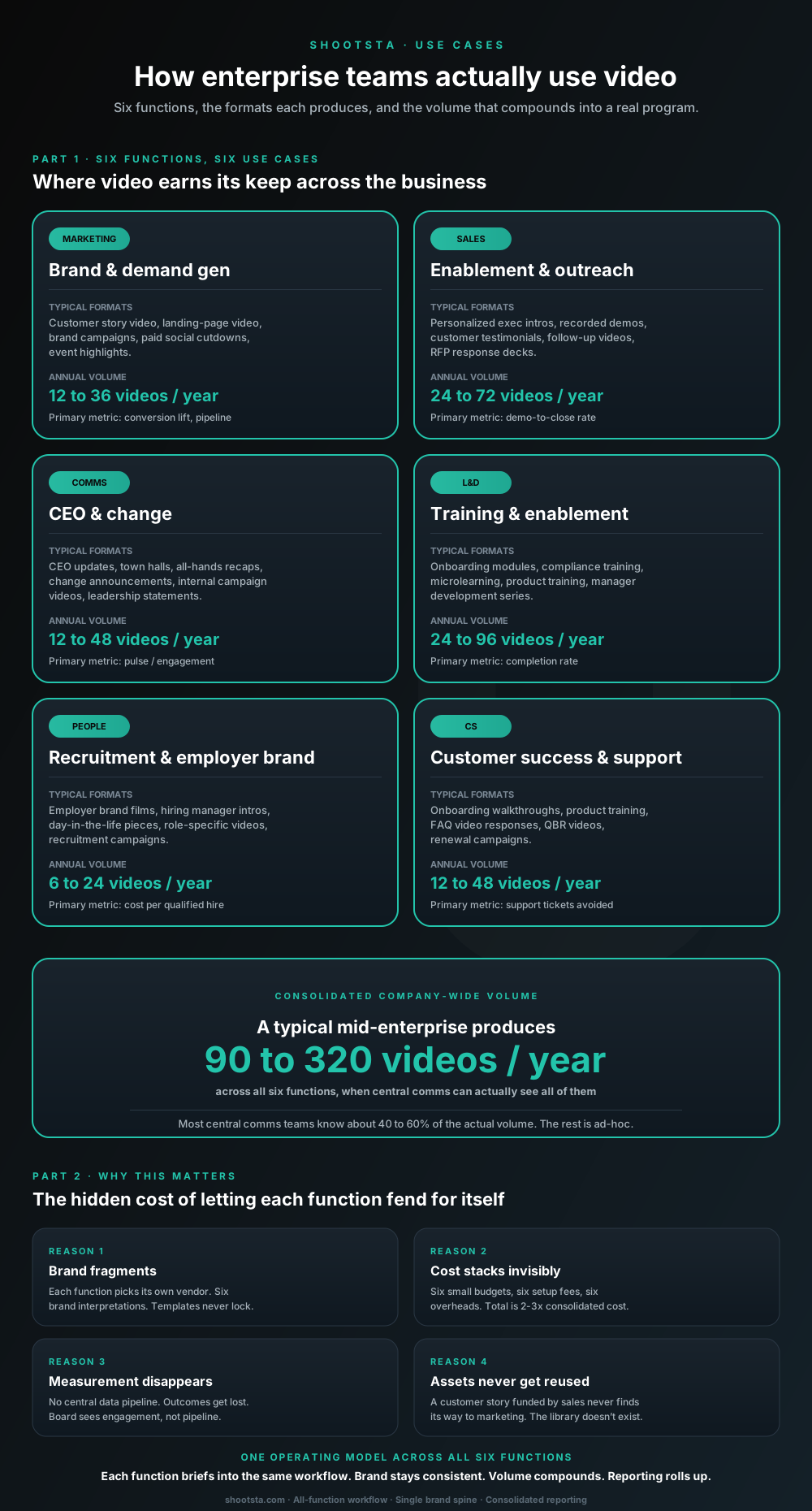
Most central comms teams know about 40 to 60% of the video volume their business produces. Marketing, sales, L&D, comms, recruitment and customer success all use video, often through separate vendors with separate brand setups. Here is the real footprint and the hidden cost of letting it stay fragmented.
The volume your business is producing
Ask the central comms or marketing leader at a large enterprise how many videos the business makes in a year, and you will get a number. That number is often lower than the real total. The figure they give covers the central program, while the real volume adds the ad-hoc work each function does on its own. Sales pays a freelancer to cut customer videos, L&D has a separate vendor for compliance modules, recruitment uses an agency for employer brand pieces, and customer success bought a SaaS tool to record product walkthroughs.
All of that work is happening, but central cannot see it. It is also split across vendors, brand interpretations and measurement frameworks that never roll up into one view.
How six core functions use video
Across the enterprise customers we work with, the same six functions show up as the main video producers. Each one has its own format mix, its own outcome metric and its own annual volume, which you can count by asking each function lead. A real enterprise video program covers all six functions, with the central marketing team as one of them.
Marketing: brand and demand generation
Marketing makes customer story videos, landing-page videos, brand campaigns, paid social cutdowns and event highlights. Count last year's output from the campaign calendar. The main metrics are conversion lift on pages with video and marketing-influenced pipeline. Central comms teams usually see this function clearly because it sits closest to them.
Sales: enablement and outreach
Sales uses tailored executive intros, recorded demos, customer testimonials, follow-up videos and RFP response decks with embedded video. Much of it is made for one prospect at a time, so ask the sales enablement lead for a count rather than relying on the marketing calendar. The main metric is demo-to-close rate. Sales is often the function central cannot see, because reps tend to source their own video and treat it as a cost of doing business rather than a program.
Internal comms: CEO updates and change
Internal comms runs CEO updates, town halls, all-hands recaps, change announcements, internal campaigns and leadership statements. The comms calendar gives you last year's count. The main metrics are pulse survey movement on the topic and employee NPS. Central usually sees this work because comms owns most of the production.
Learning & development: training and enablement
L&D produces onboarding modules, compliance training, microlearning libraries, product training, manager development series and sales training. Count the modules in the LMS, because L&D can turn out to be the highest-volume function in the business. The main metrics are course completion rate and classroom hours saved. Central often misses this work because L&D runs its own LMS and its own video production through its own vendor.
People: recruitment and employer brand
The people team makes employer brand films, hiring manager intros, day-in-the-life pieces, role-specific videos and recruitment campaigns. The talent team or its agency can give you last year's count. The main metric is cost per qualified hire. This work often goes to a recruitment agency rather than the video team.
Customer success: onboarding and support
Customer success makes onboarding walkthroughs, product training, FAQ video responses, QBR videos and renewal campaign videos. The recording tool's library will show how many were made last year. The main metrics are support tickets avoided and NPS movement. These videos are often recorded in a SaaS tool rather than by a video team, so brand and quality vary from one to the next.
Interactive volume planner
What is the real video volume across your business?
Toggle the functions producing video today and set the typical monthly volume per function. The planner shows consolidated annual volume, the tier that fits, and what consolidating fragmented vendor spend would save.
Functions producing video
Toggle one or more functions above to see consolidated volume and tier fit.
Vendor overhead estimated at ~$12K per additional vendor per year (setup fees, account management, procurement cycles, duplicated brand reviews). Tier recommendations based on Shootsta volume tier structure. Numbers are guides.
What the consolidated company-wide volume looks like
Adding the six function counts together gives your company-wide total of finished videos a year. The total depends on company size, sector and how mature each function's program is. Mature programs produce more, and the total is lower where one or two functions have not started on video yet.
When central comms teams see the combined count, the first response is often "We do nowhere near that many." That is correct for the central program. The combined count includes the ad-hoc work each function does on its own, so when you ask each function leader directly, the total is often higher than central comms expects.
The hidden cost of letting each function fend for itself
Four costs stack up when six functions each source their own video work.
Brand fragments
Each function picks the vendor that fits its budget and its timeline, so six vendors end up reading the brand six different ways. Lower thirds, voice and cultural references all start to drift. The brand custodian cannot keep up because they only see the work central knows about. Over time, brand consistency across the wider asset library slips without anyone noticing.
Cost stacks invisibly
Six functions with six small budgets means six vendor setup fees and six lots of account management. Add those costs up and the total can sit well above what one consolidated program would cost for the same output. The cost stays hidden because no central budget line sees the total, and the CFO usually finds it during a procurement audit.
Measurement disappears
Without a central data pipeline, each function reports its own outcomes in its own way. Marketing reports views and L&D reports completion, while comms reports pulse scores and sales often reports nothing at all. None of it rolls up. The board sees engagement metrics from marketing and assumes that is the whole picture, so it misses the bigger outcome story inside L&D and customer success.
Assets never get reused
A customer story funded by sales never finds its way to marketing, and a product walkthrough made for L&D never reaches customer success. The same brand idea gets shot three times because nobody knows it already exists. In practice the shared asset library does not exist, and each function works on its own.
What a company-wide program looks like in practice
Central does not take over everything. The change is one operating model that every function briefs into, with central comms owning the brand spine and each function owning its own outcomes.
Each function keeps its own budget and its own say over the brief. Marketing decides which customer stories to make, sales picks the exec intros to record, L&D sets the training calendar and recruitment chooses which roles need employer brand video. Each function knows its own work better than central does.
What changes is the production layer. All six functions brief into the same platform and work with the same brand-trained editors. They use the same brand templates, and the same brand custodian signs off their work. The vendor stack drops from 5 or 6 to one, the brand templates load once, and the asset library becomes a real place people can search.
The reporting layer changes too. Each function still tracks its own primary metric (demo-to-close rate for sales, completion rate for L&D, conversion lift for marketing). The six metrics roll up into one company-wide Tier 3 report leadership can read. The board sees one program instead of six fragmented ones. We covered the measurement framework in how to measure enterprise video success.
How to make the case for consolidation internally
The internal politics of moving six functions onto one operating model are harder than the operational design. These three moves tend to work.
Map the actual current vendor stack
Get an honest list of every video vendor in the business right now. Procurement can usually pull it from invoices, and it is almost always longer than central expects. Six to ten separate vendors is common for a mid-enterprise. Putting the real list on a slide is usually enough to start the consolidation conversation.
Run a function-by-function calendar
Ask each function to share its 12-month video calendar, or the closest thing it has, and overlay them. The duplicated work usually stands out: two functions making customer-focused videos in the same quarter, three vendors at the same trade event, or two regional offices booking the same crew for shoots a week apart. Once it is laid out like this, the case for consolidating is easy to see.
Start with one function as the proof point
Pick the function with the biggest current vendor spend or the most visible brand issues, and consolidate that one into the unified model first. Use the 90-day rollout we covered in how to build a video strategy from scratch. Once one function shows the operating model works, the others come in voluntarily.
What changes about how the in-house video team works
The in-house video team owns brand, strategy and creative direction across all six functions, rather than only the function that hired it. The role gets bigger. The partner absorbs the production volume, and the in-house team becomes the brand custodian for video across the whole business.
Function leaders who used to argue with central about access to the video team now have direct access to a workflow that ships in 48 hours. Central comms gets to focus on the strategic decisions that matter (brand, voice, sign-off chain, executive content) without bottlenecking the rest of the business. We covered the working pattern in how a video partner extends your in-house team.
Frequently asked questions
What if one function refuses to consolidate?
That is common at first. The fix is usually to make the consolidated model the better option rather than fight the function. A function that watches marketing get 48-hour turnaround, brand-locked output and one set of reports will usually opt in on its own. Forcing consolidation tends to produce resistance, while making it attractive produces adoption.
How does pricing work when six functions share one program?
There are two common patterns. One is a single annual program priced at total volume, with internal cost recovery split across functions by usage. The other is function-level sub-tiers inside one MSA. Procurement and finance usually have a strong preference between the two, and we adapt to whichever fits the internal accounting.
What does each function need to do differently?
Each function has to change less than it expects. It keeps its briefs, its outcomes and its own approvals, and the change sits in the production workflow rather than the function's strategy. The first project usually feels familiar enough that the function leader does not feel they have lost control of their own video work.
Does this work for highly regulated functions?
Yes, and it often works better than separate vendors do. Regulated content such as financial services compliance pieces, pharma adverts and government communications needs tight version control and audit trails. One platform with one approval chain is easier to defend in an audit than 5 separate vendor relationships.
What about regional functions that operate independently?
Regional teams brief into the same workflow but use the Shootsta hub closest to them. Sydney handles ANZ, London handles EMEA, Singapore handles APAC and San Diego handles the Americas. Brand templates and approval chains stay global while each region runs its own shoots. We covered this in how to scale video across global offices.
How long does it take to fully consolidate?
The timeline for moving from several vendors to one operating model depends mostly on when your existing vendor contracts end. Plan for one function to move first as the proof point, and for the rest to follow as their contracts roll off. Procurement likes the staged approach because it avoids a single big procurement event.
How we built the numbers in this post
This post does not publish volume or cost benchmarks. The numbers that matter are the ones you collect from your own business, and the method for each is below.
- Total business-wide video volume. Ask each function lead for last year's count, not only central comms. The under-count tends to sit in sales, L&D, recruitment and customer success, where each function often sources video outside the central program.
- Annual video volume by function. Use the campaign calendar for marketing, the enablement lead for sales, the comms calendar for internal comms, the LMS for L&D, the talent team for recruitment and the recording tool for customer success.
- Company-wide total. Add the six function counts together. The total includes the ad-hoc work each function does on its own, which is what central comms tends to miss.
- Cost of six functions each sourcing their own video. Add up each function's vendor spend from procurement records. The extra cost comes from duplicated setup fees, account management overheads, separate brand templates and duplicate shoots across functions.
- Time to consolidate onto one operating model. List each vendor contract and its end date. Those dates set your timeline more than anything else.
Editorial standards
- Numbers cited are the most up-to-date figures we had at the time of writing. The "last updated" date on this page is when the numbers and sources were last reviewed.
- External benchmarks come from publicly available salary, labor and industry data. We name the source where possible and summarize where the underlying data sits behind a paywall.
- Internal benchmarks come from Shootsta's own production data across 70,000+ videos delivered for enterprise customers since 2014. Ranges reflect the middle 80% of customer outcomes; outliers excluded.
- Where ranges are given, they cover variability across sector, geography and program maturity. Treat them as starting hypotheses for your own program rather than guarantees.
- Spotted a number you would challenge? Let our editorial team know what you are seeing in your business and the data behind it. Material updates get credited in the post footer.
Where to go next
For the operating model that supports a multi-function program, read how a video partner extends your in-house team. For the budget framing leadership will ask for, read the business case for enterprise video. For the strategy framework that should sit above the use-case work, read how to build a video strategy from scratch. For the multi-region operating model, read how to scale video across global offices.
To audit the current video footprint across your business and scope a company-wide program, book a free consultation.
Take this article with you
Read the latest at shootsta.com/blog/how-enterprise-teams-actually-use-video
You might also like
How to Brief an Animation Project
How to Brief an Animation Project
An animation brief is the document you send to your production partner before work starts. Get it right and you cut revision cycles in half. Get it wrong and you discover mid-production that everyone disagrees on what the video is for. This is what a complete brief looks like.
Animation for change management comms
Animation for change management comms
Animation handles change management communications better than live video for three reasons: no on-camera executives required during sensitive periods, scene-level updates when plans shift, and a single production that works across global teams with voiceover-only language swaps.
How sales leaders should use video at scale
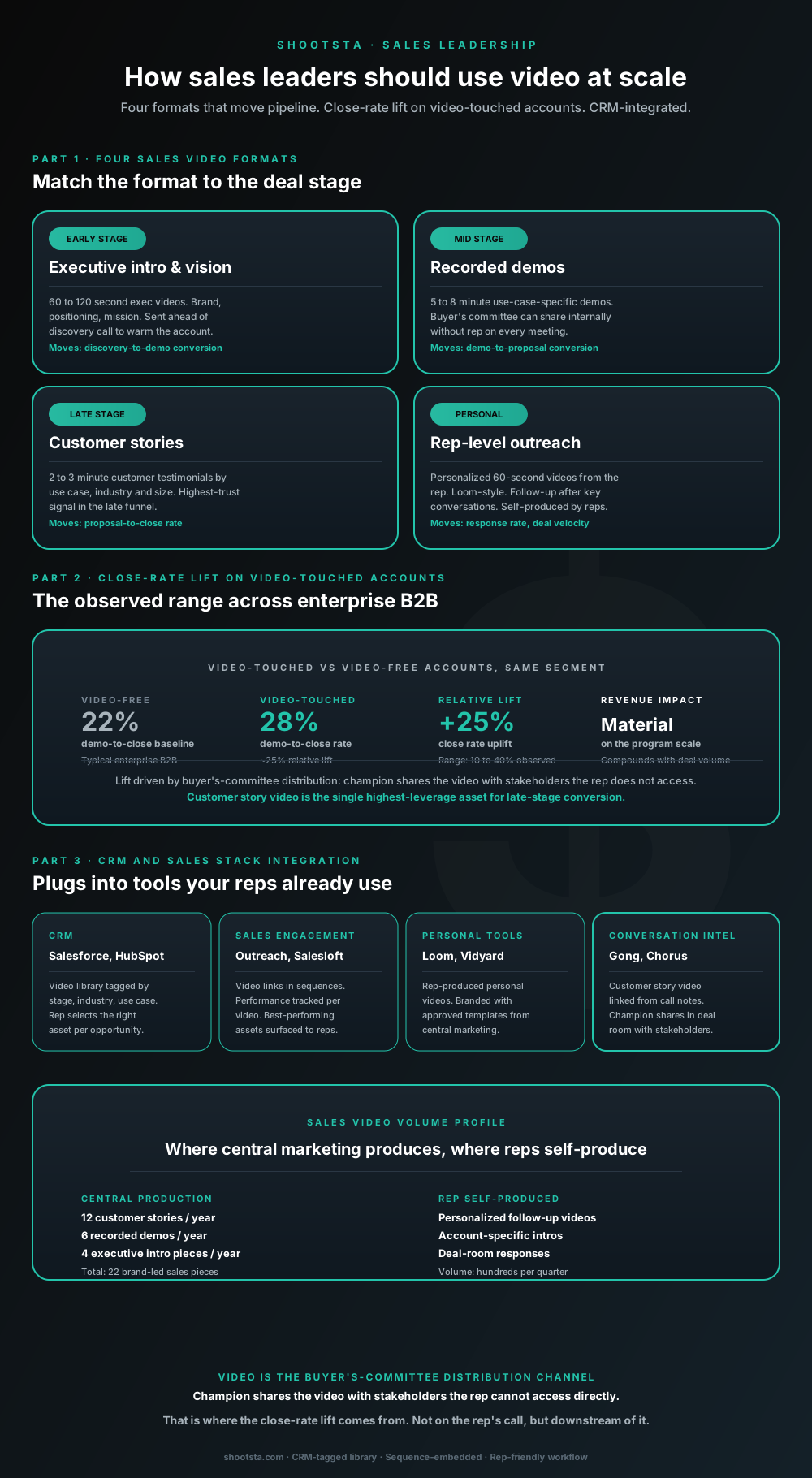
Sales leaders mostly think about video as personalized rep outreach (Loom, Vidyard) or as marketing-produced customer stories. Both are useful. The bigger opportunity is the buyer's-committee distribution layer: assets the champion shares internally with stakeholders the rep does not access directly. That is where the close-rate lift compounds.
How L&D leaders replace classroom with video
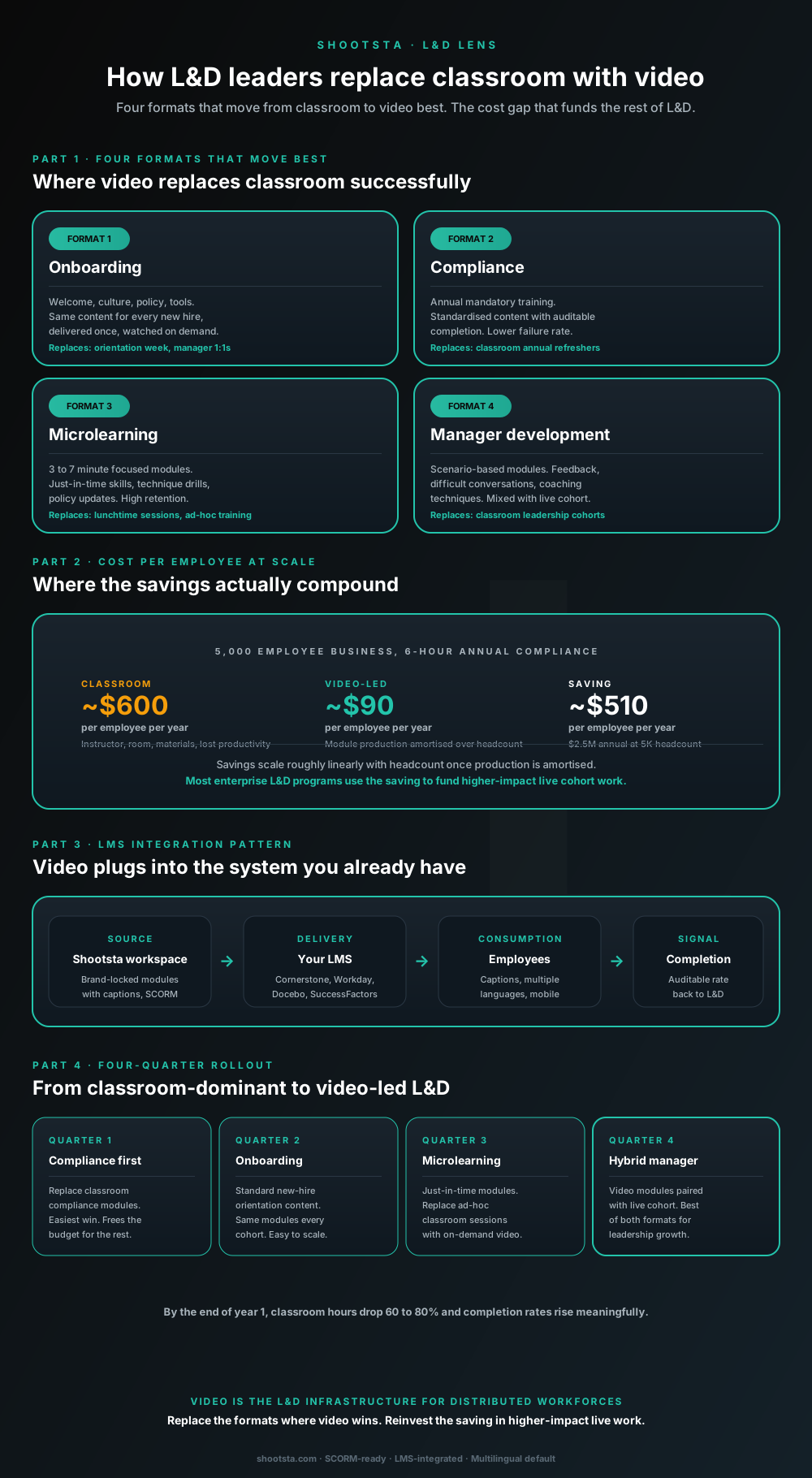
L&D leaders running classroom-heavy training programs typically have the largest single opportunity in the business to free budget through format change. Four training formats move from classroom to video cleanly; the savings fund higher-impact live work. Here is the rollout that compounds learner adoption over four quarters.
How customer success leaders should use video
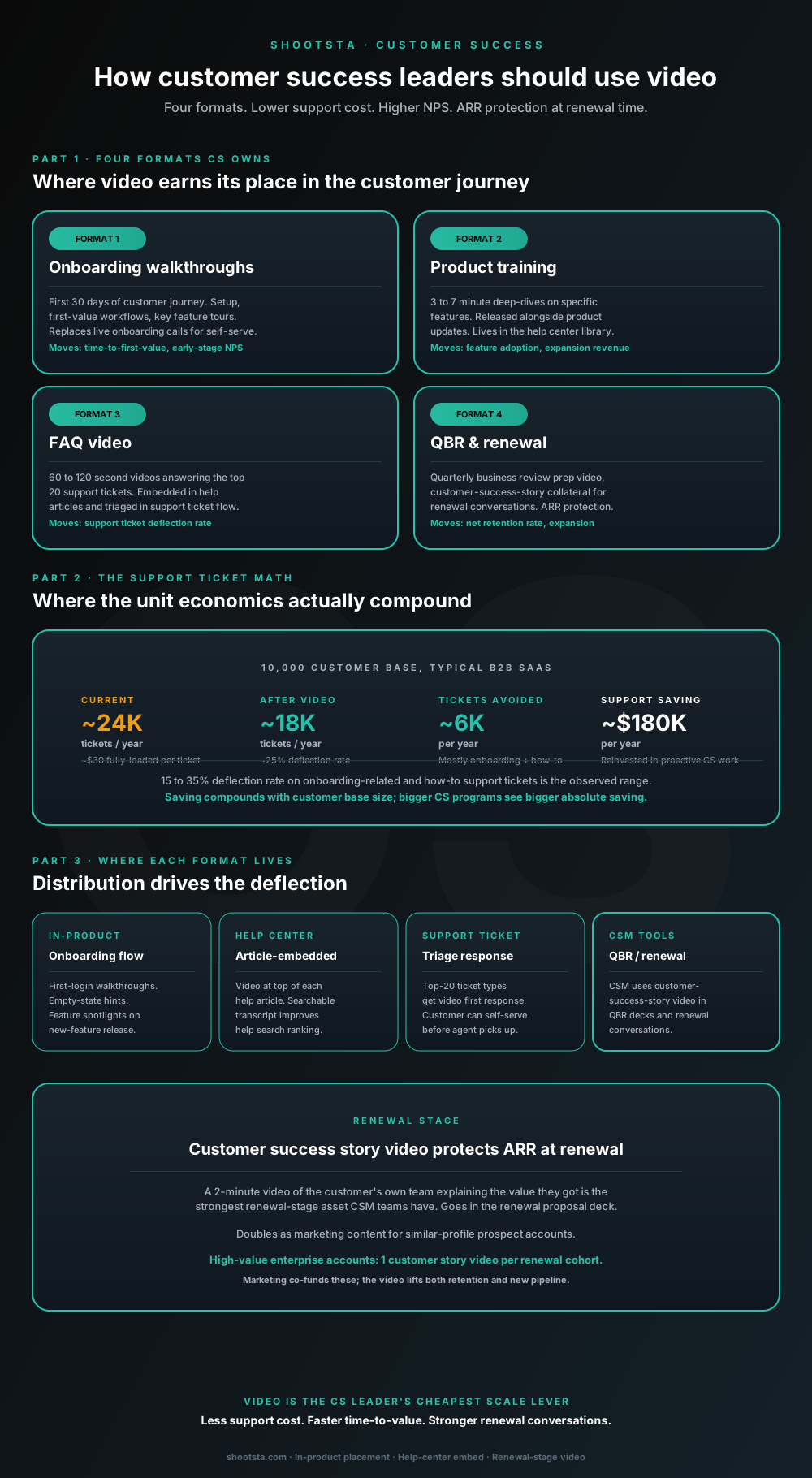
Customer success leaders are usually under-resourced for both reactive support volume and proactive retention work. Video is the cheapest lever to fix both - 15 to 35% deflection on onboarding and how-to tickets, faster time-to-value, and renewal-stage customer story video that lifts net retention. Here is the four-format model and where each piece earns its place.
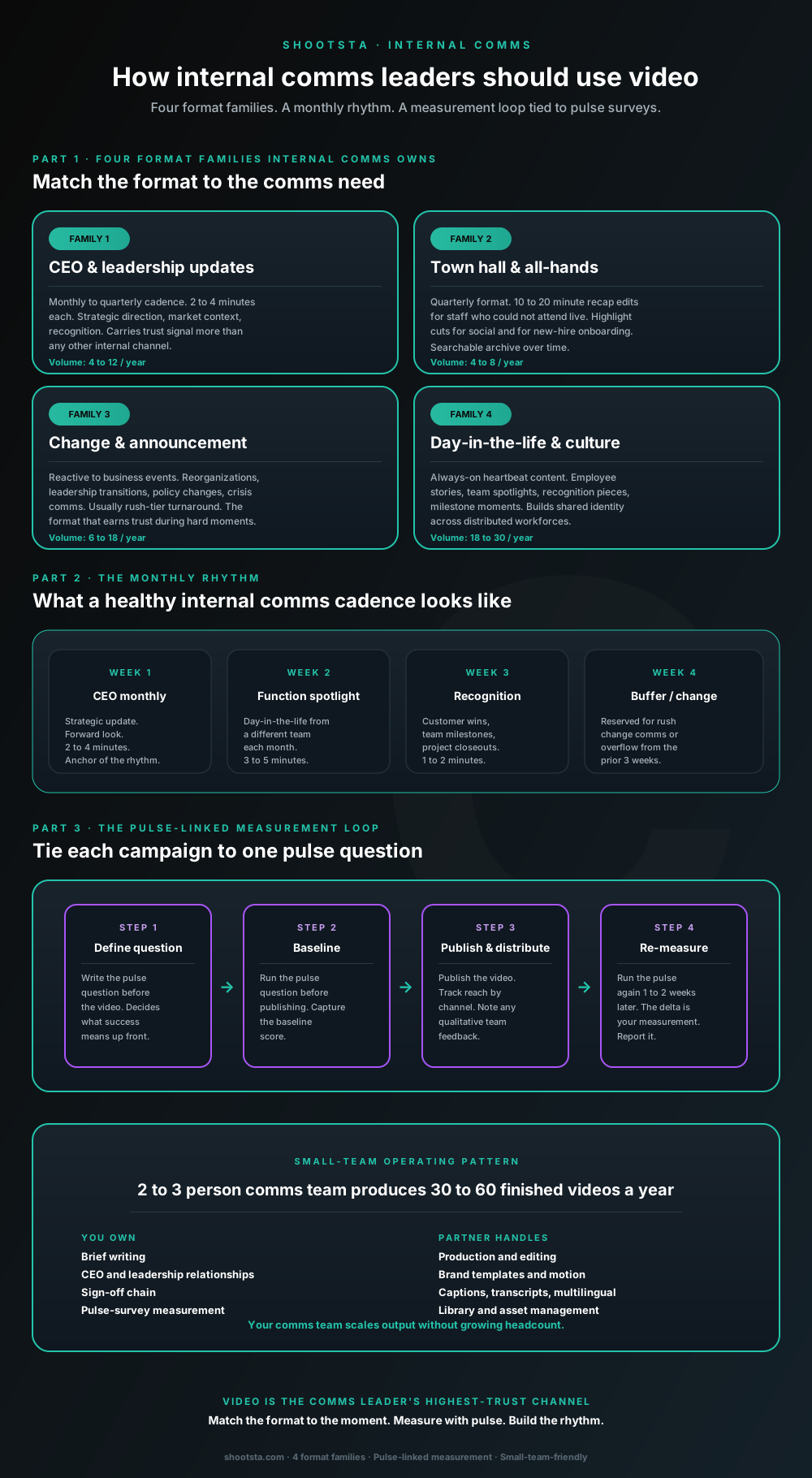
How internal comms leaders should use video
Internal comms leaders are usually under-resourced for the volume of video the business wants. The fix is not more headcount; it is structuring the program around four format families, a monthly rhythm, and a pulse-survey-linked measurement loop. Here is the operating pattern that lets a small comms team produce 30 to 60 finished videos a year.