
Video Marketing Strategy: A Practical Framework
shootsta.
Video Marketing Strategy: A Practical Framework
By Shootsta · Published April 6, 2026 · Updated October 2026
Most video marketing strategies are wishlists disguised as plans. Here is a framework that starts with what you can produce this month and builds from there.
What does a video marketing strategy need?
A video marketing strategy is a plan for how your business will use video to reach, engage, and convert your target audience. That sounds simple, but many "strategies" are lists of video ideas with no link to business goals, production capacity or measurement.
A working strategy answers five questions. It names who you are trying to reach and what they need to see at each stage before they buy. It also sets what you can produce each month, where it goes and how you will measure it.
How do you set video marketing goals that mean something?
Start with a business goal and set the video goals after it. "Produce 10 videos per month" is an output target. A business goal looks like "Generate 50 marketing qualified leads per month from video content", or "Reduce sales cycle length by 15% using video in the sales process".
Once you have the business goal, work backward from it. Say you need 50 MQLs from video and your video-to-lead conversion rate is 2%. In that case you need 2,500 video views from qualified viewers per month, and that tells you how much to produce and how to distribute it.
Read our guide to B2B video KPIs for specific metrics to track at each funnel stage.
How do you plan video content for each stage of the funnel?
Top of funnel: awareness
Your audience doesn't know you yet, and they are researching a problem or exploring a topic. Videos at this stage should teach something and keep the sales pitch out. Industry trend commentary, how-to guides and explainer videos work well. Distribute them on YouTube, LinkedIn and your blog, and measure reach and view count from your target audience.
Middle of funnel: consideration
The prospect knows solutions exist and is evaluating options. Product demo videos, comparison content, and B2B-specific case studies work at this stage. Distribute them on your website, in sales emails and through retargeting. Measure engagement depth (completion rate) and click-through to conversion pages.
Bottom of funnel: decision
The prospect is choosing between 2-3 vendors. Customer testimonial videos and detailed case studies prove that your solution works for companies like theirs. Sales reps should share these directly with prospects, and you measure them by their influence on pipeline and deal velocity.
How much video should you produce?
You will probably need more video than you expect. Here is a realistic starting cadence for a marketing team:
Each week, publish 1-2 short-form clips for social media such as LinkedIn and Instagram. Each month, add 1-2 longer pieces, such as interviews, how-tos or webinar recordings. Each quarter, release one hero piece, which could be a campaign video, a brand story or a major case study.
That adds up to at least 70 pieces per year. It sounds like a lot, but the right production model makes it achievable, because a single filming session can produce several clips. A video production subscription gives you the editing capacity to handle this volume.
Read our full guide on building an always-on video content program for the step-by-step approach.
Which platforms should you prioritize?
Put your video where your audience already spends time. For B2B, LinkedIn is the main distribution channel. YouTube helps with SEO and makes long-form video easier to find. Your website holds videos for people close to a decision, and video thumbnails in nurture emails tend to lift click-through rates.
For B2C, choose between Instagram, TikTok and YouTube based on who your audience is. Facebook works for paid distribution, and your website carries video on product pages and landing pages.
Don't try to be everywhere. Start with 2 channels and publish on them consistently. Measure what works, then expand from there.
What tools do you need for video marketing?
You need a production platform or editing service to create the videos and a hosting platform to embed and track them. You also need a distribution plan that sets your channels and cadence, plus analytics to measure performance and improve the next round.
You don't need all of these on day one. Start with production and one distribution channel. Add hosting analytics once you have enough videos to make tracking worthwhile. See our guide to video tools for a breakdown by category.
How do you build the business case?
If you need budget approval, present video marketing as an investment in revenue rather than a creative expense. Show the cost comparison between your current approach and a subscription model. Project the pipeline impact using conservative estimates. Propose a 3-month pilot with specific success metrics.
Our guide to selling video production to your CFO has the full framework, or use our Video ROI Calculator to model the numbers.
Explore marketing video production with Shootsta, or take the video quiz to find out which formats will have the biggest impact for your team.
For the full picture on distribution channels, ROI measurement, and scaling production, visit our video marketing strategy hub.
Related reading
- Every video needs an action that turns attention into a next step. Read about how to write a strong CTA for business video.
- Strategy only pays off if the videos themselves hold attention. Read about increasing video audience engagement.
Take this article with you
Read the latest at shootsta.com/blog/video-marketing-strategy-practical-framework
You might also like
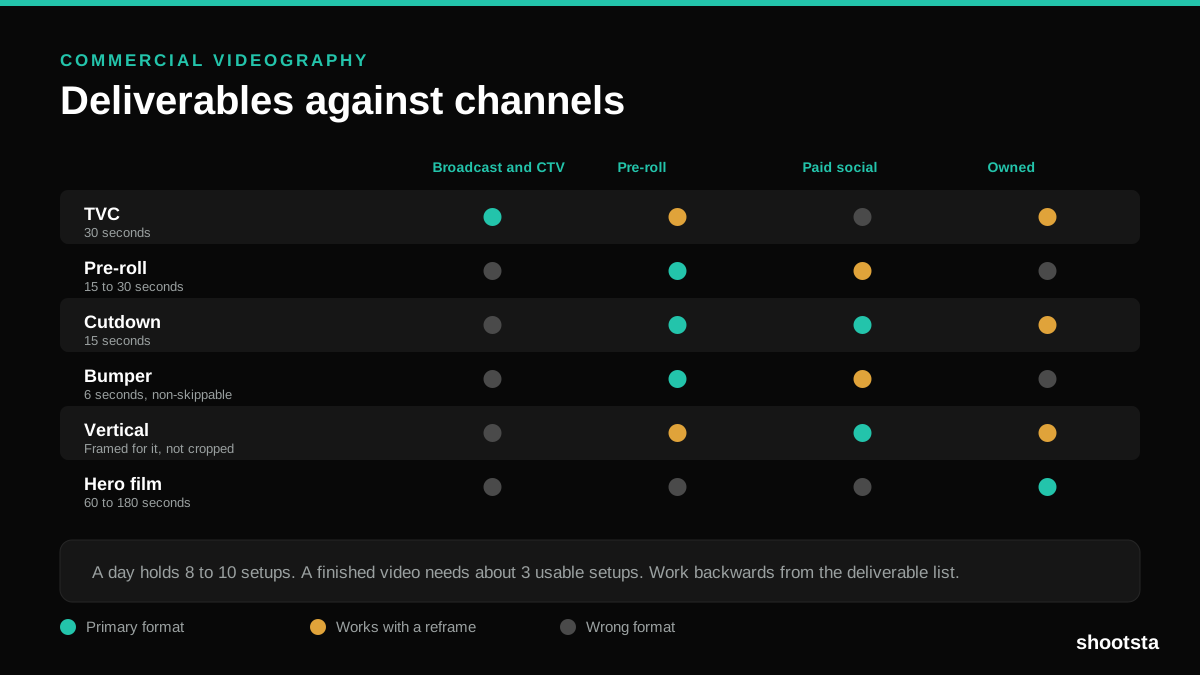
Commercial Videography: Cost and Scope
Commercial videography is priced by the day and judged by the deliverable. Most projects go wrong because those two numbers were never reconciled.
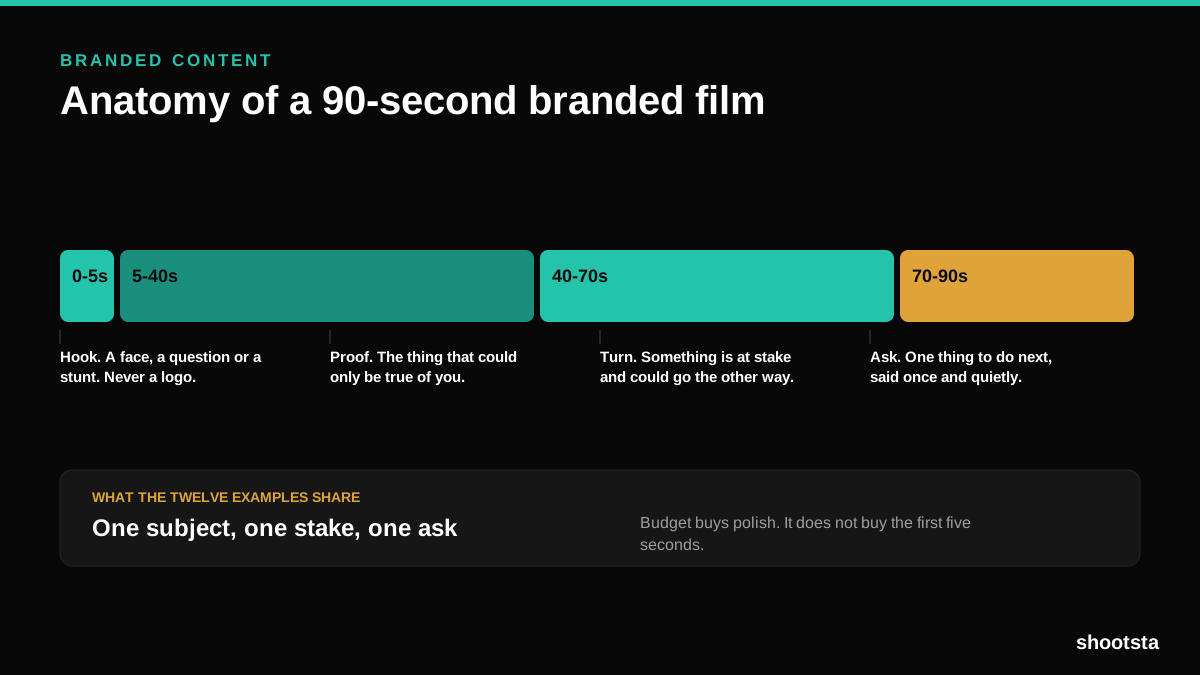
12 Branded Content Examples That Worked
Twelve pieces of branded content that people chose to watch, what each one got right, and the structure underneath all of them.
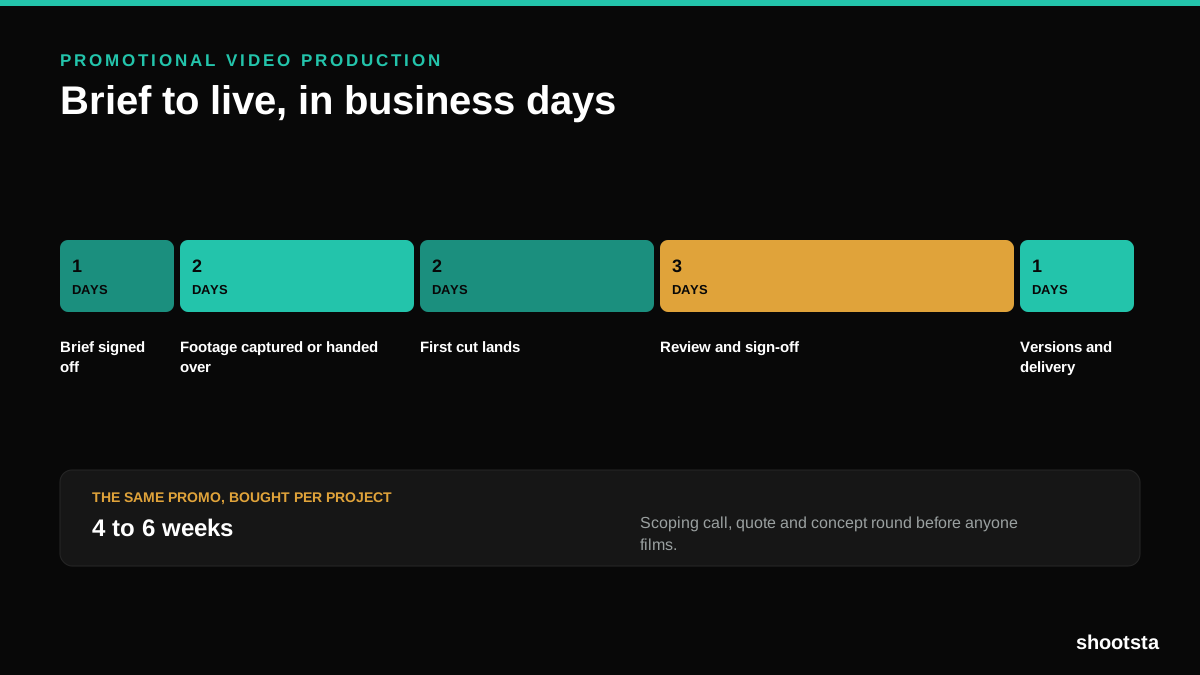
Promotional Video Production: Cost and Time
Most promotional video production schedules are not slow because of the edit. They are slow because of the approval chain. Here is where the days go.
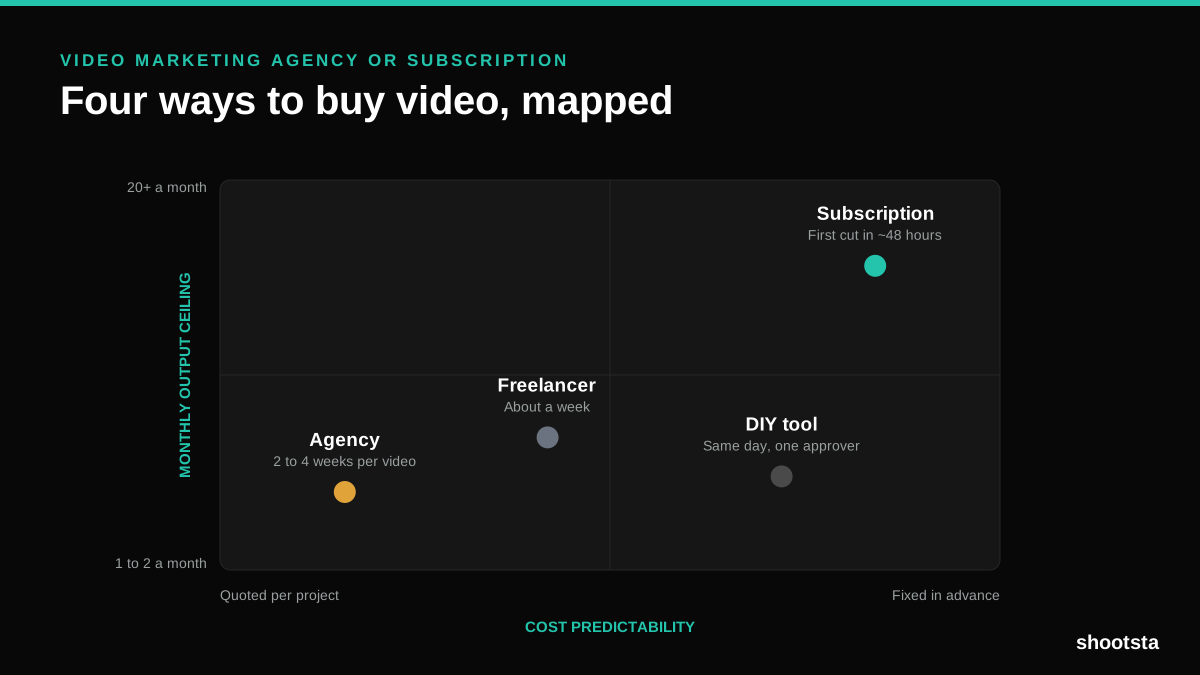
Video Marketing Agency or Subscription?
A video marketing agency prices per project and works in weeks. A subscription prices the year and works in days. Which one fits depends on how often you publish, not on which is better.

B2B Video Production: Costs and Buying Models
There are five ways to buy B2B video production. Each one works well up to a point and then breaks, usually at a volume nobody planned for. Here is what each costs and where the ceiling sits.
How to Measure Video Speed-to-Market
How to Measure Video Speed-to-Market
Speed-to-market is the lag between needing a video and publishing it. For marketing teams it is a revenue metric. Here is how to measure and improve it.