
Why FSI Marketing Teams Are Bringing Animation In-House
shootsta.
Why FSI Marketing Teams Are Bringing Animation In-House
By Shootsta · Published May 16, 2026 · Updated June 2026
Large FSI firms have been outsourcing animation to specialist agencies for years. That model is breaking down as launch cadence accelerates. Here is what is replacing it.
Why is the old animation model breaking?
For decades, FSI marketing teams worked with specialist animation studios on a project basis. A single animated explainer, costed at $40,000 to $120,000, briefed three months in advance, delivered in 8 to 12 weeks. That cadence worked when product launches happened twice a year.
It does not work in 2026. Franklin Templeton acquired a crypto investment firm in April. Acrisure launched into aviation specialty insurance in March. Broadridge extended its governance platform to support tokenized equities. ICE invested $1.6 billion in Polymarket. Every one of these moves needed customer education, partner enablement, and internal explanation video, fast.
The math is brutal. If your firm launches one new product per quarter and each launch needs 3 animated videos at agency pricing, you are committing $360,000 to $1.4 million per year and a 3-month lead time on every campaign. Most FSI marketing teams cannot fund that, and the ones that can cannot get it through procurement fast enough.
What does "in-house animation" actually mean?
Not hiring a 5-person animation team. That is too expensive and too narrow for most FSI marketing functions. In-house animation in 2026 means owning the briefing, the script, the brand direction, and the iteration cycle, while a production partner handles the actual production work.
The marketing team writes the brief and the script. The production partner storyboards, animates, and edits. The marketing team approves at each stage. End-to-end timeline: 5 to 10 business days for a 60 to 90 second explainer, compared to 8 to 12 weeks under the agency model.
The economics, compared
Three cost models exist for FSI marketing animation:
1. Per-project agency
$40,000 to $120,000 per 90-second explainer. 8 to 12 weeks turnaround. Best for hero films and broadcast quality. Wrong for ongoing launch cadence.
2. In-house team
$400,000 to $800,000 per year for a 3 to 5 person team covering motion design, illustration, and editing. Best for firms producing 50+ animations per year. Wrong if your demand is uneven across the year.
3. Production partner with a subscription
$80,000 to $250,000 per year for 20 to 60 animations annually, plus the brand and pre-production work upfront. Best for FSI marketing teams that need volume but not full-time staff. This is the model most of our financial services clients have moved to.
For more on how this compares to traditional agency production, see our guide to enterprise animation production.
What product launches benefit most from animated explainers?
Complex products with abstract benefits
Tokenized securities. Embedded insurance. Algorithmic trading platforms. Specialty program coverage. Anything where there is no physical object to film and the value proposition is conceptual. Animation visualizes things live action cannot show.
Multi-audience launches
When a product launches simultaneously to staff, partners, and customers, animation lets you keep the visual language consistent across three audiences while varying the script. Same illustrations, three voiceovers, three slightly different edits.
Regulated products
Every word in an animated explainer is scripted. That makes compliance review faster than reviewing a live action edit where someone's off-the-cuff phrasing might create regulatory issues. For more on this, see compliance-ready video production for financial services.
How fast can you produce a launch animation?
For a 60-second product launch animation with a clear brief, 7 to 10 business days end-to-end is realistic. For a longer 2 to 3 minute deeper explainer, 2 to 3 weeks. For a series of 3 to 5 connected explainers, 3 to 4 weeks total when produced as a batch.
The faster end of these ranges assumes the brief is locked at kickoff, one approver per stage, and the brand template is already established. Firms that have been running this model for a few launches already are at the lower end. First-time programs run to the upper end while the team learns the workflow.
What about the brand consistency question?
This is the most common objection FSI marketing leads raise. "Our agency knows our brand. A production partner will not." That was true 5 years ago. It is not true now.
Establishing brand consistency in animation comes down to three things: an animation style guide, a reusable kit of brand assets, and the same production team across multiple projects. Done once, every subsequent animation looks and feels like your brand without re-briefing from zero.
For an example of an FSI marketing team running this kind of program at small scale, see the Dual North America case study. For a broader view of animation services, explore our animation production page.
Where to start
Pick your next product launch. Brief one animated explainer instead of one live action explainer. Compare turnaround time, cost, and engagement against your last comparable launch. If the result holds up, plan animation into your next four launches and build the style kit during the first one. Learn more about Shootsta's animation production, see how to budget for ongoing production in our video marketing budget planning guide, or read about enterprise video production at scale.
Planning a bigger animation program? The Business Animation Playbook covers the operating model leading teams use.
Take this article with you
Read the latest at shootsta.com/blog/fsi-animation-in-house-product-launches
You might also like
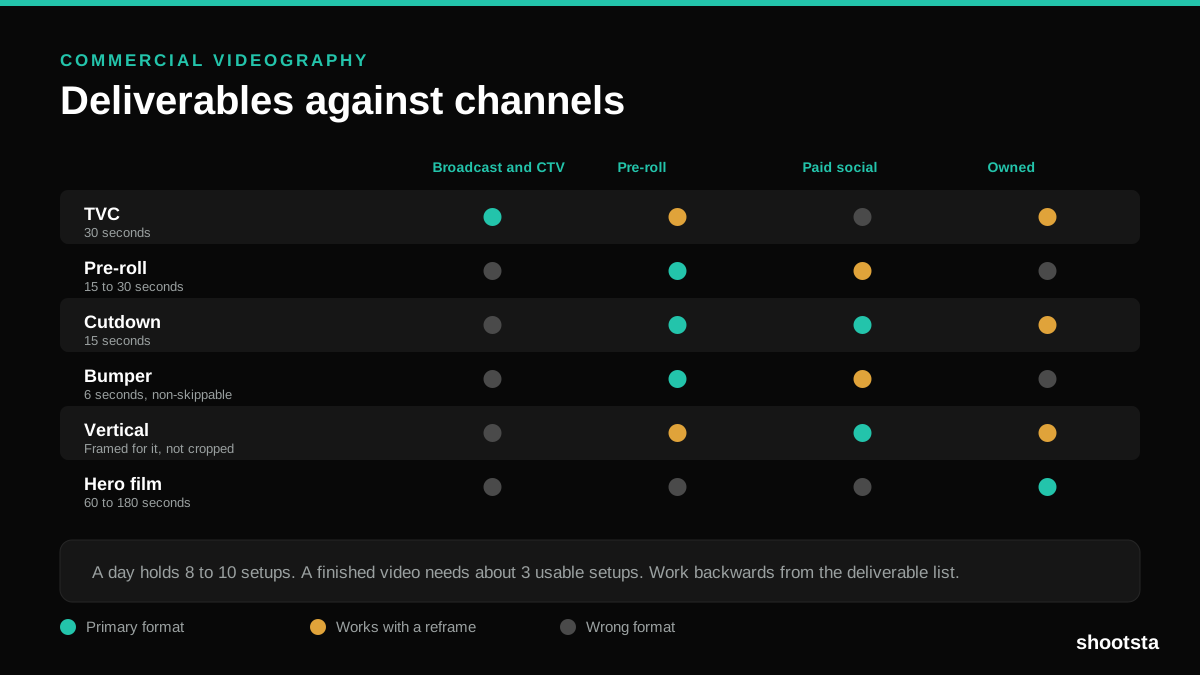
Commercial Videography: Cost and Scope
Commercial videography is priced by the day and judged by the deliverable. Most projects go wrong because those two numbers were never reconciled.
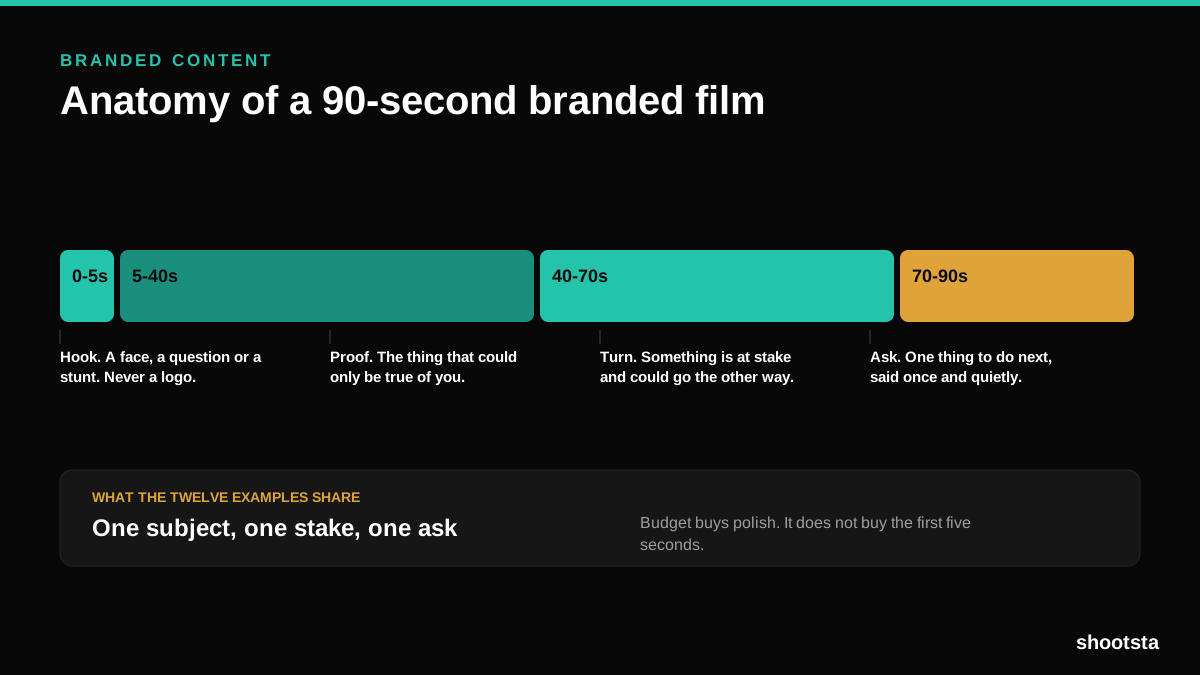
12 Branded Content Examples That Worked
Twelve pieces of branded content that people chose to watch, what each one got right, and the structure underneath all of them.
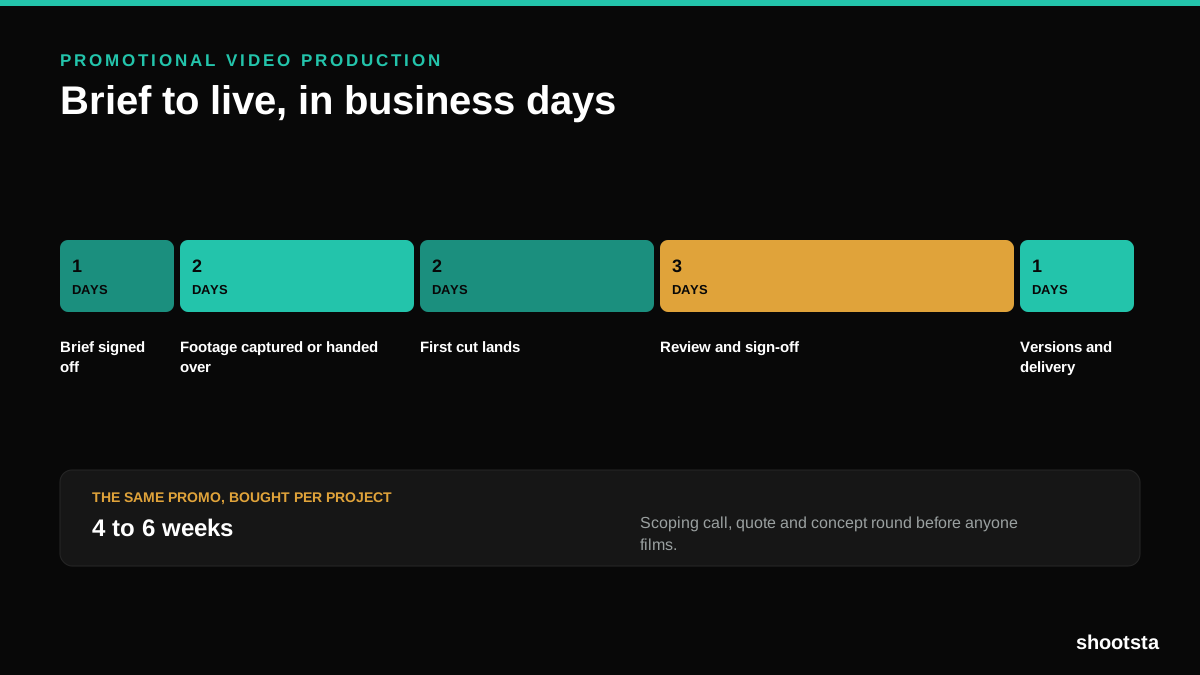
Promotional Video Production: Cost and Time
Most promotional video production schedules are not slow because of the edit. They are slow because of the approval chain. Here is where the days actually go.
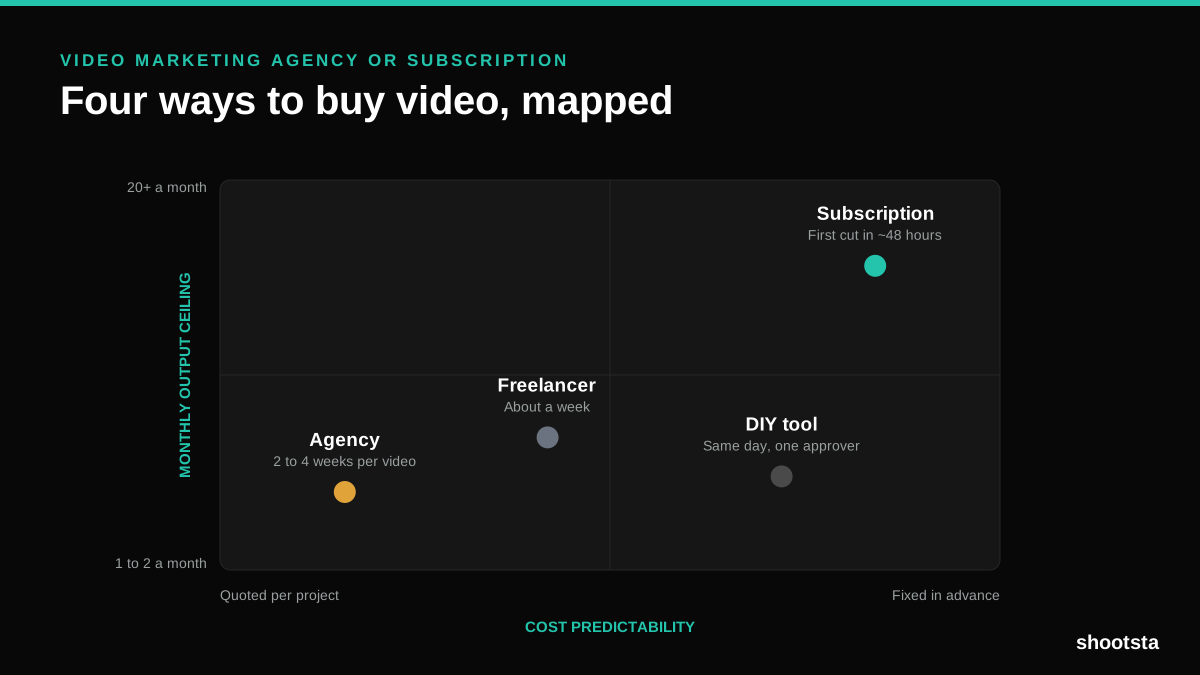
Video Marketing Agency or Subscription?
A video marketing agency prices per project and works in weeks. A subscription prices the year and works in days. Which one fits depends on how often you publish, not on which is better.

B2B Video Production: Costs and Buying Models
There are five ways to buy B2B video production. Each one works well up to a point and then breaks, usually at a volume nobody planned for. Here is what each costs and where the ceiling sits.
How to Measure Video Speed-to-Market
How to Measure Video Speed-to-Market
Speed-to-market is the lag between needing a video and publishing it. For marketing teams it is a revenue metric. Here is how to measure and improve it.