
Multi-Language Destination Videos for Tourism
shootsta.
Multi-Language Destination Videos for Tourism
By Shootsta · Published May 13, 2026 · Updated October 2026
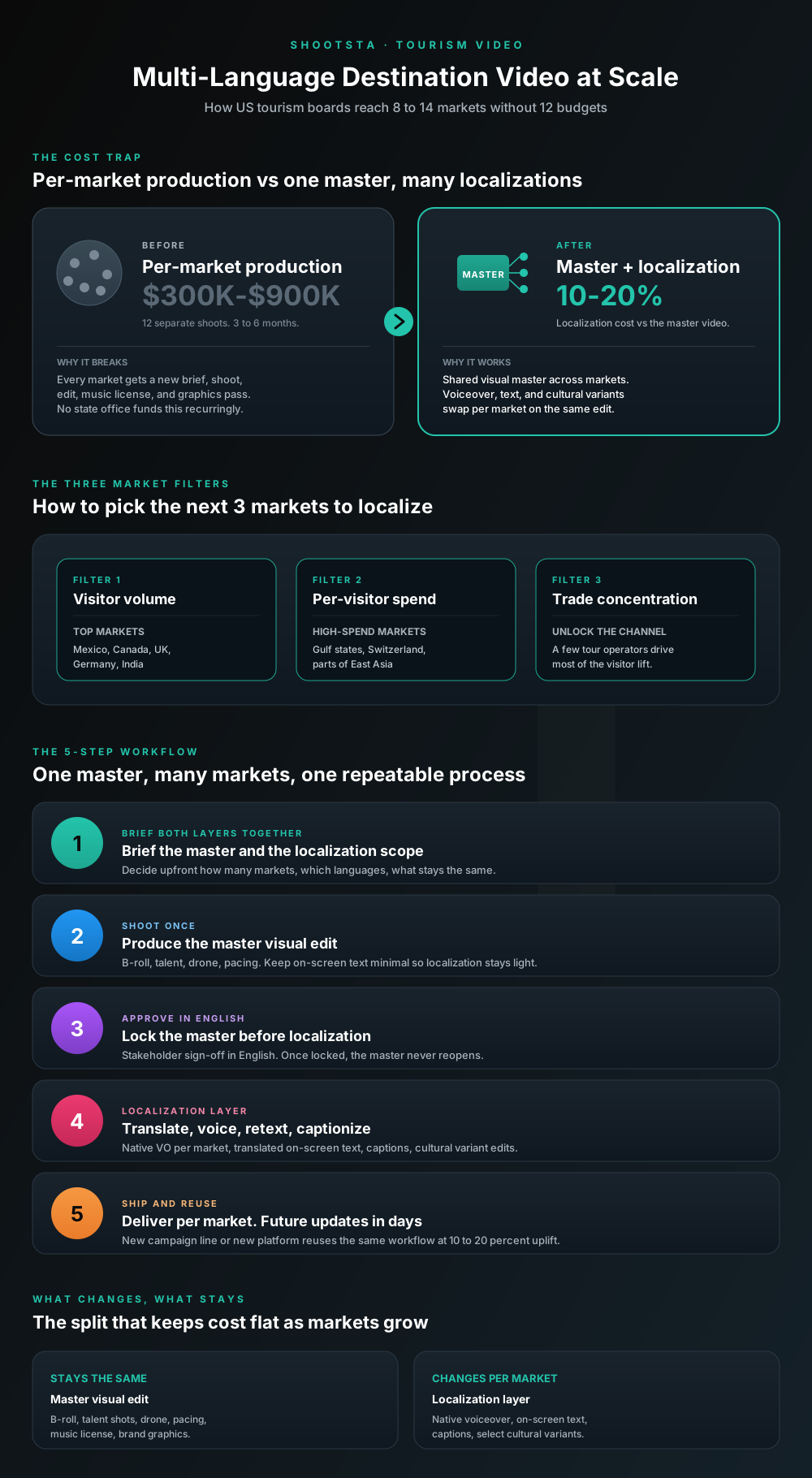
Brand USA, state tourism offices, and city CVBs all reach the same 8 to 12 international markets. Producing destination video for each market is expensive only if you do it the wrong way.
Why does multi-language destination video matter?
A US tourism board usually markets to a long list of international markets at once. China, Mexico, the UK, Germany, Canada, India, Brazil, Japan, Korea, France, Australia, the Netherlands, and the Gulf states show up on many of those lists. Brand USA's strategic plan covers a similar set, with weighting that shifts based on visa policy, lift availability, and recovery curves.
Reaching those markets in English-only video leaves measurable spend on the table. Travelers who see destination content in their own language convert at meaningfully higher rates than the same content with subtitles. International tour operators expect partner-facing video in market language. Trade events in foreign markets require local language assets to be taken seriously.
The objection most tourism marketing leads raise is cost. A 90-second anthem video produced 12 times for 12 markets is a budget that does not exist in any state tourism office. That is the wrong way to do it.
The cost trap most tourism boards fall into
The trap is treating each market like a fresh production, with a new brief, shoot, edit, music deal and graphics package every time. Done that way, a 12-market rollout multiplies the cost of a single anthem video by twelve and stretches production across months. Few state budgets can carry that on a recurring basis.
The better approach is one master with many localizations. You produce the anthem once with a global edit and build the localization layer separately. The master video stays the same, while the voiceover, on-screen text, captions and a handful of cultural variants change for each market. Because the shoot and the main edit are done once, each extra language costs a small share of the master.
What changes between markets, and what stays the same
The master visual edit stays the same
B-roll, talent shots, drone footage, and the overall pacing of the video work across markets. A beach in California is a beach in California whether you are showing it to a German traveler or a Brazilian traveler. The shared visual master keeps your brand consistent and your production budget predictable.
The voiceover changes
Each market gets a native-language voiceover, typically recorded by local talent with the right accent for that market. UK English is not US English. Latin American Spanish is not Iberian Spanish. Mandarin for mainland China is not Mandarin for Taiwan. Pick the variant deliberately for each market.
On-screen text and captions change
All on-screen text gets translated to the target language. Where captions are used for accessibility, they get translated as well. Keep on-screen text minimal in the master video so the localization layer stays light. For more on this, see our guide on captioning business videos at scale and video accessibility at scale.
Some cultural variants change
You rarely need to change the whole edit, only the specific moments that read differently in different markets. A scene of a couple in an intimate moment might land differently in conservative markets. A specific food shot might miss in a market with a different cuisine context. Identify those moments during pre-production and edit alternate versions of just those scenes.
Voiceover vs subtitles vs captions: when to use each
Voiceover is the gold standard. Native talent in the target language. Best for anthem videos, trade partner enablement, and high-stakes campaigns. Costs more, performs better.
Subtitles are open captions burned into the video. They cost less than voiceover and suit social cutdowns where the audio is often muted anyway, and where the visual story carries most of the meaning.
Captions are closed captions toggled on by the viewer. Useful for accessibility and platform requirements such as YouTube and LinkedIn. Should be present even when you have a voiceover or subtitles because they serve different needs.
A mix usually works best. Use voiceover for the hero anthem video and subtitles for social cutdowns, and put captions on everything for accessibility. Animated explainers benefit from a similar mixed approach, especially when used for destination education. See our piece on animation for destination video.
Which markets should you prioritize for localization?
Three filters: visitor volume, visitor spend, and trade partner concentration.
Markets that send a lot of visitors get priority. Mexico, Canada, the UK, Germany, and India are usually at the top of US tourism board priority lists by volume.
Markets with high per-visitor spend get priority even at lower volume. Travelers from the Gulf states, Switzerland, and parts of Asia spend significantly more per trip than the average international visitor.
Markets with concentrated trade partners get priority because language versions open up the trade channel. If 80 percent of your visitor lift from a market comes through 20 tour operators, a single piece of localized trade enablement video covers most of the conversion path.
What does the production workflow look like?
Brief the master video and the localization scope together. Shoot and edit the master, and get it approved in English. Then run the localization process: translation, voiceover recording, on-screen text rebuild, cultural variant edits, captions in each language.
The master takes the longest, since it carries the shoot, the edit and the approvals. The localization layer for every market then runs in a much shorter window after it. Later updates, such as new voiceover for a new campaign line or new captions for a new platform, move in days because the workflow is already in place.
Where to start
Pick your next anthem video or hero campaign. Brief it as one master plus a localization layer for your top 3 international markets. Compare the cost and timeline to your last per-market production. Use the result to fund expansion to the next 5 markets. For broader context on multi-format video programs, see the enterprise video playbook or 48-hour video workflow for a state tourism office.
Take this article with you
Read the latest at shootsta.com/blog/multi-language-destination-videos-us-tourism
You might also like

Shootsta at Day 1 of B2B Marketing Leaders Forum
Shootsta is at B2B Marketing Leaders Forum Asia in Singapore on 14 and 15 October 2026. Watch our day 1 video, edited overnight and ready before the first coffee break on day 2.
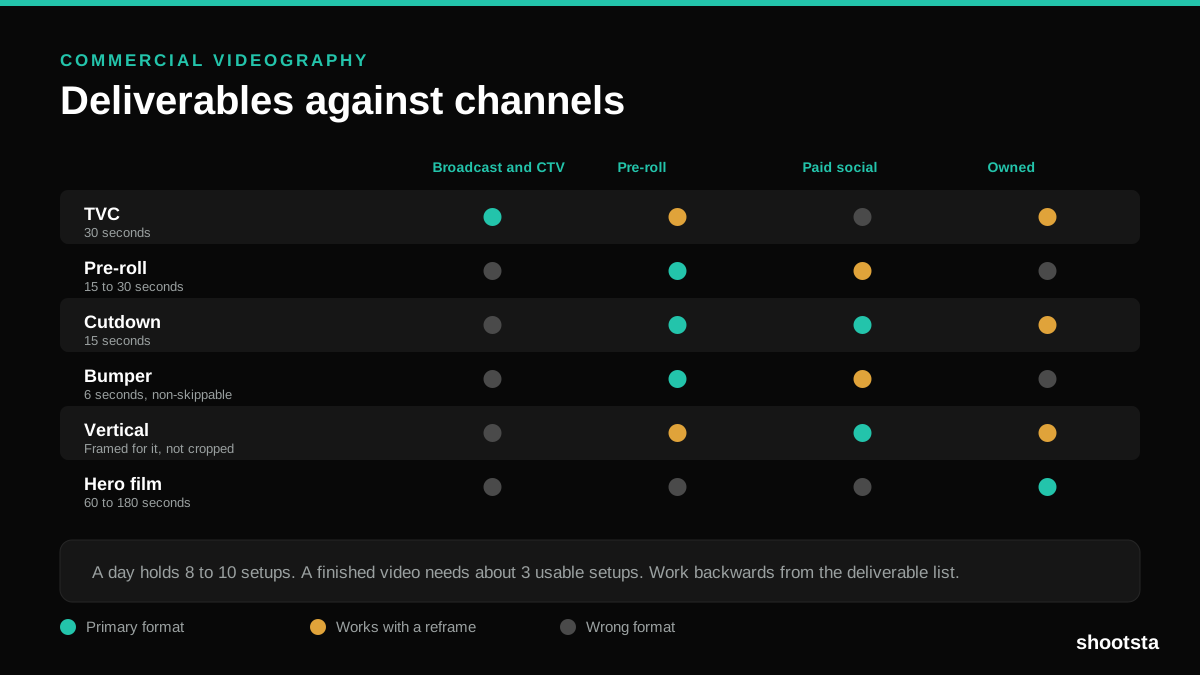
Commercial Videography: Cost and Scope
Commercial videography is priced by the day and judged by the deliverable. Most projects go wrong because those two numbers were never reconciled.
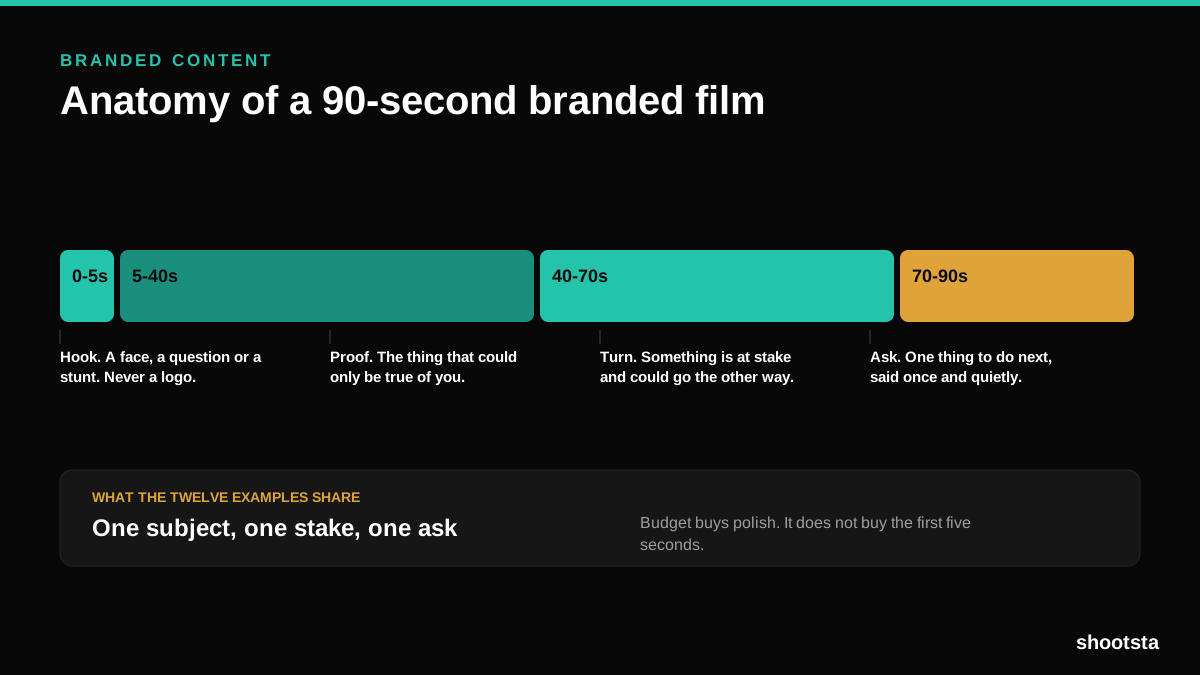
12 Branded Content Examples That Worked
Twelve pieces of branded content that people chose to watch, what each one got right, and the structure underneath all of them.
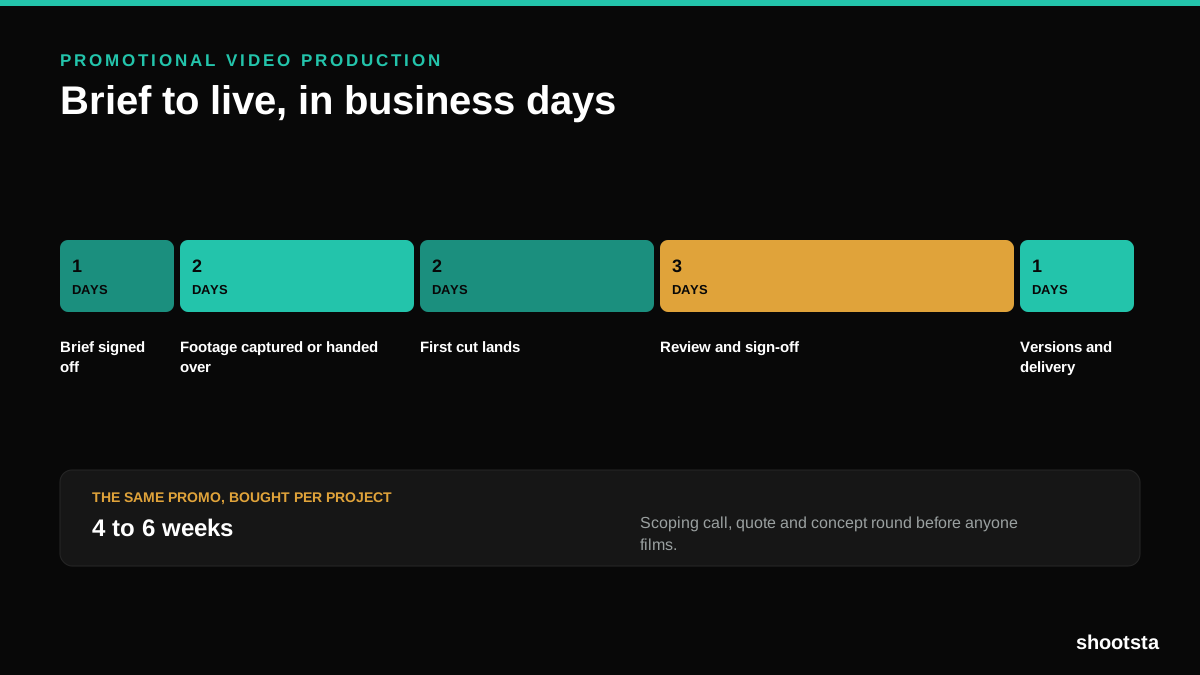
Promotional Video Production: Cost and Time
Most promotional video production schedules are not slow because of the edit. They are slow because of the approval chain. Here is where the days go.
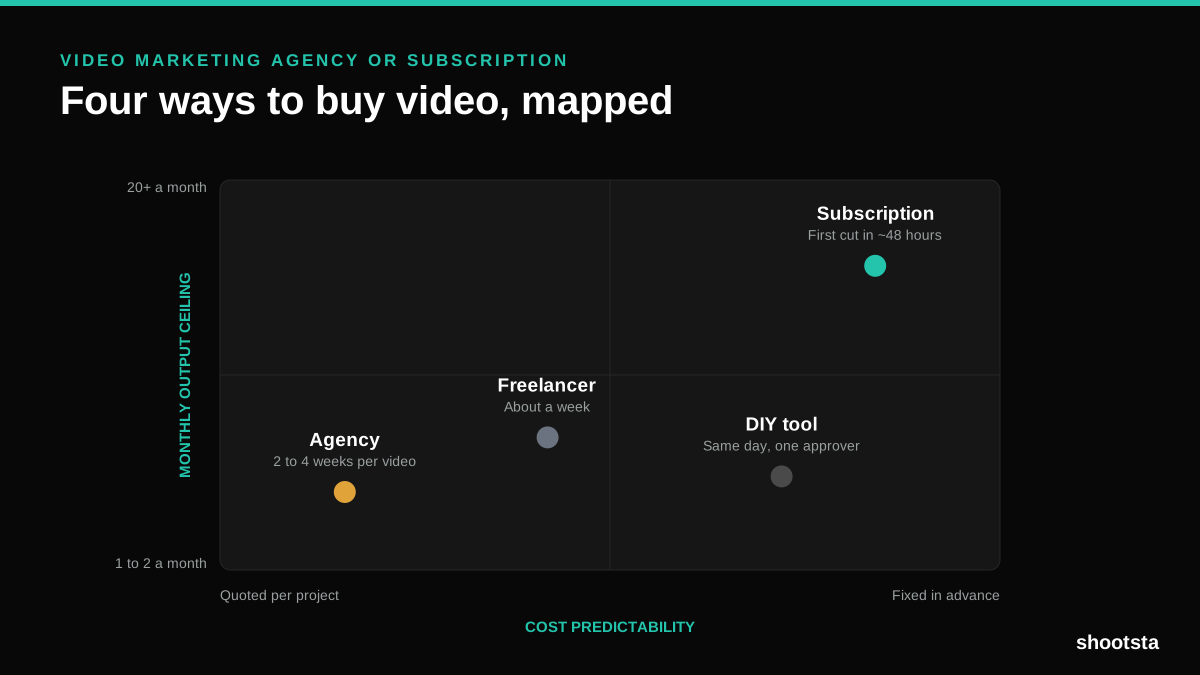
Video Marketing Agency or Subscription?
A video marketing agency prices per project and works in weeks. A subscription prices the year and works in days. Which one fits depends on how often you publish, not on which is better.

B2B Video Production: Costs and Buying Models
There are five ways to buy B2B video production. Each one works well up to a point and then breaks, usually at a volume nobody planned for. Here is what each costs and where the ceiling sits.