
Animation Use Cases for Sales Teams
shootsta.
Animation Use Cases for Sales Teams
By Shootsta · Published June 13, 2026 · Updated October 2026
Sales teams lose deals to unclear explanations and inconsistent messaging. Animation fixes both. Here is where animated video earns its place across the sales cycle.
Why does animation belong in the sales cycle?
Two problems cost sales teams deals: the prospect does not understand the product, and different reps explain it differently. Animation helps with both, because a scripted animated explainer says the same clear thing in every deal, and it shows how an abstract product works in a way a slide cannot.
The test for when to use it is the same one that applies to all enterprise video. If the value of the moment is a person, keep the person. A discovery call, a tailored pitch, a relationship-building conversation all stay human. If the value is explaining how something works, animation does it better and does it the same way each time. Here are the places where that pays off.
1. Prospecting and first-touch outreach
A 60-second animated explainer embedded in an outbound email or LinkedIn message gets a cold prospect to the "what is this and why should I care" answer faster than three paragraphs of text. It is also reusable across the whole team, so every rep leads with the same clear framing instead of improvising.
2. Product and platform demos
Live demos can break, run long or drift off topic. An animated product explainer covers the core story in 90 seconds on every call, and then the rep spends the live time on the prospect's specific situation. Animation is especially strong for products that are conceptual or early-stage, where there is not much of a UI to show yet. For the format basics, see explainer videos: when to use them and how to produce them.
3. Objection handling
Every sales team hears the same objections. Build a short animated answer to each one: the security question, and the question of whether the prospect could build it themselves. Reps send the relevant clip when an objection comes up, and the answer is the approved one rather than whatever the rep remembers under pressure.
4. Proposals and follow-up
A proposal that sits in an inbox does not sell itself. A short animated summary attached to it walks the buying committee, including the people who never joined a call, through the value in plain language. This matters in B2B, where the economic buyer often never speaks to the rep directly.
5. Onboarding and handoff to customer success
The deal does not end at signature. Animated onboarding explainers carry the new customer from sale to first value without the account team rebuilding the same walkthrough for every logo. It also keeps the story consistent as the relationship hands off from sales to customer success.
How does this connect to the rest of the business?
Sales animation is most powerful when it shares a visual language with marketing and product content. The same explainer style that runs on the website should run in the sales deck and the onboarding sequence. That consistency is part of why teams build a single animation style kit and reuse it everywhere, which we cover in animation use cases for enterprise teams.
What should stay live action?
Customer testimonials and reference stories should stay live action. The credibility of a testimonial comes from the real customer on screen, and an animated version does not carry the same weight. Use animation when you need to explain how something works, and use live action when you need proof from a real person. A sales kit with both covers more of the buying committee's questions than either format does alone.
Where to start
Pick the single explanation your reps get wrong or inconsistent most often, usually the core "what we do and why it is different" pitch. Brief one animated version, put it in every rep's hands, and track whether deals using it move faster. To scope sales content, see our animation production services and learn how Shootsta produces animation at scale.
If you plan to run animation as more than a one-off, The Business Animation Playbook lays out how teams scale it into a repeatable program.
Take this article with you
Read the latest at shootsta.com/blog/animation-use-cases-sales-teams
You might also like

Shootsta at Day 1 of B2B Marketing Leaders Forum
Shootsta is at B2B Marketing Leaders Forum Asia in Singapore on 14 and 15 October 2026. Watch our day 1 video, edited overnight and ready before the first coffee break on day 2.
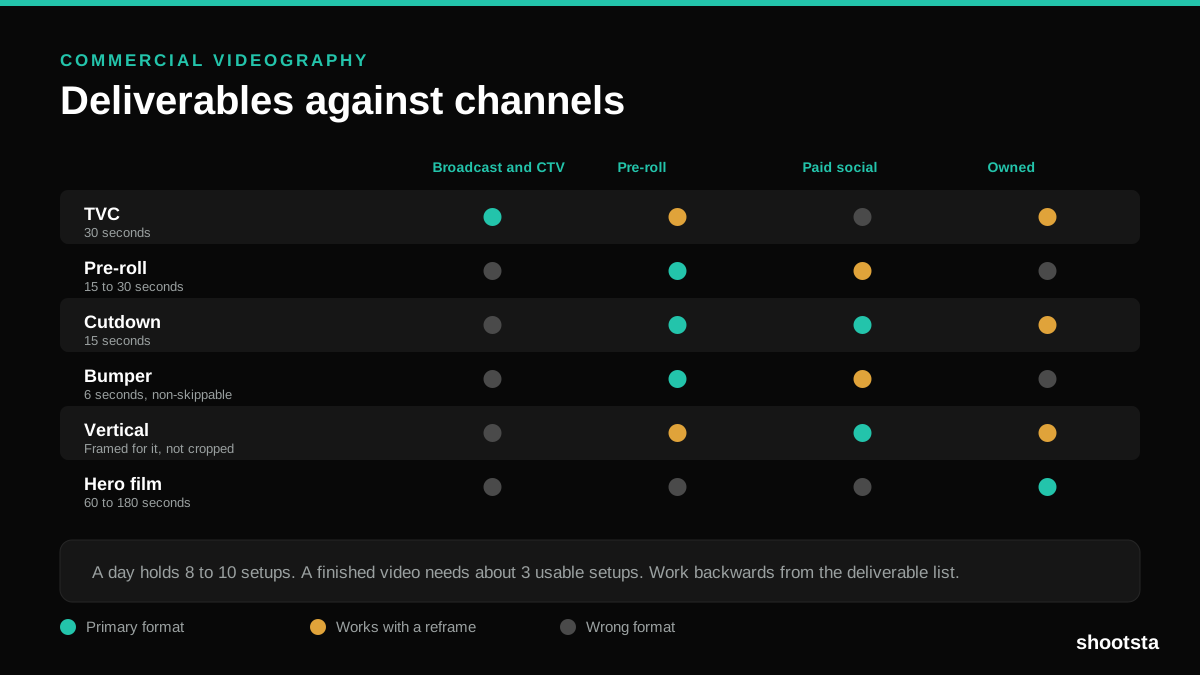
Commercial Videography: Cost and Scope
Commercial videography is priced by the day and judged by the deliverable. Most projects go wrong because those two numbers were never reconciled.
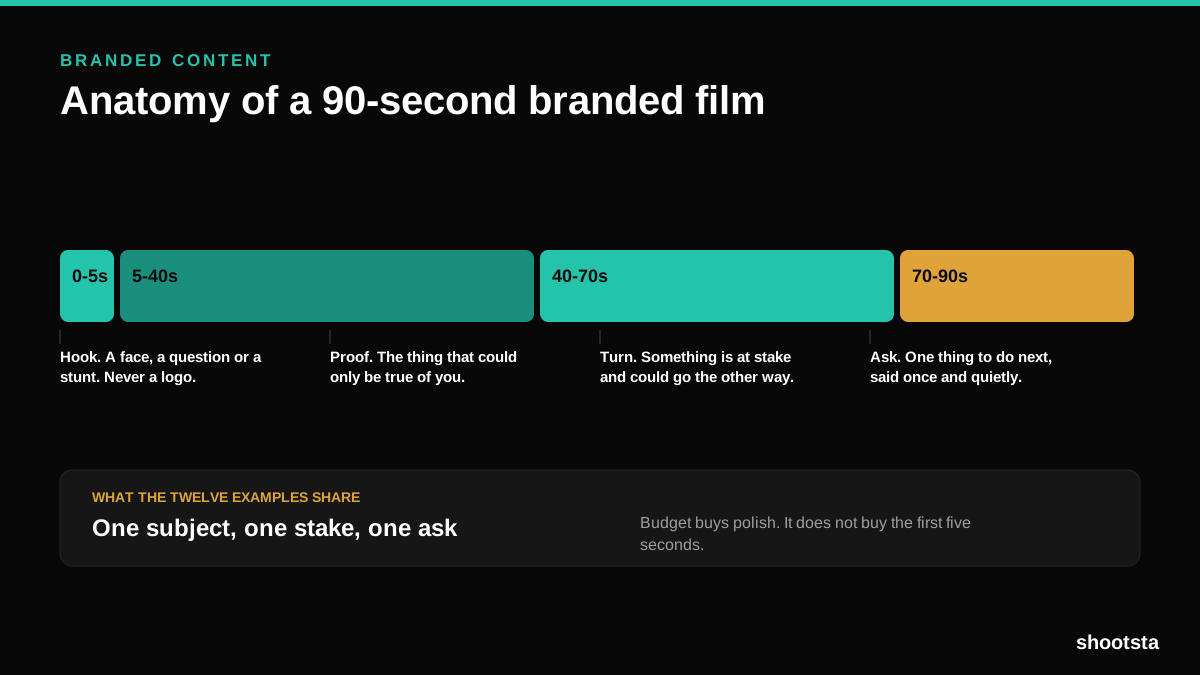
12 Branded Content Examples That Worked
Twelve pieces of branded content that people chose to watch, what each one got right, and the structure underneath all of them.
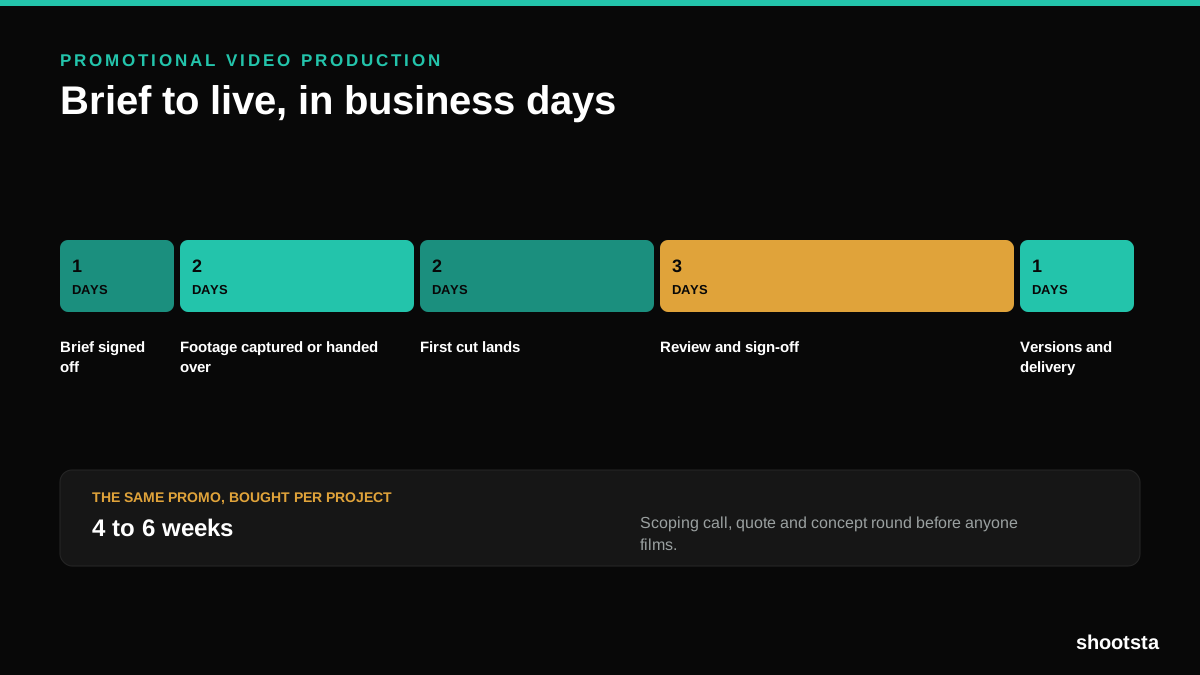
Promotional Video Production: Cost and Time
Most promotional video production schedules are not slow because of the edit. They are slow because of the approval chain. Here is where the days go.
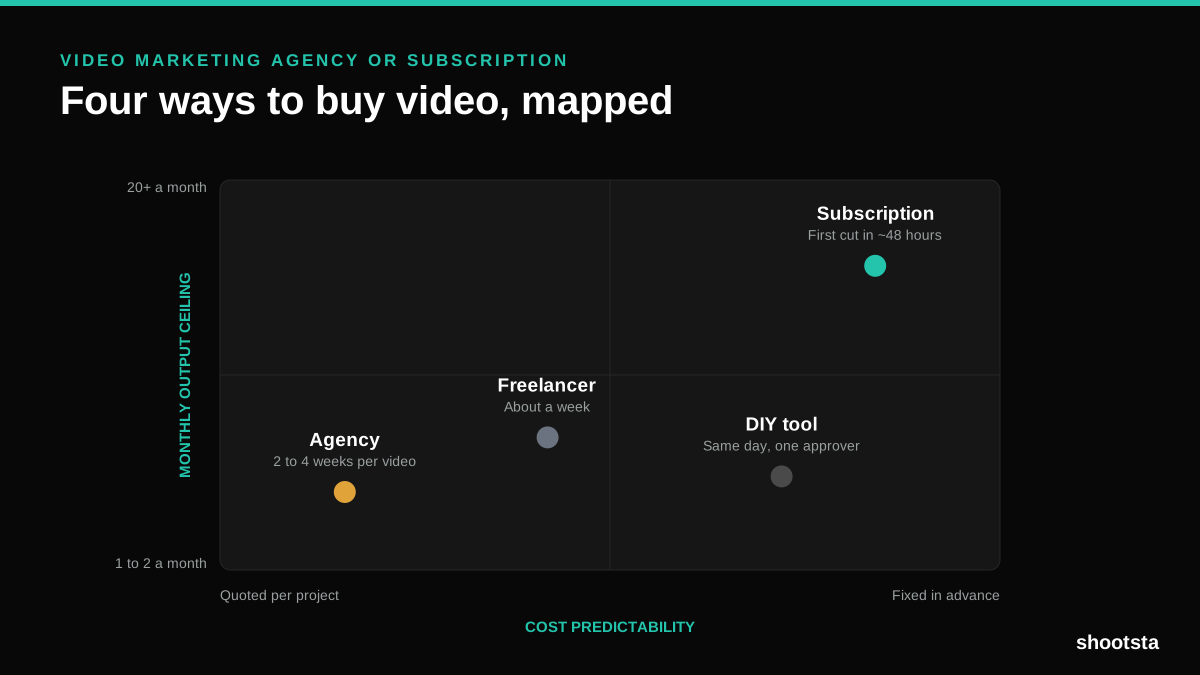
Video Marketing Agency or Subscription?
A video marketing agency prices per project and works in weeks. A subscription prices the year and works in days. Which one fits depends on how often you publish, not on which is better.

B2B Video Production: Costs and Buying Models
There are five ways to buy B2B video production. Each one works well up to a point and then breaks, usually at a volume nobody planned for. Here is what each costs and where the ceiling sits.