
B2B Video Marketing: What Works and What Doesn't
shootsta.
B2B Video Marketing: What Works and What Doesn't
By Shootsta · Published March 16, 2026 · Updated October 2026
Most B2B video marketing fails because it copies B2C playbooks. Here is what works for B2B buyers with longer sales cycles and multiple decision makers.
Why is B2B video marketing different from B2C?
B2C video marketing can afford to be emotional, entertaining, and broad. A 30-second ad that makes someone laugh can drive a purchase. B2B buying works differently. Your buyer is a committee that compares options over several months, and each person on it has a say in the outcome.
B2B video marketing needs to serve every stage of that process: awareness ("what problem do we have?"), consideration ("what solutions exist?"), and decision ("which vendor is the right fit?"). Each stage needs different content.
What B2B video content works at each stage?
Awareness stage
At the top of the funnel, your audience doesn't know you yet. They're researching a problem, so the videos that work here teach rather than sell. Think of industry trend commentary, "how to" guides, and thought leadership from your subject matter experts.
These videos should live on your blog, YouTube, and LinkedIn. They answer the questions your buyers are asking before they know vendors like you exist. This is where social media video production pays off - short clips from longer educational content perform well on LinkedIn.
Consideration stage
Now the buyer knows solutions exist. They're comparing options. Videos that work here are product overviews, feature walkthroughs, and comparison content. Product demo videos are the single most effective format at this stage.
Don't make the mistake of gating all your consideration-stage content. A prospect who can't see how your product works without booking a demo will go to the competitor whose demo video is on YouTube.
Decision stage
The buyer now has a short list of vendors and needs proof that your solution works for companies like theirs. Customer testimonial videos and case study videos are the most effective content here.
What are the biggest B2B video marketing mistakes?
Making videos about yourself instead of your buyer's problems
"We are the leading provider of..." is not a hook. "Here's how to solve [specific problem]" is. Your buyer doesn't care about your company until they believe you understand their situation.
Producing one hero video per year
One polished brand film won't move the needle. B2B video marketing requires a steady stream of content across formats and channels. Read our guide on building an always-on video content program for a sustainable cadence.
Ignoring distribution
A great video with no distribution plan is a tree falling in an empty forest. Every video needs a distribution plan: which channels, which audience segments, what paid amplification (if any), and what call to action.
Not measuring the right things
Views and likes are not ROI. Track video-influenced pipeline, video-to-meeting conversion rates, and deal velocity. See our full breakdown of B2B video KPIs that actually matter.
How do you produce B2B video content at scale?
For many B2B marketers, the barrier is production capacity rather than strategy. You probably already know which videos you need. The hard part is making them fast enough and at a cost the budget can carry.
A video production subscription solves this by separating filming (which your team does) from editing (which professionals handle). Your marketing team, product managers, and subject matter experts film on their phones. Professional editors deliver branded, polished content within 48 hours.
This model lets you publish B2B marketing videos every month instead of a handful each quarter. The guide to scaling video production explains the full approach.
Start with what moves pipeline
If you're just starting with B2B video marketing, focus on the formats that directly impact revenue: product demos, customer testimonials, and sales enablement videos. These have the shortest path to measurable ROI.
Then expand into awareness content (thought leadership, educational how-tos) and internal enablement (training videos, onboarding). Use our Video ROI Calculator to model the potential return for your team.
Once you know what to make, the next question is how to buy it. Read our guide to B2B video production costs and the five buying models.
Take this article with you
Read the latest at shootsta.com/blog/b2b-video-marketing-what-works
You might also like
Commercial Videography: Cost and Scope
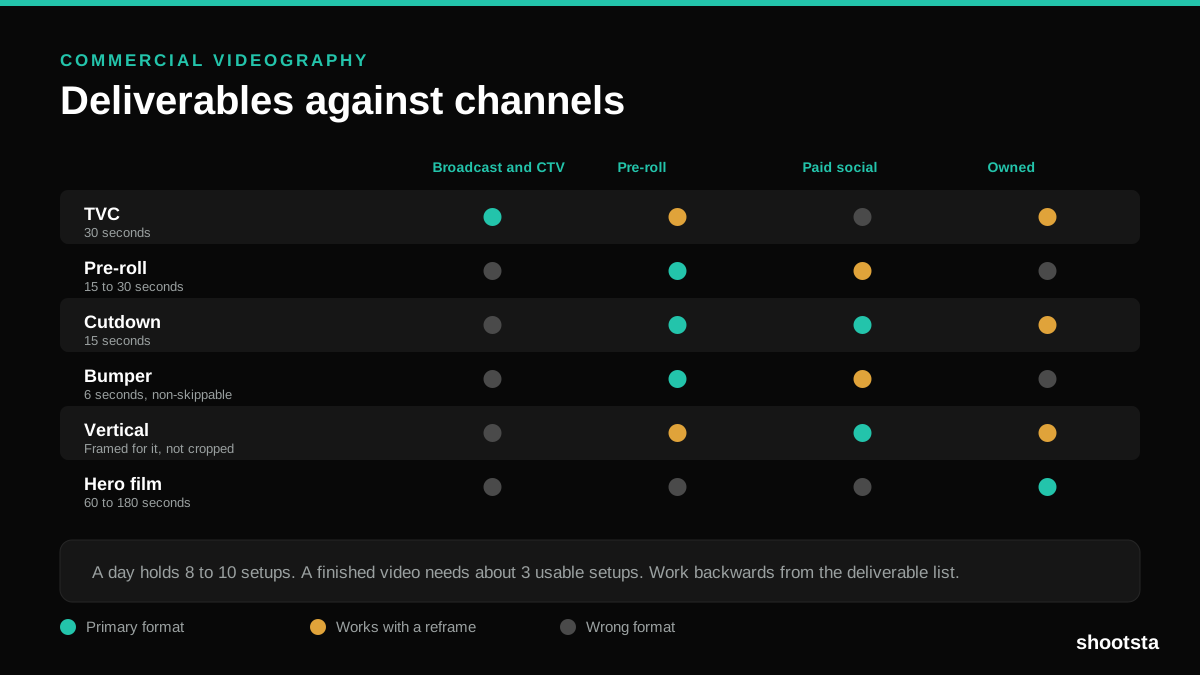
Commercial videography is priced by the day and judged by the deliverable. Most projects go wrong because those two numbers were never reconciled.
12 Branded Content Examples That Worked
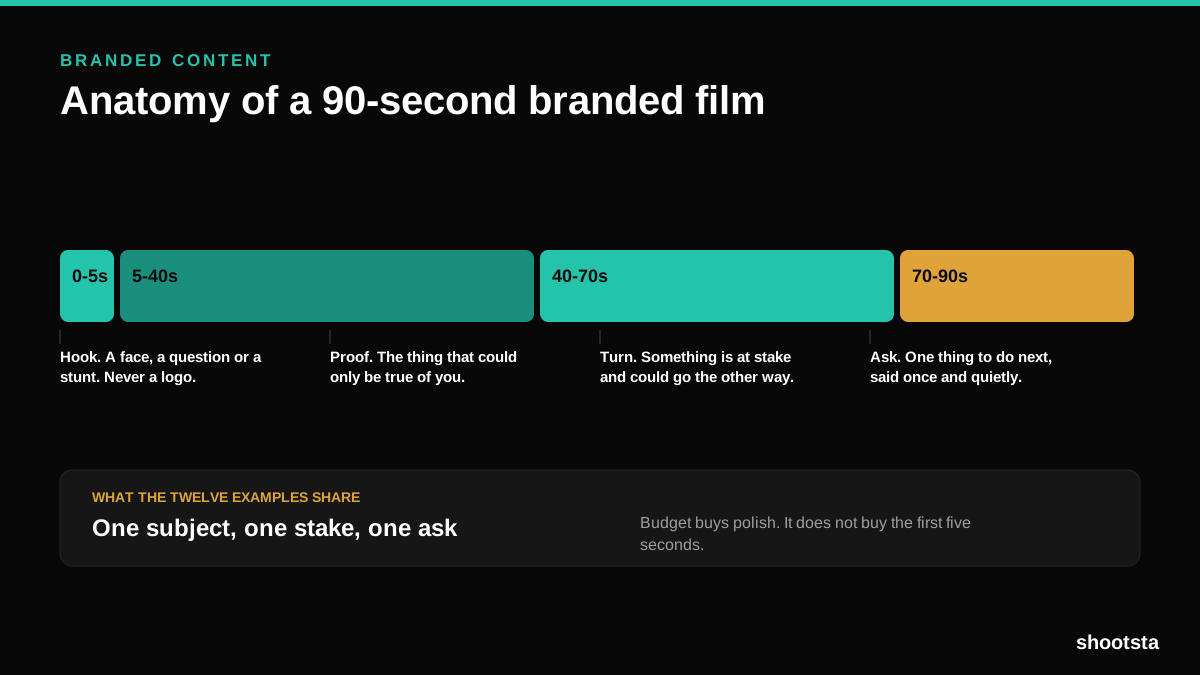
Twelve pieces of branded content that people chose to watch, what each one got right, and the structure underneath all of them.
Promotional Video Production: Cost and Time
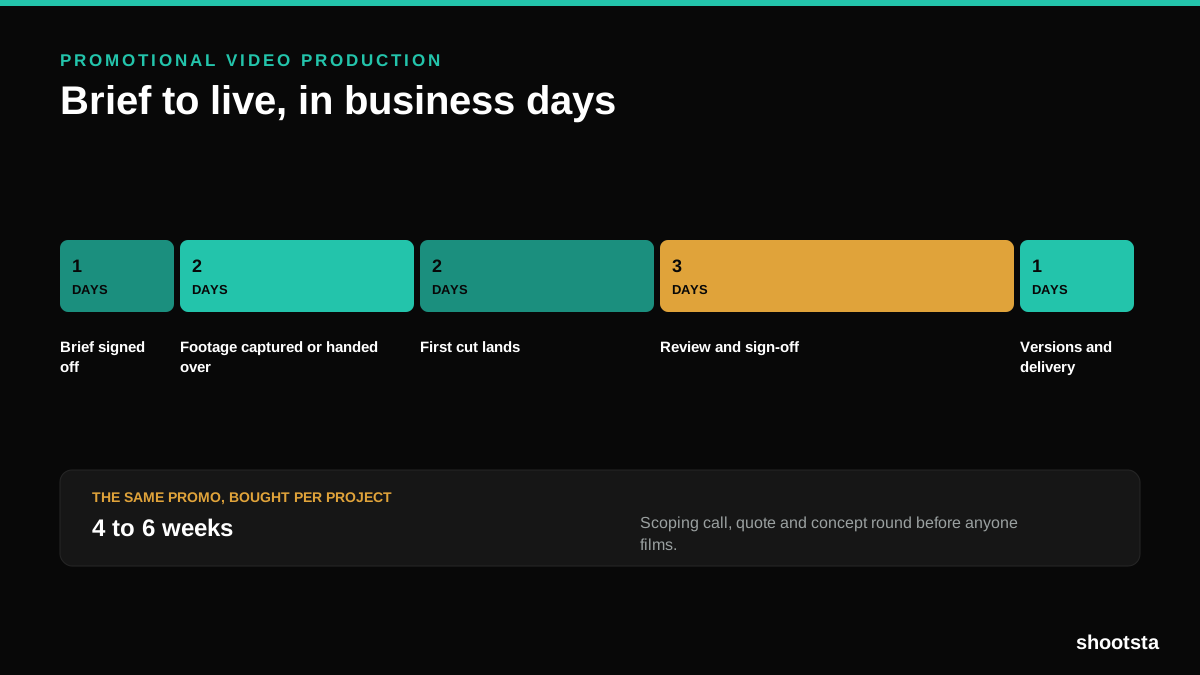
Most promotional video production schedules are not slow because of the edit. They are slow because of the approval chain. Here is where the days go.
Video Marketing Agency or Subscription?
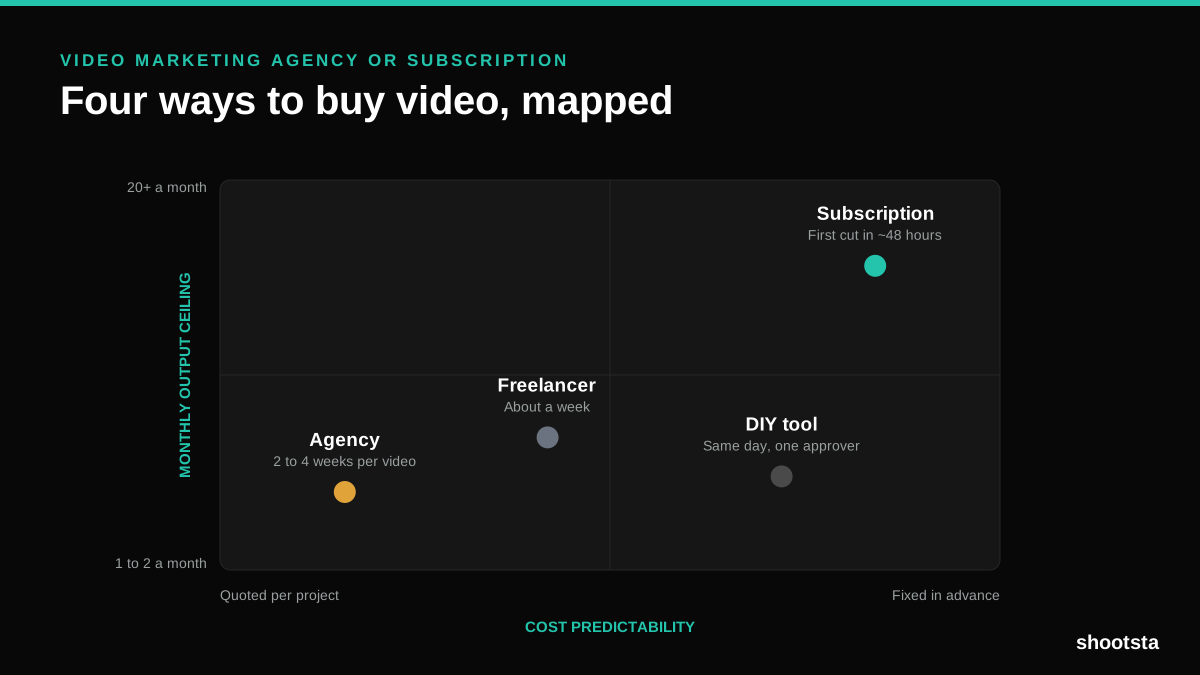
A video marketing agency prices per project and works in weeks. A subscription prices the year and works in days. Which one fits depends on how often you publish, not on which is better.

B2B Video Production: Costs and Buying Models
There are five ways to buy B2B video production. Each one works well up to a point and then breaks, usually at a volume nobody planned for. Here is what each costs and where the ceiling sits.
How to Measure Video Speed-to-Market
How to Measure Video Speed-to-Market
Speed-to-market is the lag between needing a video and publishing it. For marketing teams it is a revenue metric. Here is how to measure and improve it.