
Video ROI in B2B: The KPIs That Actually Matter
shootsta.
Video ROI in B2B: The KPIs That Actually Matter
By Shootsta · Published March 17, 2026 · Updated October 2026
Most B2B video metrics are vanity metrics. Here are the KPIs that connect video production to pipeline and revenue, and how to track them without overcomplicating your reporting.
Why is measuring video ROI in B2B so hard?
B2B companies spend on video production but struggle to connect that spend to revenue. The typical report shows view counts, play rates, and engagement metrics - numbers that look good in a dashboard. They don't tell you whether video is adding to pipeline.
You probably have plenty of data already, and the gap is in what you choose to track. A video with 10,000 views and a 75% completion rate might generate zero leads. Another video with 200 views might influence 3 enterprise deals worth $500K. If you're only tracking views, you'd invest more in the first video and starve the second.
B2B video ROI requires connecting video engagement to business outcomes. That means tracking different KPIs depending on what the video is supposed to do.
What are the vanity metrics to stop tracking?
These metrics aren't useless, but they're not ROI indicators. Stop reporting them as proof that video is working.
Total views
A view count tells you how many people pressed play. It doesn't tell you whether the right people watched, whether they stayed long enough to absorb the message, or whether they did anything afterward. A video that goes semi-viral with the wrong audience has high views and zero business impact.
Social engagement (likes, shares, comments)
Engagement metrics measure audience activity, and they say little about buying intent. A funny behind-the-scenes video might get 500 LinkedIn likes from peers and competitors. A detailed product comparison video might get 12 likes from actual prospects. The second video is worth more.
Production cost per video
Tracking cost per video without tracking value per video is meaningless. A $500 video that generates no pipeline is more expensive than a $5,000 video that sources a $50K deal. Cost matters, but only relative to return.
What KPIs connect video to B2B pipeline?
These metrics tell you whether your video program is creating business value. Group them by funnel stage as you set them up.
Qualified reach
How many people from your ideal customer profile (ICP) watched the video? This requires connecting your video hosting platform (Wistia, Vidyard) to your CRM (HubSpot, Salesforce) so you can see who watched as well as how many. A video with 200 ICP views is more valuable than one with 10,000 anonymous views.
New contacts generated
If your video is gated or has a CTA that drives to a form, track how many new contacts it generates. Not all videos should be gated, but when they are, this is the metric that matters.
Video-influenced pipeline
How much pipeline was created from contacts who watched a video before entering the sales process? This is the single most important video KPI in B2B. It tells you whether video is warming up prospects and moving them toward a sales conversation.
Video-to-meeting conversion rate
Of the people who watched a specific video, how many booked a meeting or responded to outreach? This is especially relevant for marketing video content and one-to-one sales videos. If your product demo video has a 5% meeting conversion rate and your generic brand video has 0.5%, you know where to invest.
Content engagement depth
Look beyond play rate. Track what percentage of viewers watch to the 25%, 50%, 75%, and 100% marks. If 90% of viewers drop off at the 30-second mark of a 3-minute video, the opening isn't strong enough or the video is too long for its purpose.
Video-sourced revenue
How much closed-won revenue came from deals where the first touch was a video? This is hard to track perfectly, but even a partial attribution model gives you directional data. If your enterprise video program is sourcing 15% of new pipeline, you can calculate its revenue contribution.
Video-assisted revenue
A broader metric: how much revenue came from deals where the prospect watched at least one video during the sales cycle? This captures videos that influenced a deal even if they weren't the first touch. Expect a B2B video program to influence more revenue than it sources directly.
Deal velocity impact
Do deals where the prospect watched video content close faster than deals where they didn't? Compare average deal cycle length for video-influenced deals versus non-video deals. If video-influenced deals close 20% faster, that's a real ROI argument.
How do you calculate video production ROI?
The formula is simple once you have the right inputs. ROI = (Revenue attributed to video - Cost of video production) / Cost of video production
If you spent $50,000 on video production in a quarter and videos influenced $500,000 in closed-won revenue, your ROI is 9x. Even if you attribute only 20% of that revenue to video (acknowledging other touches contributed), you're still at $100,000 / $50,000 = 2x ROI.
Video ROI tends to improve over time, because production costs stay fairly fixed while the library keeps working. A video produced in January still generates views and pipeline in June. Unlike paid ads, you don't pay per impression.
How should you set up tracking?
You don't need a complex martech stack to track video ROI. Here's the minimum setup.
Connect your video platform to your CRM
Wistia, Vidyard, and similar platforms integrate with HubSpot and Salesforce. This lets you see which contacts watched which videos and for how long. Most integrations take under an hour to set up.
Use UTM parameters on video CTAs
When your video links to a landing page or form, tag the URL with UTM parameters so you can track which videos drive which conversions in Google Analytics.
Add a "how did you hear about us" field
It sounds simple because it is. On your contact form, include a field asking how the prospect found you. You'd be surprised how often "watched a video" or "saw your video on LinkedIn" appears.
Review video influence in pipeline reviews
During weekly or monthly pipeline reviews, check which open deals have video engagement. If a prospect watched your pricing explainer and your customer testimonial before requesting a demo, that's video influence worth tracking.
What does good look like?
Benchmarks vary by industry, deal size, and video type. But here are directional targets for B2B video programs.
Video-influenced pipeline: 15-30% of total pipeline should show video engagement somewhere in the contact record. If you're below 15%, your videos aren't reaching enough prospects or aren't embedded in the sales process. If you're above 30%, you're doing well - focus on increasing conversion rates.
Video-to-meeting conversion: 2-5% for marketing videos, 10-20% for one-to-one sales videos. If your numbers are below these ranges, look at targeting (wrong audience) or content quality (not compelling enough).
Cost per video-sourced lead: compare this to your other channels. If organic search generates leads at $50 each and video generates leads at $200 each, video needs to deliver higher quality leads or faster deal cycles to justify the premium. In our experience, video-sourced leads tend to convert at higher rates, which makes the higher cost per lead worthwhile.
Deal velocity: video-influenced deals should close 15-25% faster than non-video deals. If there's no difference, your videos may not be addressing the right questions or concerns in the buying process.
Start with what you have
You don't need perfect attribution to start measuring video ROI. Begin with the metrics you can track today - video views by known contacts, pipeline from video-engaged prospects, and a simple "how did you find us" field. Improve your tracking over time as you prove the value of the program.
You are aiming for directional insight rather than perfect measurement. You want a signal that tells you whether to invest more, invest differently, or pull back. If your video program is influencing 20% of pipeline and accelerating deal cycles, you have your answer.
Reporting is one of five measures of a program that survives budget cuts. Grade yours with the CMO video scorecard to see how measurement stacks up against coverage, brand, turnaround and cost.
Take this article with you
Read the latest at shootsta.com/blog/video-roi-b2b-kpis-that-actually-matter
You might also like

How to Plan Video Team Capacity Around Leave
Your only editor just booked two weeks off, and you already know which projects will slip. Chad Lakin explains how to plan video team capacity so the work keeps moving when someone is away.
Corporate Video Editing Standards: Full Guide
A two-page editing standard does more for consistency than a forty-page brand book. Here is what it should cover, who owns each part, and how to enforce it with an in-house editor or an outside partner.
Quality Control in Outsourced Video Editing
When editing leaves the building, quality has to be checked by a system rather than by whoever happens to look. Here is the system: acceptance criteria, two QA gates, counted revision rounds and a quarterly audit.
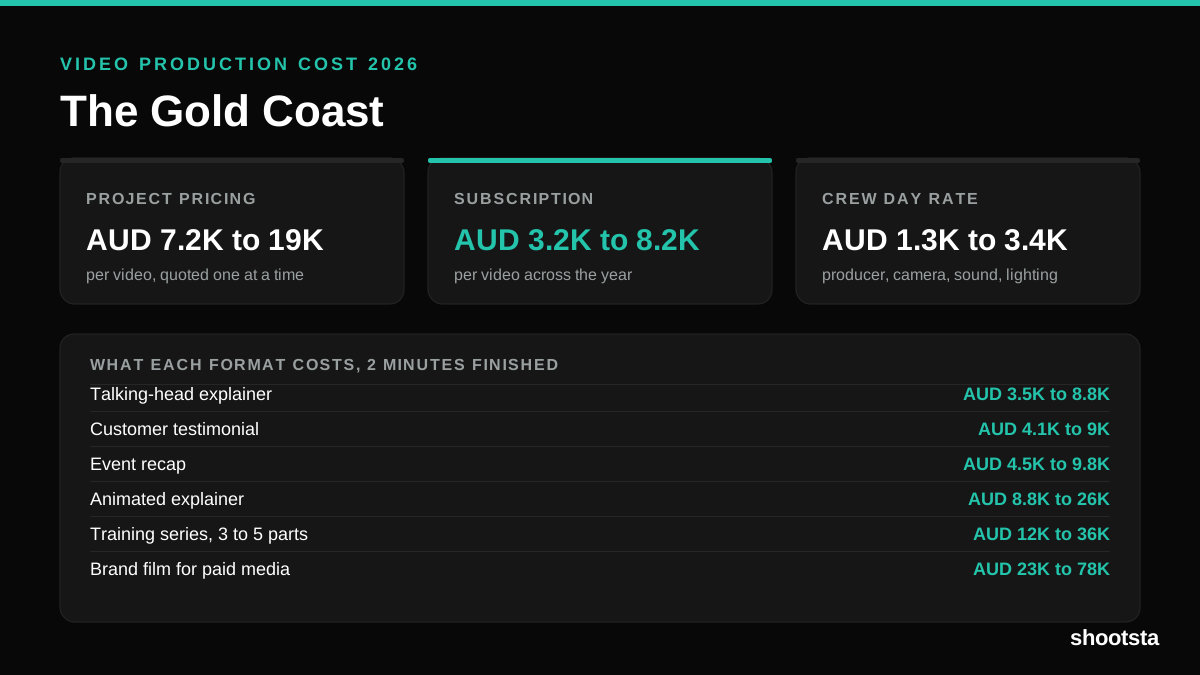
Video Production Cost on the Gold Coast 2026
Video production in the Gold Coast costs AUD 3,200 to AUD 8,200 per finished video on a subscription model, and AUD 7,200 to AUD 18,500 for one-off project work. Here is what you are paying for, and how the three pricing models compare.
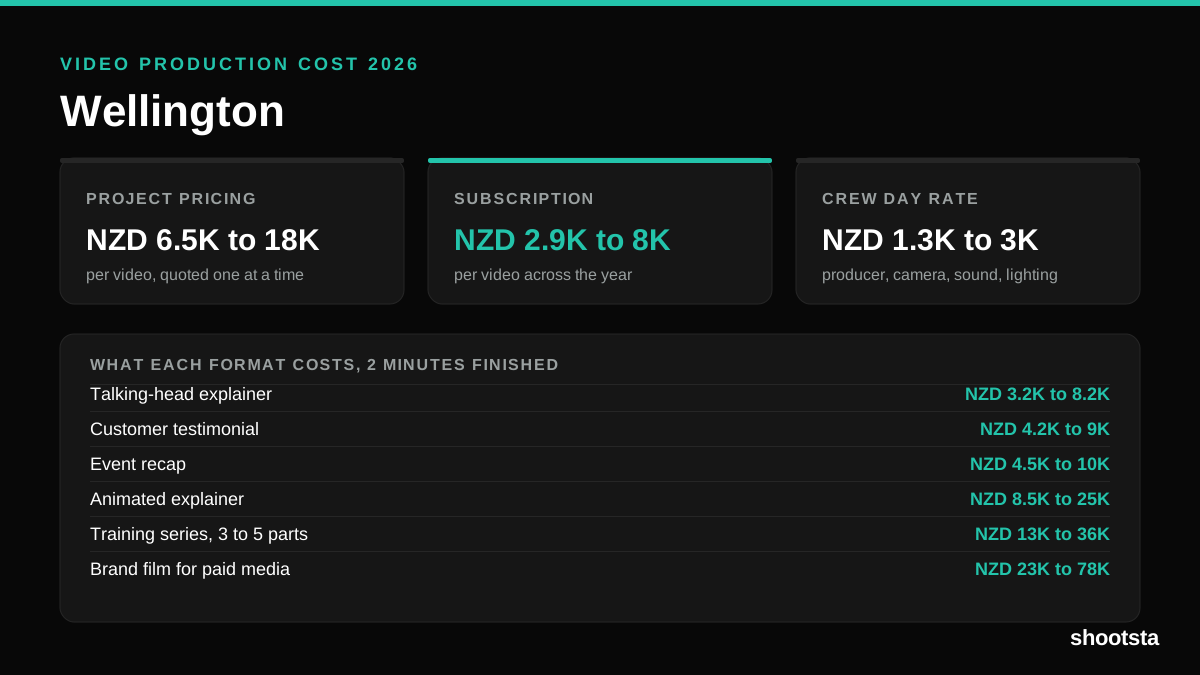
Video Production Cost in Wellington (2026)
Video production in Wellington costs NZD 2,900 to NZD 8,000 per finished video on a subscription model, and NZD 6,500 to NZD 18,000 for one-off project work. Here is what you are paying for, and how the three pricing models compare.
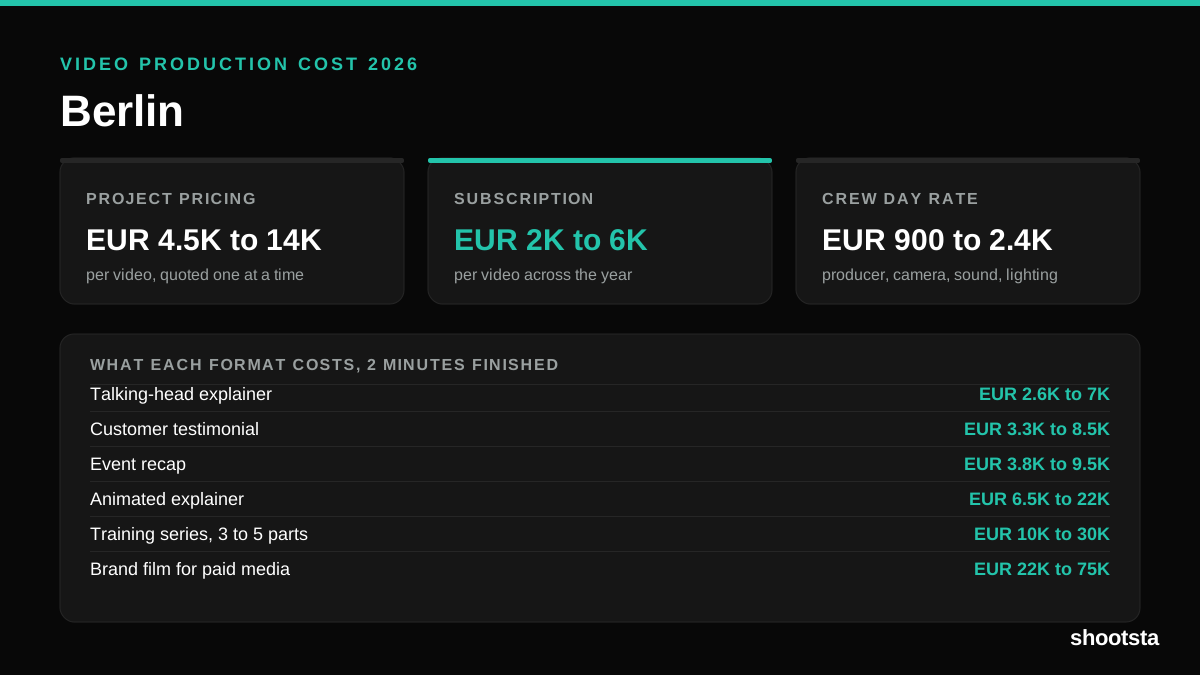
Video Production Cost in Berlin (2026)
Video production in Berlin costs EUR 2,000 to EUR 6,000 per finished video on a subscription model, and EUR 4,500 to EUR 13,500 for one-off project work. Here is what you are paying for, and how the three pricing models compare.