
shootsta.
Video Sales Letters for B2B SaaS
By Shootsta · Published April 27, 2026 · Updated October 2026
How B2B SaaS teams use video sales letters across cold outbound, ABM, and renewals - with benchmarks, ICP-fit notes, and a 30-day rollout playbook.
B2B SaaS is the segment where video sales letters earn their highest return. The buyer is online, the deal value justifies the production effort, and the sales motion is built around 1:1 outreach where a 60-second video can replace a 200-word email.
This post breaks down exactly where VSLs fit into a B2B SaaS sales org, what reply-rate lift to expect, which use cases come first, and how to roll out a video-led outbound motion in 30 days. For the production side, see our video sales letter production service. For the script formulas, see the video sales letter script template.
What is a video sales letter in B2B SaaS?
A video sales letter (VSL) in B2B SaaS is a short on-camera video, usually 60 seconds to 3 minutes, sent inside an email or LinkedIn DM by an account executive, BDR, or CSM. It opens with a specific hook about the prospect's company, names the operational pain, presents the product, surfaces proof, and ends with a clear next step. The format works in B2B SaaS because the average buyer is on screen all day, the deal sizes justify the time per video, and the buying committee is large enough that a forwardable asset has compounding value.
Why video sales letters work especially well for B2B SaaS
Three structural reasons VSLs outperform plain text in B2B SaaS:
1. The buying committee is bigger than the prospect
The average B2B SaaS deal involves 6-10 people in the buying committee. Most of them never speak to the rep. A VSL is the only sales asset a champion can forward and have the CFO, the CTO, and the security lead all watch in five minutes. Written emails get summarized to one bullet on a Slack thread; videos get watched in full.
2. The product is on screen anyway
SaaS demos are screen recordings. Embedding a 15-second product clip inside a VSL is essentially free, and it gives the buyer something tangible to react to. Industries where the product is physical or in-person have to manufacture proof; SaaS already has the proof in the form of an interface.
3. Reply rates are the bottleneck
Most B2B SaaS outbound teams measure reply rate as the leading indicator of pipeline. The benchmark for cold email reply rate sits around 3% in 2026. Teams using personalized video in cold outbound consistently report 6-9% reply rates - a 2-3x lift on the same volume. That math compounds quickly when the AE has 200 named accounts and a quarterly quota tied to first meetings.
The five highest-ROI video sales letter use cases for B2B SaaS
Cold outbound to named accounts
This is the classic use case. An AE or BDR sends a 60-75 second video to a named account that fits the ICP, opening with a specific company-level trigger. The strongest teams build a library of 5-10 trigger types (funding announcement, exec hire, product launch, competitor switch, hiring surge) and rotate through them. Reply rates lift 2-3x over plain-text outbound.
LinkedIn DM after connect
30-45 second vertical video sent immediately after a LinkedIn connection accept. The format is mobile-first, captions burned in, and references something the prospect posted or commented on recently. Connect-to-meeting conversion rates run 3-5x higher than text-only DM follow-ups in B2B SaaS.
Tier-one ABM accounts
The top 50 named accounts in the territory each get a tailored 90-120 second video. It draws on account-level research, comparable customer outcomes and a custom plan. Production cost per video is higher, but ABM hit rates can run 15-25% versus the 1-3% typical of cold outbound, so the unit economics still favor video.
Mid-funnel deal acceleration
Sent when a deal goes quiet for 14-30 days. A 45-60 second video from the AE that names the gap, surfaces likely blockers, and asks a binary question. Re-engagement rates run 25-40% on stalled SaaS deals when video is used instead of another templated nudge email.
Proposal walkthroughs
This use case pays back most on deals with ARR over $50K. A 2-3 minute picture-in-picture video walking through the proposal so the champion can forward it to the buying committee. Proposal-to-close rates lift measurably when the CFO and the CTO can watch the same video the champion did, instead of getting the proposal second-hand.
What reply-rate lift can a B2B SaaS team expect?
Benchmarks vary by ICP and segment, but the lift profile is consistent across teams that have rolled out video correctly:
- Cold email with text only: 2-3% reply rate
- Cold email with personalized video: 6-9% reply rate
- LinkedIn DM with text only: 8-12% reply rate
- LinkedIn DM with personalized video: 18-28% reply rate
- Stalled-deal re-engagement, text only: 8-15% response rate
- Stalled-deal re-engagement, video: 25-40% response rate
Teams that fail to see lift almost always have one of three problems: generic openings, videos longer than 90 seconds, or production quality so poor the buyer questions the brand. None of the three are about scripting - they are about discipline and production capacity.
Free PDF Guide
Get the VSL Script Template
A fill-in-the-blanks VSL script and swipe file built for B2B teams, free to download.
Which B2B SaaS roles should use video sales letters?
BDRs and SDRs
BDRs send the most videos and need the least polish. Filming on a phone with captions burned in is the working pattern. You are chasing reply rate at scale, and a phone video with clean captions is enough for that. Aim for 50-100 personalized cold videos per BDR per week.
Account Executives
Lower volume, higher production quality. AEs typically run 20-40 videos per week, split between named-account outbound and proposal walkthroughs. Production gets meaningful lift from a real lapel mic and basic lighting.
Customer Success Managers
CSMs send the fewest videos, but each one carries the most weight. They use video for QBRs, expansion conversations, and renewal kickoffs. The format is usually 60-90 seconds with on-screen usage data. Video is what makes a quarterly check-in feel like an event instead of a calendar item.
Sales leadership
Tier-one ABM accounts often warrant a video from the VP of Sales or the CRO directly. These videos hit at a 30-50% meeting-acceptance rate when used sparingly - typically 5-10 per quarter. Used too often, they lose the signal value.
30-day video sales letter rollout for B2B SaaS
Week 1 - Pick one use case and one segment
Do not roll out video across the whole sales org on day one. Pick one use case (we recommend stalled-deal re-engagement - it has the highest absolute lift and the lowest volume), one segment (one AE pod, one ICP, one product line), and run for two weeks. Measure reply rate against the same segment's text-only baseline.
Week 2 - Build the script library
The five highest-volume scripts the team will need: cold outbound, LinkedIn DM, ABM tier-one, mid-funnel re-engagement, and proposal walkthrough. Use the templates from the video sales letter script template as the starting point, then adjust the language so it fits your ICP.
Week 3 - Solve production capacity
Rollouts tend to stall at this point. A rep records one video, dislikes the lighting and the sound of their own voice, and quietly stops. Build a production lane that handles editing, captions, brand kit, and lower thirds for them. Either use an internal video team (rare in SaaS) or outsource to a service that ships in 48 hours - which is the model our video sales letter production service is built for.
Week 4 - Expand to the second use case
Once the first use case is producing measurable lift, layer in the next one. A sensible next step is to move from re-engagement to cold outbound by week four. Aim to be running three use cases by week six and all five by week ten.
Video sales letters for B2B SaaS FAQs
Do video sales letters work for B2B SaaS?
Yes. B2B SaaS is one of the highest-ROI segments for VSLs because the buyer is on screen all day, the deal value justifies production effort, and the buying committee benefits from a forwardable asset. Cold email reply rates typically lift 2-3x when personalized video replaces text-only outreach. LinkedIn DM reply rates lift 3x or more.
What is the ideal length for a B2B SaaS video sales letter?
Cold outbound videos work best at 60-75 seconds, and LinkedIn DMs at 30-45 seconds. Tier-one ABM accounts can take 90-120 seconds, while a proposal walkthrough can run 2-3 minutes. Watch-through drops sharply after 90 seconds in outbound, so cut anything that does not move the buyer toward the next step.
How much does it cost to produce video sales letters for a B2B SaaS sales team?
Cost varies by volume. Traditional agencies charge $2,000-$5,000 per VSL, which makes scaled outbound impossible. Subscription production models bring unit cost down significantly and let a 10-rep SaaS team produce 200-500 VSLs a month at predictable rates. Get in touch for a quote based on team size and target output.
Should B2B SaaS BDRs film their own video sales letters?
Yes. BDRs filming on a phone is the working pattern at scale. The economics break if every video has to go through a studio. Where production support helps is editing - cutting, captioning, adding the brand kit and lower thirds, and shipping back in 48 hours. Reps film, the production lane finishes.
How do you measure the ROI of video sales letters in B2B SaaS?
Track four metrics: reply rate (versus text-only baseline), meetings booked from video-touched accounts (versus baseline), pipeline created from VSL-touched accounts, and closed-won revenue from VSL-touched accounts. The first two move in 30 days, the second two move in 90-120 days. Tools like Vidyard, Loom, and Sendspark provide the play and watch-through data; CRM provides the pipeline and revenue attribution.
What B2B SaaS roles should not use video sales letters?
Inbound BDRs handling speed-to-lead motions where 5-minute response time matters more than format. For inbound qualified leads, written email with a one-click calendar link beats a 60-second video. The buyer has already raised their hand, so your job is to make booking the meeting as easy as possible.
Make video the default sales motion
The B2B SaaS teams that win the next 24 months will treat video sales letters as the default sales motion and run them every week. The economics already favor video over text on every metric except production effort, and you can solve production effort with an editing partner. See the full video sales letter production service, read the broader VSL strategy guide, or study the eight VSL examples we have broken down.
Take this article with you
Read the latest at shootsta.com/blog/video-sales-letters-for-b2b-saas
You might also like
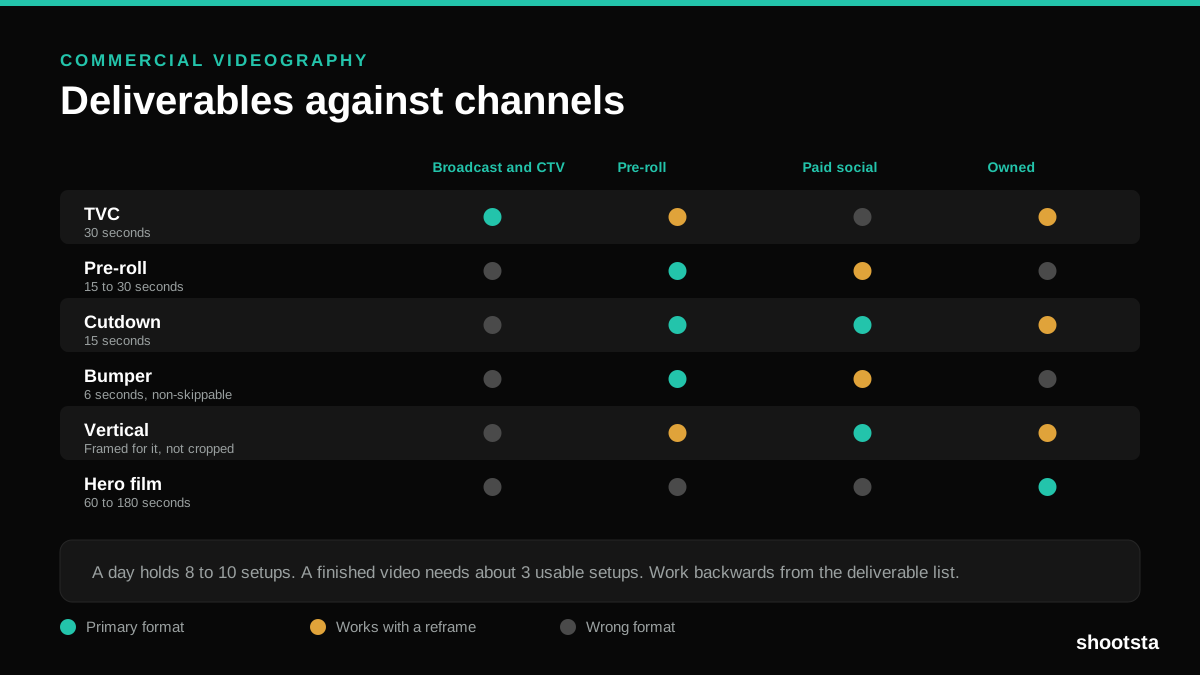
Commercial Videography: Cost and Scope
Commercial videography is priced by the day and judged by the deliverable. Most projects go wrong because those two numbers were never reconciled.
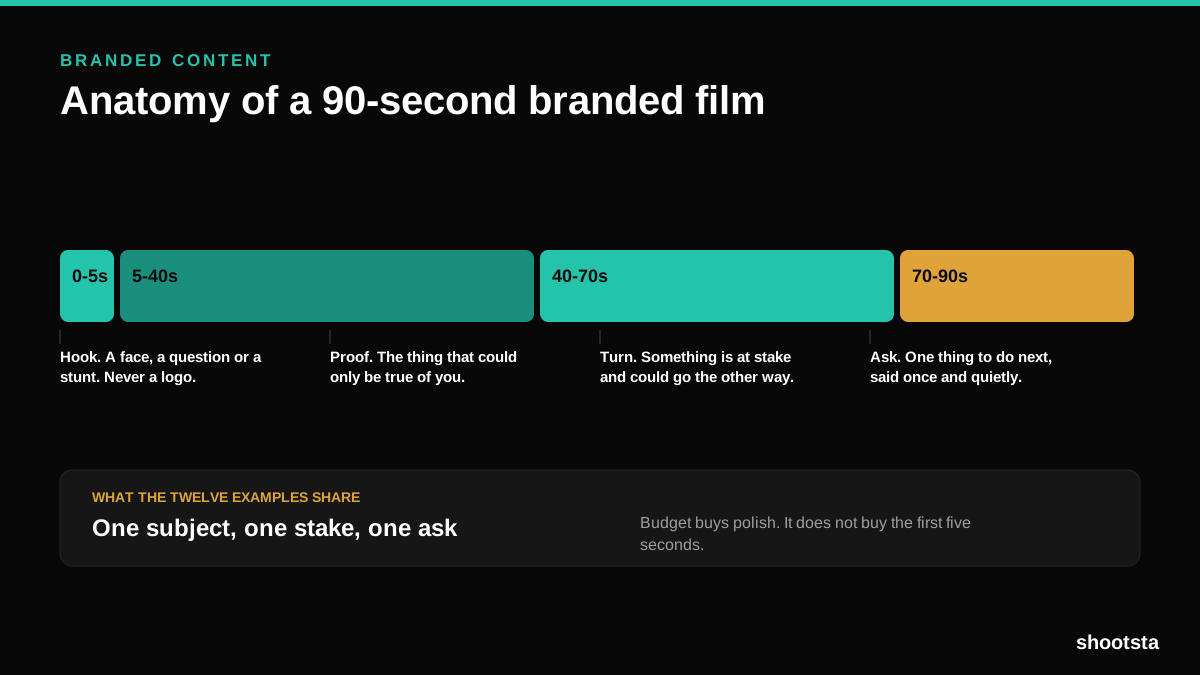
12 Branded Content Examples That Worked
Twelve pieces of branded content that people chose to watch, what each one got right, and the structure underneath all of them.
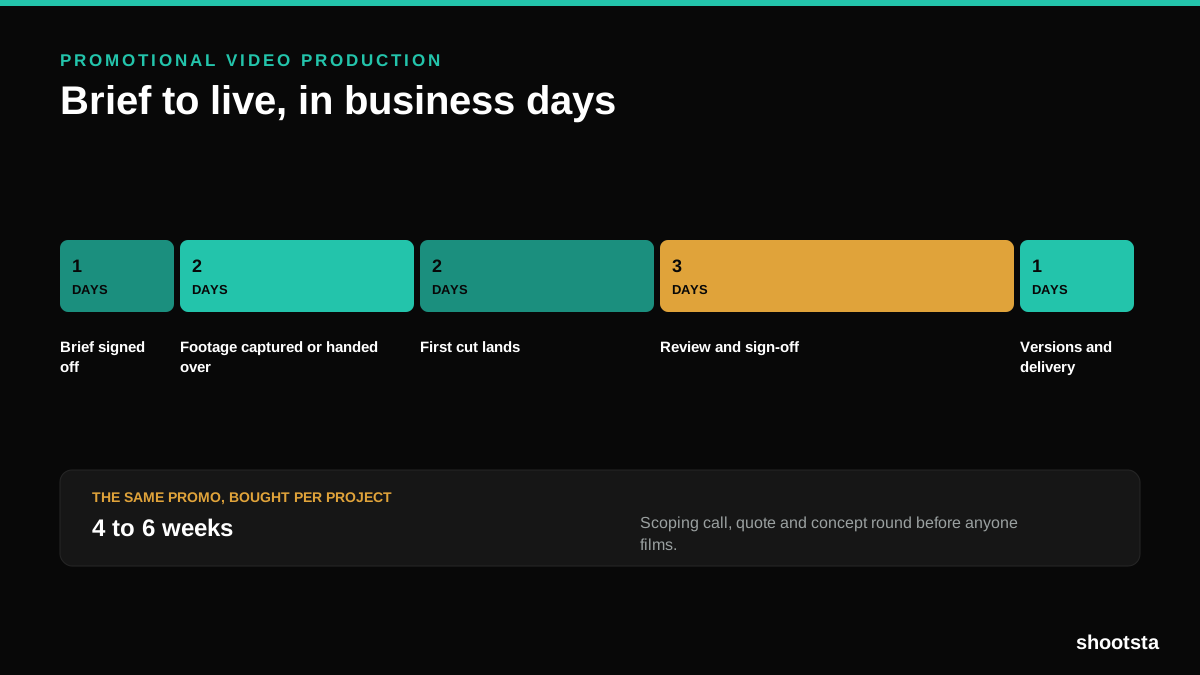
Promotional Video Production: Cost and Time
Most promotional video production schedules are not slow because of the edit. They are slow because of the approval chain. Here is where the days go.
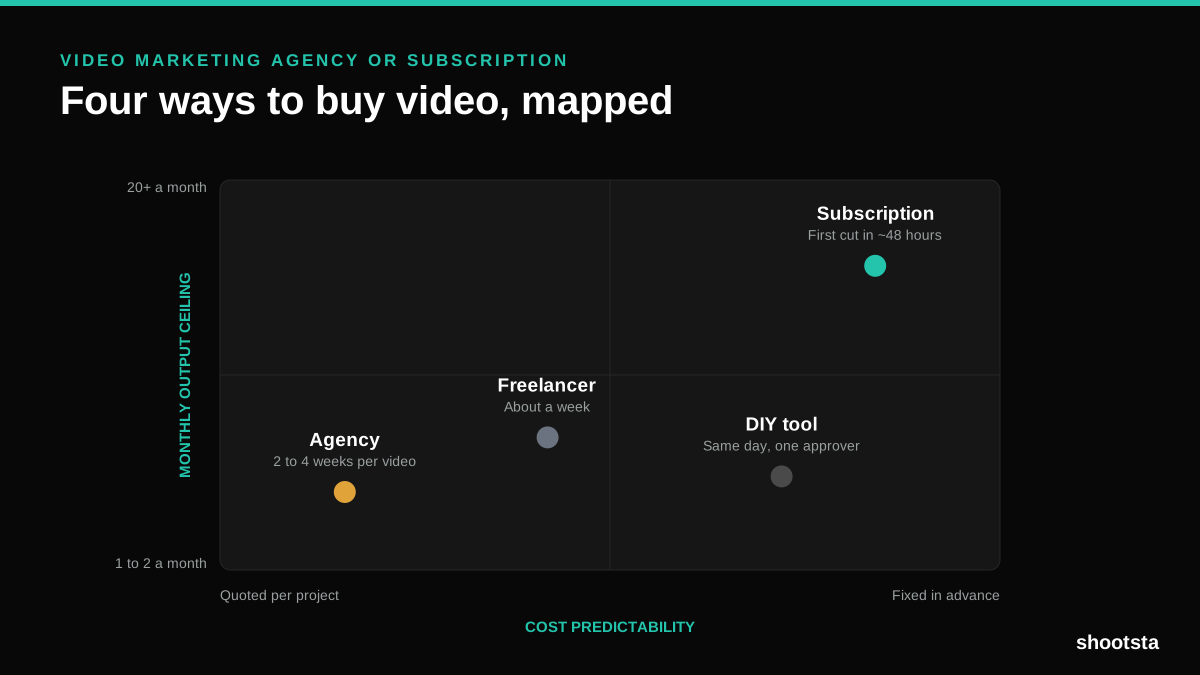
Video Marketing Agency or Subscription?
A video marketing agency prices per project and works in weeks. A subscription prices the year and works in days. Which one fits depends on how often you publish, not on which is better.

B2B Video Production: Costs and Buying Models
There are five ways to buy B2B video production. Each one works well up to a point and then breaks, usually at a volume nobody planned for. Here is what each costs and where the ceiling sits.
How to Measure Video Speed-to-Market
How to Measure Video Speed-to-Market
Speed-to-market is the lag between needing a video and publishing it. For marketing teams it is a revenue metric. Here is how to measure and improve it.