
shootsta.
How to Increase Video Audience Engagement
By Shootsta · Published February 21, 2026 · Updated October 2026
Engagement is built into the structure of a video, not bolted on after. Here is how to design business video that holds attention through the whole watch.
What does engagement mean in business video?
Engagement is more than one metric. It combines completion rate, replay rate, click-through, and the actions taken after the video ends. A video can rack up views and still have weak engagement if no one watches past the first 10 seconds or takes the next step.
The videos that hold attention were designed for it before the camera rolled. You decide engagement at the planning stage, and the edit can only work with what you planned.
The first 3 seconds decide everything
Drop-off curves on every platform have the same shape: a steep cliff in the first 3 seconds, then a gradual slope. The cliff is where a large share of viewers leave. A video that keeps people past that point has a chance to deliver its message, and one that loses them there is finished.
Three things help survive the cliff:
- Open with the payoff, not the setup. "Here's what changed when we tried this" beats "Today we're going to talk about..."
- Open with motion. A static talking head loses to a moving frame, every time.
- Open with the unexpected. Pattern breaks (a surprising visual, a counterintuitive statement) hold the eye long enough for the message to land.
How to keep viewers past 30 seconds
The next drop happens around the 30-second mark. By then the viewer wants to know whether the video is worth their time. The answer is structural: give them a small payoff every 15 to 20 seconds. That can be a new visual, a new point or a new question, and that steady pace is what keeps people watching.
For talking-head video, this means cutting between angles or to b-roll regularly. For animated video, it means changing the frame composition. For interview content, it means structuring the question order so the most engaging answer doesn't sit at the end.
Structure that drives engagement
Hook → Setup → Payoff → Action
This four-beat structure works for almost every business video under 3 minutes:
- Hook (3 seconds): Promise a payoff or break a pattern.
- Setup (15-30 seconds): Frame the problem the viewer cares about.
- Payoff (30-90 seconds): Deliver the answer or insight.
- Action (5-10 seconds): The call to action. See our CTA guide for what to write here.
Most videos that fail at engagement skip the hook and go straight to setup. The viewer leaves before the payoff because the cost of waiting outweighs the promise.
The structure short from Shootsta Academy
Tactical engagement levers
- Variable shot length. Mix 2-second cuts with 6-second holds. Viewers tune out when the rhythm is predictable, and a varied rhythm keeps them watching.
- Captions, always. A lot of social video is watched with the sound off, and without captions those viewers get nothing from it.
- One question early. "Have you ever wondered why..." engages the viewer's brain in a way that statements don't.
- Answer in 30 seconds, not 3 minutes. The faster the payoff lands, the more likely the viewer stays for the rest.
- Visual variety in the body. Talking head plus b-roll plus on-screen text plus motion graphics keeps the eye moving.
Engagement metrics worth tracking
Three numbers tell you most of what you need to know:
- Average view duration. If it is a small fraction of the total length, the structure is broken.
- Drop-off curve. Where the cliff is reveals where the script lost the viewer.
- Click-through on the CTA. The ultimate engagement signal: did the viewer act?
For the broader measurement framework, see our video marketing ROI guide.
FAQs about video engagement
What's a good completion rate for business video?
Expect lower completion on social video than on email or website video, where the viewer arrived on purpose. Benchmark each channel against your own past videos on that channel. If social completion falls well below your usual level, the hook is probably not working.
Does video length affect engagement?
Yes, though the effect is not always what you expect. Shorter video gets higher percentage completion but fewer total seconds of attention. The right length depends on the channel and the message. See our video length guide.
How do I A/B test engagement?
Cut two versions with different hooks. Post both with otherwise identical copy and audience. The version with the higher 3-second retention is the better hook, almost always.
What limits engagement most: the idea or the output?
Engagement tactics assume you are publishing often enough for them to compound. For many teams the real ceiling is volume, because a monthly video cannot build the habit that a weekly one does. If your bottleneck is finishing rather than thinking, compare the best video editing subscription services, or the best corporate video production companies for full-service partners.
Take this article with you
Read the latest at shootsta.com/blog/how-to-increase-video-audience-engagement
You might also like
How to Plan Video Team Capacity Around Leave
Your only editor just booked two weeks off, and you already know which projects will slip. Chad Lakin explains how to plan video team capacity so the work keeps moving when someone is away.
Corporate Video Editing Standards: Full Guide
A two-page editing standard does more for consistency than a forty-page brand book. Here is what it should cover, who owns each part, and how to enforce it with an in-house editor or an outside partner.
Quality Control in Outsourced Video Editing
When editing leaves the building, quality has to be checked by a system rather than by whoever happens to look. Here is the system: acceptance criteria, two QA gates, counted revision rounds and a quarterly audit.
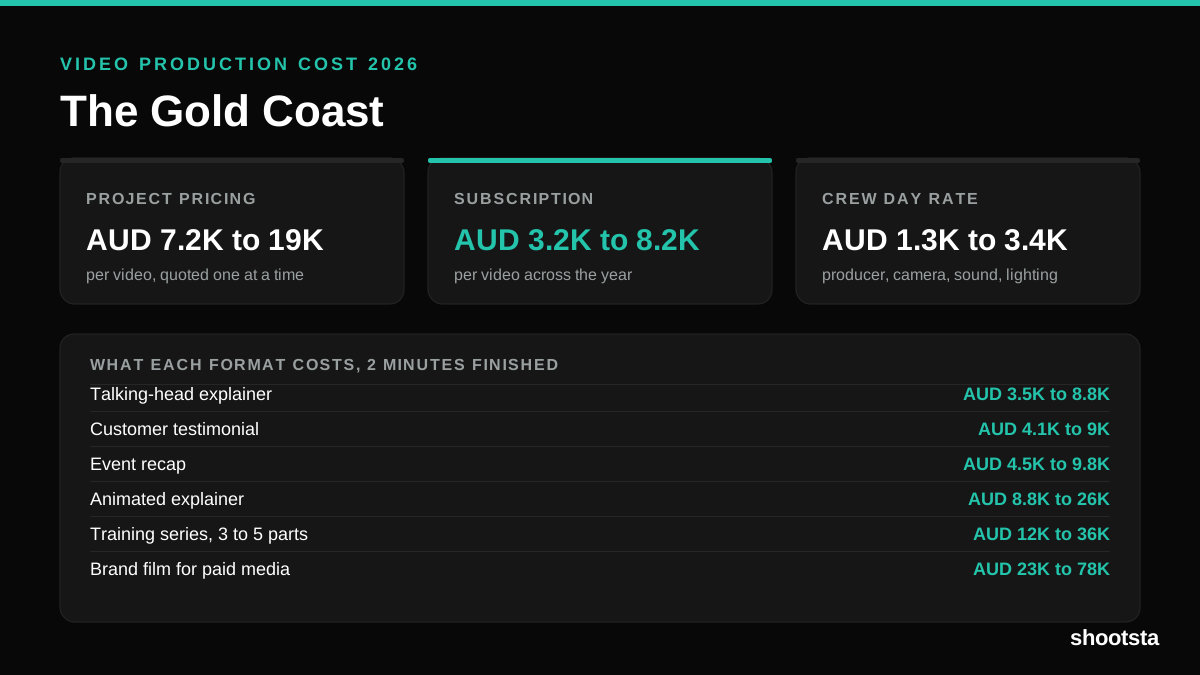
Video Production Cost on the Gold Coast 2026
Video production in the Gold Coast costs AUD 3,200 to AUD 8,200 per finished video on a subscription model, and AUD 7,200 to AUD 18,500 for one-off project work. Here is what you are paying for, and how the three pricing models compare.
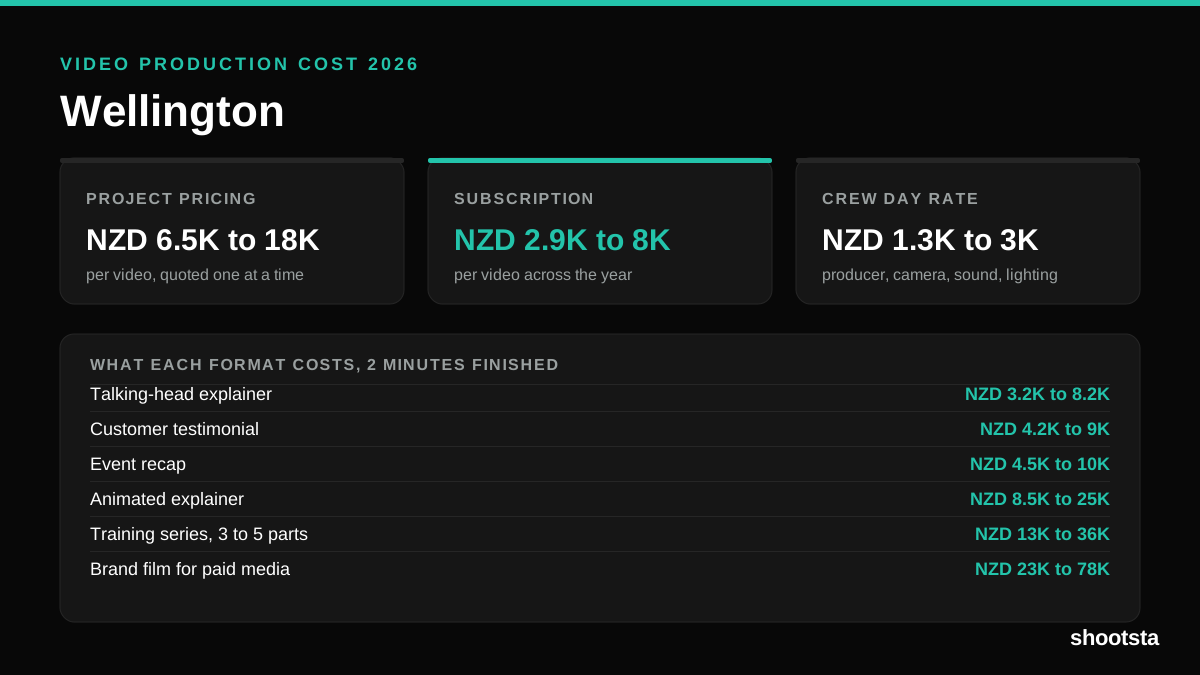
Video Production Cost in Wellington (2026)
Video production in Wellington costs NZD 2,900 to NZD 8,000 per finished video on a subscription model, and NZD 6,500 to NZD 18,000 for one-off project work. Here is what you are paying for, and how the three pricing models compare.
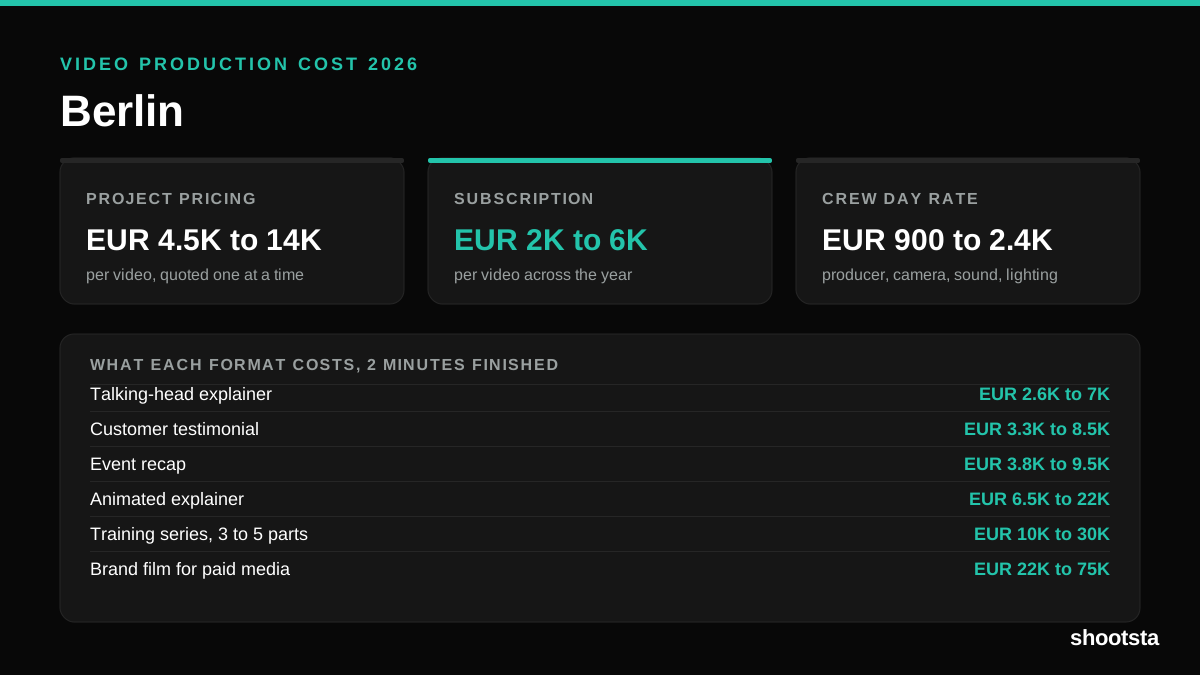
Video Production Cost in Berlin (2026)
Video production in Berlin costs EUR 2,000 to EUR 6,000 per finished video on a subscription model, and EUR 4,500 to EUR 13,500 for one-off project work. Here is what you are paying for, and how the three pricing models compare.