
How to Localize Video for Global Markets
shootsta.
How to Localize Video for Global Markets
By Shootsta · Published July 23, 2026 · Updated October 2026
Localizing video for global markets is a systems problem, not a one-off translation job. Here is how to plan a library you can re-version per market.
How do you localize video for global markets?
You localize video by producing a single master that is built to be re-versioned, then adapting the language, captions, voice and on-screen text for each market from that master. The translation is the visible part. The part that decides whether you can scale is the system underneath it.
You probably started with a simpler goal, which was getting one video into one other language. That is a fair place to begin. A single subtitle pass or a quick voiceover will get one video across one border. The trouble starts when you have dozens of videos and many markets, and every one is a fresh project with its own files, its own approvals and its own version of the brand.
Why is localization an operations problem?
Demand for native-language content is well documented. CSA Research has found that around 76% of buyers prefer to buy products with information in their own language, and roughly 40% will not buy when the content is only in another language. So the business case is rarely the hard part. The hard part is producing dozens of language versions on a repeatable schedule without the cost and the quality drifting out of control.
That is an operations question. It depends on how your masters are structured, how you store source files, how re-versioning is handled, and who signs off in each region. Get the structure right once and each new language becomes a small, predictable task rather than a new production.
What goes into a re-versionable master?
A master that is easy to localize keeps the things that change separate from the things that stay fixed. Plan for it at the brief stage:
- Keep narration off the picture so audio can be swapped without re-editing the visuals.
- Build on-screen text and lower thirds as editable layers instead of baking them into the picture.
- Leave breathing room in the edit so longer languages, such as German or Finnish, still fit.
- Hold logos, color and motion in a shared template so every market looks like one brand.
With that groundwork, re-versioning into a new language costs a fraction of a fresh shoot per market. You are adapting an asset you already own rather than rebuilding it. Shootsta has produced more than 70,000 videos in many languages. The pattern that holds up is one strong master with many clean versions made from it.
How do you decide what to localize first?
Not every video earns a translation in every market. Start with the assets that carry revenue or risk: sales explainers, onboarding, compliance, and product launches. Map each one to the markets where a local version changes a buying or training outcome. A clear method for that sits in our guide on how many languages you should localize, and the budget side is covered in how much video localization costs.
What format should the localized version take?
Subtitles, dubbing and voiceover each suit different content and different markets. A compliance module reads fine with subtitles. A leadership address often lands better with native voiceover. We break down the trade-offs in choosing between subtitles, dubbing and voiceover. Animated content has its own path, since text and audio live in editable layers from the start, which we cover in localizing animated video at scale.
What changes beyond language?
Translation handles the words. Localization also adapts the parts of a video that carry meaning on their own, and getting these wrong leaves a technically correct translation that still lands badly.
- Imagery and color. Colors, symbols, clothing and settings read differently across markets. Stock and b-roll that feel right in one region can feel off in another, so check the visuals fit the local context.
- On-screen text and examples. Currency, dates, units, names and product examples should match the market as well as the language.
- Tone and directness. Some markets prefer direct claims, others respond to a softer, relationship-first framing. Adjust the tone of the script for each market as well as the words.
- Humor and idiom. Jokes and idioms rarely survive a literal translation. Where a line depends on wordplay, adapt the idea instead of the words.
Most of this does not need a separate edit per market. Plan the master so imagery, text layers, and voice can flex, and the cultural adaptation happens in versioning rather than a reshoot.
What compliance rules change by market?
Regulation is the other thing that shifts across borders, and it is the one most likely to pull a video before it ships. Build the checks into the workflow so each market's version clears review the first time.
- Disclaimers and claims. Regulated sectors like finance, health, and insurance need market-specific disclaimers and evidence for claims. What is compliant in one jurisdiction may not be in another.
- Privacy and consent. Footage of people, customers, or workplaces carries different consent and data rules by region. Confirm releases cover every market you will publish in.
- Accessibility. Caption and accessibility rules vary, and several markets treat them as a legal standard rather than a nice-to-have. The format side is covered in burned-in vs SRT subtitles.
- Advertising standards. Comparative claims, pricing, and endorsements are governed differently by market, so the same ad cut may need edits to run.
The fix is the same as the rest of localization: a re-versionable master plus a regional approval path, so compliance becomes a checklist for each version and you never need a reshoot.
How do you keep the brand consistent across markets?
Consistency comes from governance rather than hoping each region gets it right. Regional teams need shared templates, an approval path, and a single source of truth for brand assets. Our guide to brand consistency across localized video goes deeper, and the long-term home for all of it is a managed multilingual video library. For teams running this across regions, multilingual APAC video production shows how regional hubs support delivery, and the Shootsta platform is where masters, versions and approvals stay in one place.
Where do you start?
Pick three high-value videos and two priority markets. Build one re-versionable master, ship the language versions, and measure the difference in engagement and conversion. Once the pattern works on a small set, scaling it is mostly repetition. If you want help structuring that first batch, our team can map it with you on a free consultation.
Sources
- CSA Research: share of buyers who prefer content in their own language.
- Shootsta multilingual production across 70,000+ videos in many languages.
- Shootsta regional delivery hubs in Sydney, London, Singapore and San Diego.
Take this article with you
Read the latest at shootsta.com/blog/how-to-localize-video-global-markets
You might also like

How to Plan Video Team Capacity Around Leave
Your only editor just booked two weeks off, and you already know which projects will slip. Chad Lakin explains how to plan video team capacity so the work keeps moving when someone is away.
Corporate Video Editing Standards: Full Guide
A two-page editing standard does more for consistency than a forty-page brand book. Here is what it should cover, who owns each part, and how to enforce it with an in-house editor or an outside partner.
Quality Control in Outsourced Video Editing
When editing leaves the building, quality has to be checked by a system rather than by whoever happens to look. Here is the system: acceptance criteria, two QA gates, counted revision rounds and a quarterly audit.
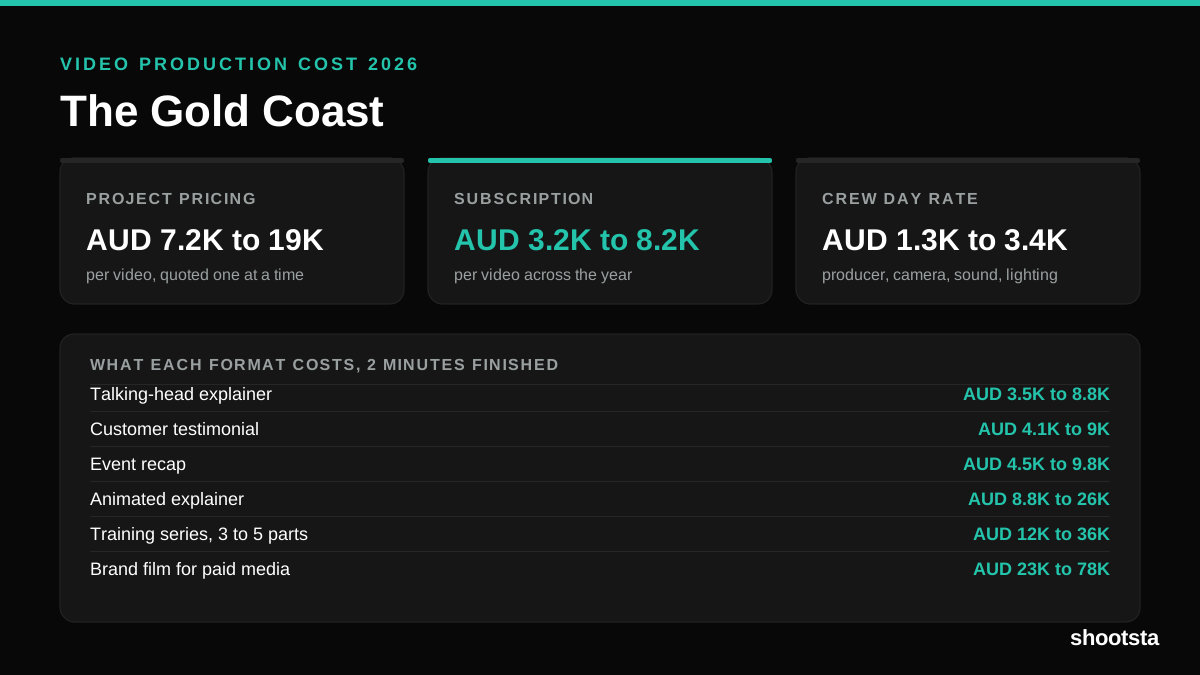
Video Production Cost on the Gold Coast 2026
Video production in the Gold Coast costs AUD 3,200 to AUD 8,200 per finished video on a subscription model, and AUD 7,200 to AUD 18,500 for one-off project work. Here is what you are paying for, and how the three pricing models compare.
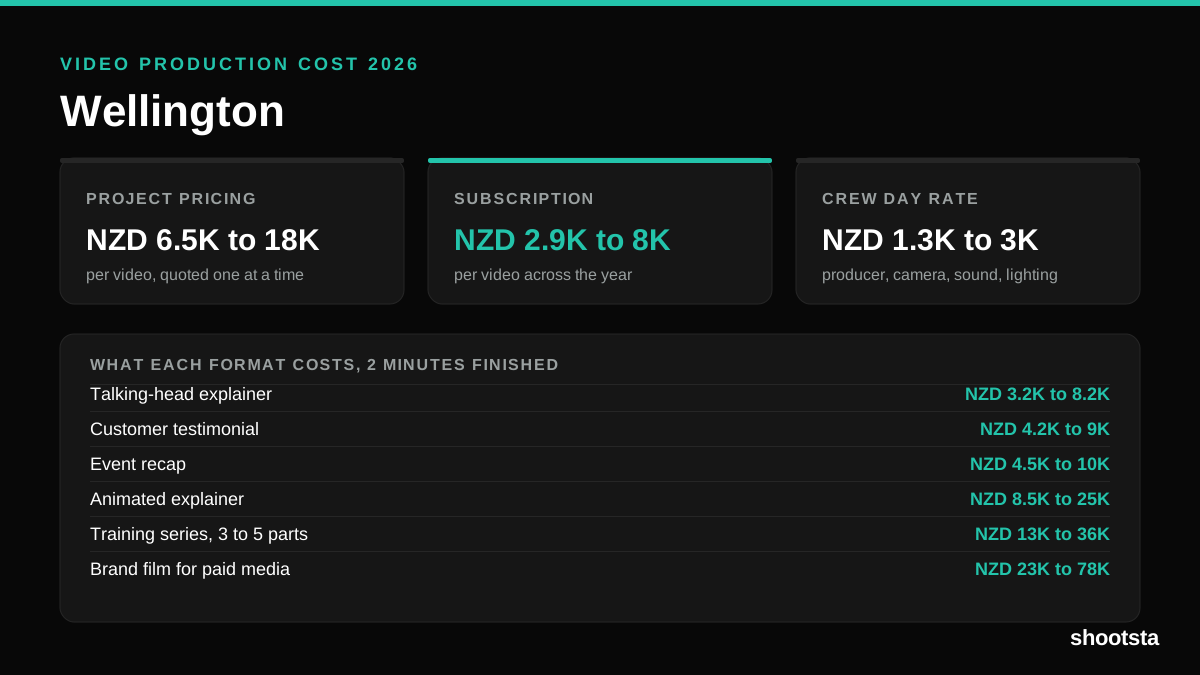
Video Production Cost in Wellington (2026)
Video production in Wellington costs NZD 2,900 to NZD 8,000 per finished video on a subscription model, and NZD 6,500 to NZD 18,000 for one-off project work. Here is what you are paying for, and how the three pricing models compare.
Video Production Cost in Berlin (2026)
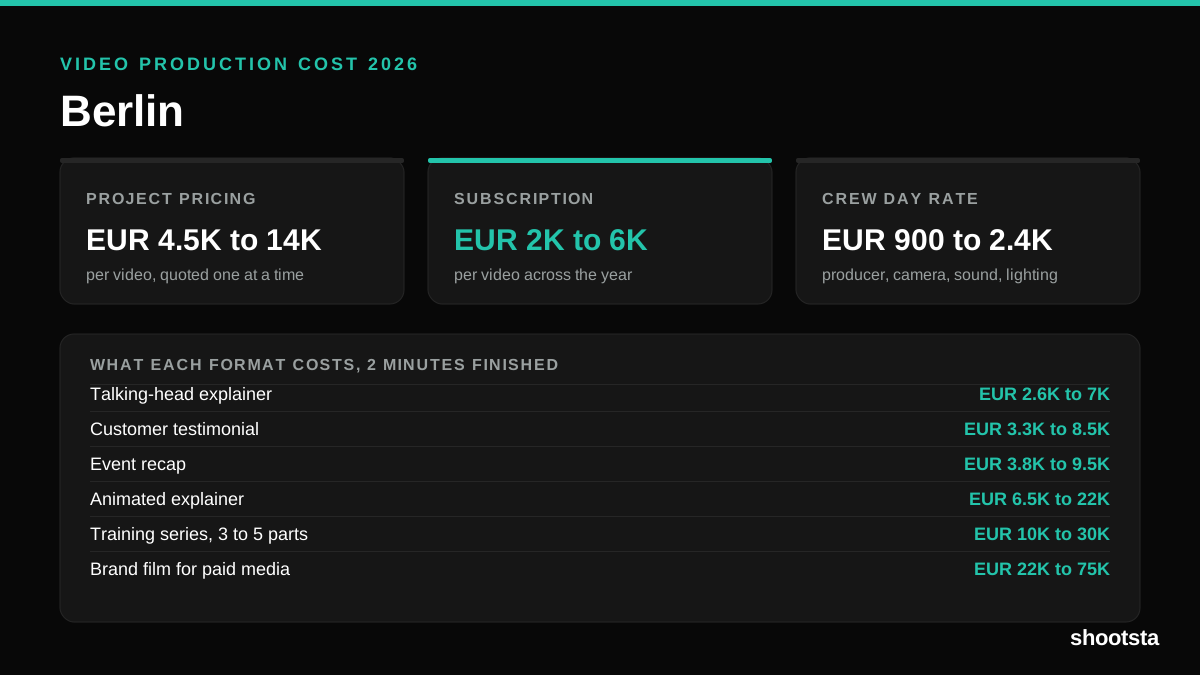
Video production in Berlin costs EUR 2,000 to EUR 6,000 per finished video on a subscription model, and EUR 4,500 to EUR 13,500 for one-off project work. Here is what you are paying for, and how the three pricing models compare.