
How Many Languages Should You Localize?
shootsta.
How Many Languages Should You Localize?
By Shootsta · Published July 30, 2026 · Updated July 2026
How many languages you should localize depends on where video changes a buying or training outcome. Fund languages by value, not by headcount.
How many languages should you localize video into?
Localize into the languages of the markets where video measurably changes a buying or training outcome, and tier the rest. There is no fixed right number. The answer comes from mapping each video to the markets where it moves revenue, risk or completion rates, then funding those first.
Teams often default to either of two extremes: one global English version, or every language at once. Both miss. English-only leaves money on the table in markets that prefer native content, and all-at-once spreads the budget so thin that the important markets get a weak version.
Why does language count matter so much?
Demand for native-language content is real and measurable. CSA Research has found that around 76% of buyers prefer to buy with information in their own language, and about 40% will not buy when it is only in another language. So the languages you choose to fund have a direct line to conversion and to training completion.
But each language multiplies cost across the whole library, which is why this decision sits right next to the budget. We map that relationship in how much video localization costs.
How do you pick the right markets?
Rank markets by value, not by how many there are. A simple method works:
- Score each market by revenue, pipeline or the size of the workforce that needs the content.
- Weight regulated content higher, since compliance has to land in the local language.
- Check the native-language preference in each market, as it varies widely.
- Group the result into tiers rather than a flat list of equal markets.
This tiering is the practical core of our pillar on how to localize video for global markets.
What is a tiered language strategy?
A tiered strategy gives different markets different depth. Flagship markets get full voiceover or dubbing and complete review. Secondary markets get voiceover. Long-tail markets get subtitles, which still meet the native-language preference at a low cost. Choosing the format per tier is covered in choosing between subtitles, dubbing and voiceover.
Tiering means you can serve many languages affordably, because not every language carries the most expensive format. The long tail stays cheap and still counts.
How do you scale the language count over time?
Start narrow and add languages as the data justifies them. Ship your top tier, measure engagement and conversion by market, and let the results decide where to expand. Because a re-versionable master makes each added language cheap, growing the count later is low-risk. Regional hubs support that growth, as shown in multilingual APAC video production.
Shootsta has produced more than 70,000 videos in 15 or more languages, and the teams that scale well almost always start with a focused tier and expand on evidence. Our team can help you rank your markets and set the tiers; start with a free consultation.
Sources
- CSA Research: share of buyers who prefer content in their own language.
- Shootsta multilingual production across 70,000+ videos in 15+ languages.
- Shootsta regional delivery hubs in Sydney, London, Singapore and San Diego.
Take this article with you
Read the latest at shootsta.com/blog/how-many-languages-localize-video
You might also like

How to Plan Video Team Capacity Around Leave
Your only editor just booked two weeks off, and you already know which projects will slip. Chad Lakin explains how to plan video team capacity so the work keeps moving when someone is away.
Corporate Video Editing Standards: Full Guide
A two-page editing standard does more for consistency than a forty-page brand book. Here is what it should cover, who owns each part, and how to enforce it with an in-house editor or an outside partner.
Quality Control in Outsourced Video Editing
When editing leaves the building, quality has to be checked by a system rather than by whoever happens to look. Here is the system: acceptance criteria, two QA gates, counted revision rounds and a quarterly audit.
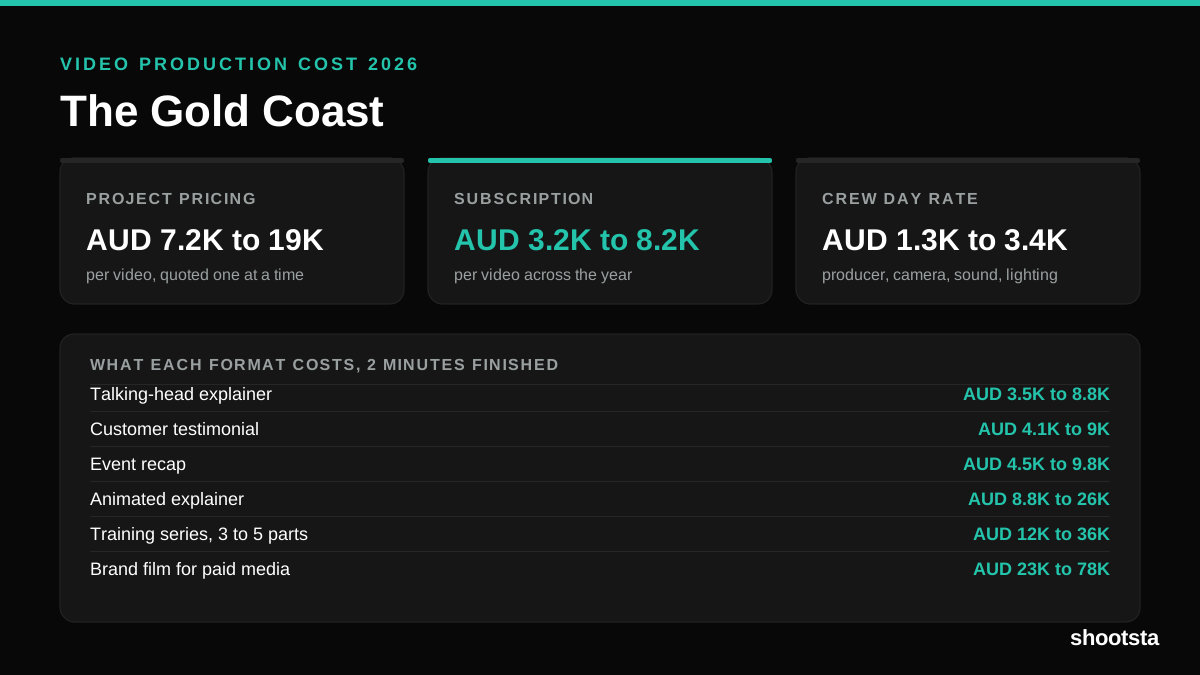
Video Production Cost on the Gold Coast 2026
Video production in the Gold Coast costs AUD 3,200 to AUD 8,200 per finished video on a subscription model, and AUD 7,200 to AUD 18,500 for one-off project work. Here is what you are paying for, and how the three pricing models compare.
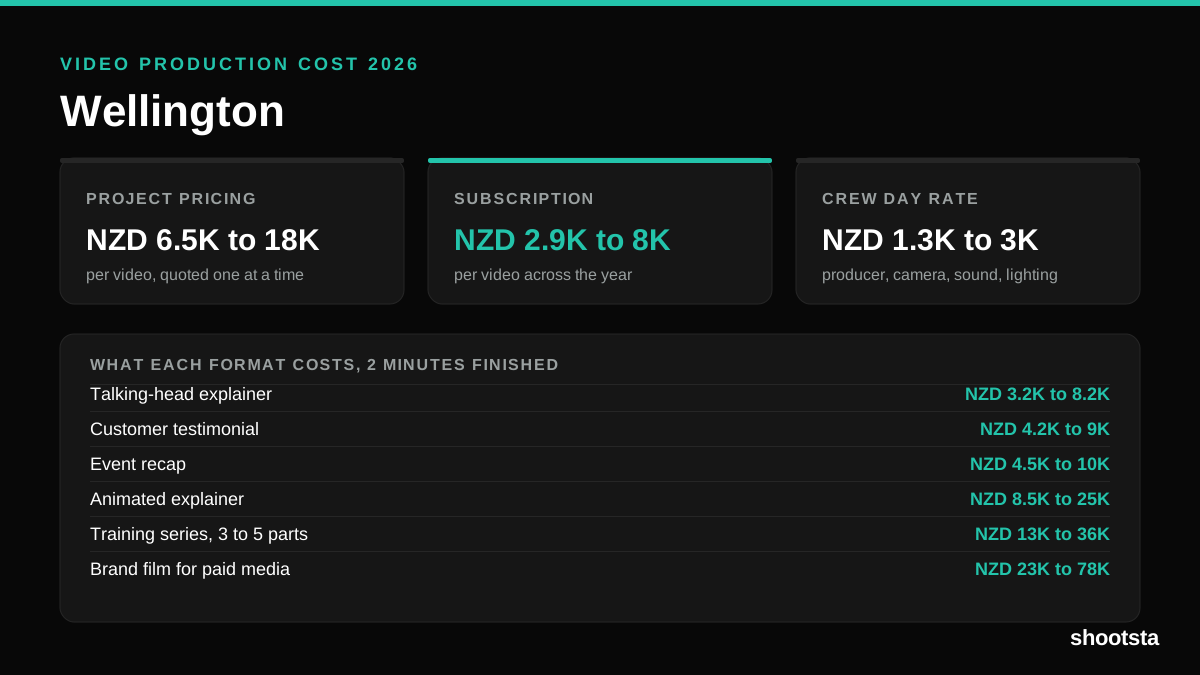
Video Production Cost in Wellington (2026)
Video production in Wellington costs NZD 2,900 to NZD 8,000 per finished video on a subscription model, and NZD 6,500 to NZD 18,000 for one-off project work. Here is what you are paying for, and how the three pricing models compare.
Video Production Cost in Berlin (2026)
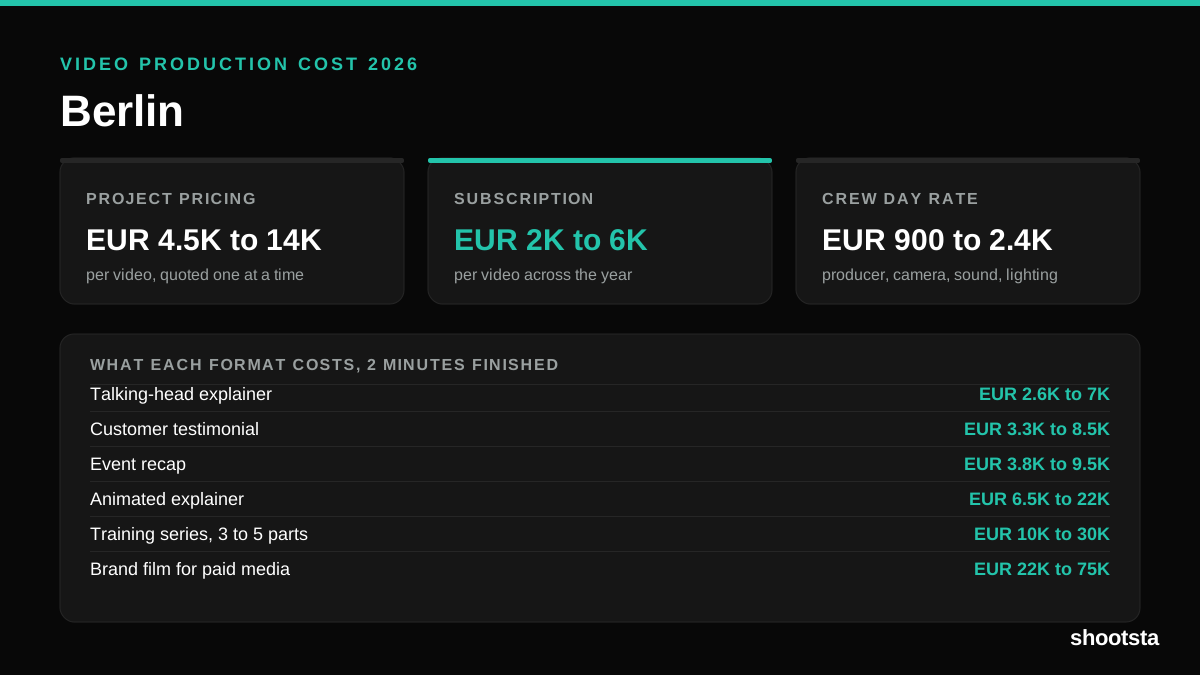
Video production in Berlin costs EUR 2,000 to EUR 6,000 per finished video on a subscription model, and EUR 4,500 to EUR 13,500 for one-off project work. Here is what you are paying for, and how the three pricing models compare.