
How Much Does Video Localization Cost?
shootsta.
How Much Does Video Localization Cost?
By Shootsta · Published July 27, 2026 · Updated October 2026
Video localization cost depends on format, languages and how your masters are built. Re-versioning from one master costs far less than reshooting.
How much does video localization cost?
Video localization cost is driven by three things: the format you choose, the number of languages, and how re-versionable your master is. A subtitle pass on an existing video costs little, while full dubbing with a fresh shoot for every market costs a great deal. The biggest lever is whether you reshoot per market or re-version from one master.
Buyers often want a flat per-minute number. That number exists, but it hides the decisions that move the bill. Two libraries of the same length can differ several times over in cost depending on how they were built.
What drives the price?
Once you list the main cost factors, the price becomes easier to predict.
- Format: subtitles are cheapest, voiceover sits in the middle, dubbing is the most expensive because of lip-sync work.
- Language count: each added language multiplies translation, recording and review.
- Master quality: a clean, layered master re-versions fast; a baked-in one needs rebuilding.
- On-screen text: editable text layers are quick to swap, while text burned into footage has to be rebuilt.
- Review cycles: regional sign-off adds time, so a clear approval path keeps cost down.
We compare the format options and their cost impact in choosing between subtitles, dubbing and voiceover.
Why is re-versioning cheaper than reshooting?
When a master is built to be localized, adding a language means swapping the audio and text while the video itself stays as it is. You are reusing the footage, the edit and the brand template you already paid for. In practice that brings each new language to a fraction of the cost of a fresh shoot per market.
This is why the structure of the first version matters so much. If you plan re-versioning at the brief stage, every later language is cheap. If you skip that step, each market becomes a new project. The full method sits in our pillar on how to localize video for global markets.
How do you budget across many languages?
Budget by tier rather than treating every market the same. Give flagship markets richer formats and full review, and give long-tail markets a lighter touch such as subtitles. The number of languages you fund should follow value, which we work through in how many languages you should localize.
Animation changes the math in your favor, since text and audio already live in editable layers, so localizing it costs less per language. That advantage is explained in localizing animated video at scale.
How do you keep cost predictable at scale?
Predictable cost comes from a predictable process. A fixed master structure, a set format policy and a managed library mean each new language is a known unit of work with a known price. Running delivery through regional hubs also keeps turnaround steady, which is how multilingual APAC video production handles volume across markets.
Shootsta produces affordable, on-brand video at scale globally and re-versions across languages from a single master, which is what keeps the per-language cost low. If you want a budget mapped to your real video set, our team can build one with you on a free consultation.
Sources
- CSA Research: share of buyers who prefer content in their own language.
- Shootsta multilingual production across 70,000+ videos in many languages.
- Shootsta regional delivery hubs in Sydney, London, Singapore and San Diego.
Take this article with you
Read the latest at shootsta.com/blog/video-localization-cost
You might also like

How to Plan Video Team Capacity Around Leave
Your only editor just booked two weeks off, and you already know which projects will slip. Chad Lakin explains how to plan video team capacity so the work keeps moving when someone is away.
Corporate Video Editing Standards: Full Guide
A two-page editing standard does more for consistency than a forty-page brand book. Here is what it should cover, who owns each part, and how to enforce it with an in-house editor or an outside partner.
Quality Control in Outsourced Video Editing
When editing leaves the building, quality has to be checked by a system rather than by whoever happens to look. Here is the system: acceptance criteria, two QA gates, counted revision rounds and a quarterly audit.
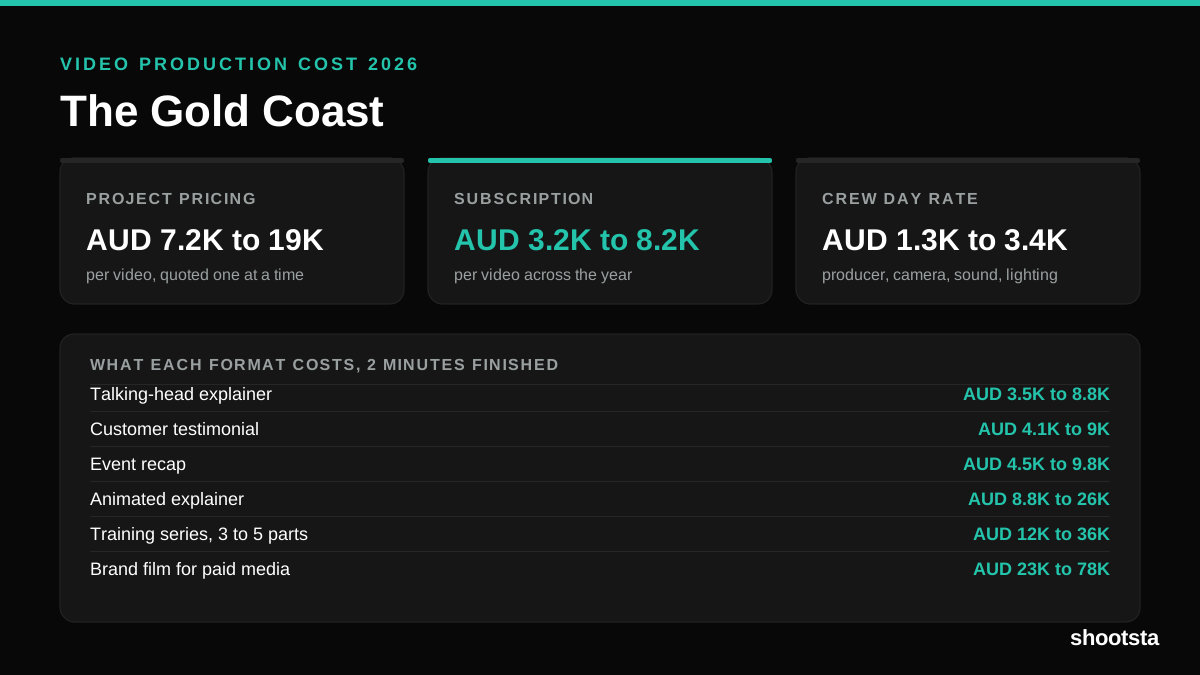
Video Production Cost on the Gold Coast 2026
Video production in the Gold Coast costs AUD 3,200 to AUD 8,200 per finished video on a subscription model, and AUD 7,200 to AUD 18,500 for one-off project work. Here is what you are paying for, and how the three pricing models compare.
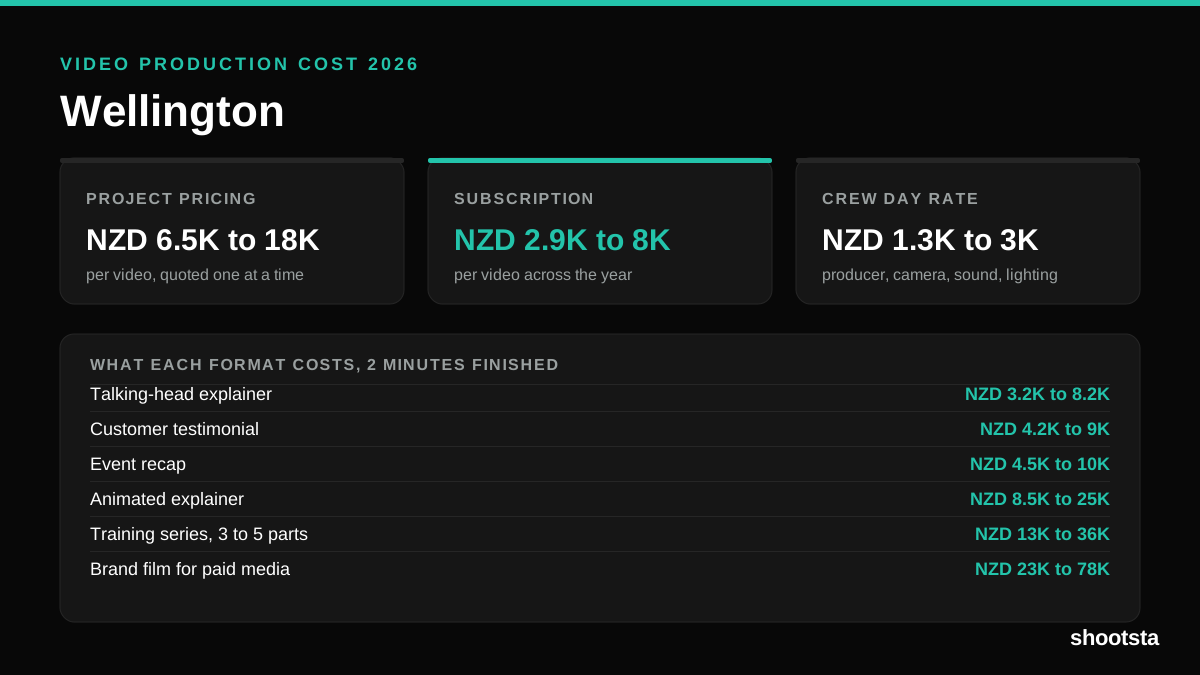
Video Production Cost in Wellington (2026)
Video production in Wellington costs NZD 2,900 to NZD 8,000 per finished video on a subscription model, and NZD 6,500 to NZD 18,000 for one-off project work. Here is what you are paying for, and how the three pricing models compare.
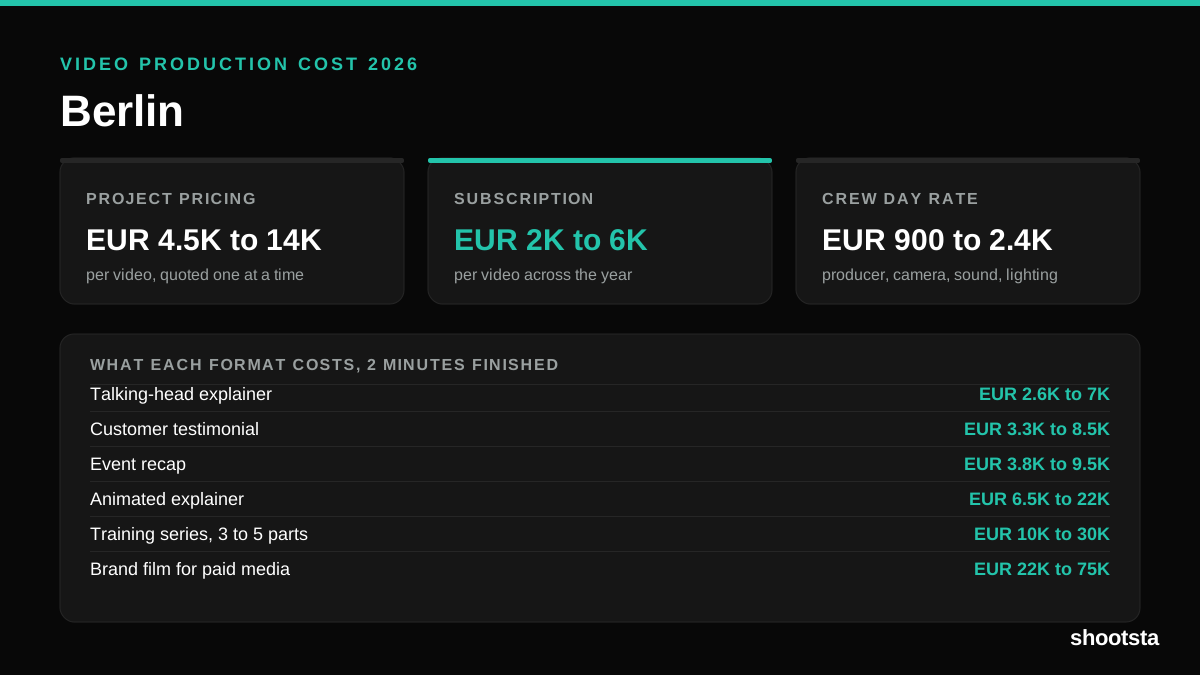
Video Production Cost in Berlin (2026)
Video production in Berlin costs EUR 2,000 to EUR 6,000 per finished video on a subscription model, and EUR 4,500 to EUR 13,500 for one-off project work. Here is what you are paying for, and how the three pricing models compare.