
Stop Re-Briefing a New Freelancer Every Time
shootsta.
Stop Re-Briefing a New Freelancer Every Time
By Shootsta · Published November 17, 2026 · Updated November 2026
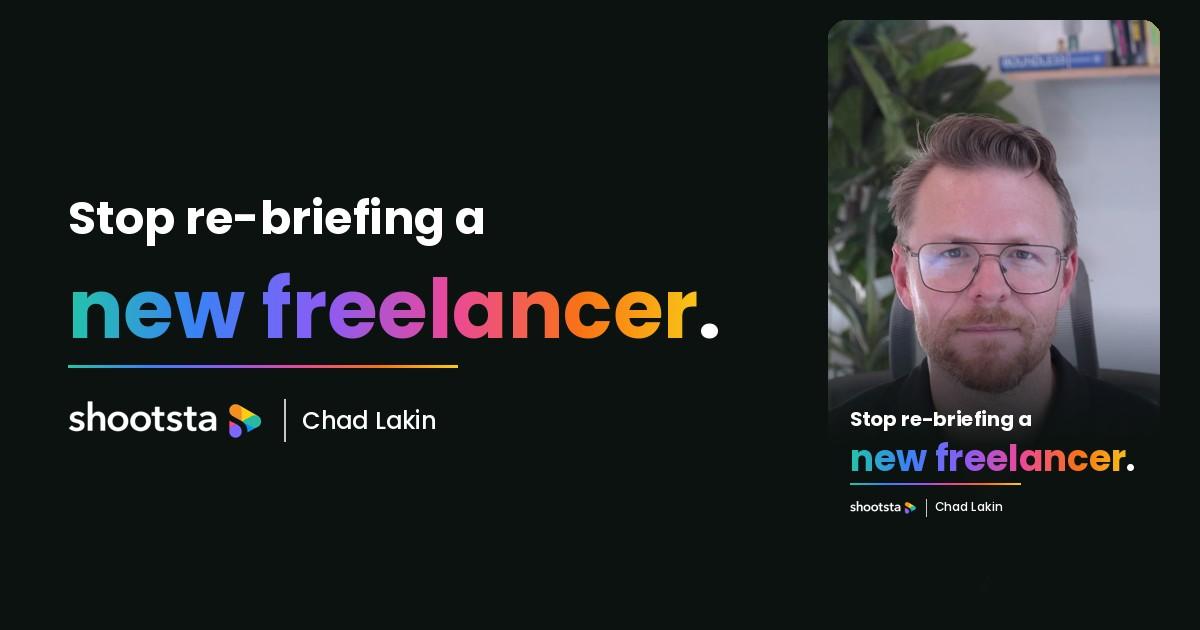
Every new freelancer needs your brand, tone and feedback process explained again. Chad Lakin explains why that wears teams down and how a video partner keeps the work consistent.
If you work in marketing or comms and you are tired of explaining your brand to a new freelancer every time you need a video, you are not alone. Each new person needs the guidelines, the tone and the feedback process again, and that setup work lands on your desk before any editing starts.
In this clip, Chad Lakin, Senior Vice President of Growth at Shootsta, explains why constant re-briefing wears teams down and what changes when you work with a partner that already knows your brand.
Below, we look at where the freelance model starts to strain, what a briefing document cannot capture, and how to stop starting from zero on every project.
Why does re-briefing freelancers take so much time?
Chad is clear that freelancers can be great. The difficulty is that you are usually relying on one person, and when that person is booked or moves on, the next one starts from scratch. You send the brand guidelines again, explain the tone again and walk them through how your team likes to give feedback.
Each handover costs a few hours, and the first few edits from a new freelancer usually need extra review rounds while they learn what you want. Across a year of projects, that adds up to a meaningful share of your team's time. We compare the costs in more detail in freelance video editor vs subscription.
What a briefing document cannot capture
Some parts of your brand fit neatly into a guidelines PDF, such as the logo, fonts and colors. Chad points to the harder part, which is what on-brand means for your team in practice. That covers the style of the edit, the pace, the feel of the music and the way your stakeholders like to review work.
These details are learned by doing the work, and they are the reason a first project with a new freelancer often feels slower than it should. When the person changes, the learning goes with them, and the next freelancer has to build it up again. Our guide on brand control with a video production partner looks at how teams keep that knowledge in one place.
How a video partner keeps the work consistent
With a good video partner, you are not depending on a single editor. You work with a team and a system that already understands your brand and your way of working, so a new project starts from what was learned on the last one.
Chad describes the result as work that stays consistent and fluid. If one editor is busy, another picks up the brief with access to the same brand kit, past projects and feedback history. The goal, in his words, is to stop starting from zero each time you need a new video, rather than to get better at briefing freelancers.
When freelancers still make sense
A partner does not have to replace every freelancer you work with. A specialist for a one-off animation, a local videographer for an event in another city or a long-standing editor who knows your brand well can all have a place alongside a partner.
The question is where most of your regular video work goes. If the bulk of your requests are similar edits that come in every week, those are the jobs where constant re-briefing costs the most and a consistent team helps the most. For a wider comparison of your options, see in-house, agency or platform for video.
What should you look for in a video partner?
When you assess partners, focus on how they keep your brand knowledge from one project to the next. The following questions are a good place to start:
- Where are your brand assets, templates and past projects stored, and who can use them?
- What happens to your work if the usual editor is busy or on leave?
- How is feedback given and tracked across review rounds?
- How long does a first edit take once footage and a brief are in?
- Is pricing predictable from month to month?
Shootsta answers these through one platform that holds your brand kit and project history, with editors in Sydney, London, Singapore and San Diego working from it. A first edit usually comes back in about 48 hours. If you want to test the fit before committing, read how to pilot a video production partner.
Frequently asked questions
Are freelancers bad for video production?
No, freelancers can do excellent work. The challenge is depending on one person at a time, which means a new briefing and a new learning curve whenever that person is unavailable or moves on.
How long does it take to onboard a new freelance video editor?
Briefing a new editor usually takes a few hours, and the first projects often need several extra review rounds. The hidden cost is the time your team spends explaining the parts of the brand that are not written down.
What is the difference between a freelancer and a video partner?
A freelancer is one person with their own schedule. A video partner gives you a team and a shared system, so your brand knowledge stays with the partner even when individual editors change.
Can a video partner work with our in-house team?
Yes, and that is how most of our clients use Shootsta. Your in-house team keeps the projects they want to own, and the partner takes the regular edits and the overflow. We explain the setup in how a video partner extends your in-house team.
Where to go next
We have helped hundreds of global businesses spend less time managing video production and more time getting the work done. If you are tired of re-briefing every new freelancer, talk to us about how your team works today. You can also start with our enterprise video editing service.
Take this article with you
Read the latest at shootsta.com/blog/stop-rebriefing-freelance-video-editors
You might also like
Fix Enterprise Video Editing Bottlenecks (2026)
Fix Enterprise Video Editing Bottlenecks (2026)
Enterprise video editing bottlenecks are an operations problem, not an editing problem. The 5 common constraints, how to diagnose yours, and what to fix first.
Corporate Video Editing Services Compared
Corporate Video Editing Services Compared
How a video agency, freelancer, offshore studio, in-house team, DIY tools and a managed subscription compare on turnaround, cost, brand control and approvals.
How Product Marketers Scale Video With Templates
Product marketing teams often need hundreds of videos with a small team. Chad Lakin explains how grouping the list into categories and building one template per category makes volume easier.
Why Brand Video Goes Stale and How to Fix It
Why Brand Video Goes Stale and How to Fix It
How to find out-of-date videos, decide whether to re-edit or re-shoot, and keep your video library current with owners, review dates and brand templates.
Why Urgent Video Requests Go Sideways
Most urgent videos go sideways because nobody planned for urgent work to happen. Chad Lakin explains how comms teams build the process first, so a fast turnaround becomes routine.
The Real Risks of Outsourcing Video Production
The Real Risks of Outsourcing Video Production
Brand drift, slow approvals, hidden costs, footage security and supplier lock-in, with the questions that expose each risk before you sign.