
Brand Consistency Across Localized Video
shootsta.
Brand Consistency Across Localized Video
By Shootsta · Published July 29, 2026 · Updated October 2026
Brand consistency across localized video comes from governance and shared templates, not from hoping regional teams stay on brand by themselves.
How do you keep brand consistency across localized video?
You keep brand consistency by giving every market the same master, the same templates and one approval path, so the only thing that changes per language is the words. Consistency comes from governance. Goodwill alone stops holding it together once several teams in different regions are editing the same videos.
The risk shows up quietly. A regional team tweaks the palette to match a local campaign, swaps a font that was not installed, or re-edits the intro. Each of those changes seems minor on its own. Across many markets they add up to a brand that looks slightly different everywhere.
Why does localization threaten brand consistency?
Localization hands creative control to people closer to the market, which is the point. Native voice and local nuance make the content work. Without shared assets and a clear standard, that local control can drift into local reinvention, and the brand splinters one well-meant edit at a time.
This is the same systems lesson that runs through our pillar on how to localize video for global markets. Translation is easy to hand off to a regional team, but keeping the brand intact needs a structure around it.
What does brand governance look like in practice?
Governance for localized video comes down to four practical rules:
- One master per asset that every market re-versions from, so no one rebuilds from scratch.
- Locked templates for logos, palette, type and motion that travel with the file.
- A single source of truth for brand assets, so every region pulls the current files.
- A defined approval path so a brand owner signs off before a version ships.
When narration and text sit on swappable layers, regional teams adapt language without touching the visual brand, which is the same approach we describe in localizing animated video at scale.
Free Consultation
Want a hand with your next video?
Talk to a Shootsta producer about your goals, timeline, and budget. There is no pitch, just advice you can use.
How do regional teams stay fast without going off-brand?
Speed and control can work together when the guardrails are built into the files. Give regional teams a master that is ready to localize and the freedom to adapt the language, and they move quickly inside a safe boundary. Regional delivery hubs help here too, since people who know the market produce inside the same brand system, as in multilingual APAC video production.
How does a platform hold the standard?
Templates and approvals only work if they live somewhere everyone uses. A shared workspace keeps the current master, every language version and the sign-off history in one place, which removes the wrong-file and stale-asset problems. That is the role of the Shootsta platform, and it is what turns a pile of language versions into a managed multilingual video library.
Where do you begin?
Audit one localized campaign across markets and list every place the brand drifted. Those gaps become your governance checklist. From there, fix the template, name the approver and put the master in one place. Shootsta produces on-brand video at scale globally and keeps every language version aligned to one master; our team can set the standard with you on a free consultation.
Sources
- CSA Research: share of buyers who prefer content in their own language.
- Shootsta multilingual production across 70,000+ videos.
- Shootsta regional delivery hubs in Sydney, London, Singapore and San Diego.
Take this article with you
Read the latest at shootsta.com/blog/multilingual-video-brand-consistency
You might also like

How to Plan Video Team Capacity Around Leave
Your only editor just booked two weeks off, and you already know which projects will slip. Chad Lakin explains how to plan video team capacity so the work keeps moving when someone is away.
Corporate Video Editing Standards: Full Guide
A two-page editing standard does more for consistency than a forty-page brand book. Here is what it should cover, who owns each part, and how to enforce it with an in-house editor or an outside partner.
Quality Control in Outsourced Video Editing
When editing leaves the building, quality has to be checked by a system rather than by whoever happens to look. Here is the system: acceptance criteria, two QA gates, counted revision rounds and a quarterly audit.
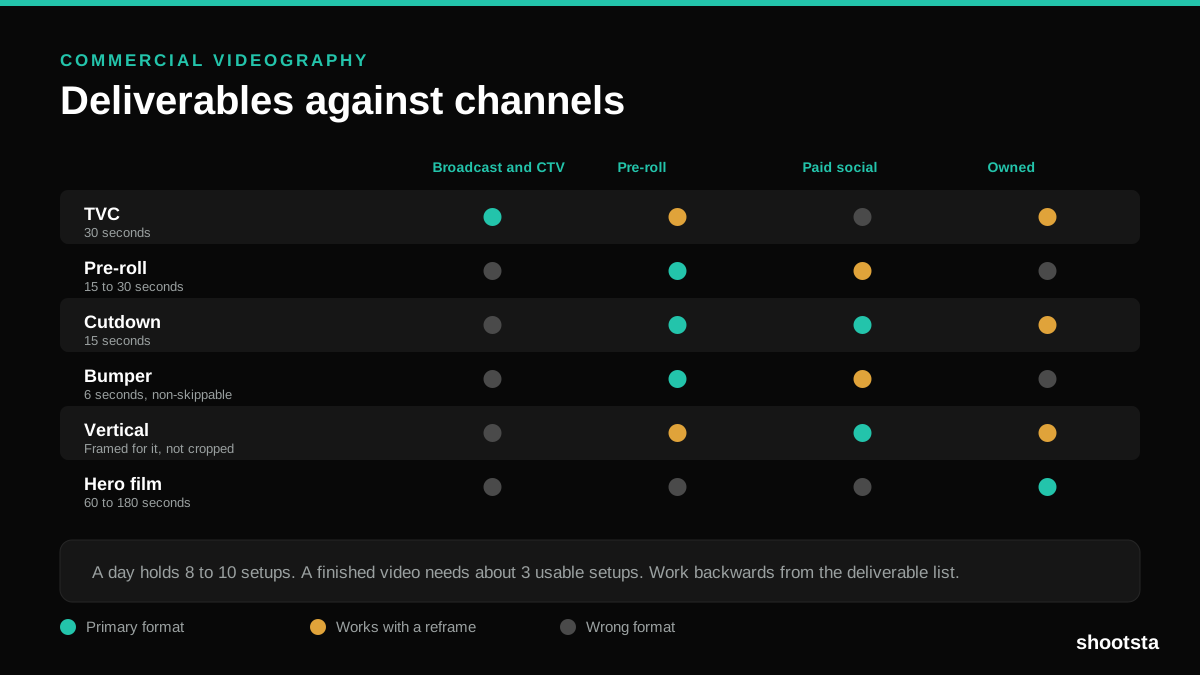
Commercial Videography: Cost and Scope
Commercial videography is priced by the day and judged by the deliverable. Most projects go wrong because those two numbers were never reconciled.
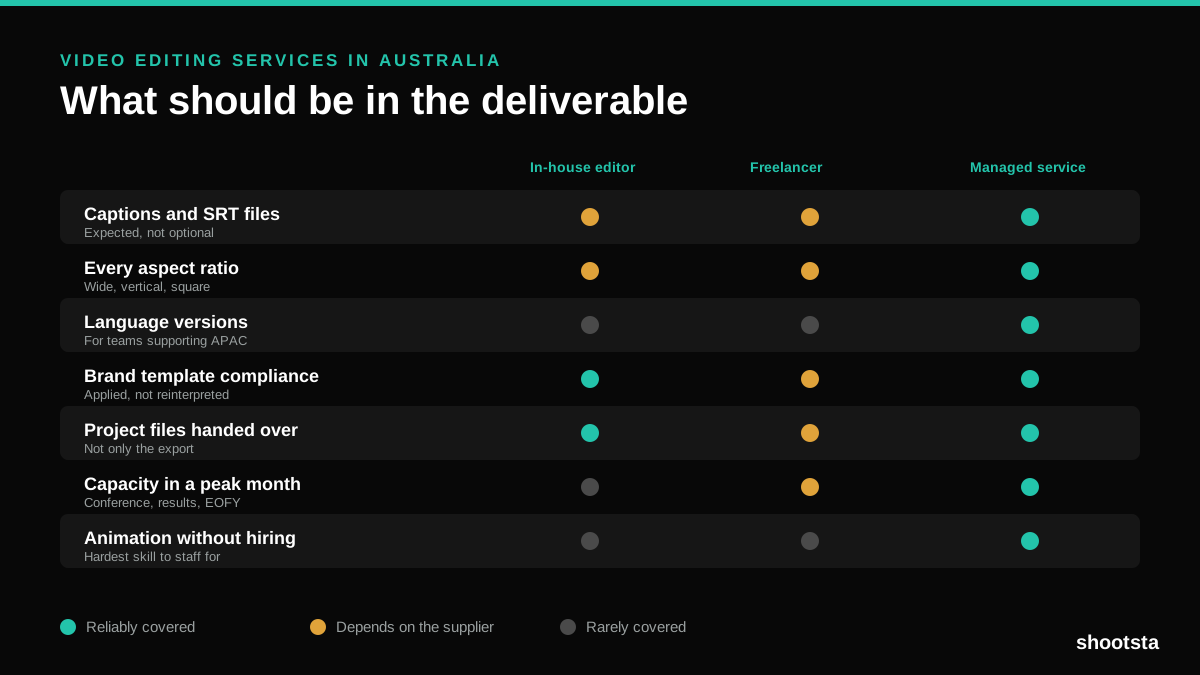
Video Editing Services in Australia
Australian teams are spread across time zones and offices, so the editing queue matters more than the editing. Here is what to expect on cost and turnaround.
12 Branded Content Examples That Worked
Twelve pieces of branded content that people chose to watch, what each one got right, and the structure underneath all of them.