
Animation for change management comms
shootsta.
Animation for change management comms
By Shootsta · Published August 4, 2026 · Updated October 2026
Animation handles change management communications better than live video for three reasons: no on-camera executives required during sensitive periods, scene-level updates when plans shift, and a single production that works across global teams with voiceover-only language swaps.
What is animation for change management?
Animation for change management is the use of illustrated or motion-graphics video to communicate organizational change - restructures, mergers, strategy pivots, digital transformation programs - to an employee audience. It replaces or supplements the executive town hall, the all-hands slide deck, or the manager cascade with a video that delivers a consistent message to every person in the organization at the same time.
The case for animation over live-action in a change context is specific. Senior leaders are often unavailable to film during an active restructure, and the message itself may need to change as the plan evolves. The content also covers abstract ideas such as org charts, timelines and strategic frameworks, which do not photograph well. Animation handles all three of these limits in ways live video cannot.
Why does animation outperform live video for change communications?
No on-camera executives required
Change programs often coincide with periods when senior leaders are in negotiation, unavailable, or constrained from speaking publicly. Filming an executive who is under legal review or mid-restructure creates risk: a poorly worded phrase, a visible change in manner, or a statement that ages badly once the plan shifts. Animation takes the speaker out of the frame, so the message can carry on its own without a face attached to it.
Scene-level updates as the plan evolves
A change program rarely stays still. Timelines slip and headcounts change, and new business units get announced along the way. With live-action video, a change to the message means a reshoot - booking talent, setting up a location, editing from scratch. Animation updates a scene or a caption line without touching the rest of the piece. If you are running merger communications, you can revise the same core animation several times over the integration period for much less than a reshoot would cost.
Consistent across a global workforce
When a restructure affects teams across multiple countries, the message needs to land consistently everywhere. A single animated video can be language-swapped with voiceover only, keeping the visual content identical across all markets. That means you pay for one production instead of a separate edit for each region. For a broader look at why animation is the default format for global communications, see the different kinds of video animation for business.
Handles abstract concepts cleanly
New org charts, strategic frameworks and integration roadmaps are hard to film, because there is nothing in front of the camera to point at. They need diagrams, flow charts, and visual metaphors to communicate clearly. Motion graphics turn abstract structures into moving visuals that an employee can follow in under two minutes, rather than decoding a slide deck in a town hall.
Which animation style works best during organizational change?
Change communications programs tend to use motion graphics rather than illustrated 2D or character-based animation, and the reasons are practical.
Motion graphics are built from the company's existing brand assets, such as its typefaces, palette and icons. They feel native to the business rather than calling attention to themselves as animated content. They are also faster to produce and update than illustrated styles, which matters when you are working against a communication deadline. Once the script is approved, a motion graphics piece for a restructure announcement can move to final render on a short, predictable schedule.
Illustrated 2D animation works well for the second wave of change content - the "what does this mean for you" explainers that go deeper on specific teams or products after the initial announcement has landed. These pieces benefit from a slightly warmer visual tone because the audience needs to understand the structure and also feel that the change is manageable.
For a full overview of animation production approaches and when each applies, see how to produce an animated explainer video.
What should a change management animation cover?
The most effective change communications videos answer four questions in order:
What is happening? The announcement itself - new structure, transaction, or strategy - with a clear timeline. Keep it to the facts. Save the strategic rationale for the next section.
Why is this happening? The business reason, framed in terms the employee audience cares about - market position, growth, stability. Avoid internal process language that employees cannot relate to.
What does it mean for me? This is the question employees ask first. Answer it directly, even if the answer at the time of announcement is "your role is not affected" or "details for your team will follow by [date]". Silence on this question creates uncertainty that spreads faster than any animation can address.
What happens next? List the next steps with an owner and a date for each, such as town halls, one-on-ones and follow-up communications. The video is the opener; the roadmap shows the employee that more is coming and the organization has a plan.
How long does a change management animation take to produce?
On a subscription production model, a 90-second motion graphics piece for a change announcement moves through four stages from the approved script:
Script and approval: The script brief goes through legal and HR review. This stage causes more delay than production does, because change comms almost always needs sign-off from multiple stakeholders before a frame is rendered.
Storyboard and design: The team applies your motion template and builds the storyboard. Key frames are approved before animation begins.
Animation and voiceover: The team animates the piece, records the voiceover and delivers the first cut. Your revisions are then worked into the final render.
Finishing: Subtitles and language version voiceovers are added, and the piece gets a final quality check.
Script approval stretches the timeline more than any production step. Change comms teams that move script to approval internally before briefing the production house get the fastest results.
FAQ: animation for change management
Can we update the animation after it goes live?
Yes. Animation assets are kept for the duration of the engagement, and individual scenes can be re-exported with updated content. Change programs often need the same piece updated more than once over the life of a restructure or integration. A scene-level update is a much smaller job than the original production, so it costs less.
What format does the animation get delivered in?
MP4 with H.264 encoding for intranet and LMS delivery. The same master file is used for language swap voiceovers. If your internal comms team needs a version for a digital screen installation or a live presentation, a higher resolution render is available from the same project file.
Do we need to provide a script?
Not necessarily. Shootsta can work from a brief that describes the change, the audience and the key messages, and develop the script from there. Change comms scripts benefit from a communications specialist review before they go into animation, because the framing matters as much as the content. If your team has a corporate communications function, their input at brief stage saves revision cycles later.
Does animation work for sensitive announcements, like redundancies?
Animation communicates structure and process clearly but does not replace the personal conversation for individual impact notifications. It works best in the period between the public announcement and the detailed individual conversations - the "what is happening and why" layer - rather than the "what this means for your specific role" layer, which should stay personal and direct.
Where to go next
If your organization is in the planning stage for a restructure, merger announcement, or transformation program, commission change communications animation before the announcement date. Production that starts before the news is public has time for legal and HR review without the pressure of an imminent announcement.
Talk to the Shootsta team about briefing a change communications animation program: book a free consultation.
Take this article with you
Read the latest at shootsta.com/blog/animation-for-change-management
You might also like
How to Brief an Animation Project
How to Brief an Animation Project
An animation brief is the document you send to your production partner before work starts. Get it right and you cut revision cycles in half. Get it wrong and you discover mid-production that everyone disagrees on what the video is for. This is what a complete brief looks like.
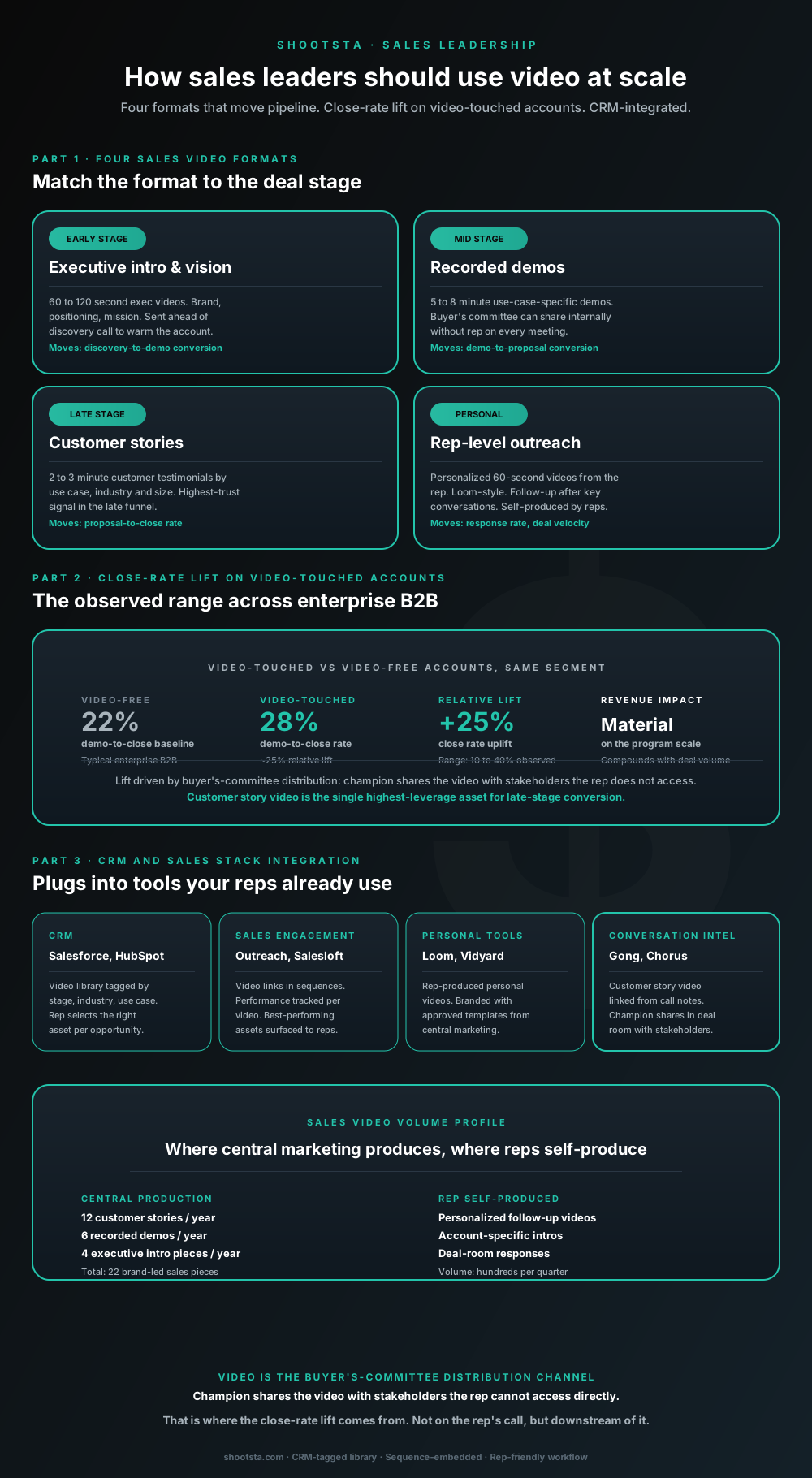
How sales leaders should use video at scale
Sales leaders mostly think about video as personalized rep outreach (Loom, Vidyard) or as marketing-produced customer stories. Both are useful. The bigger opportunity is the buyer's-committee distribution layer: assets the champion shares internally with stakeholders the rep does not access directly. That is where the close-rate lift compounds.
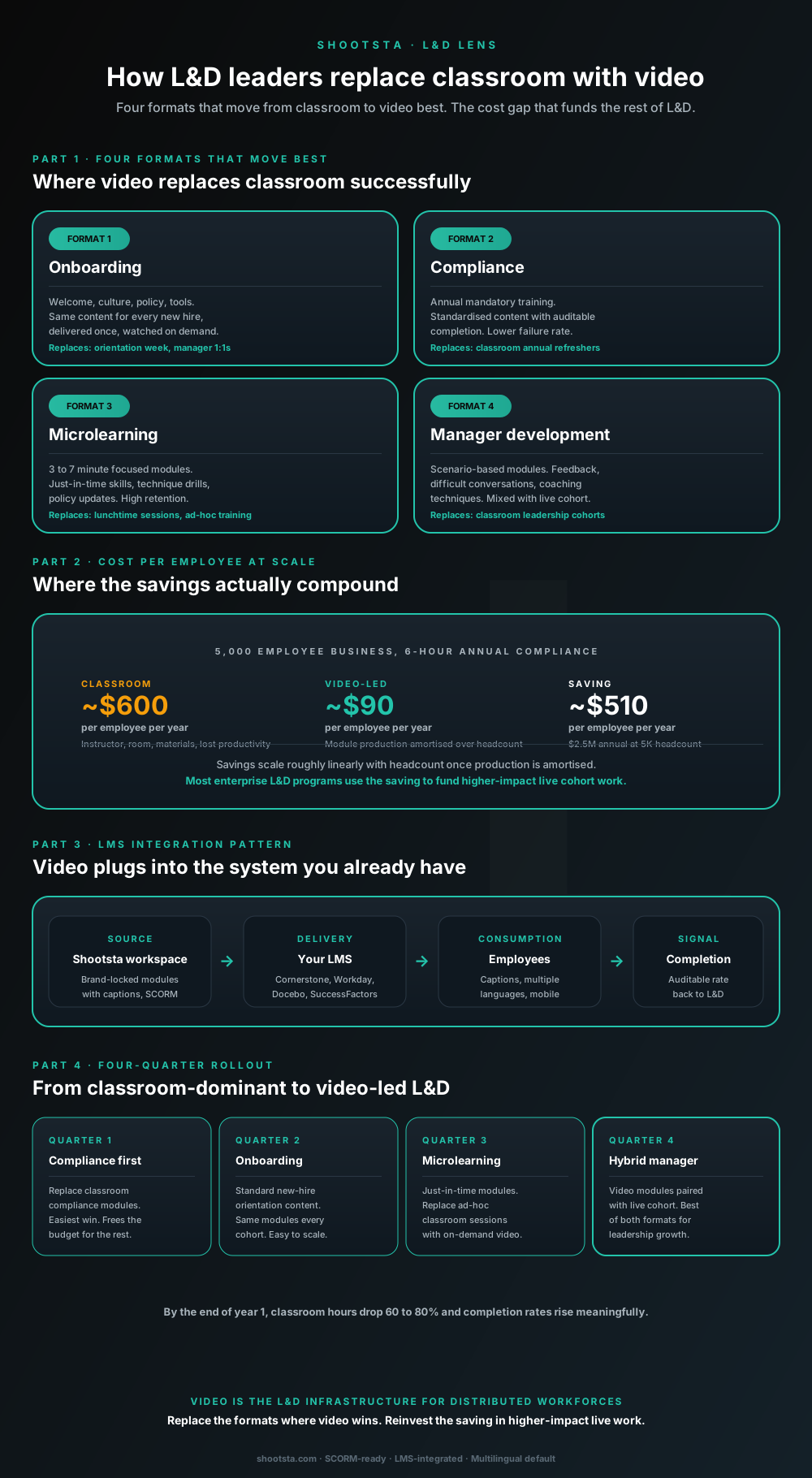
How L&D leaders replace classroom with video
L&D leaders running classroom-heavy training programs typically have the largest single opportunity in the business to free budget through format change. Four training formats move from classroom to video cleanly; the savings fund higher-impact live work. Here is the rollout that compounds learner adoption over four quarters.
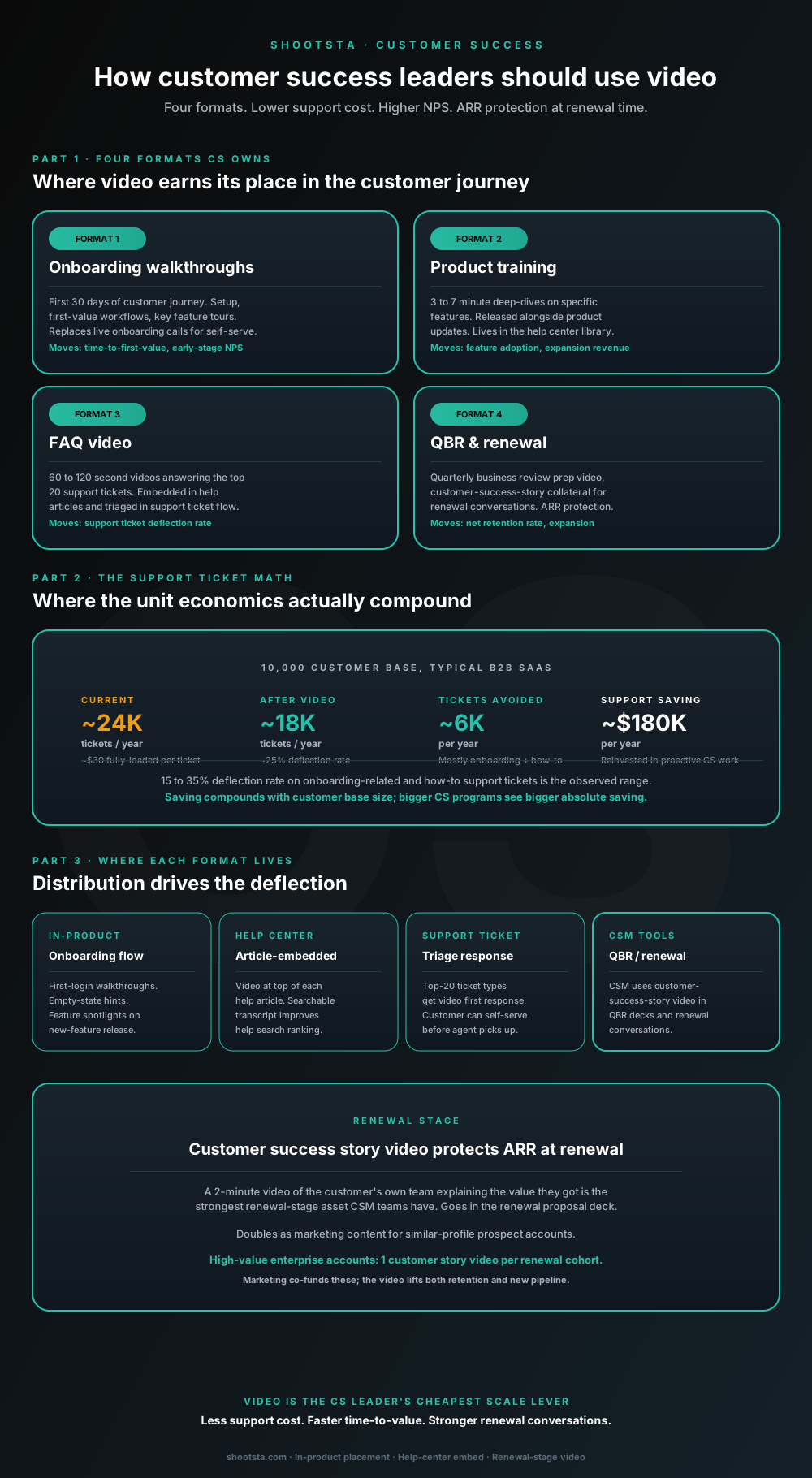
How customer success leaders should use video
Customer success leaders are usually under-resourced for both reactive support volume and proactive retention work. Video is the cheapest lever to fix both - 15 to 35% deflection on onboarding and how-to tickets, faster time-to-value, and renewal-stage customer story video that lifts net retention. Here is the four-format model and where each piece earns its place.
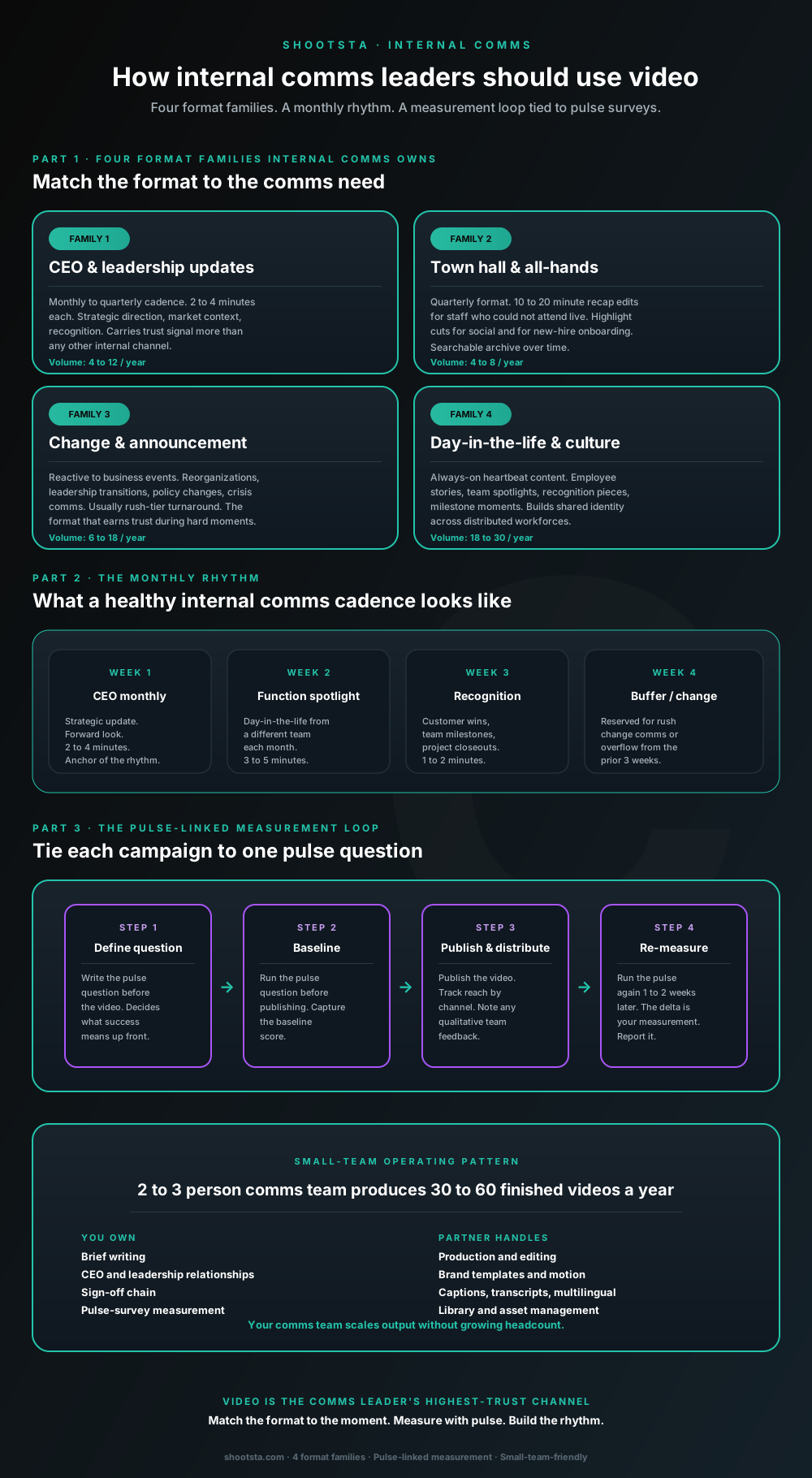
How internal comms leaders should use video
Internal comms leaders are usually under-resourced for the volume of video the business wants. The fix is not more headcount; it is structuring the program around four format families, a monthly rhythm, and a pulse-survey-linked measurement loop. Here is the operating pattern that lets a small comms team produce 30 to 60 finished videos a year.
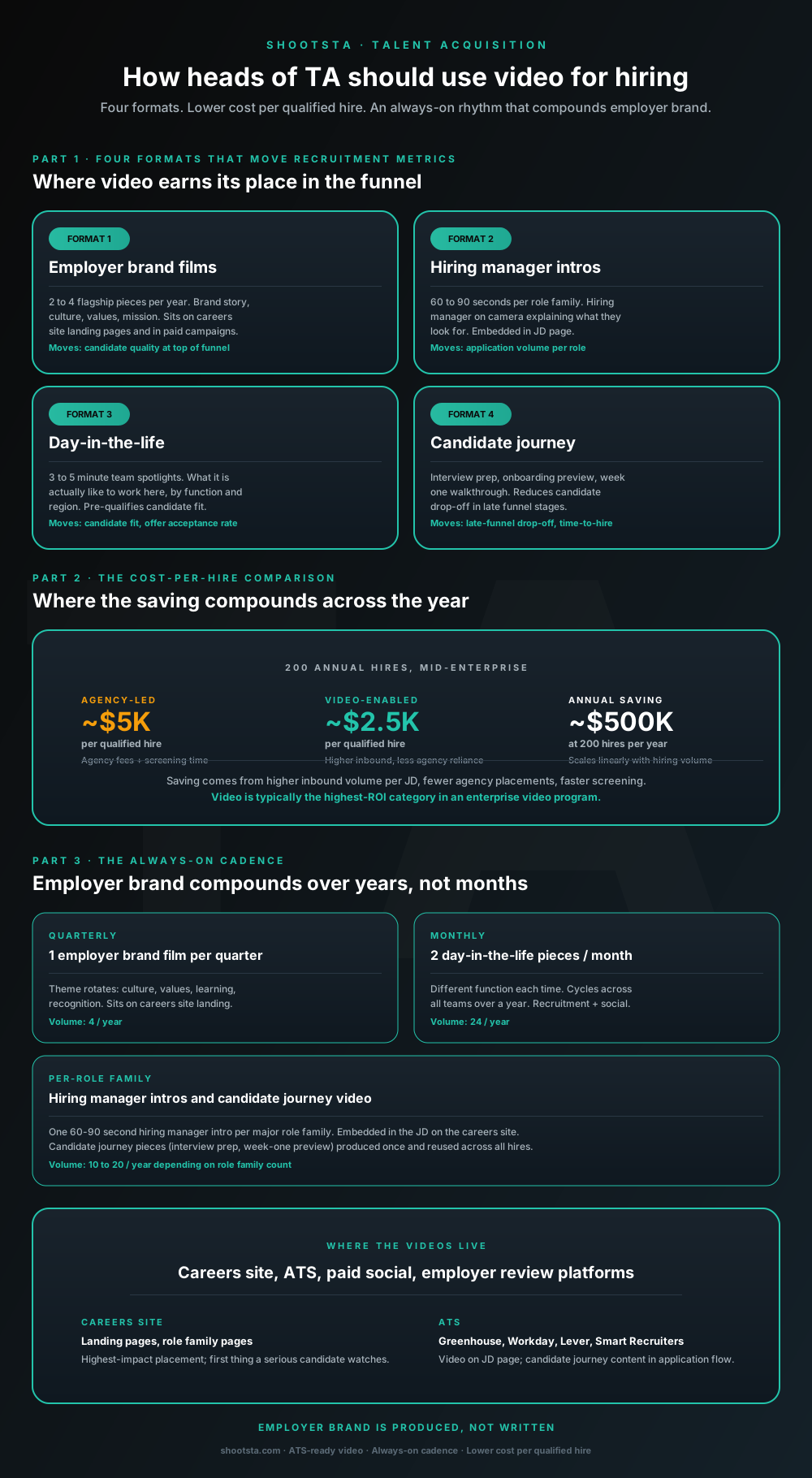
How heads of TA should use video for hiring
Heads of talent acquisition running agency-heavy hiring funnels usually have the highest-ROI video opportunity in the business. Four formats move recruitment metrics most, the cost-per-qualified-hire drops 35 to 60 percent at scale, and the rhythm compounds employer brand over years rather than months.