
How to Brief an Animation Project
shootsta.
How to Brief an Animation Project
By Shootsta · Published August 12, 2026 · Updated October 2026
An animation brief is the document you send to your production partner before work starts. Get it right and you cut revision cycles in half. Get it wrong and you discover mid-production that everyone disagrees on what the video is for. This is what a complete brief looks like.
An animation brief is the document you send to your production partner before work starts. It defines the audience, the objective, the format, the runtime, and the practical constraints - deadline, sign-off chain, budget range. At Shootsta, a complete brief on day one means fewer revision rounds later. Animation projects rarely slow down because of production speed. They slow down when stakeholders find out mid-production that they disagree on what the video is for.
What should an animation brief include?
A brief answers five questions before the production team has to ask them. Skip any of these and expect the gap to surface later - usually during review, when it is most expensive to fix.
Audience: who watches this video and what do they already know? "All staff" is not useful. "New joiners in their first week of onboarding, with no prior knowledge of our compliance framework" is. The audience defines the vocabulary, the assumed context, and the right level of detail for the script.
Objective: what should the viewer do or understand differently after watching? Give each video one objective. If the brief lists multiple objectives, you probably need more than one video, or the project scope has not been agreed internally yet.
Key message: write it as a single sentence. If you cannot write it without the word "and," the brief is not ready, and the team needs to agree what matters most before anyone opens a design file.
Format: the main choices are motion graphics, 2D character animation, whiteboard and 3D. Each one is a different production workflow with different costs and timelines. If you do not know which format you want, a note on tone ("clean and data-led" vs "human and approachable") is enough for the production team to recommend one. To understand the main options before you brief, read the different kinds of video animation for business.
Runtime and distribution: a 90-second explainer for a landing page is a different brief from a 3-minute training module. Format and channel affect script structure, pacing, and aspect ratio.
What do most animation briefs get wrong?
The most common mistake is handing over a source document - a slide deck, a policy PDF, an intranet page - and asking the production team to "turn this into a video." Source documents have no hierarchy of importance. A long policy document might hold only a few sentences that matter to the viewer. A good brief states those sentences outright. Asking the production team to find them is a slow and expensive way to write a script.
The second most common problem is unresolved stakeholder disagreement. If the compliance lead, the L&D manager, and the brand team have different ideas about what the video should say, that conflict surfaces in review and causes late-stage revisions. Brief sign-off is the right time to resolve those differences, before anyone builds a storyboard.
How much detail does the production team need?
One page is the right length for a brief. The brief is not the script - it is the shared understanding that makes writing a good script possible.
Beyond the five core elements above, these specific assets make the biggest difference at the production stage:
- Brand guidelines, or a link to them. Color hex codes and approved fonts save time at the design phase.
- Any existing animation library. If your organization has commissioned animation before, those characters and assets may be reusable, which can lower the cost of a new piece.
- Give direction for the voiceover. Accent preference matters more than clients often expect, especially for global programs running across Australian, UK and US audiences.
- Include a reference video if you have one. "Something like this, but simpler" communicates faster than a paragraph of written description. The reference does not have to be from your industry.
- The sign-off chain, meaning who approves and in what order. A long approval chain with no set sequence can add weeks to the timeline.
Does the brief need to include the script?
No. The brief is not the script. A good brief gives the production team enough information to write a first version without you providing one. If you want to supply the script yourself, that is a valid choice, but it changes the brief from a direction document into a technical spec.
What happens more often is that clients provide draft text in the brief and the production team rewrites it for pacing, on-screen language, and voiceover rhythm. A script written for reading does not work as a script written for a 90-second animated video. Starting from a brief rather than a draft script usually produces better results.
How do enterprise teams handle briefs at volume?
For programs running multiple animations in parallel - compliance update cycles, product launch series, quarterly internal communications - Shootsta typically runs a creative alignment session before the first brief is written. That session surfaces stakeholder conflicts, confirms the format and visual style, and produces a brief template the team uses for every piece in the program.
This matters at volume because inconsistent briefs produce inconsistent output. If each video in a training series goes through a slightly different brief process, the visual style drifts and review cycles lengthen. A standard brief template, agreed once, removes that variable for the rest of the program.
For one-off or first-time commissions, the production team sends a brief template as part of client onboarding. For the full production workflow from brief through to final delivery, read how to produce an animated explainer video.
Frequently asked questions
How long should an animation brief be?
One page is ideal. If the brief runs longer, you likely have more than one video to commission, or the project scope has not been agreed internally. The brief defines the direction - it does not need to contain everything you know about the topic.
What if I change the brief after production starts?
Scope changes after storyboard approval are the most common cause of timeline blowouts in animation projects. If the brief changes mid-production, expect a revised delivery date and a quote for additional work. The best protection is formal internal sign-off on the brief before it goes to the production team.
Can I brief an animation without knowing which style I want?
Yes. A good production partner, Shootsta included, will recommend a format based on your objective and audience. A note on the intended tone and content type (data-heavy, narrative, process-led) is enough. You do not need to specify 2D vs motion graphics in the brief.
Do I need to provide a voiceover script in the brief?
No. The script comes after the brief is approved. If you have strong views on specific wording, those belong in the review phase. The brief should define what the voiceover needs to accomplish, not what it should say word for word.
Where to go next
To understand which animation format fits your brief before you write it, read the different kinds of video animation for business. To see what happens after the brief is approved - from script through storyboard to final delivery - read how to produce an animated explainer video.
To start a brief with the Shootsta team, contact Shootsta about your animation project.
Take this article with you
Read the latest at shootsta.com/blog/how-to-brief-an-animation-project
You might also like
Animation for change management comms
Animation for change management comms
Animation handles change management communications better than live video for three reasons: no on-camera executives required during sensitive periods, scene-level updates when plans shift, and a single production that works across global teams with voiceover-only language swaps.
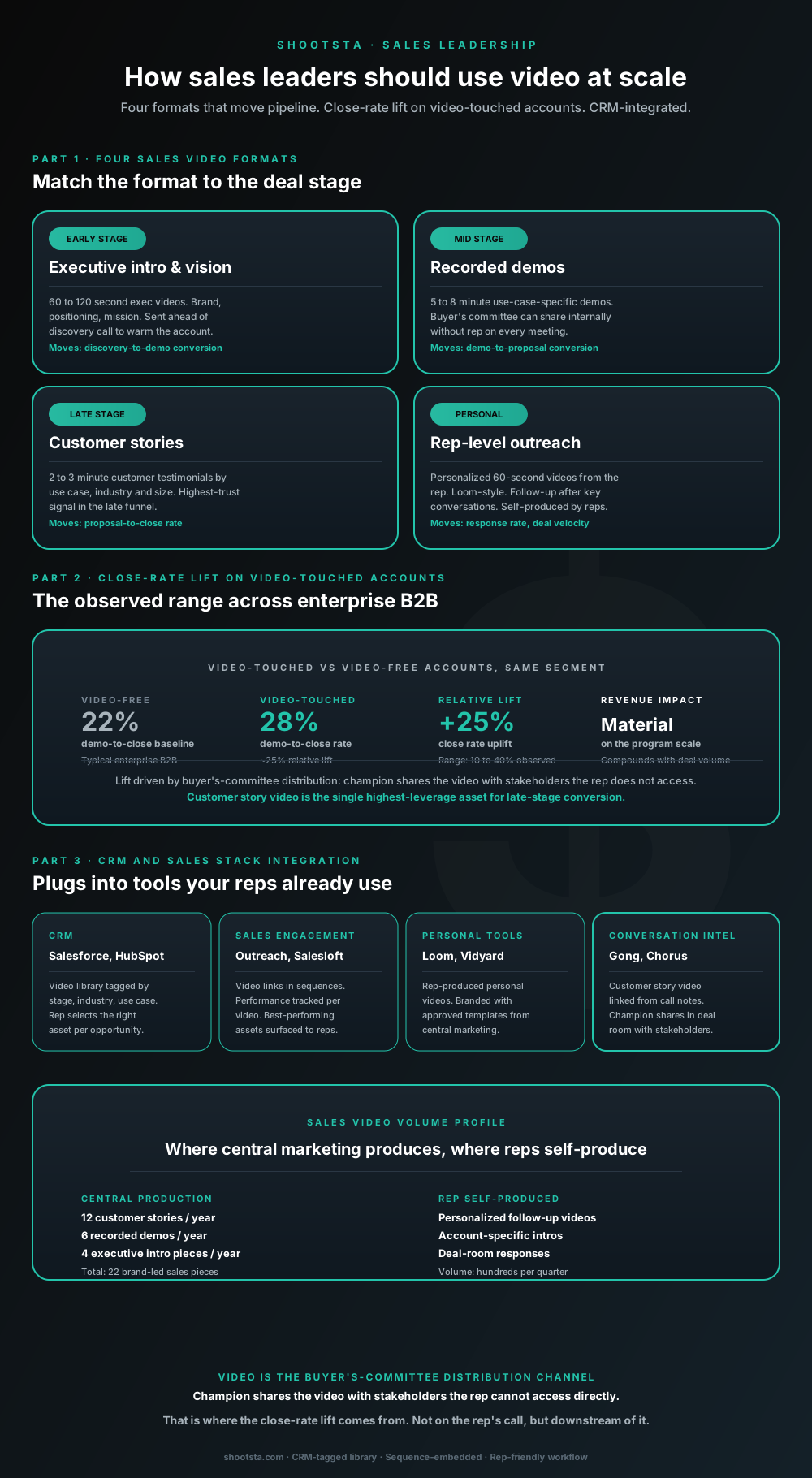
How sales leaders should use video at scale
Sales leaders mostly think about video as personalized rep outreach (Loom, Vidyard) or as marketing-produced customer stories. Both are useful. The bigger opportunity is the buyer's-committee distribution layer: assets the champion shares internally with stakeholders the rep does not access directly. That is where the close-rate lift compounds.
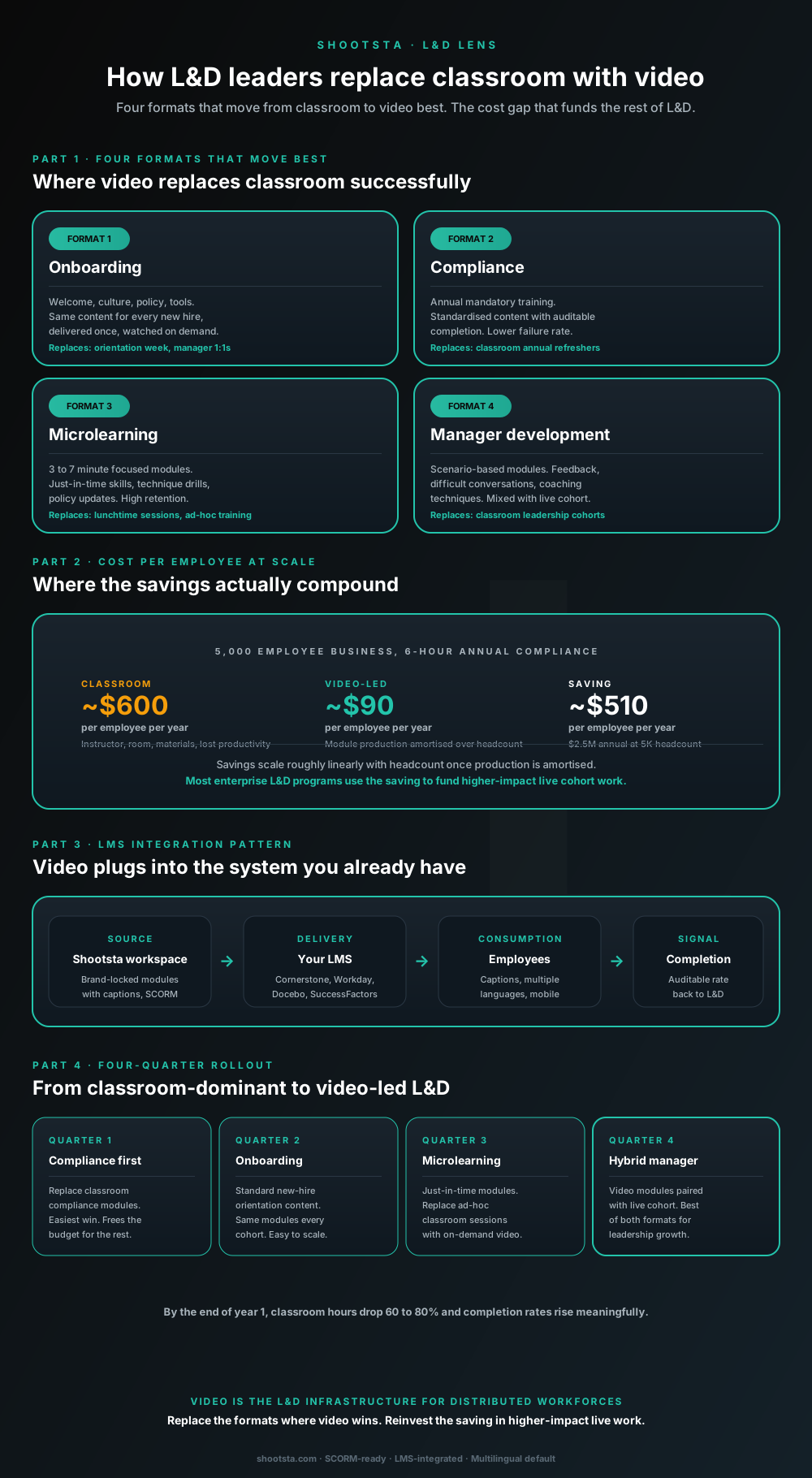
How L&D leaders replace classroom with video
L&D leaders running classroom-heavy training programs typically have the largest single opportunity in the business to free budget through format change. Four training formats move from classroom to video cleanly; the savings fund higher-impact live work. Here is the rollout that compounds learner adoption over four quarters.
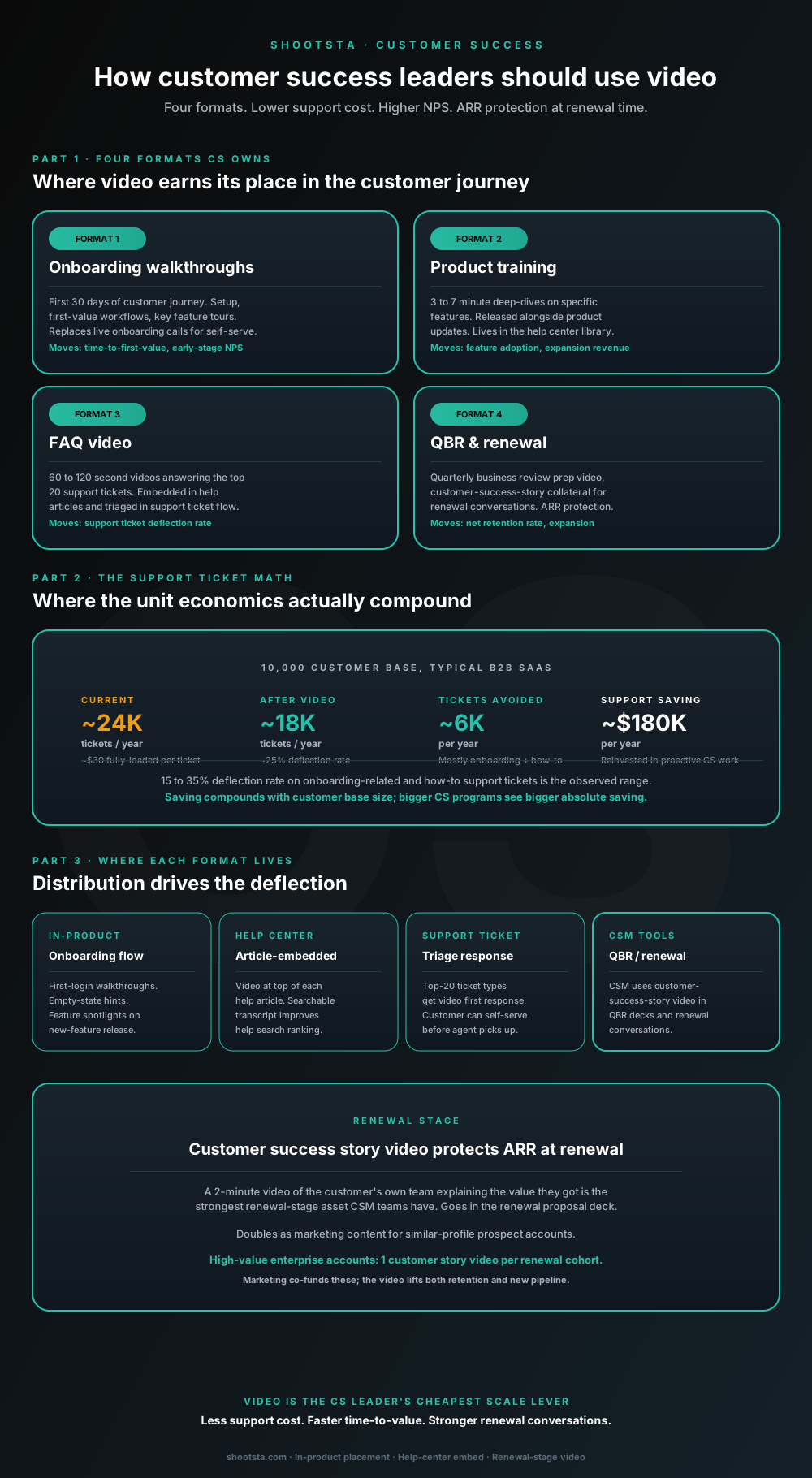
How customer success leaders should use video
Customer success leaders are usually under-resourced for both reactive support volume and proactive retention work. Video is the cheapest lever to fix both - 15 to 35% deflection on onboarding and how-to tickets, faster time-to-value, and renewal-stage customer story video that lifts net retention. Here is the four-format model and where each piece earns its place.
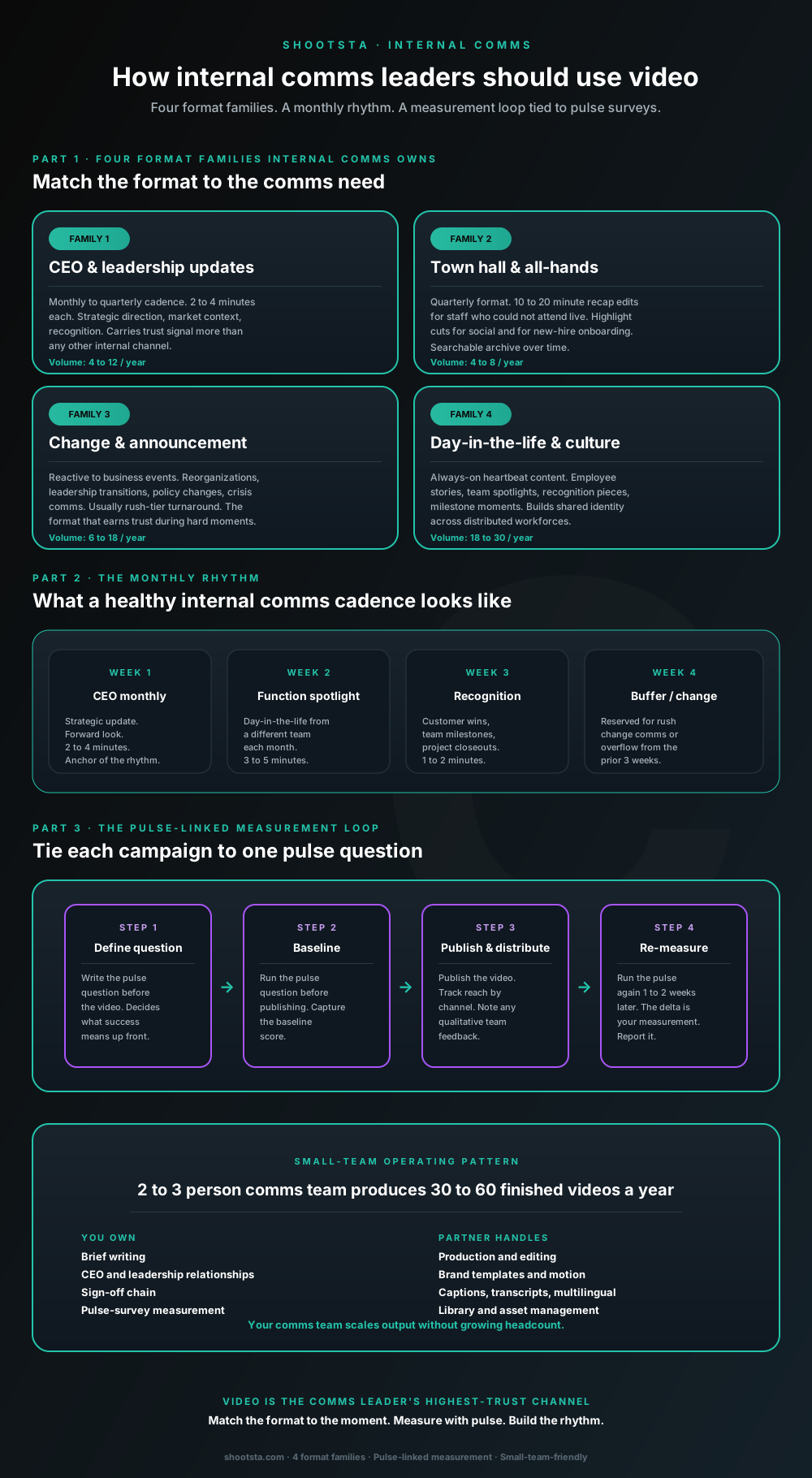
How internal comms leaders should use video
Internal comms leaders are usually under-resourced for the volume of video the business wants. The fix is not more headcount; it is structuring the program around four format families, a monthly rhythm, and a pulse-survey-linked measurement loop. Here is the operating pattern that lets a small comms team produce 30 to 60 finished videos a year.
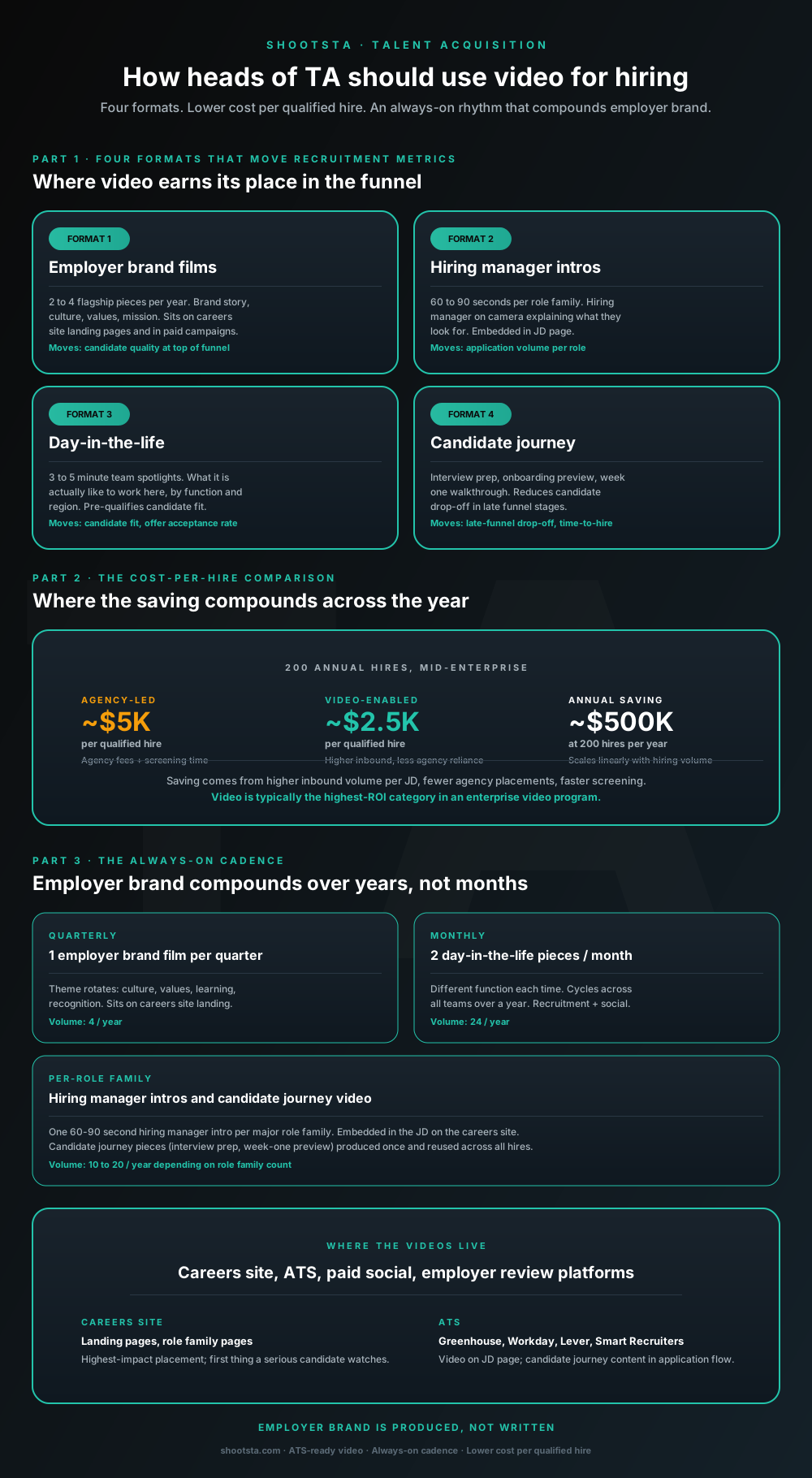
How heads of TA should use video for hiring
Heads of talent acquisition running agency-heavy hiring funnels usually have the highest-ROI video opportunity in the business. Four formats move recruitment metrics most, the cost-per-qualified-hire drops 35 to 60 percent at scale, and the rhythm compounds employer brand over years rather than months.