
How to absorb video demand spikes
shootsta.
How to absorb video demand spikes
By Shootsta · Published May 21, 2026 · Updated July 2026
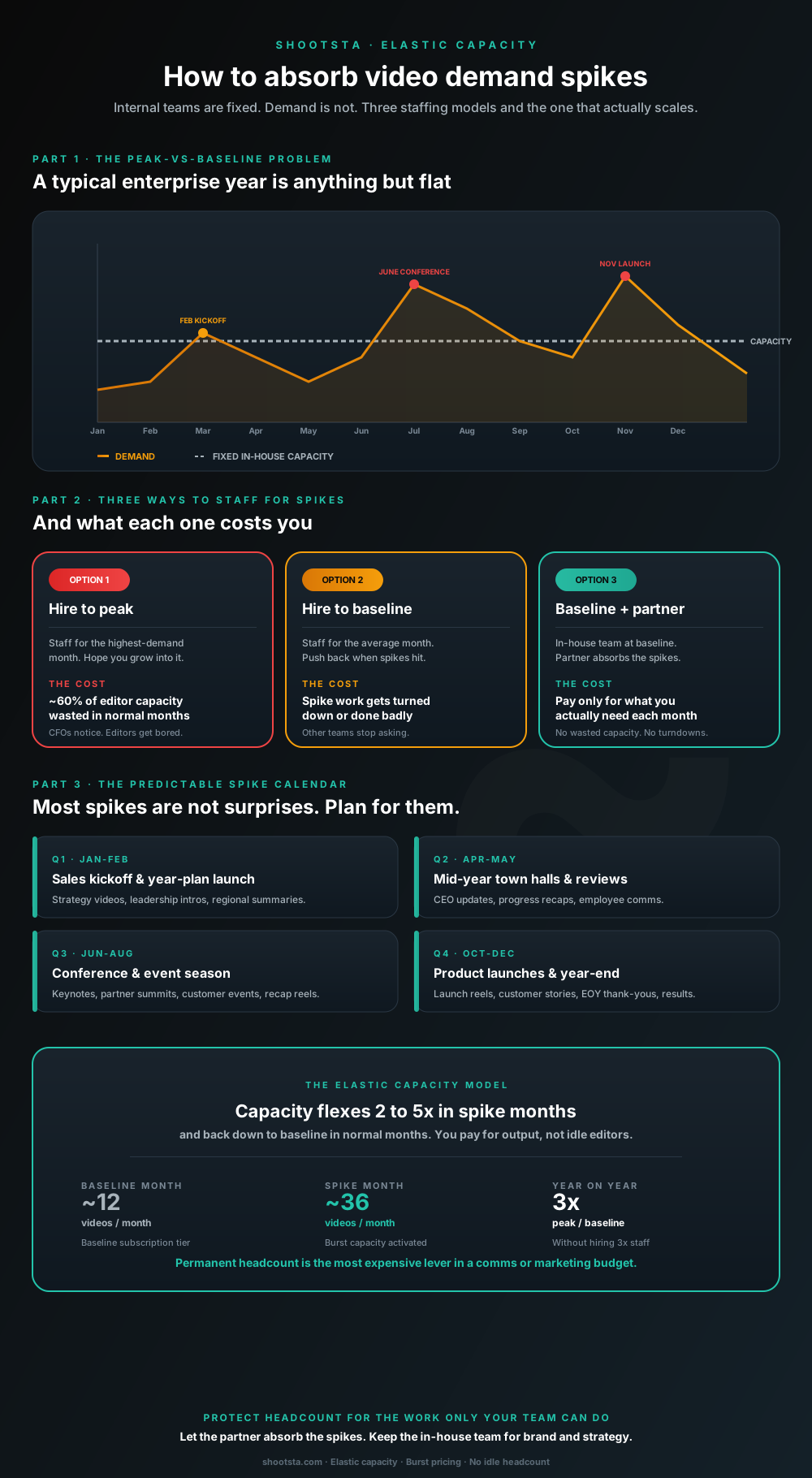
Internal video teams are fixed headcount. Enterprise video demand is not. Most teams cycle between over-hiring and turning down work. Here is the structural fix: hire to baseline, let a partner absorb the spikes, and pay for output instead of idle editors.
Short answer. You scale video editing for campaign surges by sizing your in-house team to the baseline month, not the peak, and letting a production partner absorb the spikes. Roughly half of an enterprise year's video lands in 3 to 4 spike months: sales kickoff, mid-year town halls, event season, and Q4 launches. Hiring to peak wastes about 60% of editor capacity in normal months; hiring to baseline means spike work gets dropped or done badly. The fix is elastic capacity that flexes 2 to 5x in spike months and back down, so you pay for output instead of idle editors.
Why enterprise video demand is never flat
A typical enterprise year produces 60 to 150 finished videos. Roughly half of that volume lands in 3 to 4 spike months. Sales kickoff in January or February. Mid-year town halls in April and May. Conference season in June through August. Product launches and end-of-year recaps in October through December. The rest of the year sits at a much lower baseline.
Internal video teams are sized as fixed headcount. The same 2 editors who quietly produce 10 videos a month in a baseline month are asked to produce 30 in a spike month. That maths does not work. The team either burns out, the spike work gets turned down, or it gets done badly to meet the deadline. None of the three is a good answer for the business.
The three staffing models, and what each one actually costs
There are only three ways to staff an enterprise video program. Each one has a cost.
Option 1: Hire to peak
Staff for the highest-demand month. The math: at 5 finished videos per editor per month and a peak of 30 videos, you need 6 editors permanently on payroll. In a normal month (say 12 videos) you are using 2 editors and 4 are sitting on the bench.
The cost: roughly 60% of editor capacity is wasted across the year. At $110K loaded per editor, that is $264K of permanent payroll producing nothing in normal months. CFOs notice. Editors get bored and leave. Hiring to peak is the most expensive option in absolute dollars, and the worst for team morale.
Option 2: Hire to baseline
Staff for the average month. The team handles baseline volume well. When spikes hit, the team works weekends, pushes back on the lower-priority requests, or quietly tells the regional offices to handle their own video.
The cost: spike work either does not happen, happens badly, or fractures across the business. Other teams stop asking after a few rejections. Brand drifts as regions go around central. The lost output is invisible in budget terms (you never paid for the work you did not do) but it shows up as a stalled video program 18 months later.
Option 3: Hire to baseline + production partner for spikes
Staff the in-house team for the baseline. Use a production partner to absorb the spikes. Subscription tier can flex up 2 to 5x in spike months and back down in normal months, so you pay for what you actually produce instead of for idle editors.
The cost: the in-house headcount is sized correctly. The partner cost only runs during the months you need the extra output. Total annual spend is typically lower than hiring to peak, and significantly lower than the long-term cost of stalled or fragmented work in the baseline-only model. We covered the working pattern in how a video partner extends your in-house team.
Interactive calculator
What does staffing your video spikes actually cost?
Set your baseline and peak monthly demand. The calculator compares hiring permanent staff to handle the peak vs keeping the in-house team at baseline and using a partner for the spikes.
Your demand profile
3.0x peak vs baselineYour spike months run 3.0x your baseline. Total demand for the year is 216 videos (108 in normal months + 108 across 3 spike months).
Hire to peak
8 permanent editors
$880K
per year, loaded
264 video slots / year sit idle in normal months
Baseline + partner
3 permanent + flexible partner
$431K
per year ($330K in-house + $101K burst)
No wasted capacity. No turndowns.
What this means
The baseline-plus-partner model serves the same demand for $449K less per year than hiring to the peak. You also keep elastic capacity for months you did not forecast, instead of carrying permanent headcount that sits idle.
And if demand drops? Subscription tier scales down. Hiring decisions do not.
See how burst capacity is pricedIf you stay at baseline with no partner
At baseline-only headcount, around 36 videos a year that the business is asking for will not get made. Other teams stop asking, or they go around central and make worse work themselves. That is the most expensive failure mode of all.
Assumptions: $110K USD loaded annual cost per in-house editor (salary, benefits, gear, software, management). Per-editor output is 5 finished videos per month at quality. Partner burst pricing uses Shootsta subscription tier rates. Numbers are guides.
The predictable enterprise spike calendar
Most spikes are not surprises. The same four windows show up in almost every enterprise calendar, and they can be planned for instead of fought.
Q1 (January to February): Sales kickoff and year-plan launch
Strategy videos, leadership intros, regional summaries, sales enablement updates. Typical Q1 spike: 2 to 3x baseline for 4 to 6 weeks. Most enterprise programs that handle Q1 well start scoping the work in November of the previous year.
Q2 (April to May): Mid-year town halls and reviews
CEO updates, progress recaps against the annual plan, employee comms around any reorganization, mid-year recognition pieces. Typical Q2 spike: 1.5 to 2x baseline for 3 to 4 weeks. Lower amplitude than Q1 but it cuts into normal work that does not stop.
Q3 (June to August): Conference and event season
Keynotes, partner summits, customer events, recap reels. For organizations that run a flagship annual event, this is the biggest spike of the year. Typical Q3 spike: 3 to 5x baseline for 4 to 8 weeks, with heavy concentration around the event itself.
Q4 (October to December): Product launches and end-of-year
Launch reels, customer stories, year-in-review pieces, EOY thank-yous, results videos for board and investor audiences. Typical Q4 spike: 2 to 4x baseline for 6 to 10 weeks. Less predictable than the other three because launches slip.
What "elastic capacity" actually looks like in practice
The mechanics matter. Subscription production with elastic capacity is not a generic "burst at any volume" promise; it is a specific contract structure that flexes within a defined range.
The annual subscription is sized to your expected annual output, which is roughly the area under your demand curve across 12 months. In baseline months you use a fraction of the subscription capacity. In spike months you use more than the per-month average, drawing forward against capacity that was set aside earlier. The annual total stays roughly the same; the monthly consumption flexes.
For unplanned spikes that exceed the annual envelope, burst capacity is priced per finished video at the appropriate tier rate. There is no overage shock as long as the annual sizing is right; the partner absorbs reasonable variability inside the agreement. Heavy unplanned use beyond the agreement is scoped during the QBR rather than billed by surprise.
What an in-house team is for, and what a partner is for
The clearest way to think about the split: the in-house team owns the work that compounds over time. Brand decisions. Stakeholder relationships. Creative direction. Strategic comms. The work where institutional knowledge matters more than capacity.
The partner owns the work that scales linearly with volume. Editing, post-production, multilingual versions, social cutdowns, motion graphics, captioning, recap edits. The work where reliability and brand consistency matter more than artistic signature, and where capacity is the constraint.
Spikes are almost always volume problems, not strategy problems. Conference season needs 30 recap videos cut to brand inside two weeks. That is editing capacity, not creative direction. Q4 launches need 12 product cutdowns in 5 languages each. That is multilingual production, not brand strategy. The in-house team should not be the bottleneck on either.
How burst capacity is priced
Three approaches Shootsta uses depending on the customer's predictability of demand.
Fixed annual tier with flex
For programs with a known annual envelope (typical 24, 36 or 60+ videos a year), the subscription price is fixed and capacity flexes within the year. Spike months use more capacity, baseline months use less. This is the cheapest model when annual demand is reasonably predictable.
Baseline tier plus burst pricing
For programs with high variability or where leadership wants a smaller annual commitment, a smaller baseline tier covers normal months and burst capacity is priced per finished video above that. Burst rates are at standard tier pricing, not premium. This model works for organizations early in their video program when annual demand is genuinely uncertain.
Event-based burst packages
For predictable annual events (the conference, the all-hands, the launch), a scoped burst package handles the event window specifically. Crew, editors, on-site capacity for same-day cuts, multilingual versions, social distribution edits. Priced as a fixed event fee. Useful for programs that mostly run small in-house and need a specific reinforcement once or twice a year.
Frequently asked questions
What if our spike is bigger than 5x baseline?
Most spikes that look like 10x are actually 3x to 5x when you map them across the full spike window instead of the worst day. For genuinely event-scale spikes (a global conference with 80+ session recaps), Shootsta Premier sits alongside subscription for the project-scale burst and is scoped per event.
How fast can the partner ramp during a spike?
Capacity is already in the system. The Production Team Lead activates the additional editor capacity in your dedicated team within 24 hours of a confirmed brief volume increase. The 48-hour first-cut bar holds during spikes, often with second-shift overnight editing across the global rota. We covered the speed model in how a video partner ships in 48 hours.
Do you charge a premium for spike work?
No, for spikes inside the annual envelope. Spike months draw forward against capacity that baseline months under-consumed; the annual price covers it. Burst above the annual envelope is at standard tier rates, not premium. Rush turnaround within 24 hours is a separate priority service.
What happens to the partner cost if demand drops?
Subscription tier scales down at renewal. The partner agreement is not headcount; it does not have the same friction to right-size. Most customers adjust tier annually based on the next-year forecast; some adjust quarterly when demand shifts materially. The point of the model is that capacity tracks demand, in both directions.
Can we just rely on freelancers for spikes?
Some programs do, and it works at low volume. The challenges at scale: freelancers each interpret brand differently, the same freelancer is not always available when you need them, onboarding a new freelancer for a 2-week spike burns half the spike in setup, and quality varies. A dedicated brand-trained team that flexes inside an agreement avoids those three friction points.
How do you forecast our annual envelope?
We work backwards from your last 12 months of actual video output (across all teams, including the work you outsourced ad-hoc) and forward from the next 12 months of known events, launches and campaigns. The resulting annual envelope is usually 40 to 80% higher than what teams initially estimate, because the ad-hoc work and the regional work is often invisible in central counts.
How we built the numbers in this post
The spike calendar, capacity model and cost ranges in this piece are anchored to Shootsta's own enterprise customer data plus public benchmarks for editor salary and time-to-hire. Sources by claim.
- 60 to 150 finished videos per year in a typical enterprise program. Shootsta benchmark across enterprise customers in financial services, professional services, technology and aviation. Mature programs sit at the top of the range; emerging programs at the bottom.
- ~50% of annual volume lands in 3 to 4 spike months. Shootsta production data: spike-month volume in Q1 (sales kickoff), Q2 (mid-year town halls), Q3 (events) and Q4 (launches) consistently outweighs baseline-month volume by 2x to 5x.
- $110K USD loaded per in-house editor, 5 finished videos per editor per month. Public salary data (US Bureau of Labor Statistics, Glassdoor, LinkedIn Talent Insights) plus typical employer overhead. Output benchmark from Shootsta delivery data. The same assumptions used in how a video partner extends your in-house team.
- Spike amplitudes (2x to 5x baseline by quarter). Shootsta production data: Q1 sales kickoff typically 2 to 3x baseline, Q2 mid-year 1.5 to 2x, Q3 event season 3 to 5x, Q4 launches 2 to 4x.
- Annual envelope forecasts run 40 to 80% above initial team estimates. Shootsta onboarding benchmark. The under-estimate comes from invisible ad-hoc and regional work that does not appear in the central video team's count until a procurement audit catches it.
Editorial standards
- Numbers cited are the most up-to-date figures we had at the time of writing. The "last updated" date on this page is when the numbers and sources were last reviewed.
- External benchmarks come from publicly available salary, labor and industry data. We name the source where possible and summarize where the underlying data sits behind a paywall.
- Internal benchmarks come from Shootsta's own production data across 70,000+ videos delivered for enterprise customers since 2015. Ranges reflect the middle 80% of customer outcomes; outliers excluded.
- Where ranges are given, they cover variability across sector, geography and program maturity. Treat them as starting hypotheses for your own program, not warranties.
- Spotted a number you would challenge? Let our editorial team know what you are seeing in your business and the data behind it. Material updates get credited in the post footer.
Where to go next
For the working pattern alongside an existing in-house team, read how a video partner extends your in-house team. For the budget framing leadership cares about, read the business case for enterprise video. For the speed model that lets spikes ship in 48 hours instead of weeks, read how a video partner ships in 48 hours.
To scope a baseline subscription tier plus burst capacity for your team, book a free consultation.
Take this article with you
Read the latest at shootsta.com/blog/how-to-absorb-video-demand-spikes
You might also like
How to Brief an Animation Project
How to Brief an Animation Project
An animation brief is the document you send to your production partner before work starts. Get it right and you cut revision cycles in half. Get it wrong and you discover mid-production that everyone disagrees on what the video is actually for. This is what a complete brief looks like.
Animation for change management comms
Animation for change management comms
Animation handles change management communications better than live video for three reasons: no on-camera executives required during sensitive periods, scene-level updates when plans shift, and a single production that works across global teams with voiceover-only language swaps.
How sales leaders should use video at scale
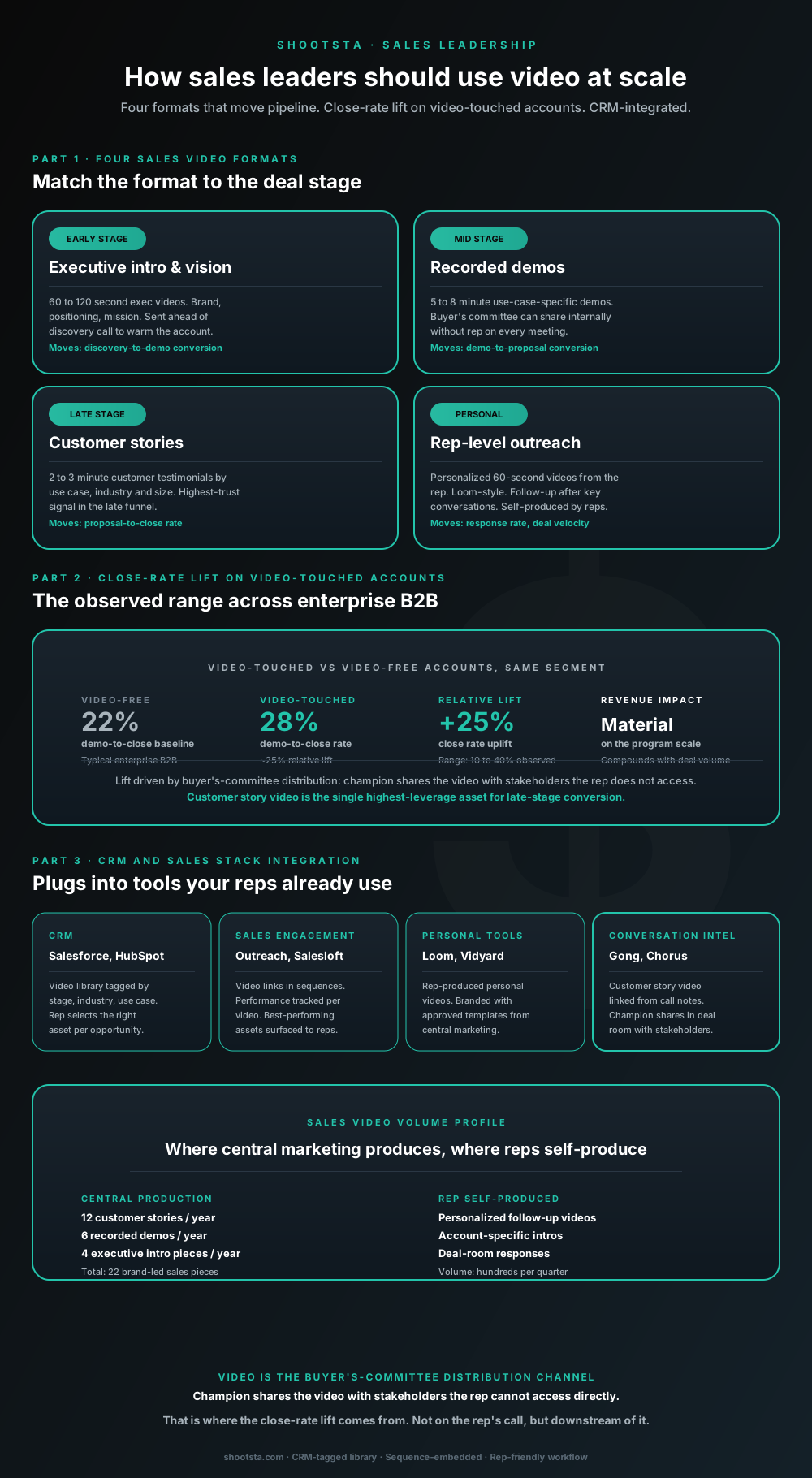
Sales leaders mostly think about video as personalized rep outreach (Loom, Vidyard) or as marketing-produced customer stories. Both are useful. The bigger opportunity is the buyer's-committee distribution layer: assets the champion shares internally with stakeholders the rep does not access directly. That is where the close-rate lift compounds.
How L&D leaders replace classroom with video
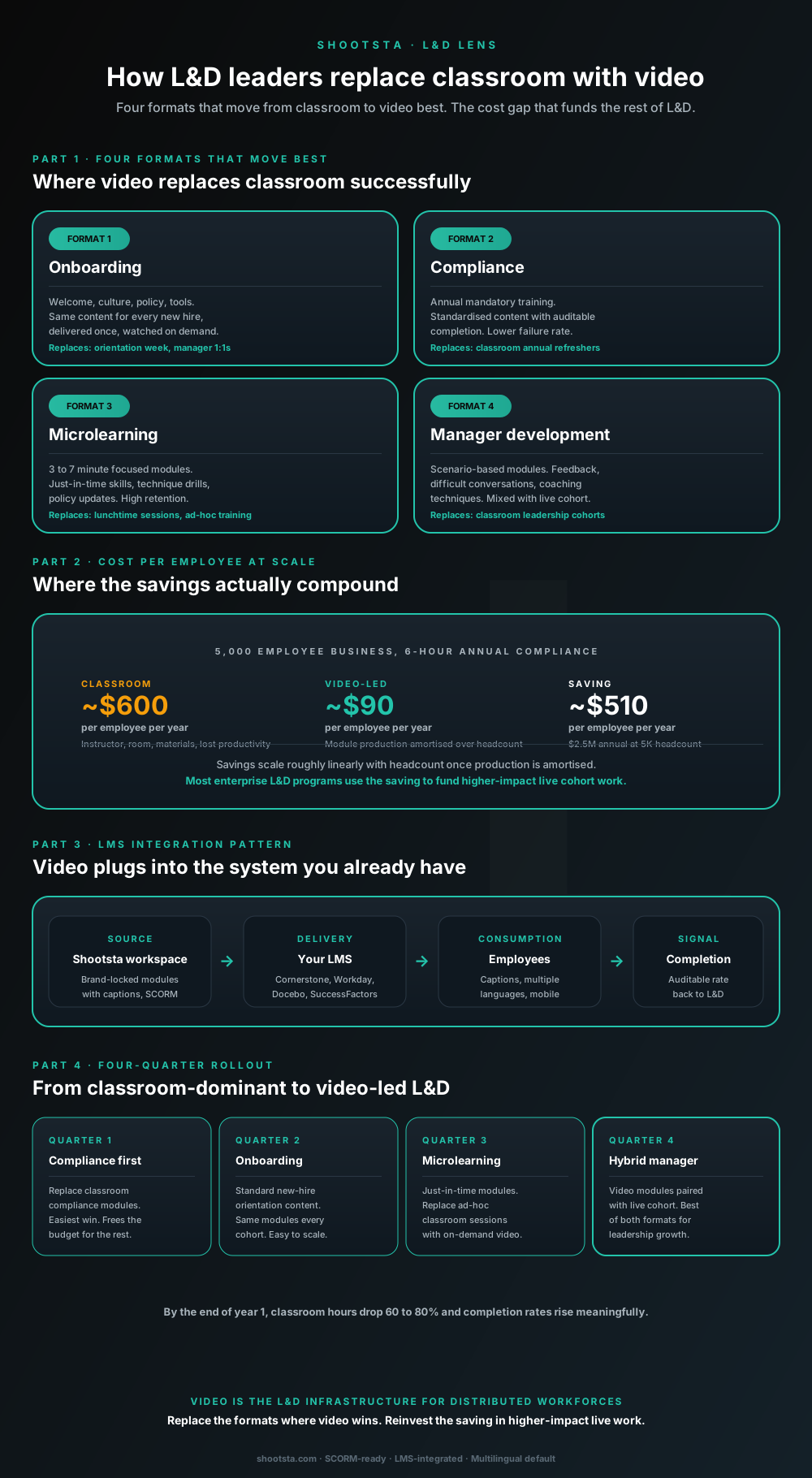
L&D leaders running classroom-heavy training programs typically have the largest single opportunity in the business to free budget through format change. Four training formats move from classroom to video cleanly; the savings fund higher-impact live work. Here is the rollout that compounds learner adoption over four quarters.
How customer success leaders should use video
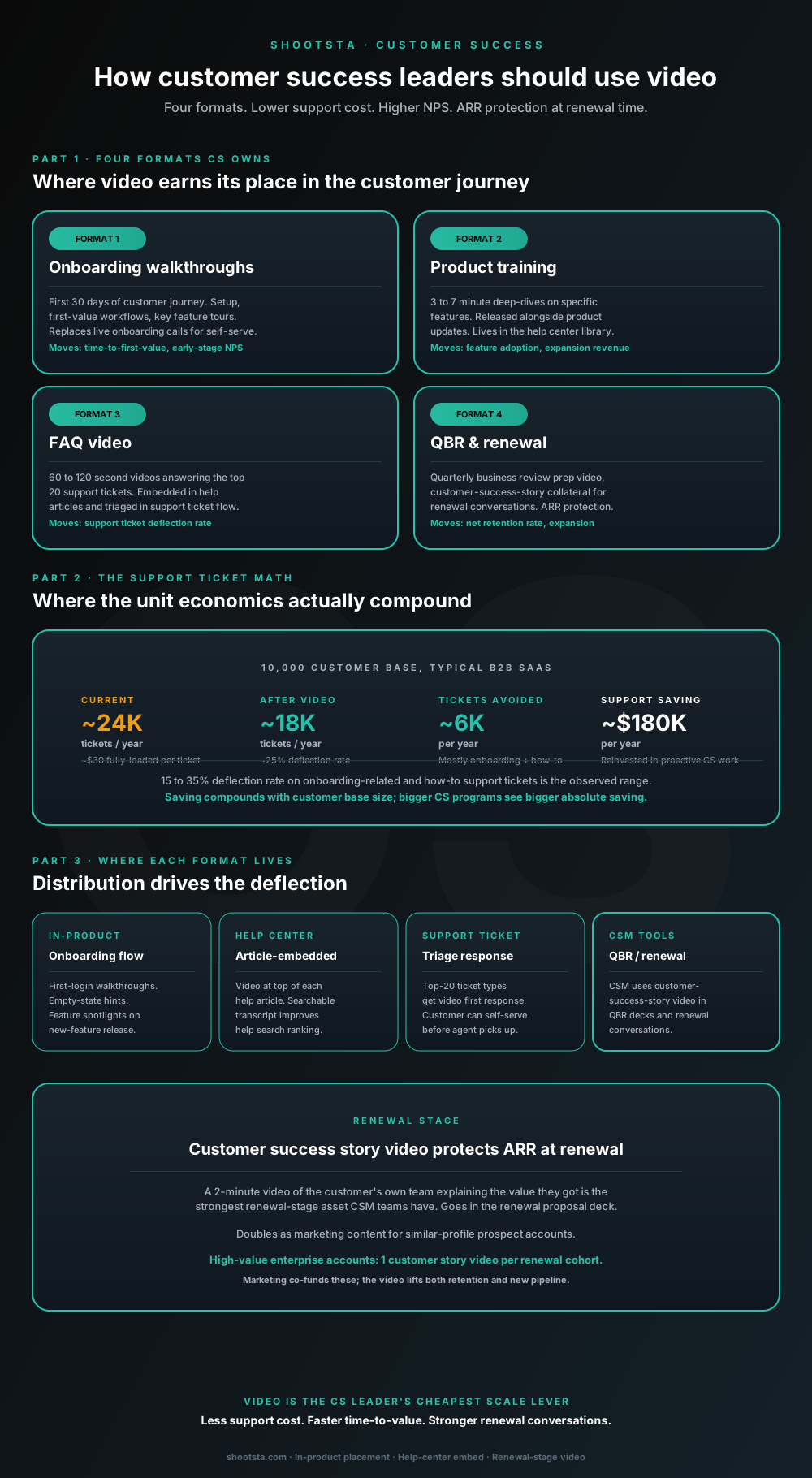
Customer success leaders are usually under-resourced for both reactive support volume and proactive retention work. Video is the cheapest lever to fix both - 15 to 35% deflection on onboarding and how-to tickets, faster time-to-value, and renewal-stage customer story video that lifts net retention. Here is the four-format model and where each piece earns its place.
How internal comms leaders should use video
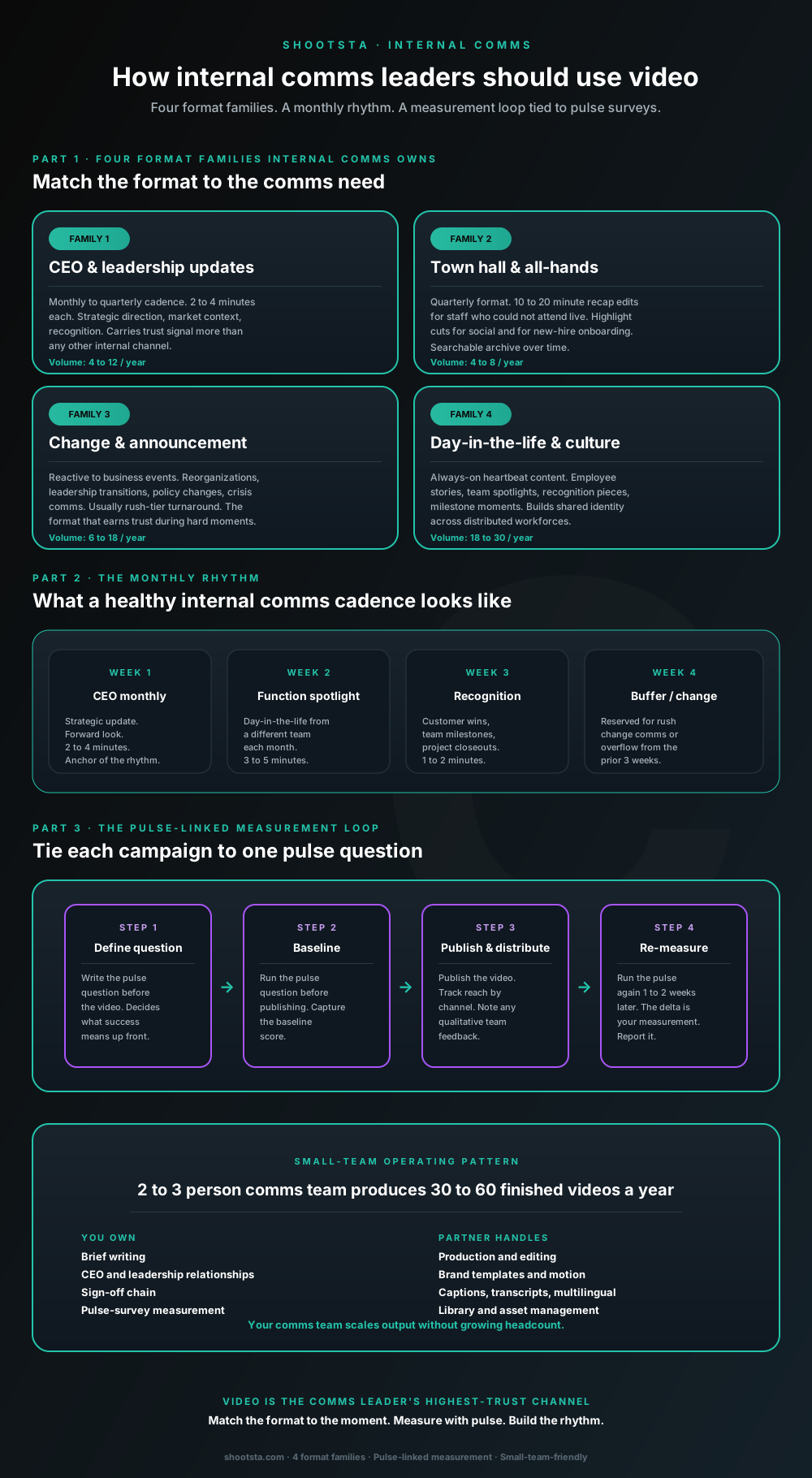
Internal comms leaders are usually under-resourced for the volume of video the business actually wants. The fix is not more headcount; it is structuring the program around four format families, a monthly rhythm, and a pulse-survey-linked measurement loop. Here is the operating pattern that lets a small comms team produce 30 to 60 finished videos a year.