
How to scale video across global offices
shootsta.
How to scale video across global offices
By Shootsta · Published May 19, 2026 · Updated October 2026
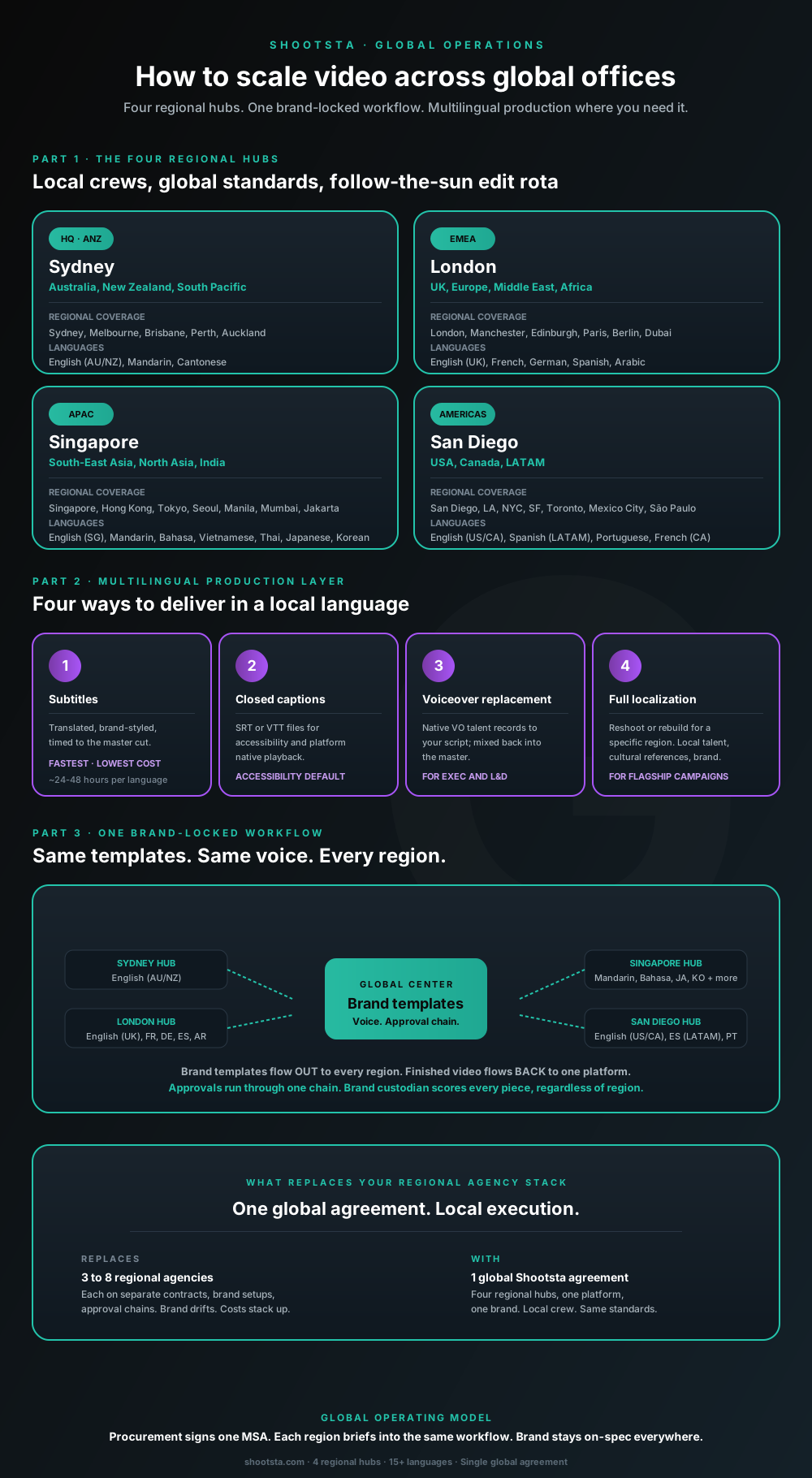
Global enterprises usually run video through a stack of 3 to 8 regional agencies, each with their own contract, brand setup and approval chain. The result is brand drift, procurement load, and inconsistent quality. Here is how one global agreement and four regional hubs replace it.
Why a regional agency stack stops working at scale
Global enterprises often end up with a stack of several regional video vendors. You might have a production house in Singapore for APAC, an animation studio in London for EMEA and a creative agency in New York for the Americas. On top of that sit a few legacy relationships that nobody remembers signing off on. Each one has its own contract, brand setup, approval chain and invoice cadence.
The problems compound as the business grows. Brand drifts because each region rebuilds templates from scratch. Procurement spends a large part of every year renewing or replacing vendors. Internal comms gets a different first-cut quality from every region, and the brand custodian cannot keep up. By the time leadership notices, the cost of fixing it (consolidating contracts, retraining vendors, harmonizing brand) is higher than the original cost of running the stack.
The four-hub model that replaces a regional stack
Shootsta operates four regional hubs that together cover ANZ, EMEA, APAC and the Americas. Each hub holds local crew, local editors and language coverage for its region. All four hubs work from the same brand templates and the same production platform, so brand stays consistent regardless of where the work is captured or cut.
Sydney hub: ANZ and South Pacific
The Sydney hub is Shootsta's head office and the original production hub. It serves Australia and New Zealand with Sydney-based editors and local videographer networks.
London hub: UK, Europe, Middle East and Africa
The London hub serves the UK, Europe, the Middle East and Africa through London-based editors and local videographer networks. The London team handles most enterprise EMEA programs, including financial services, professional services and pharma work.
Singapore hub: APAC, South-East Asia and India
The Singapore hub runs regional crews across Singapore, Hong Kong, Kuala Lumpur, Jakarta, Bangkok, Tokyo, Seoul, Sydney and Mumbai. It is the multilingual centre of the model, because enterprises in South-East Asia often need several language versions of every piece.
San Diego hub: USA, Canada and LATAM
The San Diego hub has crew in San Diego, LA, NYC, SF, Toronto, Mexico City and São Paulo. Its routine languages are English (US/CA), Spanish (LATAM), Portuguese (BR), French (CA). The Americas hub also handles cross-region work where North American leadership signs off on content destined for LATAM or Canada.
Interactive calculator
What does your global video stack look like today?
Pick the regions you operate in, set how many languages each master video gets shipped in, and see what consolidating to one global partner unlocks.
Regions you operate in
Hubs covered
4 / 4
Full global coverage
Routine languages
18
across the active regional hubs
Localized deliverables
72
24 masters × 3 languages
What consolidating unlocks
Most enterprise programs at this footprint run ~8 regional vendors on separate contracts, separate brand setups and separate approval chains. A single global Shootsta agreement consolidates that into 1 MSA, one platform, and one brand-locked workflow. Procurement saves ~7 vendor renewal cycle s per year, and brand drift drops because every region runs from the same templates.
Scope a global agreementAssumptions: regional vendor count estimated at ~2 per active region (production house + localization vendor) which is typical for enterprise stacks. Localized deliverables count subtitled, captioned, voiceover-replaced and fully-localized variants. Numbers are guides.
How multilingual production gets delivered
Multilingual is the part of global video that most regional agencies handle badly. The trade-off is between four delivery methods, and the right one depends on the content type and the audience.
Subtitles
Translated, brand-styled subtitles are burned into the master or delivered as a separate track. This is the fastest and cheapest method, because the master video stays as it is. It works for sales enablement, internal comms, training and most social cutdowns. The downside is that viewers must be willing to read.
Closed captions
Captions come as SRT or VTT files that play natively in social platforms, YouTube, Vimeo, an internal LMS and accessibility tools. They are the default deliverable for any video going on the public web or needing to meet accessibility rules (WCAG, regulated sectors). We often deliver them alongside subtitles rather than in place of them.
Voiceover replacement
Native voice talent records the script in the target language, and the new track is mixed back into the master. The visual stays the same while the audio becomes local. This is the right method for executive video where reading subtitles feels wrong, for L&D modules where the learner needs to focus, and for product videos with heavy product names or technical terms.
Full localization
Here you reshoot or rebuild the piece for a specific region. That can mean local on-camera talent, region-appropriate b-roll and cultural references that work locally, and sometimes a different creative concept entirely. It is the right method for flagship campaigns where a translated version would feel wrong, and for markets where the master language is not credible.
One brand-locked workflow keeps every region on-spec
The workflow is what holds a multi-region program together, more than the regional crews do. All four hubs work from the same brand templates, the same approval chain and the same production platform.
Brand templates (fonts, lower thirds, motion graphics, brand palettes, voice guides) are loaded into the Shootsta platform once during onboarding. Every regional hub draws from the same templates. The first cut from a Singapore editor looks the same as the first cut from a London editor, because the same templates are doing the work.
Approvals run through one chain. Your brand custodian sees every piece from every region before release, scored against brand guidelines. Regional teams brief locally but sign off centrally. The brand custodian's job stays manageable because the templates do most of the brand work upfront.
Finished videos and project files land in one workspace, regardless of where they were captured or cut. Your team searches in one place, and reusing an asset from another region is simple. Nobody has to chase down "that video from APAC last quarter" anymore.
What one global agreement replaces
A typical global enterprise program runs several regional video vendors. One Shootsta global agreement replaces that with: one MSA, one platform, one brand setup, one approval chain, one quarterly QBR, one invoice (or four, billed regionally if procurement prefers it).
Procurement gets back the time it spent renewing or replacing vendors every year. Legal reviews one contract instead of several, and finance forecasts one annual line item instead of a quarterly scramble. The comms and marketing leaders responsible for brand stop having to mediate between regions and vendors who interpret brand differently.
How regional execution still feels local
The risk with consolidating to one global vendor is that regional execution feels remote, slow and culturally tone-deaf. The four-hub model is designed to avoid that.
Local crews shoot the work. A Singapore launch is captured by a Singapore crew working with local fixers and talent in the local time zone. The edit is finished by an editor in the Singapore hub who knows the regional voice. Approvals run locally where they need to (regional brand owner, regional compliance) and centrally where they should (global brand custodian).
Multilingual production is handled by the regional hub closest to the audience. Each language version is handled by translators and voice talent native to that market. The platform keeps the workflow central while the execution stays local.
Frequently asked questions
How many languages does Shootsta support?
Shootsta makes language versions through its four hubs in Sydney, London, Singapore and San Diego, with editors in 5+ regions. Language needs differ by program, so list every language and market you need when you brief the work. Your account team will confirm coverage and timing for each one before the project is scoped.
Do you have crew in every city we operate in?
The four hubs cover most major business cities through staff editors plus a vetted regional crew network. For cities outside the standard coverage (smaller markets, regional offices, secondary cities), we source crew through the regional hub's network, which adds some time to the schedule but keeps quality consistent. We will scope coverage during onboarding so there are no surprises.
How is brand consistency maintained across so many regions?
The brand templates, the approval chain and the production platform are global. Regional execution feeds back into the same brand custodian sign-off, scored 1 to 5 against your brand guidelines. We covered the full set of brand-control levers in brand control with a video production partner.
Can you handle different regulatory requirements per region?
Yes. The compliance review steps are set per project and per region inside the platform, so each region's content goes to its own reviewers before it is published. Your compliance team decides which local rules apply, such as MAS in Singapore, the FCA in the UK, FINRA and the SEC in the US or ASIC in Australia, and one region's review does not hold up another's.
What is the turnaround on multilingual versions?
It depends on the method. Subtitles and captions are the quickest, because the master video does not change. Voiceover replacement depends on talent availability in each language. Full localization with a reshoot is scoped per project, because it is closer to a new production. Agree the timing for each language before the project starts.
How does pricing work for a global agreement?
You sign one annual or multi-year MSA with regional pricing schedules attached. Most global agreements are billed centrally with regional cost-recovery if internal accounting requires it. Subscription tier pricing follows total annual volume across all regions, so consolidating regions usually drops per-video cost as well as reducing procurement overhead.
How we built the numbers in this post
The multi-hub model here is drawn from Shootsta's own operating footprint, and the regulator list comes from public regulator guidance. We quote no Shootsta customer outcome figures, and the sources for each claim are listed below.
- Several regional video vendors in a typical global enterprise stack. We give no vendor count, because the number depends on company size and operating maturity. Count your own vendors before you build the consolidation case.
- Four-hub model (Sydney, London, Singapore, San Diego). Shootsta operational footprint. Local crew, local editors and language coverage are confirmed against each hub's staff and partner network. See the Shootsta locations page for the current footprint.
- Language coverage. We give no language count. Coverage and timing are confirmed per language when a project is scoped.
- Subtitle, caption, voiceover and full localization turnaround times. We give no per-method figures, because timing depends on the language, the talent and the scope. Standard edits come back within 24 to 48 hours depending on package, as set out in the Shootsta help centre.
- Regulator coverage by region. MAS in Singapore, FCA in the UK, FINRA and SEC in the US, ASIC in Australia, sector-specific pharma and government rules. Compiled from regulator public guidance in each jurisdiction.
Editorial standards
- Numbers cited are the most up-to-date figures we had at the time of writing. The "last updated" date on this page is when the numbers and sources were last reviewed.
- External benchmarks come from publicly available salary, labor and industry data. We name the source where possible and summarize where the underlying data sits behind a paywall.
- Figures and ranges come from the public sources cited on this page and from published market rates. We do not quote any Shootsta customer outcome figures here.
- Where ranges are given, they cover variability across sector, geography and program maturity. Treat them as starting hypotheses for your own program rather than as warranties.
- Spotted a number you would challenge? Let our editorial team know what you are seeing in your business and the data behind it. Material updates get credited in the post footer.
Where to go next
For the working pattern alongside an existing in-house team in your central office, read how a video partner extends your in-house team. For the brand-control discipline that holds a multi-region program together, read brand control with a video production partner. For the turnaround model that lets a global rota deliver 48-hour first cuts across time zones, read how a video partner ships in 48 hours.
If you want to scope a global agreement for your enterprise footprint, book a free consultation with the Shootsta team.
Take this article with you
Read the latest at shootsta.com/blog/how-to-scale-video-across-global-offices
You might also like
How to Brief an Animation Project
How to Brief an Animation Project
An animation brief is the document you send to your production partner before work starts. Get it right and you cut revision cycles in half. Get it wrong and you discover mid-production that everyone disagrees on what the video is for. This is what a complete brief looks like.
Animation for change management comms
Animation for change management comms
Animation handles change management communications better than live video for three reasons: no on-camera executives required during sensitive periods, scene-level updates when plans shift, and a single production that works across global teams with voiceover-only language swaps.
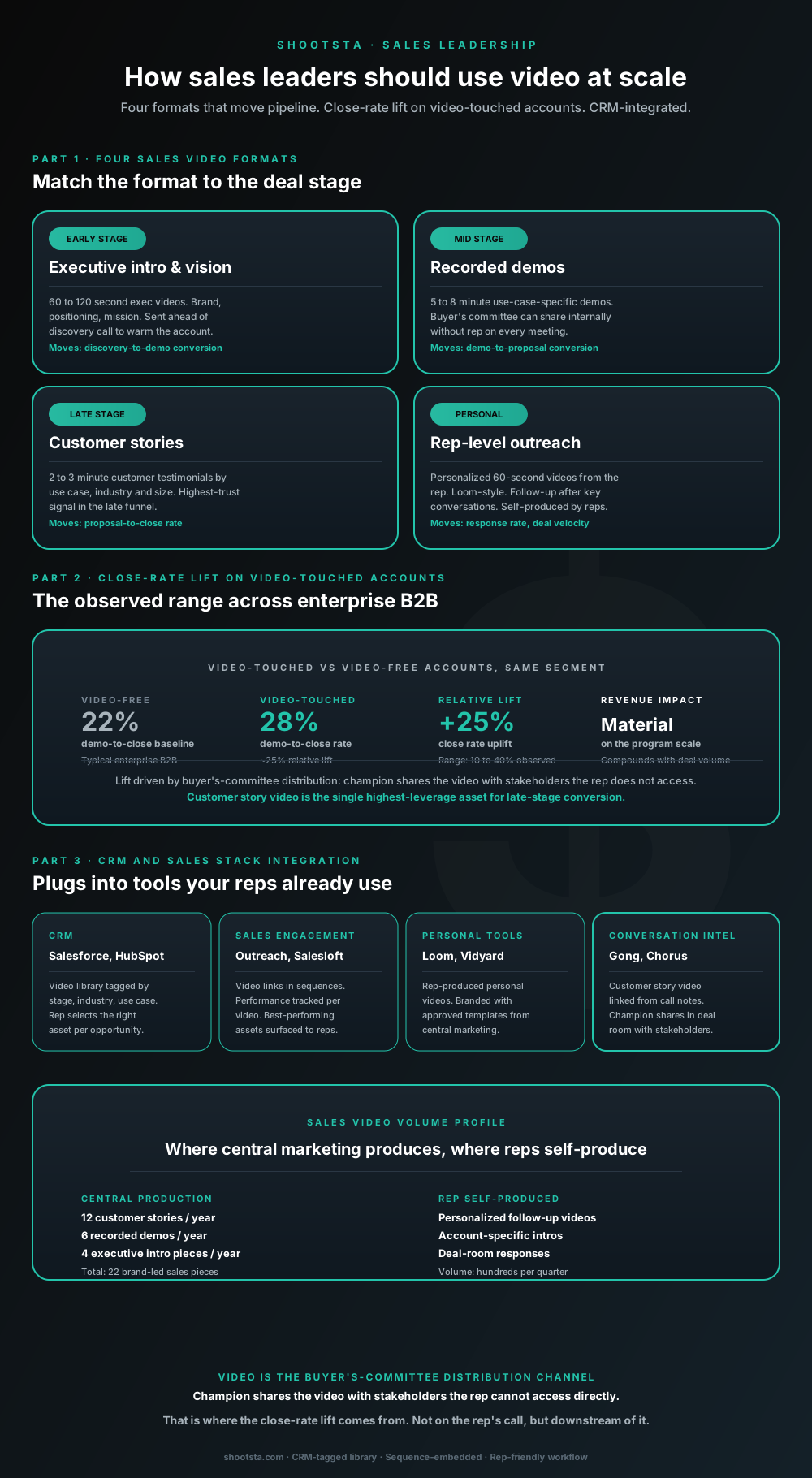
How sales leaders should use video at scale
Sales leaders mostly think about video as personalized rep outreach (Loom, Vidyard) or as marketing-produced customer stories. Both are useful. The bigger opportunity is the buyer's-committee distribution layer: assets the champion shares internally with stakeholders the rep does not access directly. That is where the close-rate lift compounds.
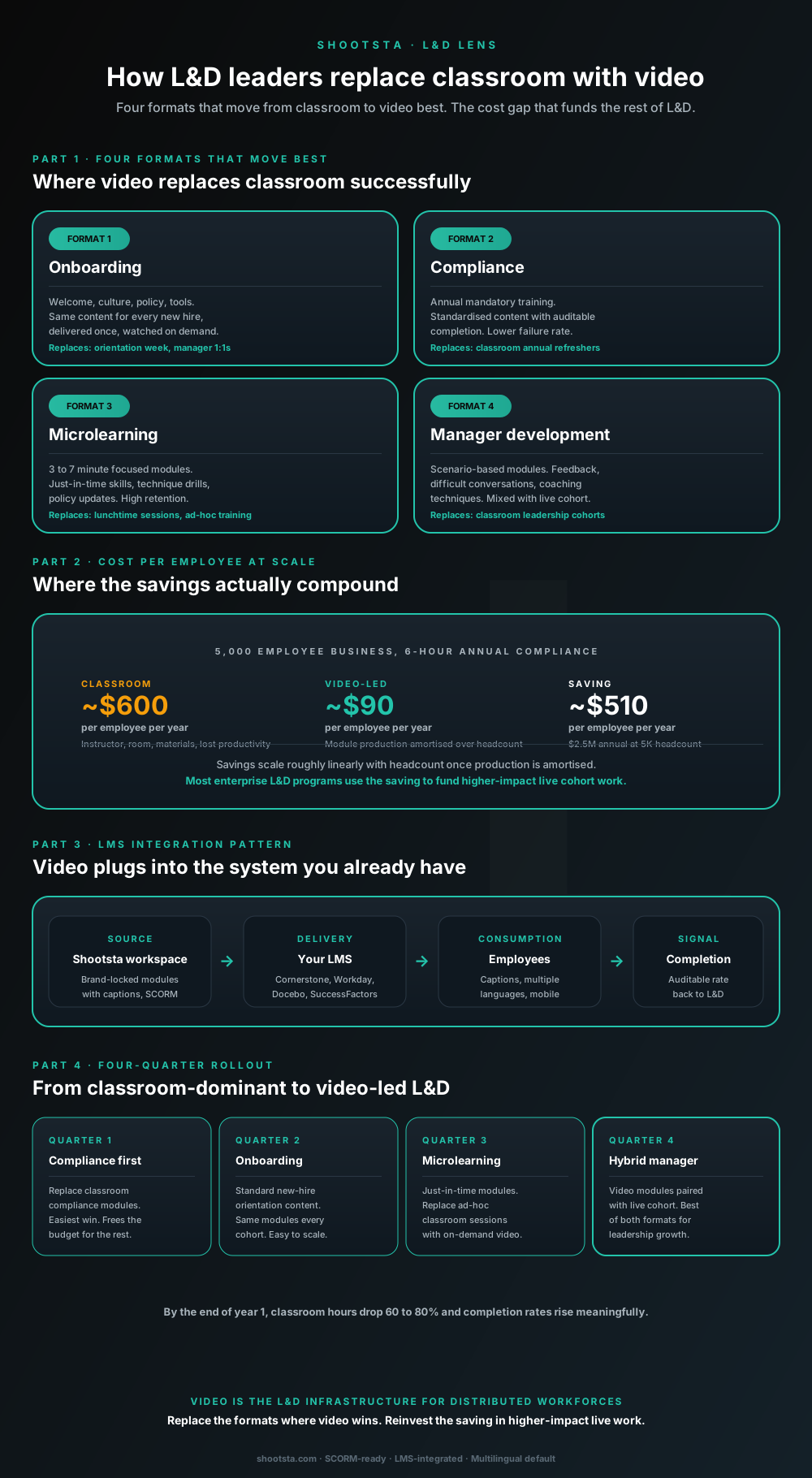
How L&D leaders replace classroom with video
L&D leaders running classroom-heavy training programs typically have the largest single opportunity in the business to free budget through format change. Four training formats move from classroom to video cleanly; the savings fund higher-impact live work. Here is the rollout that compounds learner adoption over four quarters.
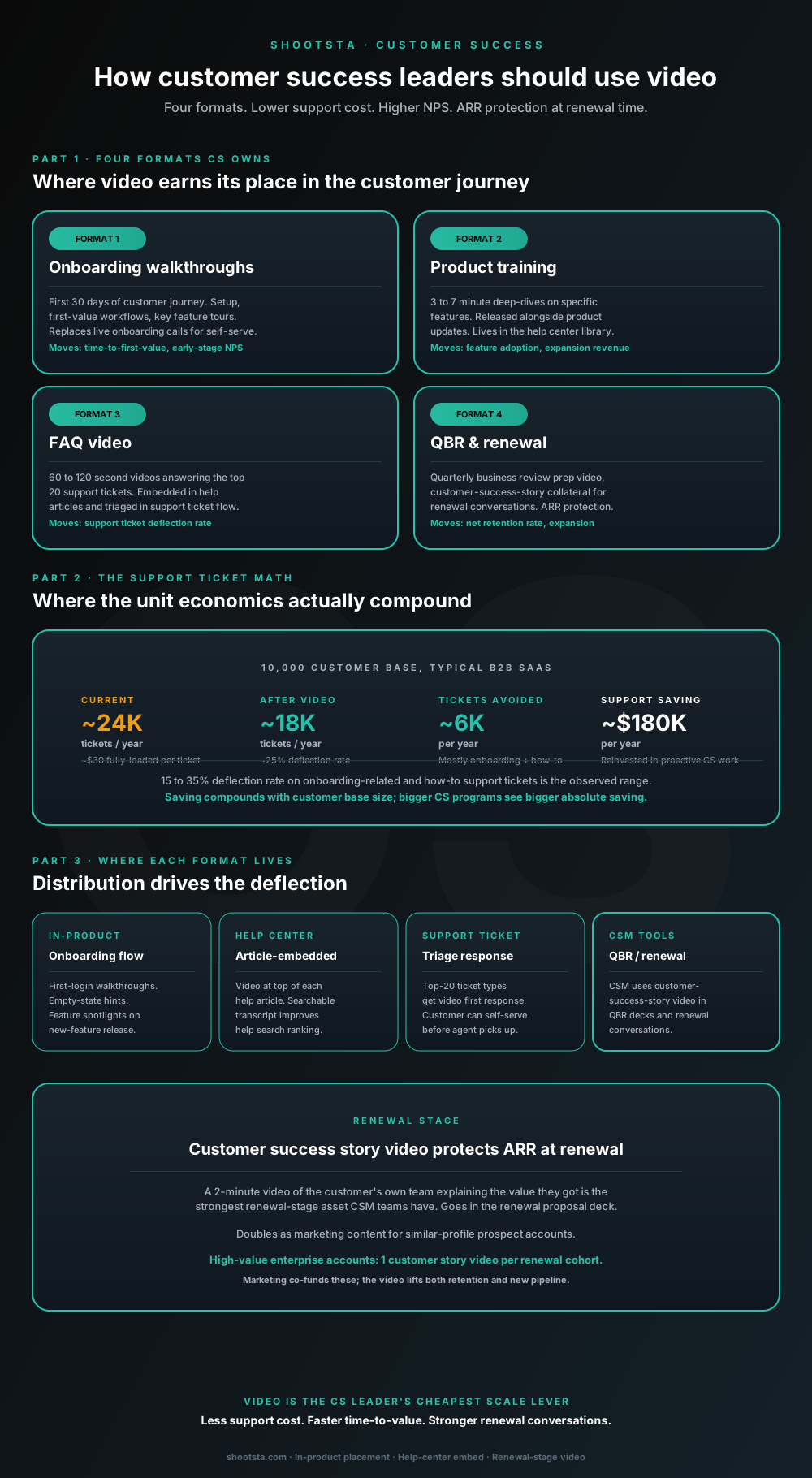
How customer success leaders should use video
Customer success leaders are usually under-resourced for both reactive support volume and proactive retention work. Video is the cheapest lever to fix both - 15 to 35% deflection on onboarding and how-to tickets, faster time-to-value, and renewal-stage customer story video that lifts net retention. Here is the four-format model and where each piece earns its place.
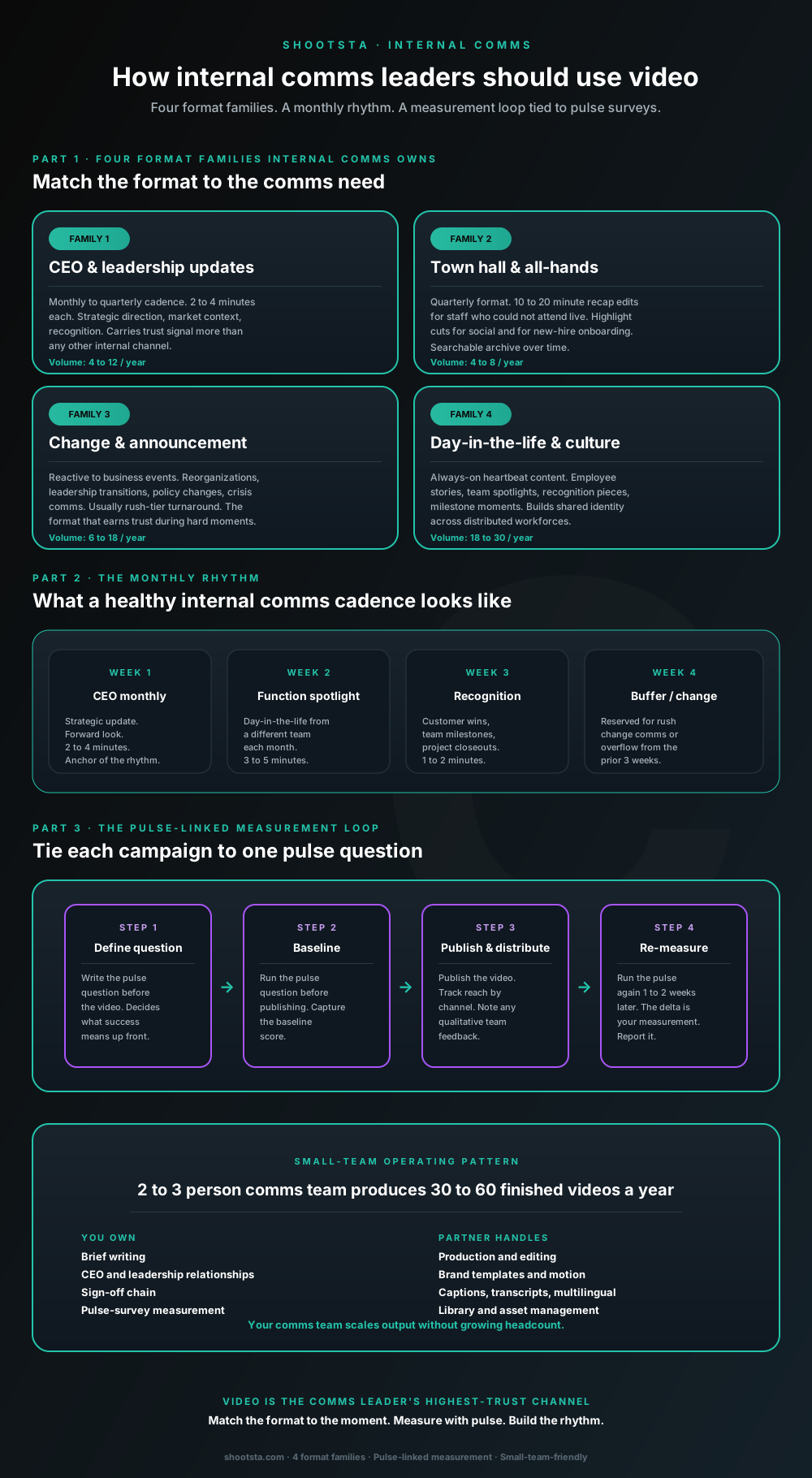
How internal comms leaders should use video
Internal comms leaders are usually under-resourced for the volume of video the business wants. The fix is not more headcount; it is structuring the program around four format families, a monthly rhythm, and a pulse-survey-linked measurement loop. Here is the operating pattern that lets a small comms team produce 30 to 60 finished videos a year.