
The Business Case for a Video Platform
shootsta.
The Business Case for a Video Platform
By Shootsta · Published June 25, 2026 · Updated October 2026
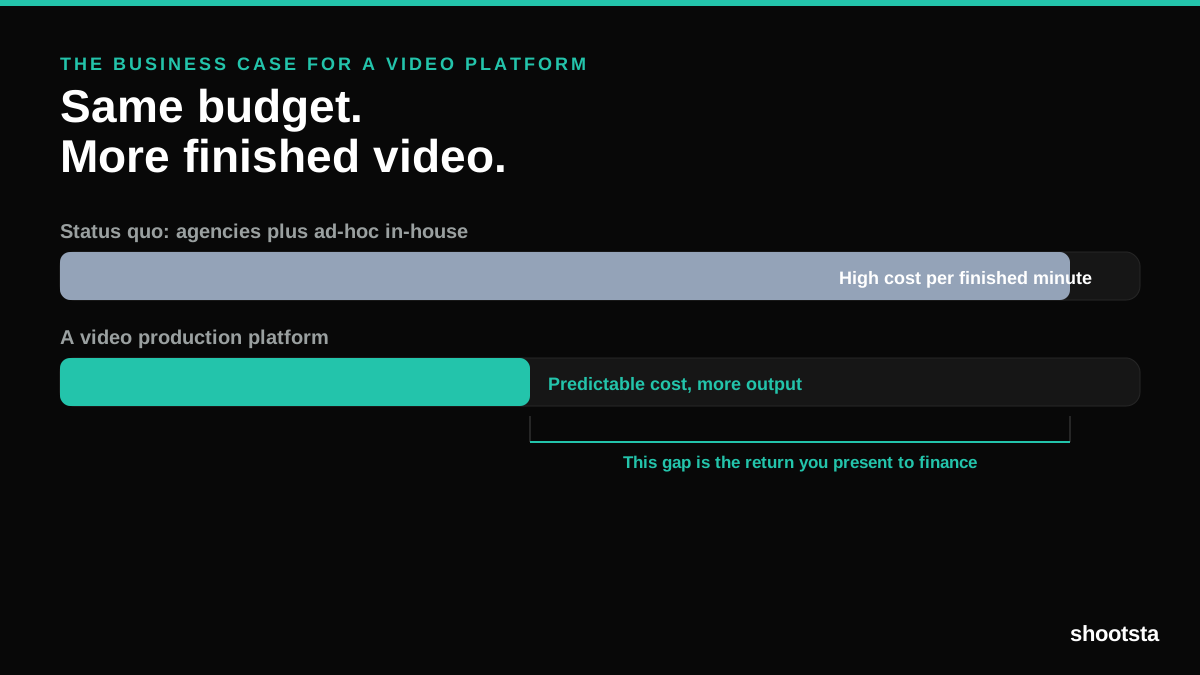
The internal-selling guide for getting a video production platform approved. Frame the problem in business terms, compare the true cost of agencies and ad-hoc in-house against one predictable platform cost, build a simple payback model, de-risk with a pilot, and put it all on one page in language finance and leadership will sign off.
Short answer. To get a video production platform approved, do not sell the tool. Sell the business problem: video demand outruns capacity, so campaigns slip and cost per finished minute stays high. Compare the true cost of the status quo (per-project agency spend plus idle in-house capacity) against one predictable platform cost, show the extra output that same budget buys, then de-risk the decision with a small pilot. This post gives you the framework, the numbers to gather, and the one-page language to put in front of finance and leadership.
Most video platform business cases fail for the same reason. They lead with features when the person signing off cares about outcomes and cost. If you own the video budget and you want a production platform approved, your job is not to prove the software is good. It is to prove that the way you make video today costs more and delivers less than the alternative, and that the switch pays for itself.
This is the internal-selling guide. It walks through how to frame the problem, run the cost comparison, build a simple payback model, remove the risk, and put it all on one page in language finance and leadership will accept. It sits alongside the broader argument for enterprise video in general; for that wider view, read the business case for enterprise video. This post is specifically about winning the platform buy decision.
How do you frame the problem in business terms?
Start with the gap, not the software. Every function in the business now asks for video: launches, social cutdowns, executive updates, training, recruitment, customer stories. Demand climbs every year. The capacity to produce it does not, because headcount is flat and agencies are expensive and slow.
Put that gap in numbers your leadership already tracks. How many video requests came in last year versus how many shipped? How many campaigns slipped or launched without the video they needed? What is the cost per finished minute across your current mix of agencies and in-house effort? These are the metrics that turn a vague "we need more video" into a problem finance recognizes.
What does the cost comparison look like?
The status quo has two hidden costs that rarely appear on one line. Agencies price per project, so more video means a bigger invoice with no volume relief. In-house hiring adds fixed salary that sits idle between spikes and cannot flex to a launch week. Add those together and divide by the minutes of finished video you shipped, and you get a true cost per finished minute. It is usually higher than anyone expects.
A platform replaces that with one predictable annual cost that flexes with volume. To make the comparison honest, total your last twelve months of agency invoices, the loaded cost of any in-house video roles, and the tooling and freelance spend around them. Set the platform cost beside that baseline and compare cost per finished minute rather than headline price. For a breakdown of where the money goes, read the real cost of enterprise video production, and to weigh the models side by side, see in-house, agency, or platform for video.
How do you build the ROI model and payback?
Keep the model simple enough to fit on a slide. Return comes from three places. First, more finished output for the same or lower spend, which you can express as cost per finished minute before and after. Second, faster time to market, because a first cut in days instead of weeks means campaigns launch on schedule and stop leaving revenue on the table. Third, reduced brand risk, because one standard across every video removes the cost of rework and off-brand content.
For payback, divide the platform's annual cost by the monthly saving plus the value of the extra output it produces. Most cases reach payback well inside a year once idle in-house cost and slipped-campaign cost are counted honestly. If you want a defensible number without building a spreadsheet from scratch, run your figures through the Video ROI Calculator and lift the output straight into your case.
How do you de-risk the decision?
Leadership rarely rejects a good case; they reject a big, irreversible commitment. So do not ask for one. Propose a phased rollout that starts with a pilot: one team, one content type, a fixed number of videos over a defined window, with clear success metrics agreed up front. Time to first cut, cost per finished minute, and on-brand pass rate are the three to track.
A pilot turns an abstract argument into evidence. If it hits the targets, you expand with data leadership has already seen. If it does not, you have spent a fraction of an annual contract to learn that. This structure is what moves cautious approvers, because the downside is small and known. To bring those approvers along early, read how to get exec buy-in for video at scale.
DUAL, a specialty insurer, is the proof point for this whole argument. Rather than keep briefing agencies per project or hire a production team they could not keep busy, they moved to a repeatable platform model that ships on-brand video at volume for a predictable cost. The business case held up in practice: more output, faster turnaround, one consistent brand.
Their full story is in the DUAL case study, which is a useful reference to attach to your own proposal.
What goes on the one-page case?
Finance and leadership do not read long decks. Give them one page with five short sections. State the problem in their metrics: demand versus capacity, slipped campaigns, current cost per finished minute. List the options you considered. Give the recommendation and why, the cost comparison and payback in a small table, and the pilot plan with its success metrics and decision date.
Language matters here. Say "this reduces our cost per finished minute from X to Y and clears the campaign backlog," not "this is a modern video solution." Tie every claim to a number leadership already cares about, and name the risk you are removing rather than the feature you are buying. Once the platform is approved, the next job is proving it worked, which is covered in how to measure enterprise video success.
Frequently asked questions
What is the strongest argument for a video production platform?
Cost per finished minute at volume. Agencies and idle in-house capacity both make each video expensive in different ways, while a platform spreads a predictable cost across far more output. When you show the same or lower budget buying more finished video, and campaigns landing on time, the case largely makes itself. Features are a distant second to that number.
How do I justify the investment to finance?
Frame it as a cost and risk decision, not a creative one. Total your real current spend across agencies, in-house roles, freelancers, and tools, then divide by finished minutes shipped to get a true cost per minute. Set the platform cost beside it, show the payback period, and attach a small pilot so the commitment is reversible. Finance approves reversible decisions with clear payback far more readily than open-ended ones.
How is this different from the general case for enterprise video?
The general case argues why the business should invest in video at all. This is narrower: it is the internal guide for choosing a platform over the status quo of agencies plus ad-hoc in-house, and the exact language to get that specific decision signed off. If you are still building the case for video itself, start with the business case for enterprise video, then return here for the platform decision.
Should I run a pilot before committing to a platform?
Almost always, yes. A pilot with one team, one content type, and agreed success metrics turns your argument into evidence at a fraction of a full contract. It also gives cautious approvers a small, known downside, and that is usually what gets them to say yes. Expand on the pilot's data rather than on a promise.
Sources and further reading
The patterns above line up with how researchers describe rising video demand and how buyers evaluate marketing technology. For wider context:
- Wistia State of Video report on rising production volume and how teams resource video.
- Gartner on marketing technology and how leaders assess martech spend and ROI.
- HubSpot on planning a marketing budget and defending spend to leadership.
On Shootsta's side, research shows the trade-offs most clearly when you compare the models directly in in-house, agency, or platform for video and the numbers in the real cost of enterprise video production.
Where to go next
This closes a series aimed at the people who own the video budget. For the broader argument to build video into the business at all, read the business case for enterprise video. To bring leadership along before you present, read how to get exec buy-in for video at scale. To prove the platform delivered once it is live, read how to measure enterprise video success.
If you want a baseline before you write the case, grade your program with the CMO video scorecard. The lowest of the five measures is usually the one the business case should lead with.
To pressure-test your own numbers before you write the case, book a free consultation.
Take this article with you
Read the latest at shootsta.com/blog/business-case-video-production-platform
You might also like

How to Plan Video Team Capacity Around Leave
Your only editor just booked two weeks off, and you already know which projects will slip. Chad Lakin explains how to plan video team capacity so the work keeps moving when someone is away.
Corporate Video Editing Standards: Full Guide
A two-page editing standard does more for consistency than a forty-page brand book. Here is what it should cover, who owns each part, and how to enforce it with an in-house editor or an outside partner.
Quality Control in Outsourced Video Editing
When editing leaves the building, quality has to be checked by a system rather than by whoever happens to look. Here is the system: acceptance criteria, two QA gates, counted revision rounds and a quarterly audit.
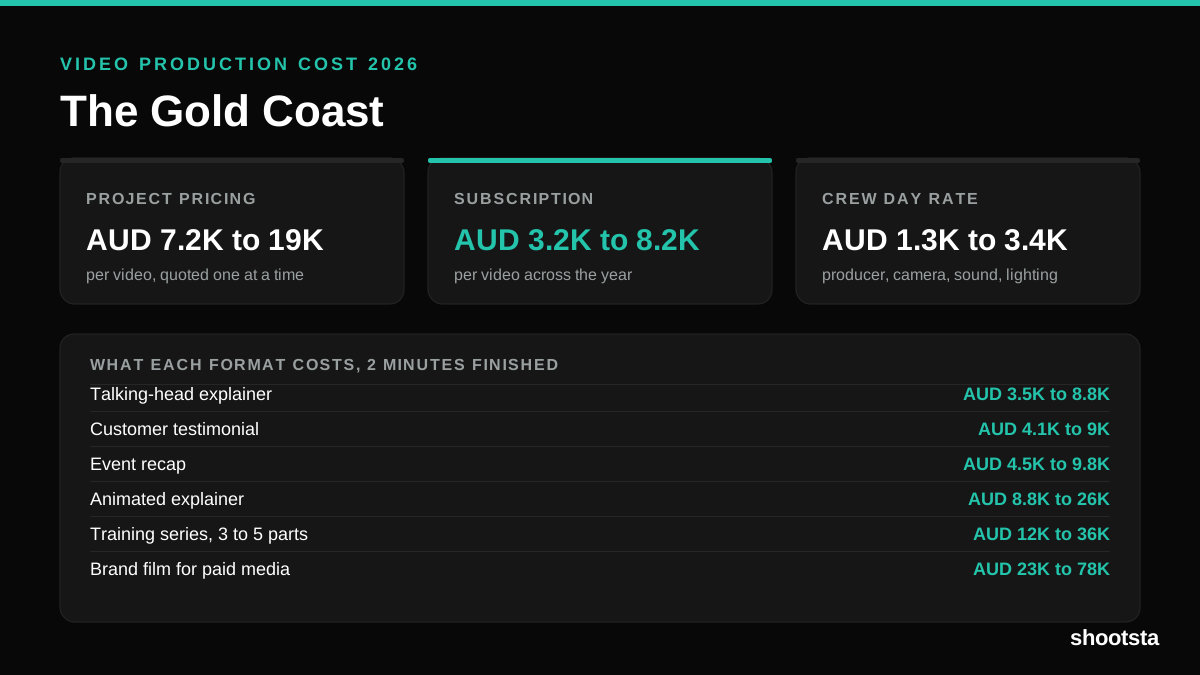
Video Production Cost on the Gold Coast 2026
Video production in the Gold Coast costs AUD 3,200 to AUD 8,200 per finished video on a subscription model, and AUD 7,200 to AUD 18,500 for one-off project work. Here is what you are paying for, and how the three pricing models compare.
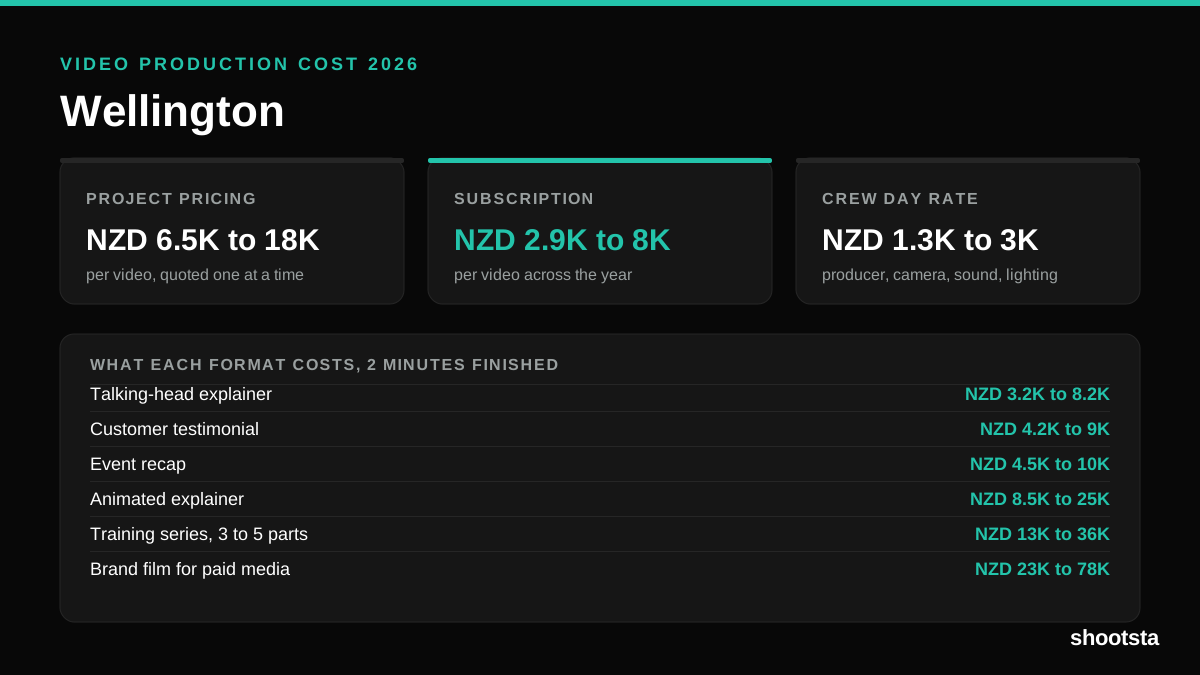
Video Production Cost in Wellington (2026)
Video production in Wellington costs NZD 2,900 to NZD 8,000 per finished video on a subscription model, and NZD 6,500 to NZD 18,000 for one-off project work. Here is what you are paying for, and how the three pricing models compare.
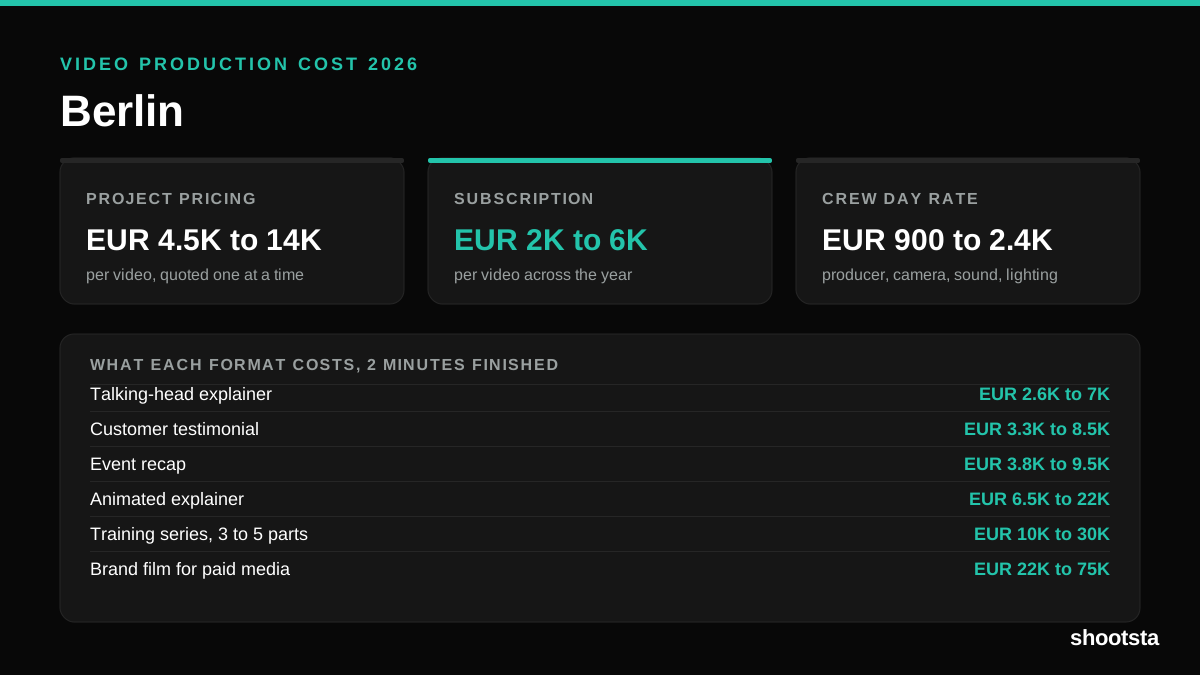
Video Production Cost in Berlin (2026)
Video production in Berlin costs EUR 2,000 to EUR 6,000 per finished video on a subscription model, and EUR 4,500 to EUR 13,500 for one-off project work. Here is what you are paying for, and how the three pricing models compare.