
How brands stay human as AI gets more capable
shootsta.
How brands stay human as AI gets more capable
By Shootsta · Published August 10, 2026 · Updated October 2026
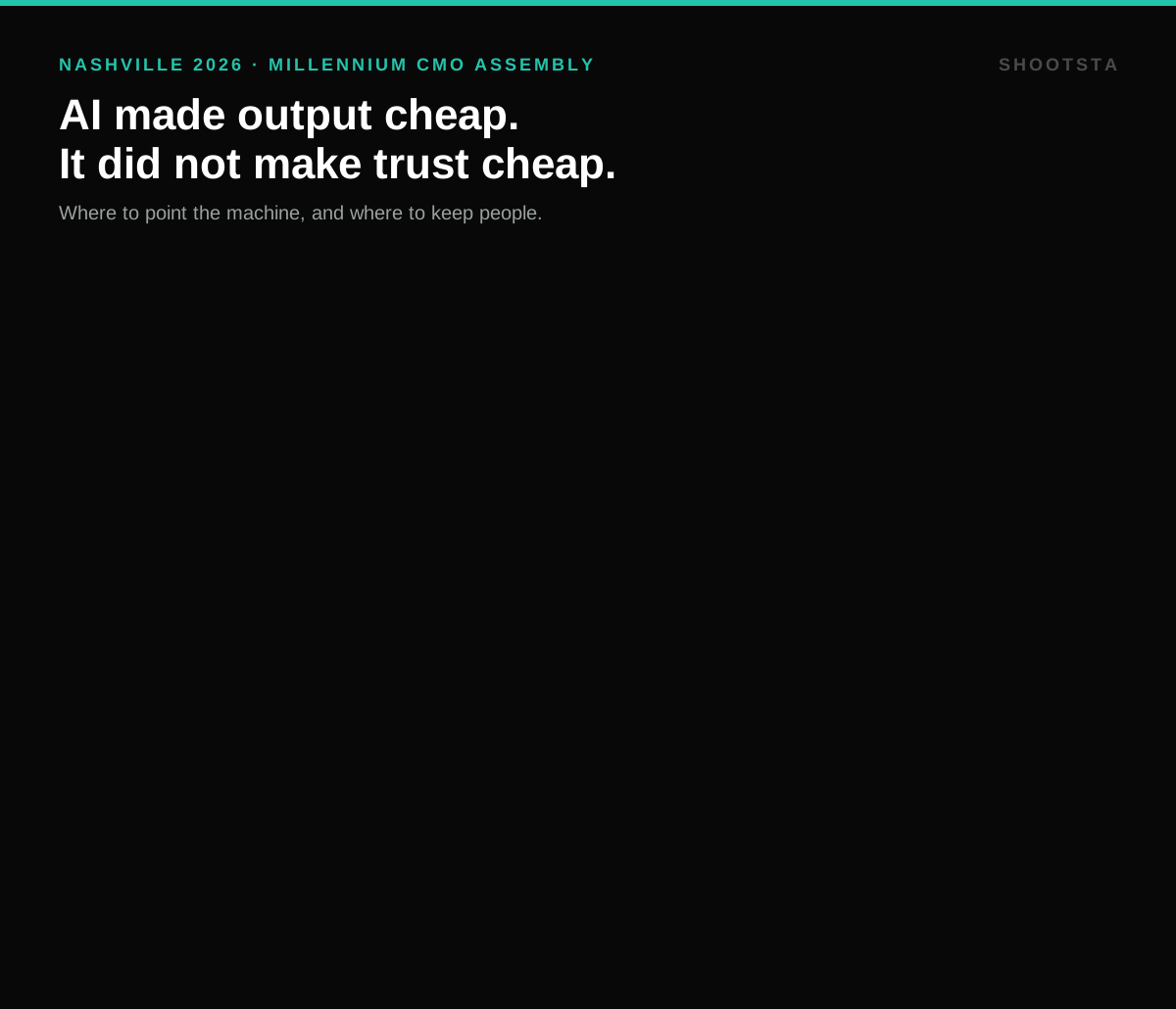
AI has made output cheap. It has not made trust cheap. Point the machine at the repetitive work, keep people on the judgement calls, and the time you free up goes into the parts nobody wants automated: real people on camera and a point of view worth having.
The brands pulling ahead are using AI to strip the drag out of production, then spending the time and budget that frees up on the parts your audience does not want automated, such as real people on camera and a point of view worth having. Every brand can be fast now, so speed no longer sets you apart. Making something worth watching still does.
This question ran through two days at the Millennium Alliance CMO Assembly in Nashville, where marketing leaders from some of the world's biggest brands got together to talk about the technology changing how their work gets made. The full recap is in what we heard at the CMO Assembly in Nashville. This piece is the argument underneath it.
As AI gets more capable, how do brands stay human?
By using the technology on the mechanical work and keeping people on the judgement calls. AI helps you move faster, produce more and understand more of what you already have. Trust still comes down to people. So does the judgement about which idea deserves a place in front of a customer.
The bigger risk with AI is the sheer amount of average marketing it can make very quickly, and average gets filtered out faster every quarter. When every brand can generate a hundred assets before lunch, the scarce thing is a human being with something specific to say.
Where does AI earn its place in video?
AI earns its place mostly behind the camera. It handles transcription and tagging, rough assembly and pulling selects. It can search an archive you have already paid for but cannot find anything in. It also cuts long-form edits into social versions and drafts language versions of an edit that already works.
That work eats human hours, and it is the kind of task machines handle well. Hand it over and the cost per video falls without anything on screen getting worse. We went deeper on the split in how AI fits inside enterprise video workflows.
What should stay with people?
People should keep the idea, the person on camera, the direction and the taste behind it. They should also make the call on what to cut. The relationship with the customer who agreed to be in the video belongs with a person too.
Those parts are the reason anyone watches, so treating them as bottlenecks to automate misses the point. A generated presenter reading a generated script is technically a video and practically a cost with no return, because the audience can tell and the brand pays for it later.
The test: would anyone notice if a machine made it?
Here is the filter we keep coming back to. If a machine could have made it and nobody would notice, why make it?
Run it over your last quarter of output. The assets that pass carry something specific, such as a named person, a customer's own words or a number only your company has. The assets that fail were filler, and AI is about to make filler endless. Producing more of it faster will not help your brand.
What this means for how you produce video
The brands handling this well have a system underneath their AI tools, and the system matters more than the tools. It covers capacity that flexes with volume, one route for briefing work in, brand governance inside the workflow so consistency does not depend on review, and measurement tied to business outcomes.
Get that right and AI becomes a multiplier on something that already works. Skip it and AI just helps you produce off-brand video faster. The four pillars, plus a free playbook, are in the Enterprise Video Operating Model, and the CMO video scorecard grades your current program out of 25 in about three minutes.
Frequently asked questions
Does AI replace video production teams?
No, and teams that bet on it tend to learn that at some cost. AI takes over the repetitive parts of production such as transcription, rough cuts, versioning and search. It does not do the parts that make a video worth watching: the idea, the interview, the direction, the call on what to cut. In practice you spend fewer hours per video and keep the people who matter.
Will AI-generated video hurt brand trust?
It depends what you use it for. Using AI to speed up editing, versioning or captions is invisible to the audience and carries no trust cost. Using it to fake a person, a customer or an experience is a different thing, and audiences are getting quicker at spotting it. The safe line is simple: automate the production, never the sincerity.
How do you keep a brand consistent when video volume goes up?
Put the brand into the workflow instead of the review stage. When logos, fonts, brand palettes, lower thirds, music and intros are applied by the system that produces the video, consistency holds at any volume. When it depends on someone spotting mistakes in review, it slips the first week your output doubles.
How fast can enterprise video realistically move?
It can move faster than you might plan for. We turn around a first edit in about 48 hours across 70,000+ videos, which is short enough that video can respond to what is happening rather than commemorate it six weeks later.
Want to talk it through with someone who does this at volume? Book a free consultation, or read the Nashville recap for what marketing leaders are running into right now.
Take this article with you
Read the latest at shootsta.com/blog/how-brands-stay-human-as-ai-gets-more-capable
You might also like

How to Plan Video Team Capacity Around Leave
Your only editor just booked two weeks off, and you already know which projects will slip. Chad Lakin explains how to plan video team capacity so the work keeps moving when someone is away.
Corporate Video Editing Standards: Full Guide
A two-page editing standard does more for consistency than a forty-page brand book. Here is what it should cover, who owns each part, and how to enforce it with an in-house editor or an outside partner.
Quality Control in Outsourced Video Editing
When editing leaves the building, quality has to be checked by a system rather than by whoever happens to look. Here is the system: acceptance criteria, two QA gates, counted revision rounds and a quarterly audit.
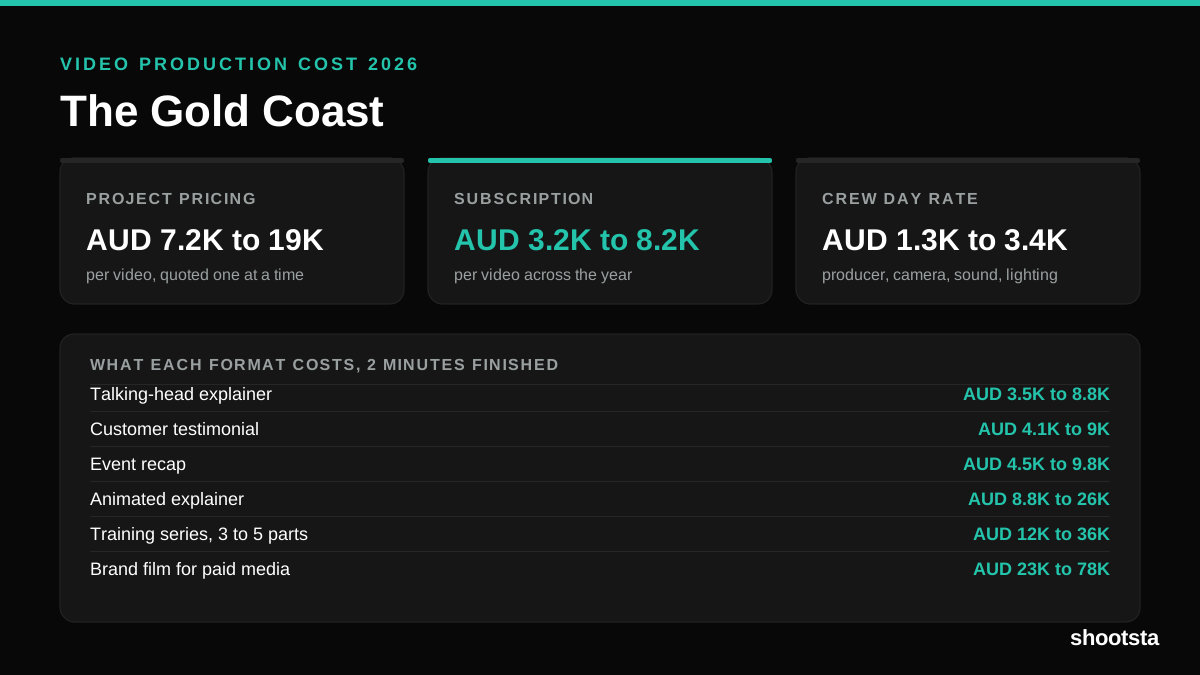
Video Production Cost on the Gold Coast 2026
Video production in the Gold Coast costs AUD 3,200 to AUD 8,200 per finished video on a subscription model, and AUD 7,200 to AUD 18,500 for one-off project work. Here is what you are paying for, and how the three pricing models compare.
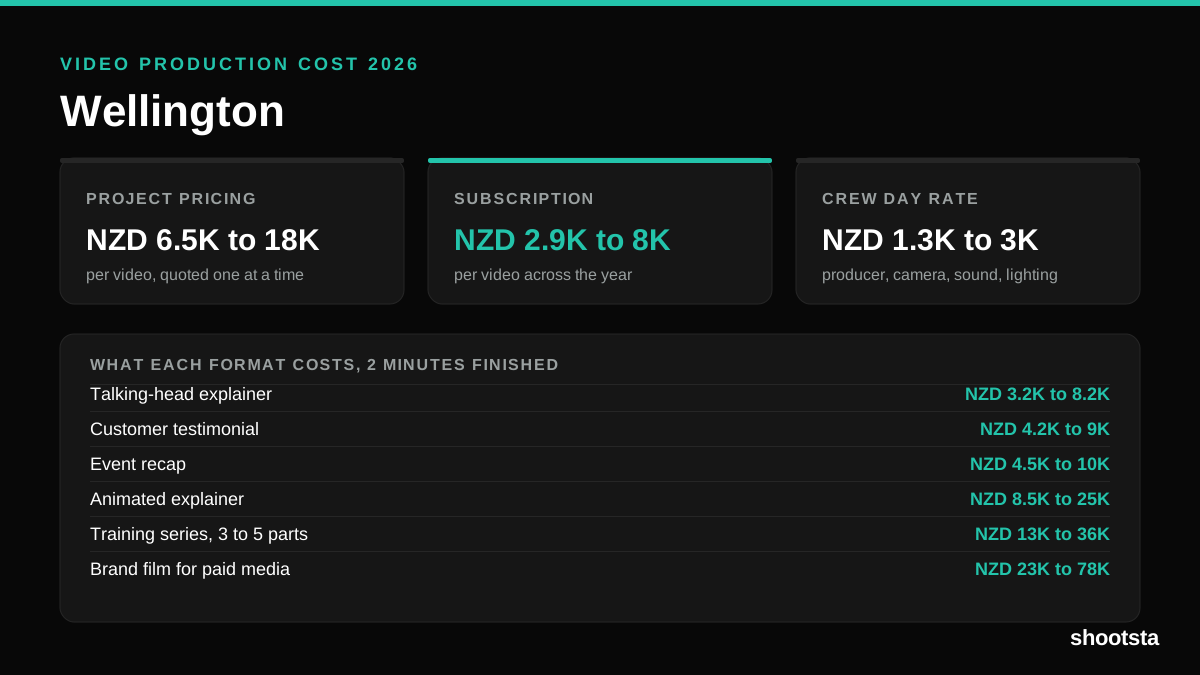
Video Production Cost in Wellington (2026)
Video production in Wellington costs NZD 2,900 to NZD 8,000 per finished video on a subscription model, and NZD 6,500 to NZD 18,000 for one-off project work. Here is what you are paying for, and how the three pricing models compare.
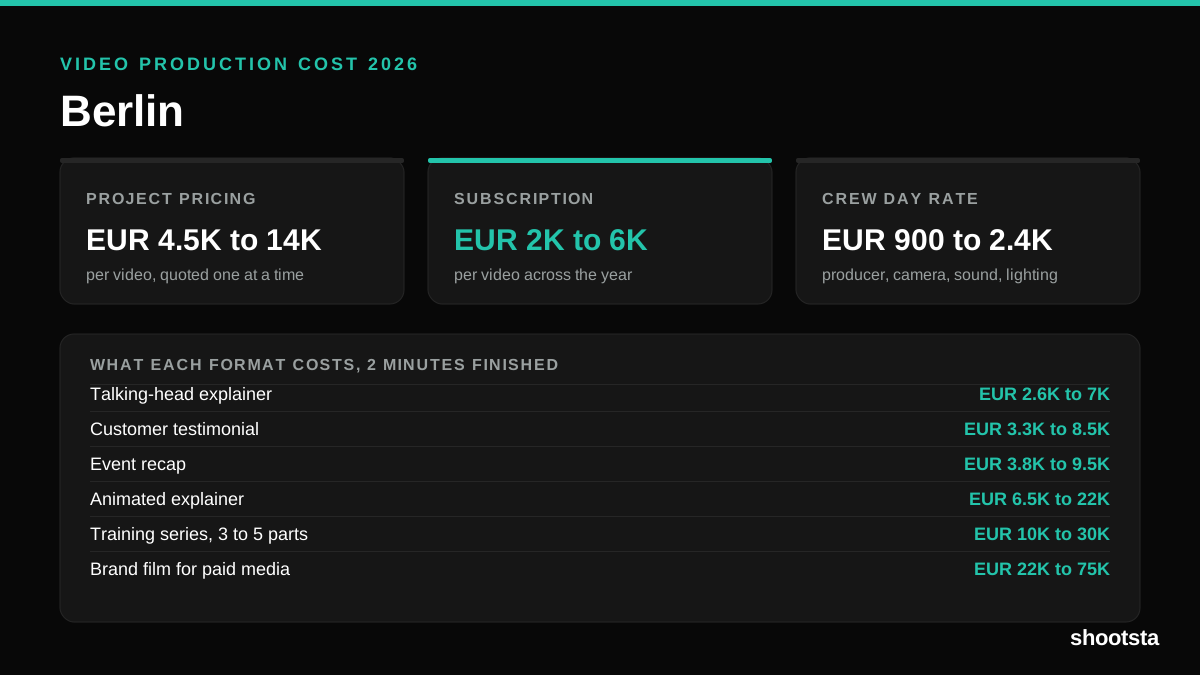
Video Production Cost in Berlin (2026)
Video production in Berlin costs EUR 2,000 to EUR 6,000 per finished video on a subscription model, and EUR 4,500 to EUR 13,500 for one-off project work. Here is what you are paying for, and how the three pricing models compare.