
Video Agency vs Video Subscription
shootsta.
Video Agency vs Video Subscription
By Shootsta · Published August 10, 2026 · Updated October 2026
A video agency is built for the big campaign. A subscription is built for ongoing volume. Here is how their cost, speed, and fit differ.
Is a video agency or a video subscription better?
A video agency is better for a big, considered campaign that needs strategy and a high production ceiling. A subscription is better for ongoing volume that needs to ship fast and stay on brand. They solve different problems, and plenty of enterprise teams keep both on the books. The comparison comes up because both can produce excellent video, so the useful question is what each one is built to do again and again.
What a video agency does well
A good agency brings strategy, concept, and a deep bench: directors, designers, and producers who can take a flagship campaign from idea to finished film. For a brand launch or a set-piece that has to make an impression, that depth is the right fit. An agency is at its best on that one big piece of work.
Agency engagements are shaped around projects: the agency scopes a brief, quotes it and delivers it. That model suits the campaign well, but it gets expensive for everyday video. A two-day turnaround on a simple product clip is not what an agency retainer is built around, and per-project pricing makes high volume costly.
What a subscription does well
A subscription is built for repeatable output. Shootsta gives your team the kit and training to shoot. Every plan includes professional editing with a 48-hour turnaround and unlimited revisions within scope, so the steady stream of product, sales, training, and internal video ships on a schedule. Across 70,000+ videos, the model gives you a fixed monthly fee and a set number of video credits, with no rush charges. An agency quotes each project separately.
- Speed: a set turnaround you can plan a calendar around.
- Cost: a flat fee that absorbs more volume rather than re-quoting each job.
- Consistency: brand templates applied across every edit, so you do not re-brief the look each time.
A scenario: one campaign, then the year that follows
Take a brand refresh. The hero film, the strategy, and the look are exactly what an agency should own; the production ceiling and the considered creative direction are worth the project fee. Then the year after the launch arrives, and the new brand has to show up in dozens of smaller videos: sales decks, onboarding, event recaps, social cuts. Briefing the agency for each of those would be slow and costly, because the engagement was never built for everyday volume.
In this setup the agency sets the standard with the launch work. A subscription then keeps that standard running across the many videos that follow, at a pace your calendar can plan around.
Can a subscription match an agency on production quality?
For the everyday video that fills a team's calendar, yes. Professional editors, brand templates and a tuned production process cover product clips, sales videos and internal video at a quality that holds up well.
The very top of the production ceiling is still an agency's home ground: the cinematic set-piece with a full crew. The weekly videos you ship rarely need that ceiling. They need to be on brand and out the door on time, which is what the subscription is built for.
How to choose, or combine
For an enterprise video plan, the usual answer is to use both. Brief an agency for the flagship campaign where strategy and the production ceiling matter, and run a subscription for the volume that has to ship every week. To compare the underlying models, read the video subscription versus videographer and editor pillar, or see what a videographer misses at scale. To check how much video your team really needs each month, read how many videos enterprises produce per month, or model the cost in the enterprise video ROI calculator. When you want a plan, talk to the Shootsta team.
Sources
- Shootsta production across 70,000+ videos for enterprise teams.
- Shootsta pricing: every plan includes the platform, professional editing with 48-hour turnaround, brand template setup and unlimited revisions within scope.
Take this article with you
Read the latest at shootsta.com/blog/video-agency-vs-video-subscription
You might also like
How to Plan Video Team Capacity Around Leave
Your only editor just booked two weeks off, and you already know which projects will slip. Chad Lakin explains how to plan video team capacity so the work keeps moving when someone is away.
Corporate Video Editing Standards: Full Guide
A two-page editing standard does more for consistency than a forty-page brand book. Here is what it should cover, who owns each part, and how to enforce it with an in-house editor or an outside partner.
Quality Control in Outsourced Video Editing
When editing leaves the building, quality has to be checked by a system rather than by whoever happens to look. Here is the system: acceptance criteria, two QA gates, counted revision rounds and a quarterly audit.
Video Production Cost on the Gold Coast 2026
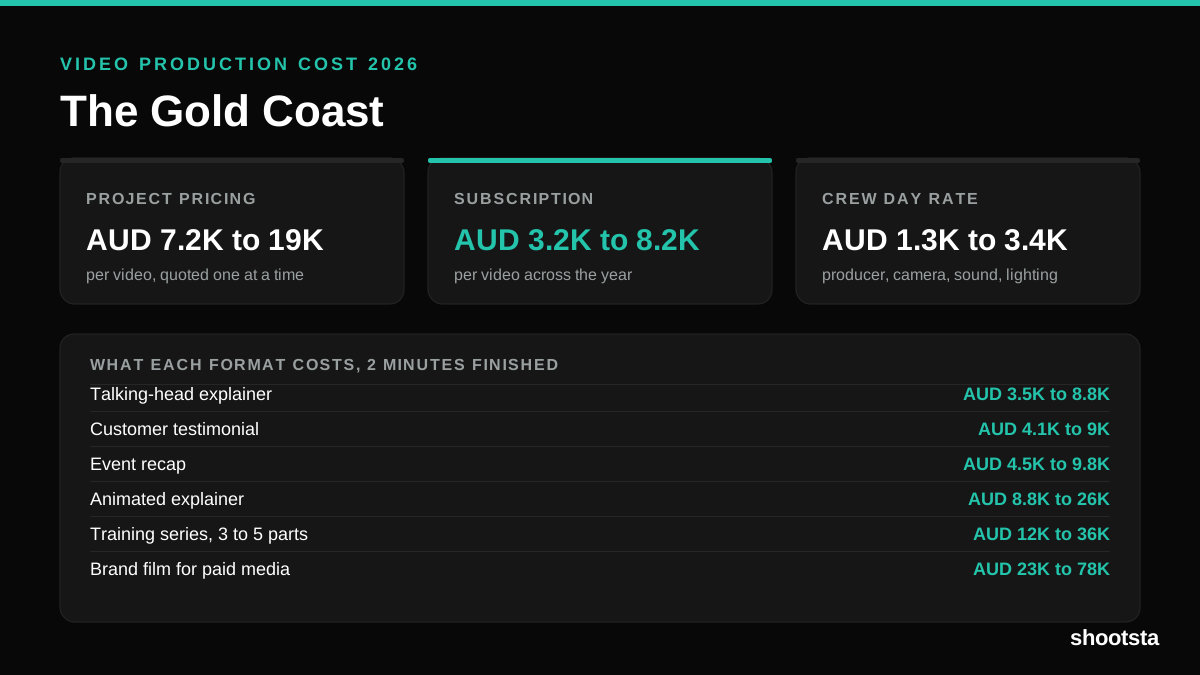
Video production in the Gold Coast costs AUD 3,200 to AUD 8,200 per finished video on a subscription model, and AUD 7,200 to AUD 18,500 for one-off project work. Here is what you are paying for, and how the three pricing models compare.
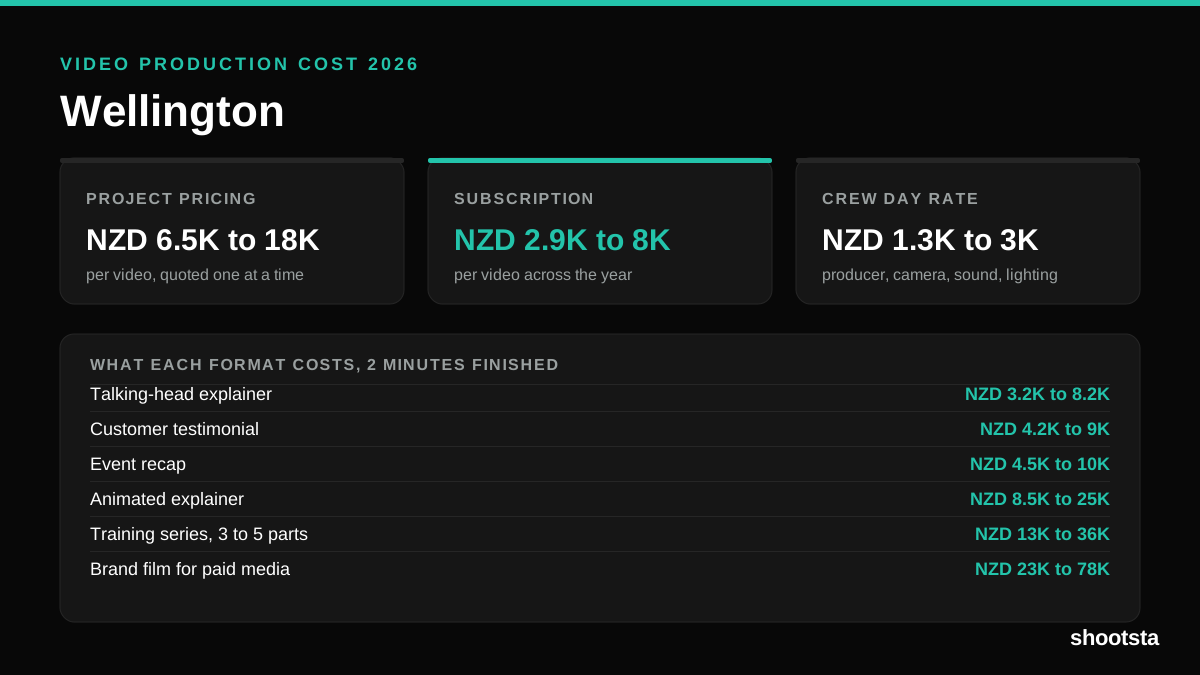
Video Production Cost in Wellington (2026)
Video production in Wellington costs NZD 2,900 to NZD 8,000 per finished video on a subscription model, and NZD 6,500 to NZD 18,000 for one-off project work. Here is what you are paying for, and how the three pricing models compare.
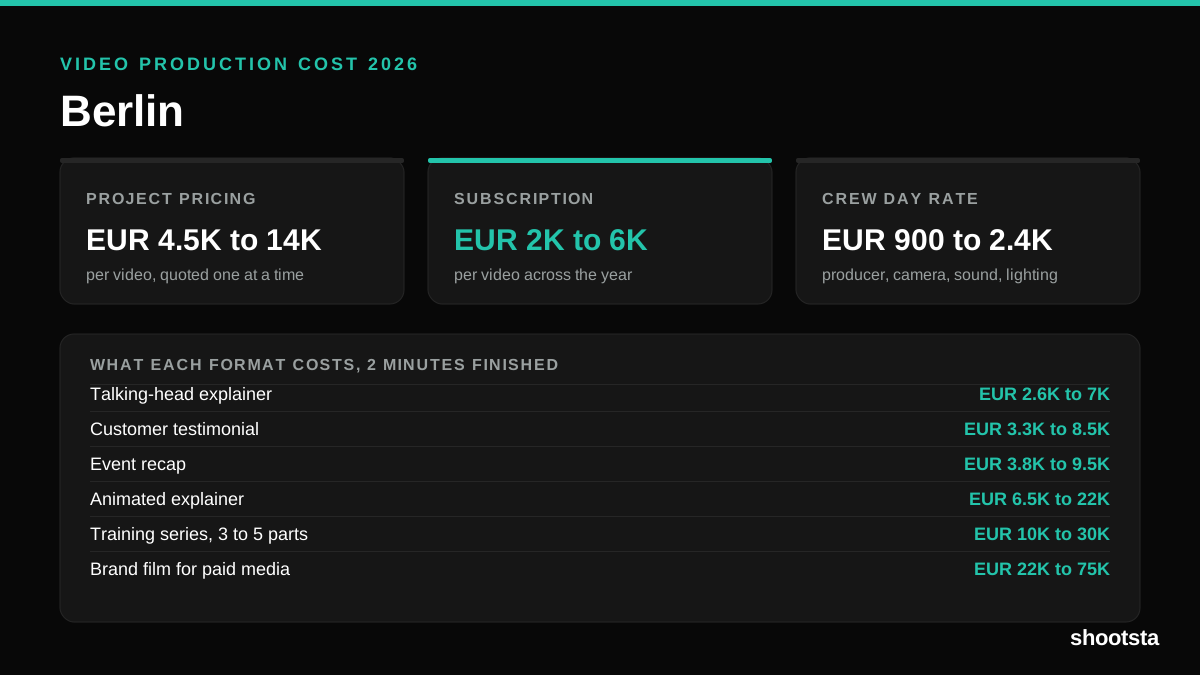
Video Production Cost in Berlin (2026)
Video production in Berlin costs EUR 2,000 to EUR 6,000 per finished video on a subscription model, and EUR 4,500 to EUR 13,500 for one-off project work. Here is what you are paying for, and how the three pricing models compare.