
What a Videographer Misses at Scale
shootsta.
What a Videographer Misses at Scale
By Shootsta · Published August 11, 2026 · Updated October 2026
A videographer plus editor handles the hero shoot well. At scale, the gaps show: turnaround, coverage, brand drift, and unpredictable cost. Here is what fills them.
What does a videographer and editor miss when video scales?
A videographer and editor miss four things as volume rises: fast repeatable turnaround, coverage across regions, brand consistency held across many videos, and predictable cost. The craft is fine in all four cases. Each gap comes from running a project model when the business now needs an operating model.
The pairing is still excellent at what it is built for: a single high-craft shoot finished with care. The gaps only appear once you ask one or two people to supply video for the whole business, week after week.
The four gaps
- Turnaround: a project team works to availability, not to a fixed schedule, so a busy week pushes everything back. We cover this in enterprise video turnaround time.
- Coverage: one shooter is in one place. Multi-region demand means travel, lead time, or footage that never gets shot.
- Brand consistency: one editor holds the look until two projects collide. Across dozens of videos, drift creeps in without shared templates.
- Cost predictability: per-project pricing re-quotes every job, so the bill grows in step with volume and is hard to forecast.
A scenario: the same edit in six markets
Say a single training video has to ship in six markets, each with its own language subtitles and a local intro. A videographer and editor can produce all six, but they produce them one at a time, and any change to the master means re-cutting six versions in sequence. By the time the last market gets its version, the first one may already need an update. At a handful of videos a year, nobody notices the delay. At enterprise volume every video carries this multiplier, and the project model has no shortcut for it.
Why these gaps are structural, not personal
Your videographer and editor can be very good and still hit these limits, because the limits belong to a model built around individual projects. A project model is set up to finish one video at a time. An operating model is set up to deliver a steady flow of videos over months. When your business needs that flow, the project model strains no matter how skilled the people are.
How do you know when you have outgrown the project model?
A few signals tend to show up together:
- Video requests are waiting in a queue rather than going out as they come in.
- The same footage keeps getting re-cut for different channels and regions.
- Brand look varies noticeably between videos shot months apart.
- The annual video bill is hard to predict because every job is quoted fresh.
When two or more of these are true, the model is what needs to change, and the people running it can stay. Our look at how many videos enterprises produce per month gives a sense of the volume where this usually tips over.
What fills the gaps
A subscription is built for the stream. Shootsta gives your team the kit and training to capture footage anywhere, then edits each video with a 48-hour turnaround and unlimited revisions within scope. Brand templates are set up once and applied across every cut. Across 70,000+ videos, regional hubs in Sydney, London, Singapore, and San Diego cover the multi-market work. The monthly fee and the number of video credits are fixed up front, so you know the cost per video before you start.
You do not have to choose one or the other. Keep the videographer for the flagship shoot, and add a subscription for the steady volume around it. To see the full comparison, read the video subscription versus videographer and editor pillar, or compare suppliers in video agency versus video subscription. See how the system works on the Shootsta platform, or talk to the Shootsta team.
Sources
- Shootsta production across 70,000+ videos for enterprise teams.
- Shootsta pricing: every plan includes the platform, professional editing with 48-hour turnaround, brand template setup and unlimited revisions within scope.
Take this article with you
Read the latest at shootsta.com/blog/videographer-editor-limits-at-scale
You might also like
How to Plan Video Team Capacity Around Leave
Your only editor just booked two weeks off, and you already know which projects will slip. Chad Lakin explains how to plan video team capacity so the work keeps moving when someone is away.
Corporate Video Editing Standards: Full Guide
A two-page editing standard does more for consistency than a forty-page brand book. Here is what it should cover, who owns each part, and how to enforce it with an in-house editor or an outside partner.
Quality Control in Outsourced Video Editing
When editing leaves the building, quality has to be checked by a system rather than by whoever happens to look. Here is the system: acceptance criteria, two QA gates, counted revision rounds and a quarterly audit.
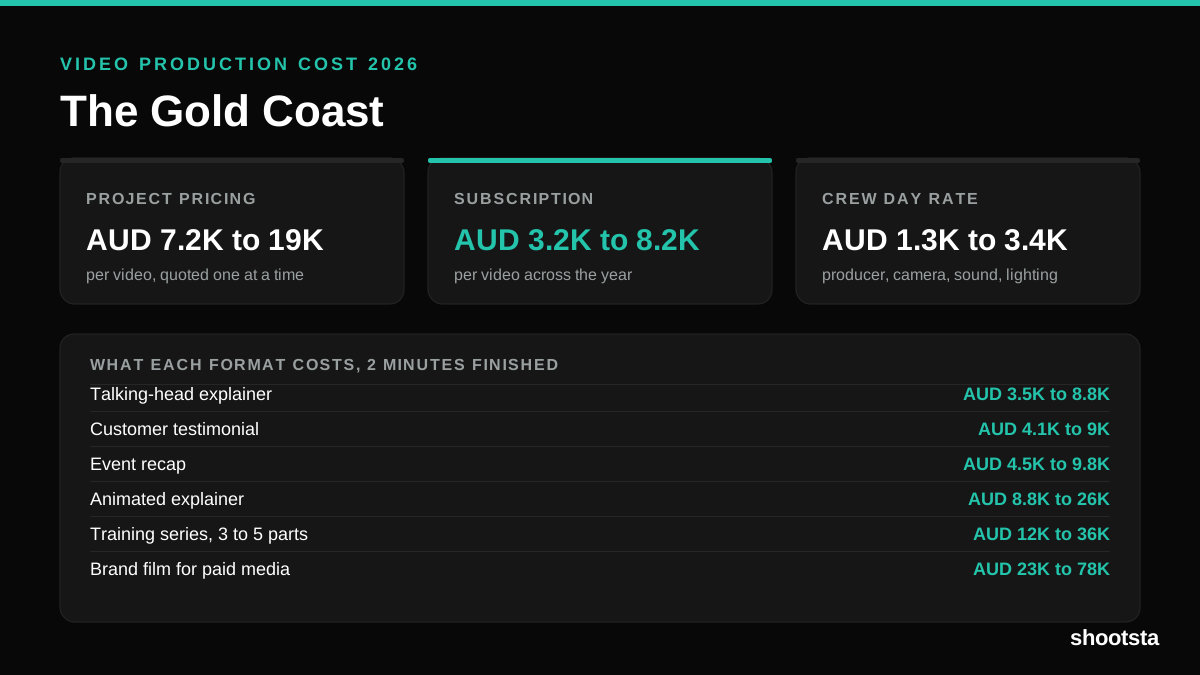
Video Production Cost on the Gold Coast 2026
Video production in the Gold Coast costs AUD 3,200 to AUD 8,200 per finished video on a subscription model, and AUD 7,200 to AUD 18,500 for one-off project work. Here is what you are paying for, and how the three pricing models compare.
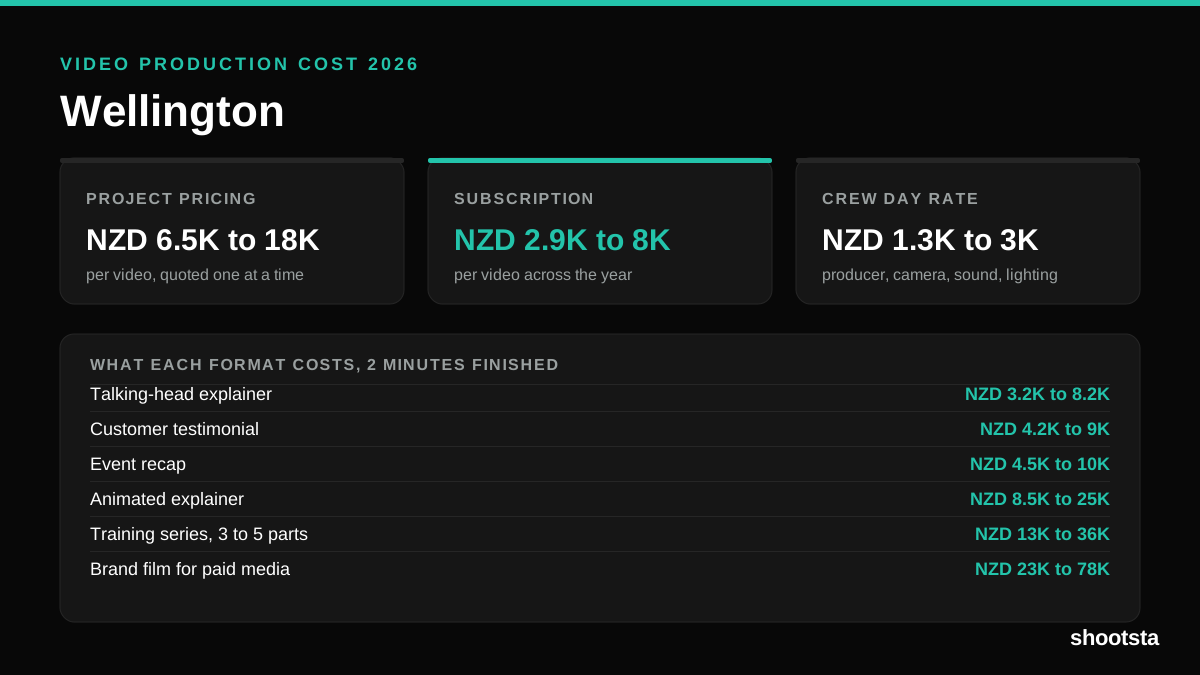
Video Production Cost in Wellington (2026)
Video production in Wellington costs NZD 2,900 to NZD 8,000 per finished video on a subscription model, and NZD 6,500 to NZD 18,000 for one-off project work. Here is what you are paying for, and how the three pricing models compare.
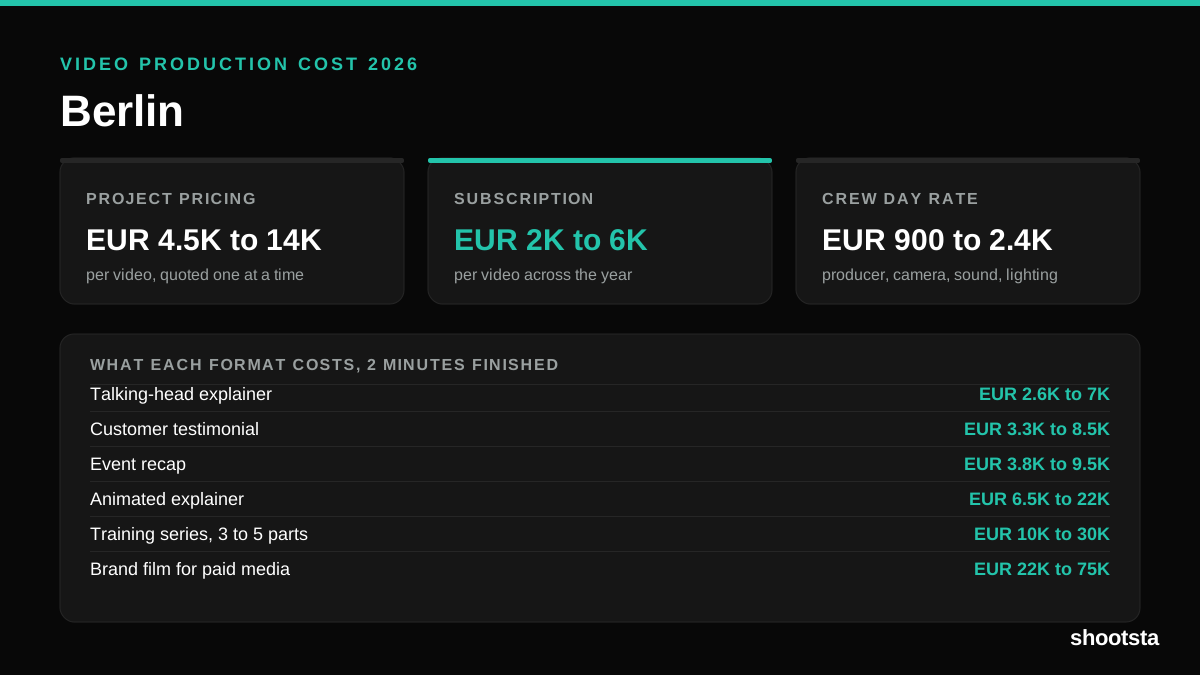
Video Production Cost in Berlin (2026)
Video production in Berlin costs EUR 2,000 to EUR 6,000 per finished video on a subscription model, and EUR 4,500 to EUR 13,500 for one-off project work. Here is what you are paying for, and how the three pricing models compare.