
In-House Videographer vs Outsourced Video
shootsta.
In-House Videographer vs Outsourced Video
By Shootsta · Published August 6, 2026 · Updated August 2026
Hiring an in-house videographer gives you control but fixed capacity. Outsourcing flexes with demand. A subscription gives you the control of in-house with the flex of outsourced.
Should you hire an in-house videographer or outsource video?
Hire an in-house videographer when video is constant, brand knowledge matters, and you can keep one person busy all year. Outsource when demand is uneven or spread across regions. A subscription sits between the two: the control of in-house with capacity that flexes like outsourced.
Plenty of teams reach the point where they wonder if a full-time hire would be cheaper than commissioning each project. It is a reasonable instinct once you are producing video most weeks.
The case for an in-house videographer
An in-house videographer learns your brand deeply, is available for last-minute requests, and builds institutional knowledge that a one-off freelancer never accumulates. For a business with steady, predictable video demand in one location, a full-time hire can make real sense.
The trade-off is fixed capacity at a fixed cost. One person can shoot one thing at a time. When demand spikes, work queues behind them. When demand dips, you are still paying a salary. And a videographer who shoots is not always the editor who finishes, so you often need a second hire to keep up. The true cost of in-house video editing covers that second salary.
The case for outsourcing
Outsourcing flexes with demand. You commission when you need to and pay nothing in the quiet months. The cost, though, is per project and unpredictable, and coordination across multiple vendors eats time. Brand consistency also drifts when each project goes to a different supplier.
A scenario: thirty videos a month across regions
Imagine a comms team that needs around thirty videos a month spread across three regions: onboarding clips, leadership updates, customer stories, and event recaps. One in-house videographer cannot physically shoot thirty pieces in two or three countries, so the team either flies someone around or leaves gaps. Outsource the overflow and the bill swings month to month, with a different vendor learning the brand each time.
A blended setup tends to hold up better:
- In-house for the recurring local shoots where speed and brand knowledge matter most.
- A subscription for the editing volume and the videos shot by staff in other regions.
- The occasional outsourced specialist for a one-off that needs a particular skill.
Where a subscription fits
A subscription is the practical middle. Shootsta equips your in-house people with the kit and training to shoot, then handles unlimited professional editing at a set turnaround behind them. You keep the brand knowledge and immediacy of in-house, and you get capacity that does not cap at one person. Regional hubs in Sydney, London, Singapore, and San Diego cover markets a single hire cannot reach.
Which option gives the most predictable budget?
A salaried hire is predictable on cost but fixed on capacity, so the budget is steady while the output is capped. Outsourcing is the reverse: capacity flexes, but each quote is fresh and the annual total is hard to forecast. A subscription is the option that keeps both steady, since you know the fee in advance and the output scales inside it. For teams that need to plan a year of video against a set number, that predictability is usually the deciding factor. You can pressure-test it against your own volume in the video ROI calculator.
The honest answer is often X plus Y: an in-house videographer for the shoots that need a body on site, a subscription for the editing volume and the multi-region work. To compare the full picture, read the video subscription versus videographer and editor pillar, or see why one videographer cannot scale your video. Run your own numbers in the enterprise video ROI calculator, or talk to the Shootsta team.
Sources
- Shootsta production across 70,000+ videos for enterprise teams.
- Shootsta subscription model: kit, training, and unlimited edits with set turnaround.
- Industry rate benchmarks for freelance videographers and editors (day rates and per-project quotes).
Take this article with you
Read the latest at shootsta.com/blog/in-house-videographer-vs-outsourced-video
You might also like

How to Plan Video Team Capacity Around Leave
Your only editor just booked two weeks off, and you already know which projects will slip. Chad Lakin explains how to plan video team capacity so the work keeps moving when someone is away.
Corporate Video Editing Standards: Full Guide
A two-page editing standard does more for consistency than a forty-page brand book. Here is what it should cover, who owns each part, and how to enforce it with an in-house editor or an outside partner.
Quality Control in Outsourced Video Editing
When editing leaves the building, quality has to be checked by a system rather than by whoever happens to look. Here is the system: acceptance criteria, two QA gates, counted revision rounds and a quarterly audit.
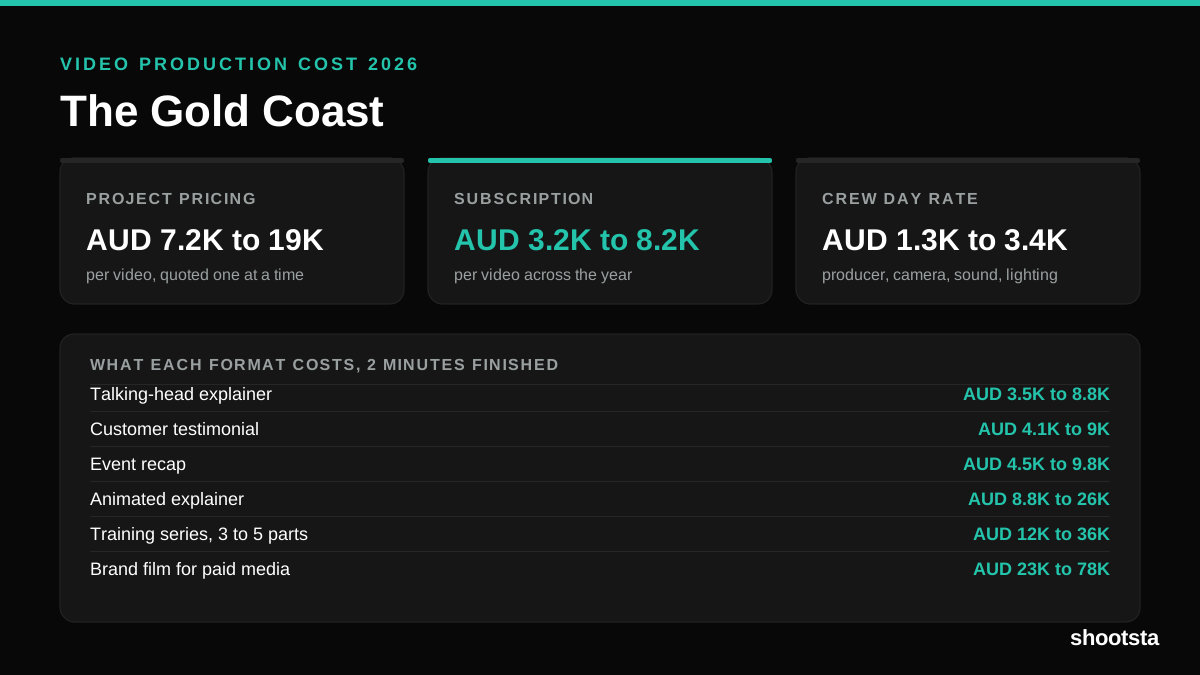
Video Production Cost on the Gold Coast 2026
Video production in the Gold Coast costs AUD 3,200 to AUD 8,200 per finished video on a subscription model, and AUD 7,200 to AUD 18,500 for one-off project work. Here is what you are paying for, and how the three pricing models compare.
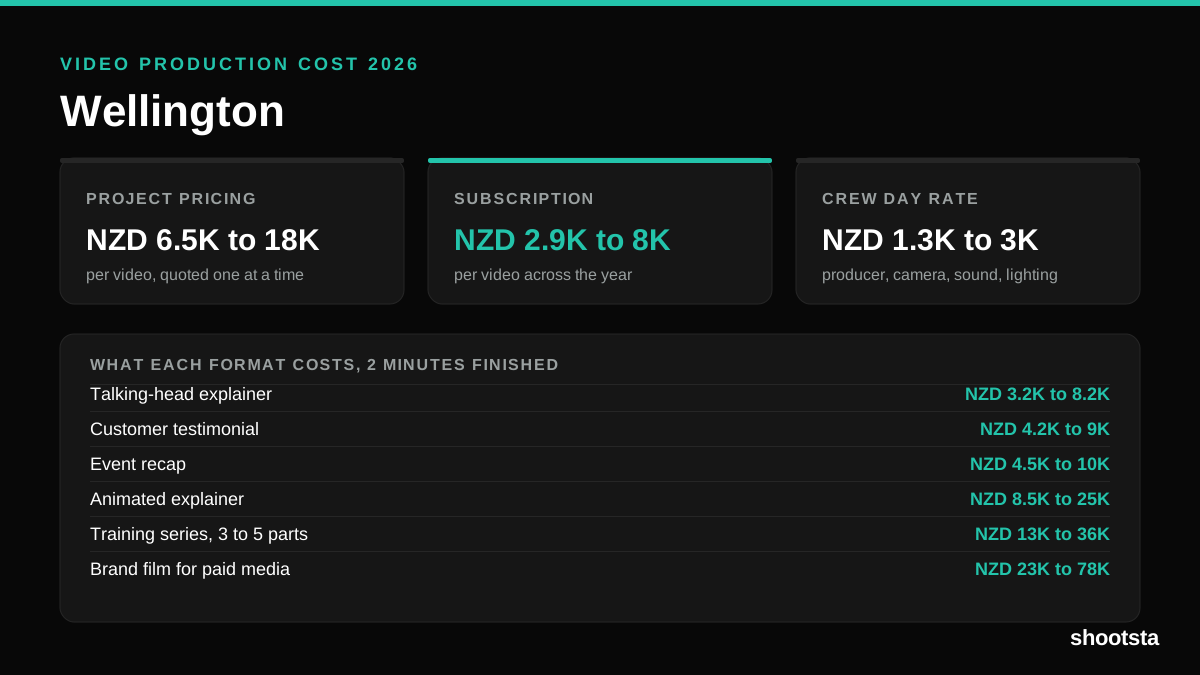
Video Production Cost in Wellington (2026)
Video production in Wellington costs NZD 2,900 to NZD 8,000 per finished video on a subscription model, and NZD 6,500 to NZD 18,000 for one-off project work. Here is what you are paying for, and how the three pricing models compare.
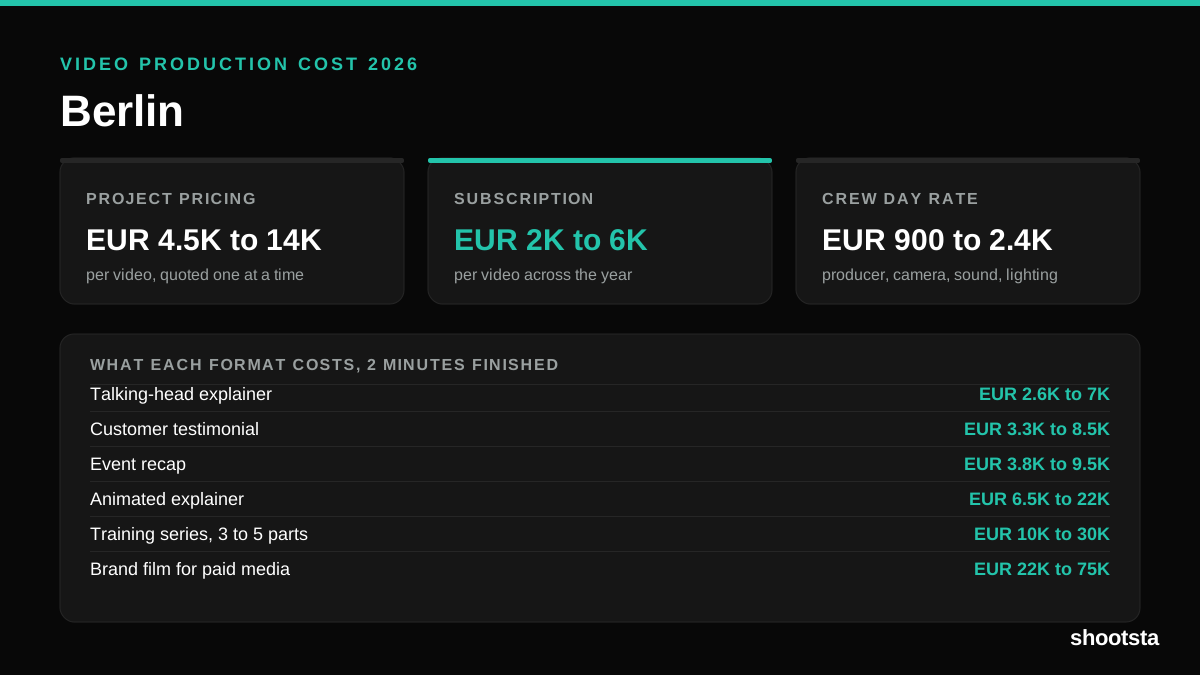
Video Production Cost in Berlin (2026)
Video production in Berlin costs EUR 2,000 to EUR 6,000 per finished video on a subscription model, and EUR 4,500 to EUR 13,500 for one-off project work. Here is what you are paying for, and how the three pricing models compare.