
Why One Videographer Can't Scale Video
shootsta.
Why One Videographer Can't Scale Video
By Shootsta · Published August 7, 2026 · Updated October 2026
One videographer is one point of capacity: one shoot, one location, one queue. Here is why that breaks as video volume grows, and what fixes it.
Why can't one videographer scale your video output?
One videographer cannot scale video because a single person is a single point of capacity: one shoot at a time, in one location, feeding one edit queue. As soon as you need more video than one person can shoot and finish in a week, a queue forms and everything behind it slows down.
Your videographer can be excellent and still hit this limit. A great shooter is who you want behind the camera on an important day. The trouble is the arithmetic of one person, and skill does not change it.
The three limits of a single shooter
- Time: a videographer can shoot one project at a time. Two requests in the same week means one waits.
- Place: one person is in one location. Footage from another city or country means travel cost and lead time, or it simply does not happen.
- Pipeline: shooting is half the job. Editing forms a second queue behind the first, and a videographer who edits their own work is doing two jobs in series.
Each limit is manageable on its own. When you stack them across a year of growing demand, the bottleneck gets worse with every new request.
What happens as volume rises
At low volume a single videographer keeps up easily and the cost is clear. As you add product launches, sales videos, training, and internal comms, requests start arriving faster than one person clears them. Turnaround stretches, and urgent videos jump the queue and push others back. The cost-per-video stays flat while the wait time climbs. Our piece on enterprise video turnaround time shows how quickly that compounds.
A scenario: the week three teams all need video
Say sales wants a customer story, HR wants an onboarding clip, and product wants a feature demo, all in the same week. One videographer can serve one of them on time. The other two wait, and the people waiting start to treat video as slow, so they stop asking. Over time the bottleneck shrinks how much video the business attempts, on top of delaying the videos already in the queue. To get a sense of the real demand, our breakdown of how many videos enterprises produce per month is a useful reference.
How a subscription removes the bottleneck
A subscription decouples shooting from editing capacity. Shootsta gives your team the kit and training to capture footage wherever they are, then edits each video with a 48-hour turnaround and unlimited revisions within scope. The edit queue is no longer one person deep. Across 70,000+ videos, regional hubs in Sydney, London, Singapore, and San Diego cover locations one shooter cannot.
A setup that works well as demand grows is a videographer for the hero shoot and a subscription for the volume. To see the full comparison, read the video subscription versus videographer and editor pillar, or weigh the staffing question in in-house videographer versus outsourced video.
Does hiring a second videographer fix it?
Adding a second shooter doubles capacity, but the model stays the same. You still have two edit queues, two salaries to keep busy in quiet months, and two people who each cover one location at a time. Two videographers in Sydney do not help a team that needs footage in Singapore next Tuesday. Hiring more people scales cost in steps and capacity in steps, while the demand scales smoothly in between. A subscription is built to absorb that uneven demand without another hire each time it climbs. See how the model works on the Shootsta platform, or talk to the Shootsta team.
How many videos can one videographer produce a year?
The output of a single videographer who both shoots and edits is capped by their calendar. Every finished video has to share the year with travel, scheduling, revisions and admin, so the count is far lower than the number of working days suggests. The number drops as soon as briefs need animation, multiple languages or a second location, because one person can only be in one place at a time. It drops to zero on every project in the queue the moment that person is on leave or off sick. If you are weighing one hire against a partner, see whether to bring video production in-house.
Sources
- Shootsta production across 70,000+ videos for enterprise teams.
- Shootsta pricing: every plan includes the platform, professional editing with 48-hour turnaround, brand template setup and unlimited revisions within scope.
Take this article with you
Read the latest at shootsta.com/blog/why-one-videographer-cant-scale-video
You might also like

How to Plan Video Team Capacity Around Leave
Your only editor just booked two weeks off, and you already know which projects will slip. Chad Lakin explains how to plan video team capacity so the work keeps moving when someone is away.
Corporate Video Editing Standards: Full Guide
A two-page editing standard does more for consistency than a forty-page brand book. Here is what it should cover, who owns each part, and how to enforce it with an in-house editor or an outside partner.
Quality Control in Outsourced Video Editing
When editing leaves the building, quality has to be checked by a system rather than by whoever happens to look. Here is the system: acceptance criteria, two QA gates, counted revision rounds and a quarterly audit.
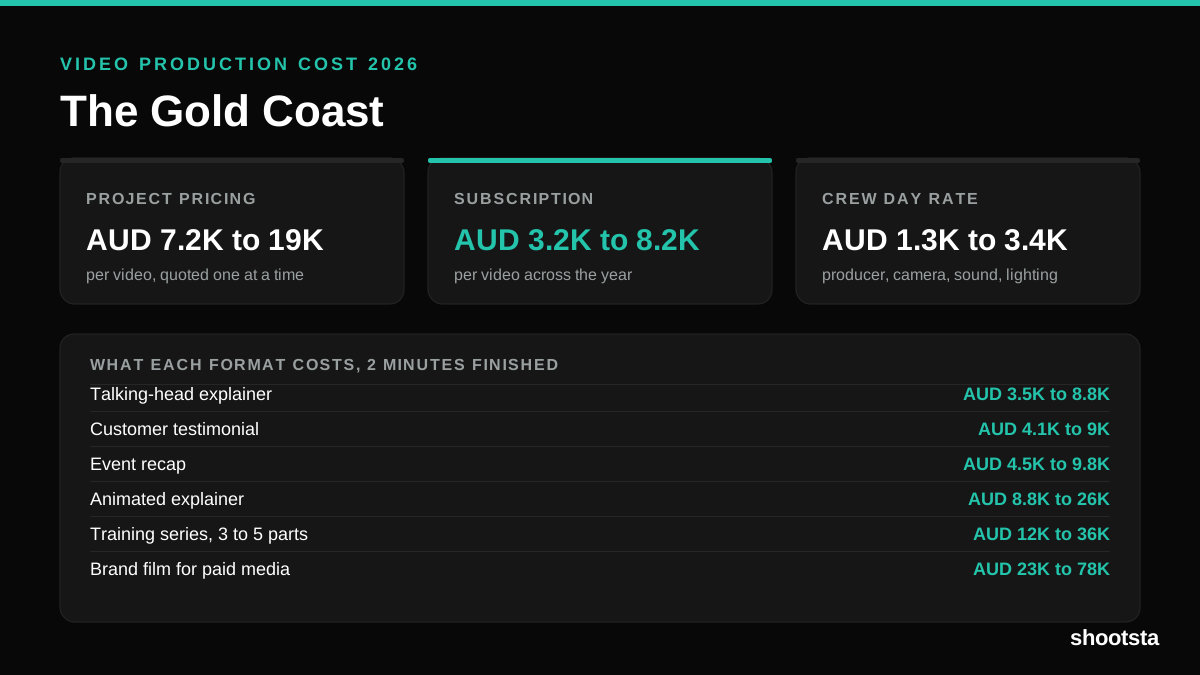
Video Production Cost on the Gold Coast 2026
Video production in the Gold Coast costs AUD 3,200 to AUD 8,200 per finished video on a subscription model, and AUD 7,200 to AUD 18,500 for one-off project work. Here is what you are paying for, and how the three pricing models compare.
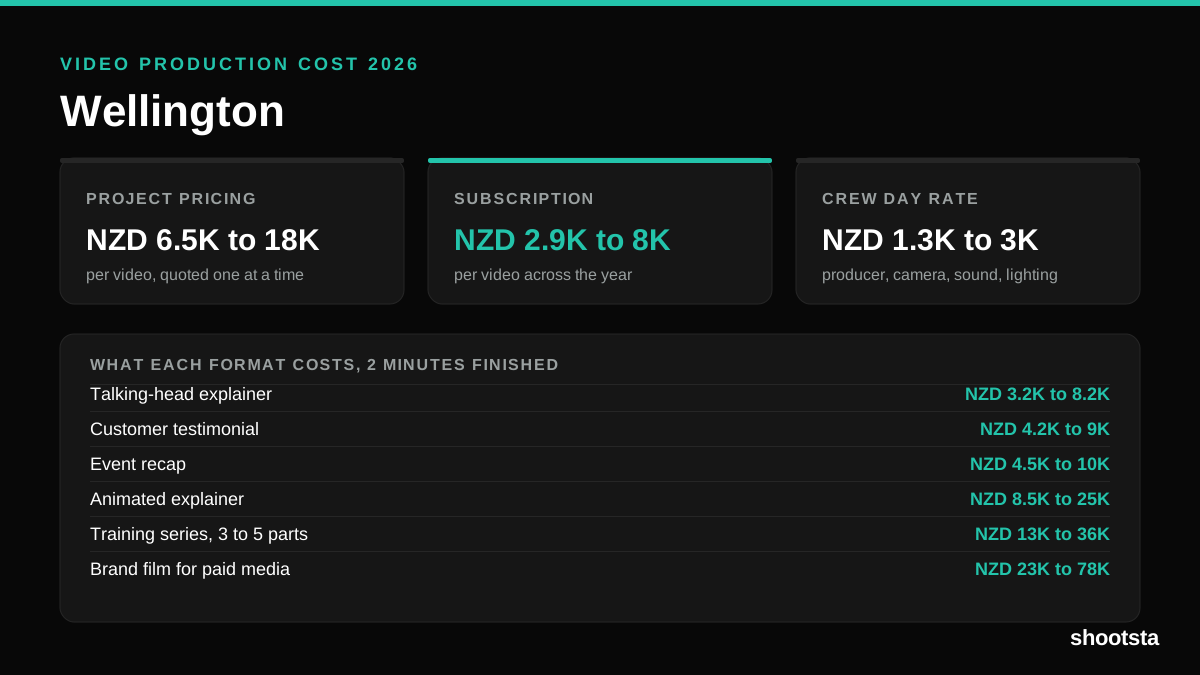
Video Production Cost in Wellington (2026)
Video production in Wellington costs NZD 2,900 to NZD 8,000 per finished video on a subscription model, and NZD 6,500 to NZD 18,000 for one-off project work. Here is what you are paying for, and how the three pricing models compare.
Video Production Cost in Berlin (2026)
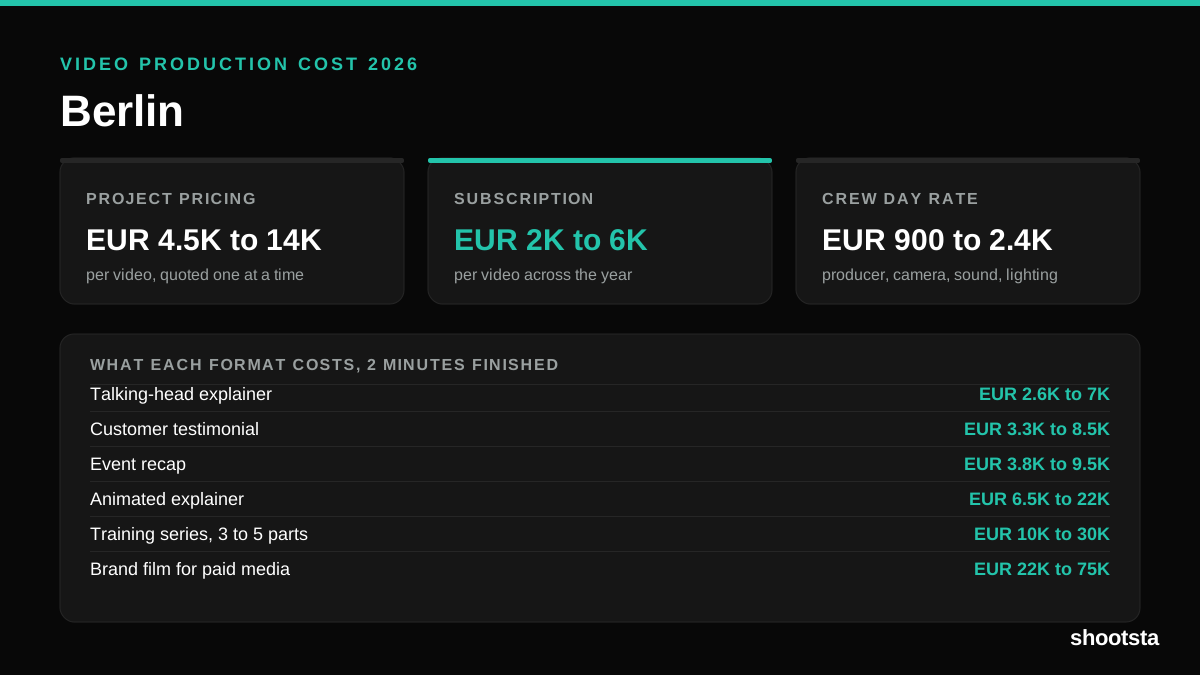
Video production in Berlin costs EUR 2,000 to EUR 6,000 per finished video on a subscription model, and EUR 4,500 to EUR 13,500 for one-off project work. Here is what you are paying for, and how the three pricing models compare.