
5 Video Formats for US Tourism Boards in 2026
shootsta.
5 Video Formats for US Tourism Boards in 2026
By Shootsta · Published May 31, 2026 · Updated October 2026
Tourism marketing video has converged on five formats that consistently move visitor volume, trade engagement, and stakeholder funding. Here is what each one is and how to prioritize.
What video formats matter for tourism boards?
Tourism boards are judged on a short list of numbers. Those are visitor volume, visitor spend, trade partner engagement and stakeholder support for funding. A handful of video formats move those numbers again and again. Boards still make long documentary series, big-budget hero films and broadcast TVCs, but those rarely shift the same metrics.
Below are the five formats that give state tourism offices, convention and visitors bureaus and destination marketing organizations the most value in 2026. Three of them are built on animation or motion graphics. The other two are live action and share a production workflow.
Format 1: Multi-language destination explainers
This format gives an international tourism budget the most return. You make a 60 to 90-second destination explainer once as a master, then produce versions in 8 to 12 languages for your international markets. The video runs on your destination site, in trade partner channels and in international paid social campaigns.
This format matters because international visitor growth depends on reaching travelers in their own language and culture. An English-only anthem video leaves out every traveler who would rather watch in their own language. We set out the production approach in our piece on multi-language destination videos at scale.
Format 2: Trade enablement video series
This is a library of short videos, 60 to 90 seconds each, made for travel agents, tour operators and meeting planners. Each video covers a single product, experience or selling angle. You share them through trade portals, partner enablement kits and trade shows.
This format matters because a large share of international visitors book through trade partners. Trade enablement video keeps a destination in the partner's sales kit between trade events. A workable cadence is 3 to 5 new videos each quarter, with refreshes of the evergreen core. See producing travel trade enablement video for the format detail.
Format 3: Animated stakeholder reporting
This is a video of 90 seconds to 3 minutes that sums up the year's marketing impact. It is short enough that the legislature, the board and your members will watch it to the end. It mixes live action for member and partner voices with motion graphics for the data.
This format matters because funding cycles depend on impact that stakeholders can see. A PDF annual report tends to get filed, while a video update gets passed around. The same video also works as public accountability content. See stakeholder reporting video for the production approach.
Format 4: Event recap and asset library production
This format covers recap videos from trade missions, IPW, festivals, partner events and board events. It also covers the asset library that each shoot leaves behind. That library holds B-roll, partner interviews and audience footage that feed the other formats across the year.
This format matters because tourism boards run dozens of events a year. Each event can produce video that outlasts the day itself, as long as production keeps pace with the event calendar. See event recap videos for tourism boards.
Format 5: Crisis-ready video kit
Many tourism boards only build this format once a crisis has started. The kit holds brand templates, music tracks, graphic packages and statement frameworks. With it in place, you can finish a crisis communication video within hours.
This format matters because hurricanes, wildfires, public health events and other crises keep their own schedule. A board that sets up its workflow after the crisis starts will trail the news cycle by days. A board with the kit ready can publish on the first day. See crisis communications video for tourism boards.
Why three of the five are animation-led or animation-supported
Tourism mixes the very visual with the abstract. The destination itself is visual, while travel decisions, stakeholder ROI and sustainability systems are abstract. Live action handles the visual half, and animation and motion graphics handle the abstract half. Pure live action wins in formats like trade interviews and member spotlights, where the value is the person on screen.
A few years ago this mix leaned heavily toward live action. Animation is now faster to produce and costs less per video, and language versions are simpler to make. That has changed the math for tourism boards. For broader context on the shift, see how corporate video trends have shifted in 2026.
How to prioritize if you are starting from zero
If your tourism board has no video library yet and a limited budget, work in this order to get value fastest.
- One destination explainer with localization for your top 3 international markets
- One trade enablement series for your highest-volume trade partner segment
- One stakeholder reporting video for the upcoming legislative briefing
- The pre-built crisis kit (do not wait for the crisis)
- One event recap from your next major event
That gives you 5 to 7 finished videos in the first 90 days, with each of the five formats covered. From there, grow each format in line with the metrics that matter most to your board's funding case.
What does this cost?
The cost depends on how many videos you make and how many language versions each one needs. A state tourism office or CVB working on the cadence above gets the best value from an ongoing program rather than separate agency projects. Shootsta customers who move agency work across typically pay 50-60% less per video, and the saved budget goes into more output.
For an example of a small marketing team running this kind of production well, see the Dual North America case study. You can also read the enterprise video playbook for more on building the broader video program.
Take this article with you
Read the latest at shootsta.com/blog/5-video-formats-us-tourism-boards-2026
You might also like

How to Plan Video Team Capacity Around Leave
Your only editor just booked two weeks off, and you already know which projects will slip. Chad Lakin explains how to plan video team capacity so the work keeps moving when someone is away.
Corporate Video Editing Standards: Full Guide
A two-page editing standard does more for consistency than a forty-page brand book. Here is what it should cover, who owns each part, and how to enforce it with an in-house editor or an outside partner.
Quality Control in Outsourced Video Editing
When editing leaves the building, quality has to be checked by a system rather than by whoever happens to look. Here is the system: acceptance criteria, two QA gates, counted revision rounds and a quarterly audit.
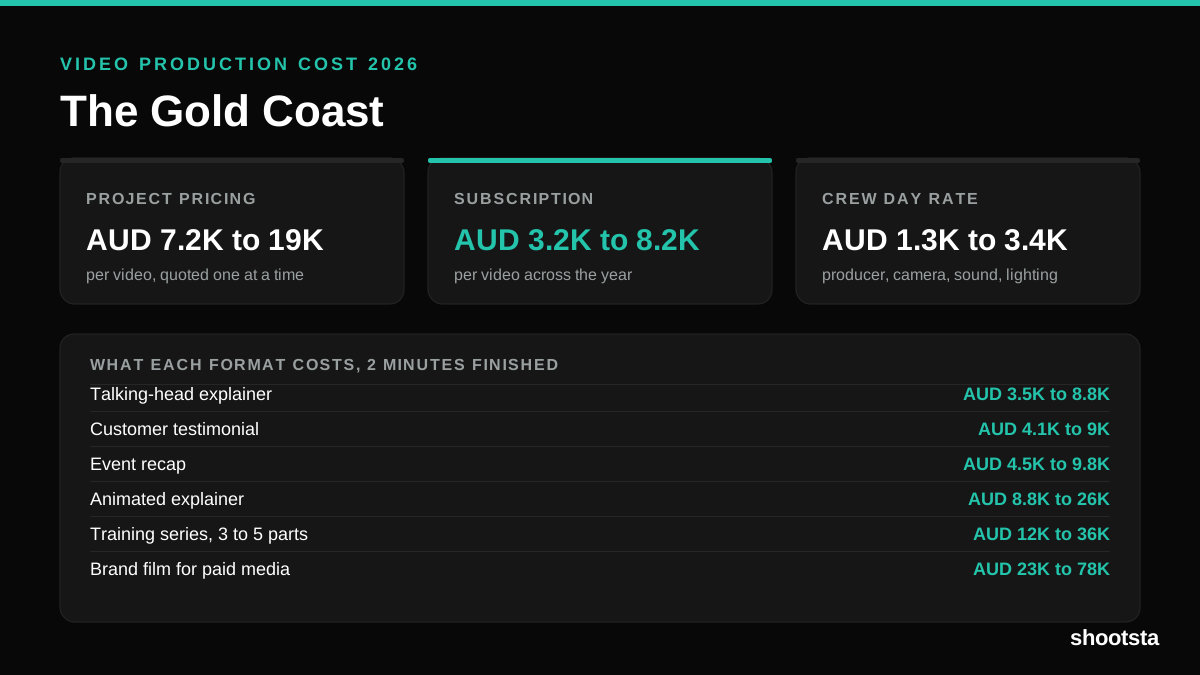
Video Production Cost on the Gold Coast 2026
Video production in the Gold Coast costs AUD 3,200 to AUD 8,200 per finished video on a subscription model, and AUD 7,200 to AUD 18,500 for one-off project work. Here is what you are paying for, and how the three pricing models compare.
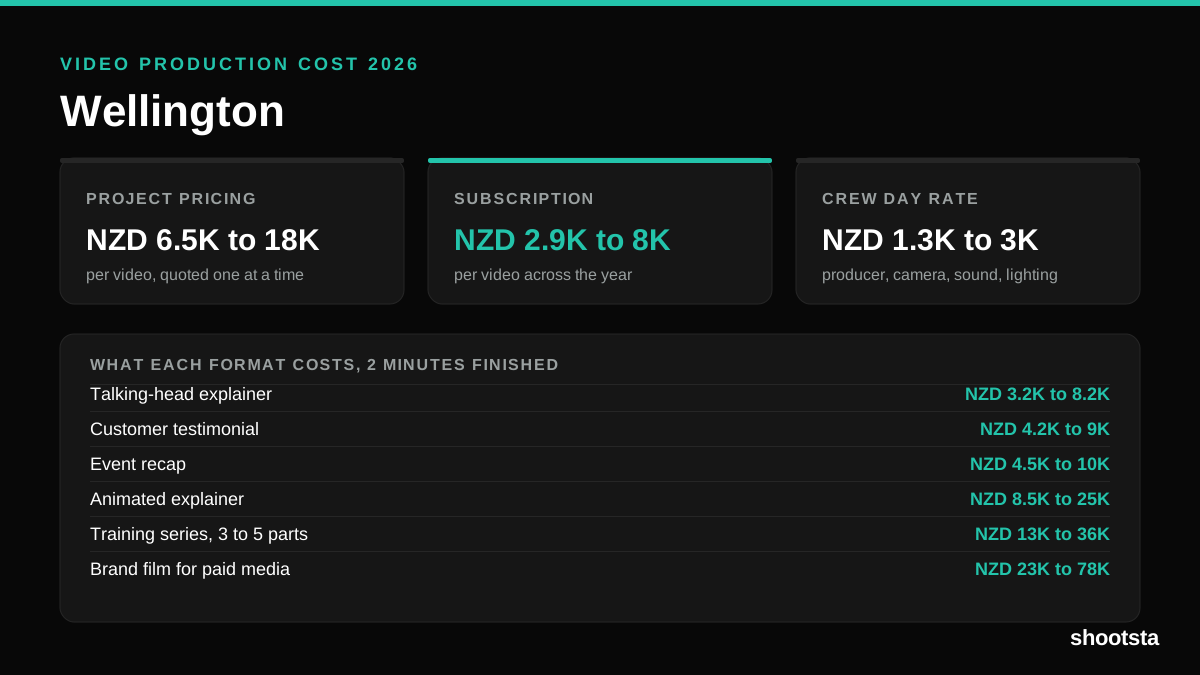
Video Production Cost in Wellington (2026)
Video production in Wellington costs NZD 2,900 to NZD 8,000 per finished video on a subscription model, and NZD 6,500 to NZD 18,000 for one-off project work. Here is what you are paying for, and how the three pricing models compare.
Video Production Cost in Berlin (2026)
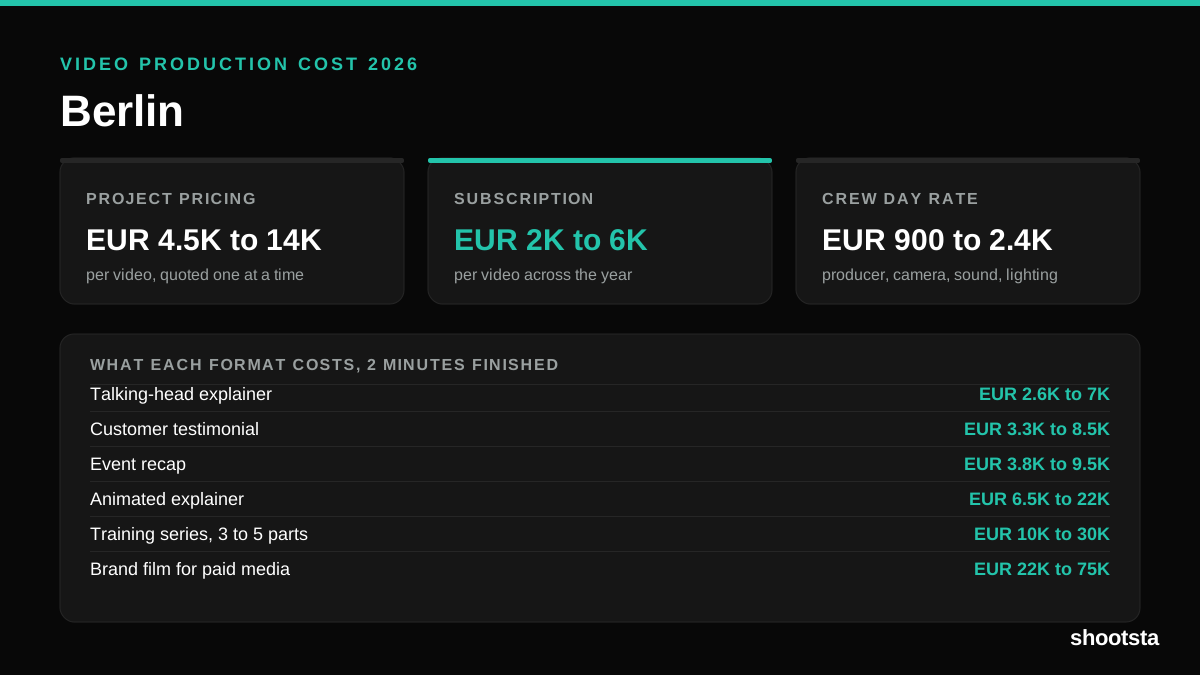
Video production in Berlin costs EUR 2,000 to EUR 6,000 per finished video on a subscription model, and EUR 4,500 to EUR 13,500 for one-off project work. Here is what you are paying for, and how the three pricing models compare.