
Event Recap Videos for Tourism Boards: When 48 Hours Matters
shootsta.
Event Recap Videos for Tourism Boards: When 48 Hours Matters
By Shootsta · Published May 21, 2026 · Updated October 2026
Trade shows, ribbon cuttings, festivals. Tourism boards generate dozens of events a year. The recap video is the asset that lives forever, but only if it ships within days.
Why does event recap video matter for tourism boards?
A tourism board runs a long calendar of events every year. The calendar includes trade missions, IPW, US Travel Association events and regional travel trade shows. It also has festival activations, ribbon cuttings at new properties, member events and partnership signings. Each one can give you video that keeps working long after the doors close.
The recap video does more work than anything else you bring home from an event. It records the moment and makes the case for next year's edition. It also shows sponsors and partners what they got for their support. The trouble is that a recap often ships weeks after the event, and by then the news cycle has moved on and the social posts have gone quiet.
What does a 48-hour event recap workflow look like?
Production starts before the event begins. You need a shoot plan and an editor on standby. You also need a delivery date that nobody moves.
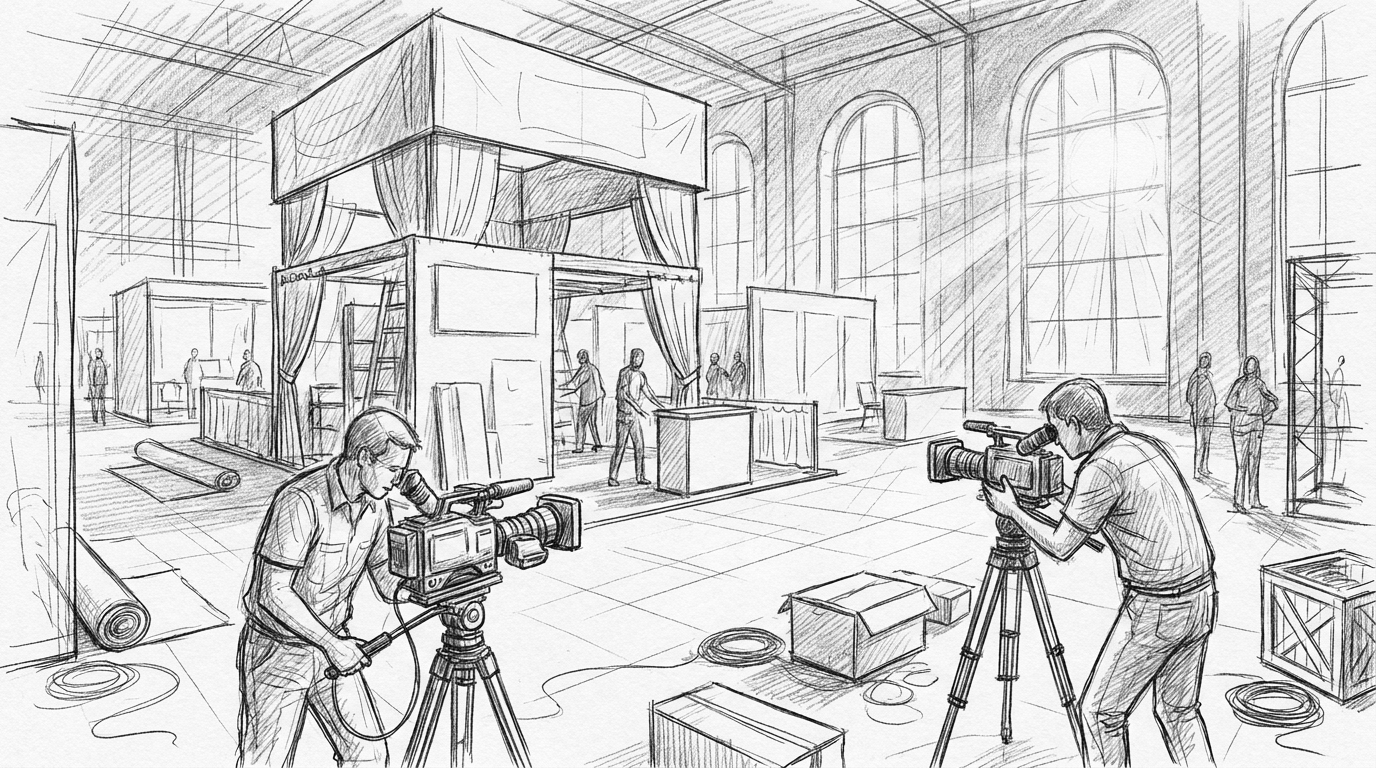
Sample storyboard for a 48-hour event recap shoot, generated in Shootsta's free AI storyboard tool. The full 8-panel sequence walks through booth setup, partner and traveler interviews, the same-day handoff, and the overnight edit.
Pre-event: lock the brief
Before the event, the marketing team agrees on what the recap video is for. It might be a 30-second teaser for next year's event or a 60-second highlight reel for the trade press. It might be a 90-second deep cut for member communications. Make that choice before the cameras go on.
On-site: shoot to a script, not to chance
Event video often goes wrong when the crew films everything and hopes a story turns up in the edit. The 48-hour workflow works the other way around. Shoot to a written shot list of 6 to 10 specific moments and 3 to 5 short interviews, plus b-roll of the venue and the audience. Anything else is a bonus.
Same-day handoff
Footage goes to the editor on the same day it is filmed. For a multi-day event, that means a handoff at the end of each day instead of one at the close. The editor can start cutting the next morning while Day 2 is still running.
Overnight edit
The editor delivers the first cut to the marketing team within about 48 hours of the final shoot. You give one round of marked-up feedback, the editor makes one revision, and you sign off. For more on this workflow pattern, see our 48-hour video workflow for a state tourism office piece.
What formats should you publish?
Plan for at least three formats, each with its own job.
- 30-second teaser cut: for paid social and email, designed to be watched on mute with captions doing the narrative work
- 60 to 90-second hero cut: for the homepage, member newsletters, and trade press distribution
- 2 to 3-minute deep cut: for board updates and partner sponsor reporting
Each cut comes from the same shoot. Three formats do not mean three times the work, because the editor is cutting the same footage three ways. That adds some editing time, but you only pay for one production cycle.
Who should be on camera?
Tourism event recap video works best with a mix of voices. Start with one on-camera lead, who is usually the board's communications lead, the event organizer or the destination director. Their job is to frame the event and say what came out of it.
Add two to three partner or member interviews. These can come from hotels, attractions, tour operators or airline partners. They show the event's value from the side of the businesses that paid to be there.
Where you can, film one traveler or attendee as well. That person speaks straight to the audience the destination is marketing to. It is often the moment viewers remember, and it is also the interview crews skip when the day gets busy.
Recurring vs one-off events
Recurring events have a structural advantage: you can reuse format, lower thirds, music, and brand templates from year to year. The fifth annual recap of a festival should cost a fraction of the first because the production framework already exists.
One-off events have to be designed from scratch each time, and that is where a lot of tourism budget goes. The fix is to run event recap as an ongoing video program with shared templates.
The asset library that comes out of event coverage
Beyond the recap video itself, an event shoot gives you an asset library for the next 12 months of marketing. You get b-roll of the destination and drone footage from the venue. You also get partner interviews you can re-cut as testimonials and audience reactions you can use in campaign work.
Plan the shoot with that library in mind as well as the recap. A 2-day event shoot can feed finished assets across the whole year that follows, if the shot list asks for them. See our piece on client testimonial videos at scale for how to use partner interviews beyond the event itself.
Where to start
Pick your next major event and brief the recap before it starts. Lock the three formats and have the editor on standby. Afterwards, compare the delivery time and engagement with your last event recap. Your first run will probably take longer than 48 hours. After a few events in the same program, the team can hit 48 hours without dropping quality. For broader context, see our internal communications video ideas guide.
Take this article with you
Read the latest at shootsta.com/blog/tourism-event-recap-video-48-hours
You might also like
What Makes a Great Internal Comms Video
What Makes a Great Internal Comms Video
Internal comms video competes with everyone's inbox. The best ones are honest, short, and clear about what changes. Here is how they are built and how the panel scores them.
APRA-Aligned Video Production for AU FS
APRA-Aligned Video Production for AU FS
AU financial services video carries a specific regulatory load. APRA, ASIC and AFCA shape the workflow. The compliance gate pattern, the SM-equivalent accountability requirements under FAR and BEAR, and the per-asset audit trail that holds at APRA inspection for Big 4 banks, super funds and insurers.
Animation vs Live Action for Internal Comms in Banks
Animation vs Live Action for Internal Comms in Banks
Internal comms teams in banking default to talking-head videos. Animation is often the better format. Here is a clear framework for choosing between them.
AI Rollout Comms in Financial Services
AI Rollout Comms in Financial Services
AI tools are landing inside every major FSI firm in 2026. The communication challenge is bigger than the technology. Here is how to use animation to roll AI out across staff.
Recruitment Video Production Formats
Recruitment Video Production Formats
Job listings with video get more applications from better candidates. Here are the recruitment video formats that work, with production tips for each one.
Enterprise Video Production at Scale
Enterprise Video Production at Scale
How large organizations scale video production from a handful of videos per quarter to hundreds per month without losing brand consistency or blowing the budget.