
When Your Whole Video Team Is One Person
shootsta.
When Your Whole Video Team Is One Person
By Shootsta · Published July 31, 2026 · Updated October 2026
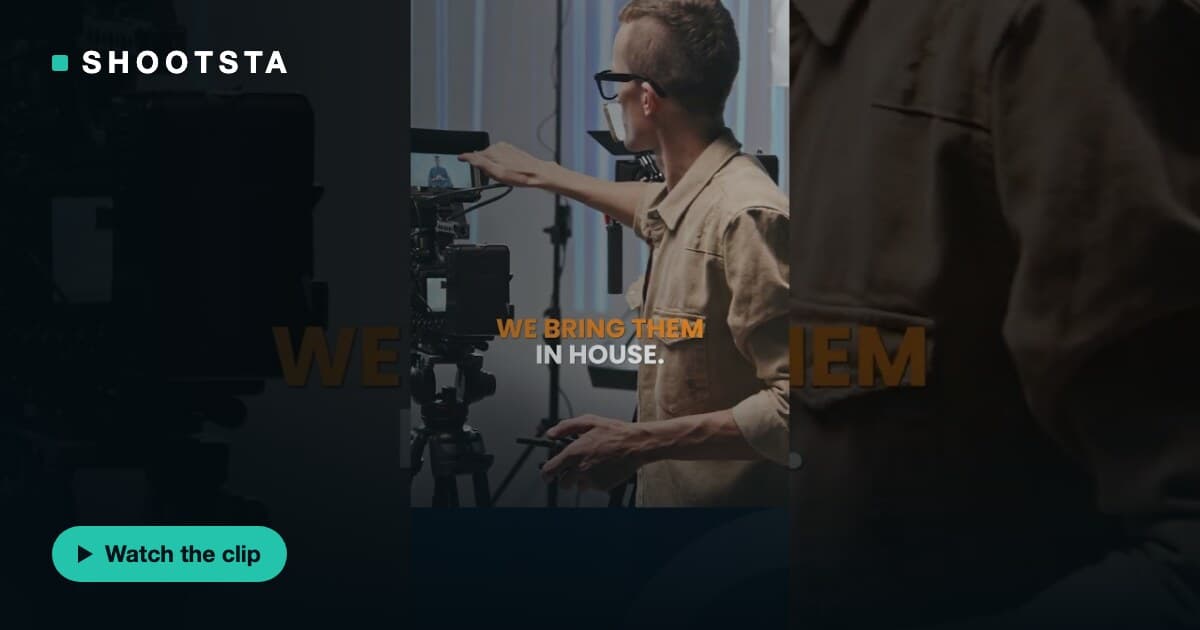
Every enterprise has a Steve: the one talented video person who ends up carrying marketing, HR, comms, sales and L&D at once. Chad Lakin explains why the fix is rarely one more hire, and what an operating model that absorbs demand looks like instead.
"We have an internal video team." When you ask how big the team is, the answer is often one name: "Steve."
If you have worked in enterprise marketing, you have met Steve. He is talented and passionate, and within a few weeks he is underwater. Marketing needs campaigns and HR needs recruitment videos, while internal comms has announcements to get out. Sales wants customer stories, and L&D needs training content. One person quietly becomes the bottleneck for an entire organization.
In this clip, Chad Lakin, Senior Vice President of Growth at Shootsta, explains why this happens so often, and why hiring one more creative person rarely fixes it. The real work is designing an operating model where demand can grow without burning out your team.
Watch the clip above, then here is why the one-person video team hits a wall, and what to do instead.
Why does one video hire turn into a bottleneck?
It happens without anyone planning it. You hire one capable person to make video, and word gets around fast. Suddenly every team in the building has found the video person, and every request is reasonable on its own.
The trouble is that a single queue cannot hold five departments at once. Marketing, HR, internal comms, sales and L&D all want video in the same week, and they all want it now. Each brief is small. Together they are a full-time job several times over. The requests do not slow down to match one person's capacity, so the backlog grows and the calendar slips.
What does that cost you, beyond the backlog?
The obvious cost is speed: videos that should ship in days take weeks. The quieter cost is your person. Talented creatives who spend every hour in the edit queue stop doing the work you hired them for, the ideas and the craft, and start burning out on volume. A single hire is also a single point of failure. When Steve takes leave, the whole video function stops. We go deeper on that ceiling in why one videographer cannot scale video.
Why isn't the answer to hire another Steve?
A second hire buys you a few months. Then demand catches up again, because it keeps growing while headcount does not. Every hire is a fixed cost that still cannot flex to the busy weeks, and it sits idle in the quiet ones. You end up over-staffed for the average month and still under water at the peaks. The math on that trade-off is laid out in what in-house video editing actually costs and whether to bring video production in-house.
What does an operating model that scales look like?
The teams that get past this stop trying to solve a capacity problem with one more headcount. They split the work by type and route each kind to the model that fits it.
Keep your in-house person for the work that needs an insider: brand judgment, the on-site shoot, the relationships across the business. Add elastic capacity for the volume through a managed partner and a platform, so a brief handed over today comes back as a first edit in about 48 hours, with the editing and animation done for you and no new headcount. That model typically runs at 50 to 60% below agency cost, and it flexes up for the busy weeks and back down for the quiet ones. Then give the other departments templates and brand guardrails so they can self-serve the simple videos without a producer in the room. That is elastic capacity that extends your in-house team rather than replacing it, and it is the same logic behind why no single production model absorbs enterprise video volume. The full shape of it is in the enterprise video operating model.
Frequently asked questions
We already have an in-house video team. Why do we need a partner?
You keep them, and you protect them. A partner is elastic capacity that absorbs the volume and the peaks, so your in-house person spends their time on the high-value work only an insider can do instead of clearing an endless edit queue. When requests spike, capacity flexes up without a new hire. More on that split in how a video partner extends your in-house team.
Isn't it cheaper to just hire another video person?
It rarely is once you count the peaks. A hire is a fixed salary that cannot flex with demand, so you pay for the quiet weeks and still fall behind in the busy ones. A managed partner scales with the workload and turns a first edit around in about 48 hours, usually at 50 to 60% below agency cost. For the side-by-side numbers, see in-house versus outsourced video production costs.
How do you keep quality and brand consistent across teams?
Write the standard into the system so it does not depend on one person's memory. Templates, brand guidelines and approval guardrails let teams outside marketing create inside the rules, and a fast, tailored edit keeps quality high even when the raw footage comes from a phone. More on that in keeping brand consistency when video scales.
How fast can a partner turn videos around?
A first edit comes back in about 48 hours once the footage and brief are in. Bigger builds like animation take longer. That turnaround is what lets a stretched team keep publishing without adding people, as we break down in how a video partner ships in 48 hours.
Where to go next
For the full model behind this, read the enterprise video operating model. For why one production approach cannot carry everything, read why one model cannot scale enterprise video. And for the mindset shift underneath it all, read why video is a capability, not a campaign.
If your organization has a Steve, and one calendar is holding back everyone else's video, the fix is a better operating model that takes the volume off that one person.
Take this article with you
Read the latest at shootsta.com/blog/one-person-video-team-bottleneck
You might also like

How to Plan Video Team Capacity Around Leave
Your only editor just booked two weeks off, and you already know which projects will slip. Chad Lakin explains how to plan video team capacity so the work keeps moving when someone is away.
Corporate Video Editing Standards: Full Guide
A two-page editing standard does more for consistency than a forty-page brand book. Here is what it should cover, who owns each part, and how to enforce it with an in-house editor or an outside partner.
Quality Control in Outsourced Video Editing
When editing leaves the building, quality has to be checked by a system rather than by whoever happens to look. Here is the system: acceptance criteria, two QA gates, counted revision rounds and a quarterly audit.
Video Production Cost on the Gold Coast 2026
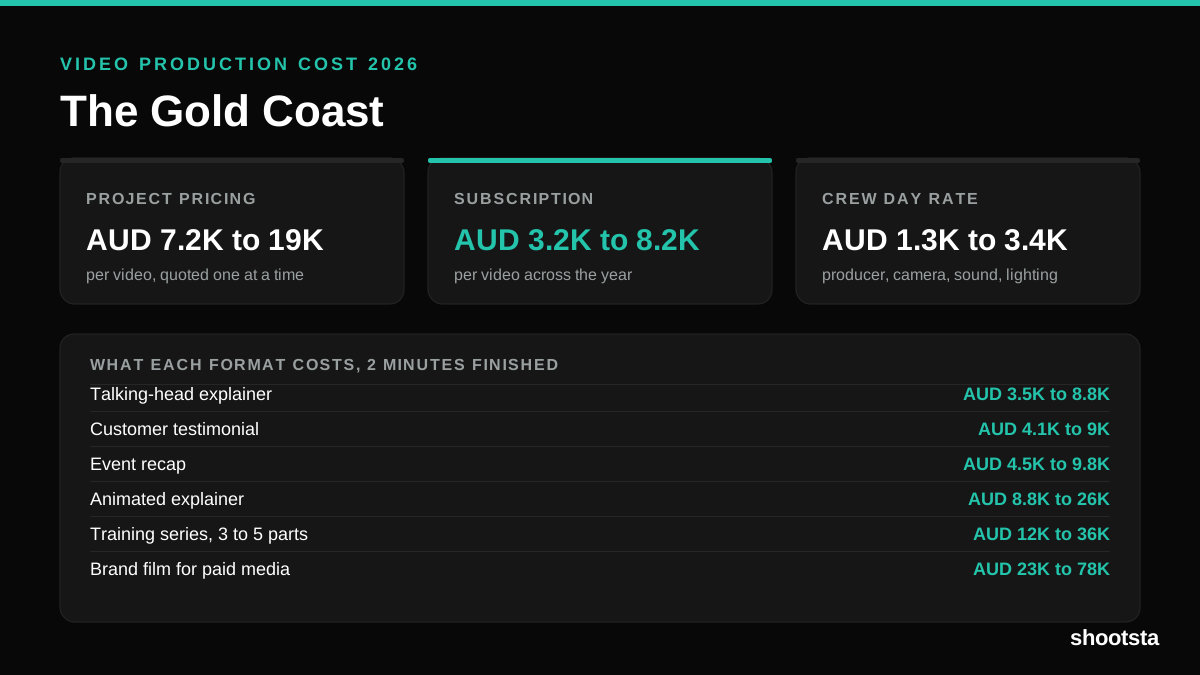
Video production in the Gold Coast costs AUD 3,200 to AUD 8,200 per finished video on a subscription model, and AUD 7,200 to AUD 18,500 for one-off project work. Here is what you are paying for, and how the three pricing models compare.
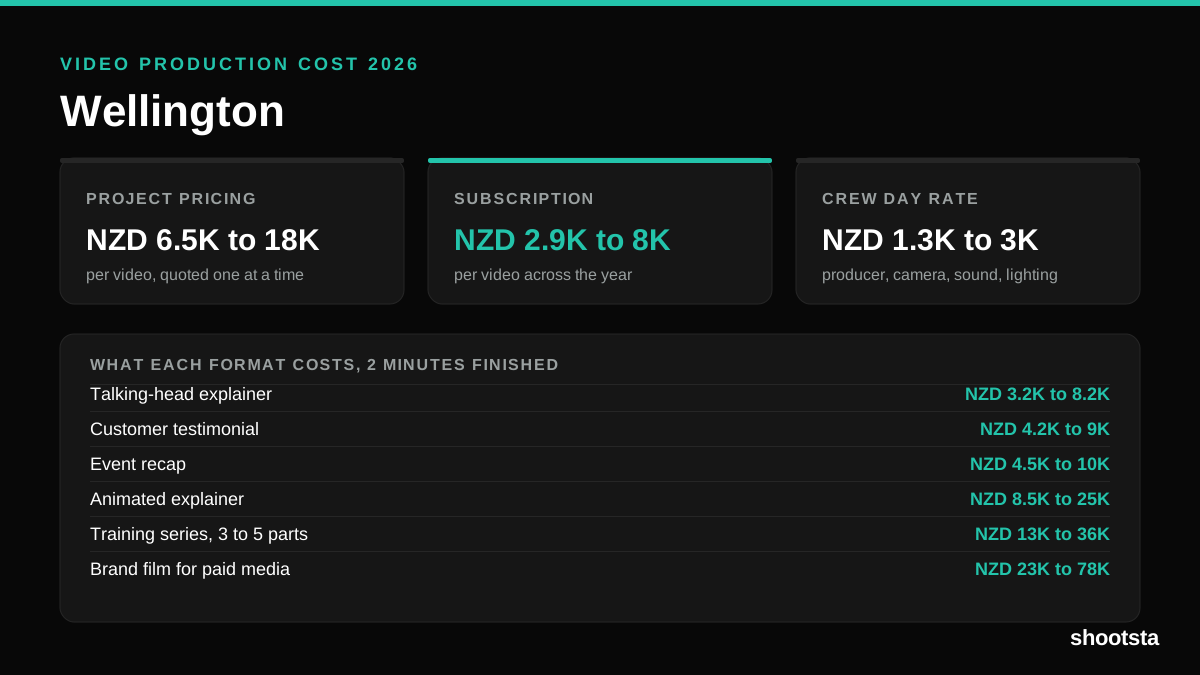
Video Production Cost in Wellington (2026)
Video production in Wellington costs NZD 2,900 to NZD 8,000 per finished video on a subscription model, and NZD 6,500 to NZD 18,000 for one-off project work. Here is what you are paying for, and how the three pricing models compare.
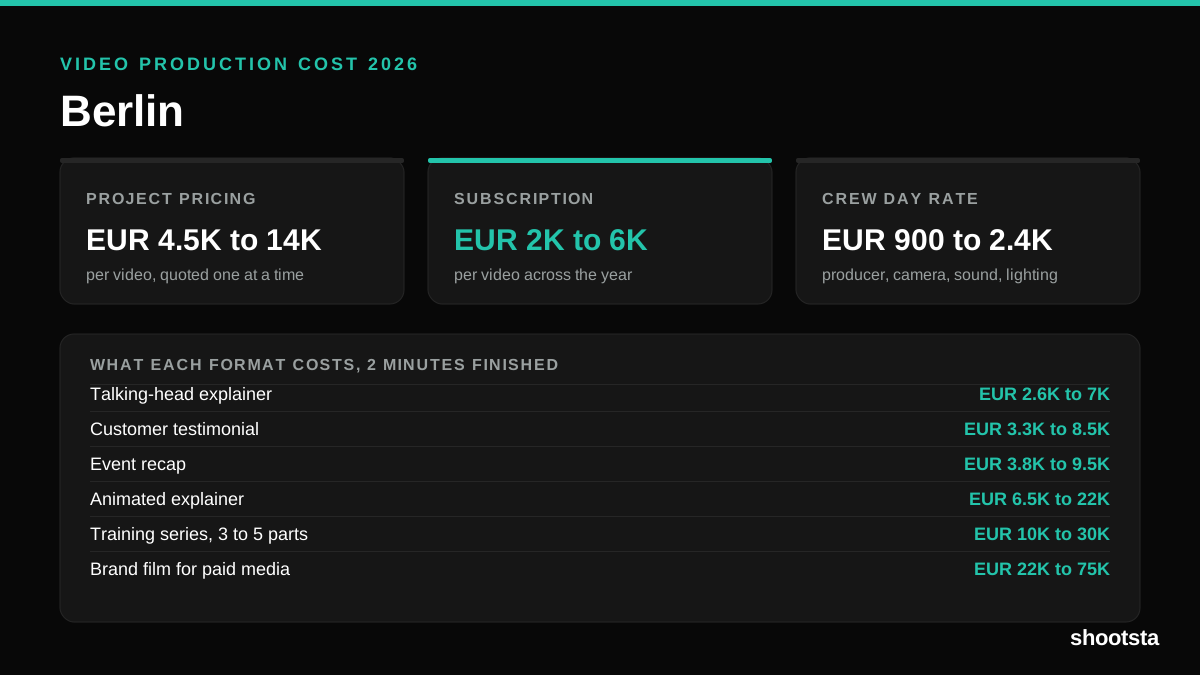
Video Production Cost in Berlin (2026)
Video production in Berlin costs EUR 2,000 to EUR 6,000 per finished video on a subscription model, and EUR 4,500 to EUR 13,500 for one-off project work. Here is what you are paying for, and how the three pricing models compare.