
Why One Model Can't Scale Enterprise Video
shootsta.
Why One Model Can't Scale Enterprise Video
By Shootsta · Published July 26, 2026 · Updated October 2026
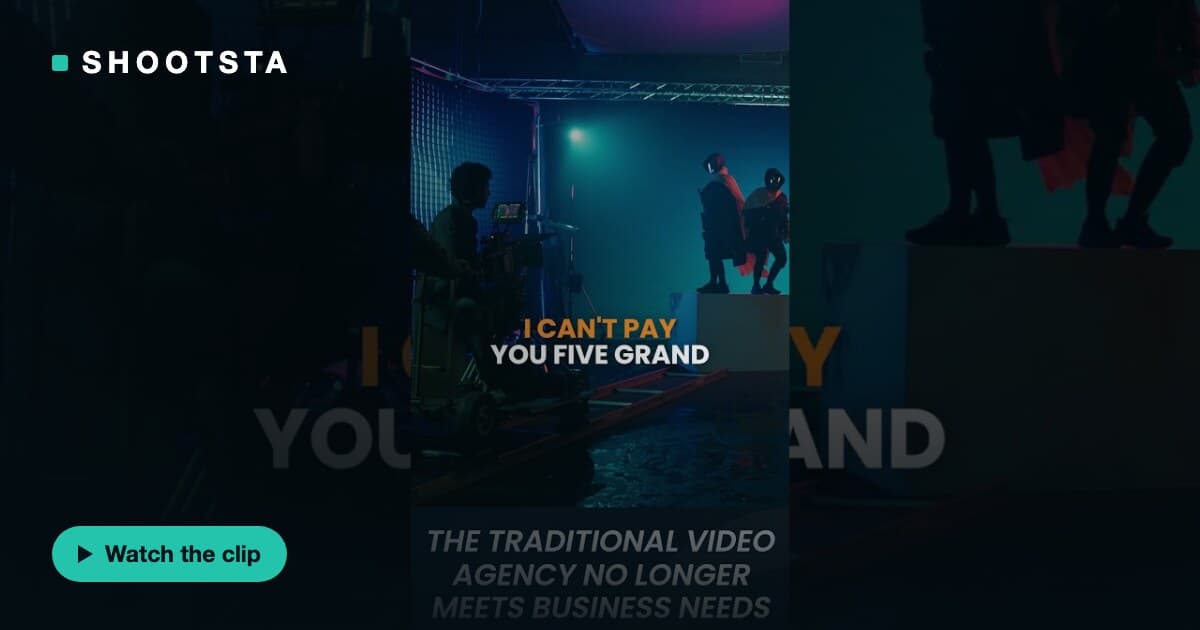
Enterprise teams now need hundreds of videos a year across marketing, sales, comms, learning and more. Chad Lakin explains why no single production model absorbs that volume, and how the teams that scale match each type of content to the model that fits it.
Enterprise demand for video has changed. A few years ago it meant a couple of hero campaigns and a television-quality brand film once a year. Organizations now brief hundreds of videos a year across marketing, sales, internal comms, learning, customer success, recruiting and executive communications.
In this short clip, Chad Lakin, Senior Vice President of Growth at Shootsta, explains why that shift is pushing enterprises to build new operating models that combine agencies, internal teams, technology and scalable production. The idea at the center of it is straightforward: match the right production model to the right type of content.
Watch the clip above, and then read on to see how that plays out when you produce video at high volume.
Why has enterprise demand for video changed?
A few years ago, most of the video budget went to one or two flagship pieces, such as the brand film, the big campaign or the launch video. For many teams, that was the whole job.
The job is now much wider. Sales wants tailored pitch and follow-up videos, and internal comms needs leadership updates and town-hall recaps. Learning teams need onboarding and compliance modules, customer success needs product walkthroughs, and recruiting needs employer-brand videos. Each of those teams wants video every week rather than once a quarter. Across 70,000+ videos for global brands, we see the same pattern: request volume keeps climbing while patience for slow, expensive production drops. We put real numbers on that shift in how many videos an enterprise actually needs per month.
Why does that volume break the traditional agency model?
The problem has nothing to do with agencies being bad at their job. They are excellent at the work they were built for, which is high-craft, high-stakes video where the outcome justifies the budget and the timeline. A flagship brand film should go to people who obsess over every frame.
The strain shows up when you push a year of everyday video through a model designed for the flagship piece. No single production approach was built to absorb hundreds of videos across seven functions. If you run that volume through a hero-film process, timelines stretch to weeks and the cost climbs past what the business will sign off. The agency is still great at the flagship, and the mistake is asking one model to carry everything else as well. This is the same tension teams weigh in video agency versus a video subscription.
What does a blended video operating model look like?
Enterprises that scale video stop hunting for one supplier to do everything. They build an operating model that combines agencies, internal teams, technology and a scalable production partner, and they let each one carry the work it is best at.
We describe the shape of that model as Peak, Pulse and Presence. Peak is the flagship, high-craft work. Pulse is the steady drumbeat of hub videos that keeps audiences engaged between the big moments, and Presence is the always-on help video your teams need on demand. When an organization puts most of its budget into Peak and leaves the rest under-served, that is where the backlog builds. The full breakdown lives in the enterprise video operating model, and the choice between building it in-house, using an agency, or running a platform is covered in in-house, agency, or platform for video.
How do you match the production model to the content type?
Once you stop treating all video as one job, it becomes clear which model suits each type of work.
Flagship brand films. These are low in volume and high in craft and stakes. Keep your agency for these, or use Shootsta Premier for premium one-off projects. This is the work worth going big on, and it is a small share of the total.
Recurring hub and always-on content. This work comes in high volume and needs speed and a predictable cost. This is where a managed video partner and a platform do the heavy lifting: brief a video today and your first edit comes back in about 48 hours, so you ship while it still matters. The per-video cost runs 50 to 60% below agency rates, with the editing and animation done for you and no editors to hire. That is the model behind an enterprise video editing service, and the turnaround is broken down in how a video partner ships in 48 hours.
Quick, teams-make-it content. This is the highest volume of all, covering the screen recording, the quick update and the sales follow-up. Give teams outside marketing templates, brand guardrails and a fast edit so they can create on-brand video without a producer in the room for every clip. What matters here is keeping brand consistency as video scales, so that more creators do not lead to messier output.
When you run those three models together through one system, the business stops fighting over the trade-off between quality, speed and cost. You no longer have to force one process to be premium, fast and cheap at the same time. This is the operating-model view of treating video as a capability rather than a campaign.
To find where your model breaks first, run it through the CMO video scorecard. It asks ten questions and scores your answers across coverage, brand, turnaround, cost and measurement.
Frequently asked questions
Does an enterprise still need a video agency?
Yes, an enterprise still needs one for the right work. Agencies are strong on flagship, high-craft brand films where the stakes justify the budget and the timeline. The change is that you stop routing every video through that model. If you pair the agency for hero pieces with a managed partner and your internal team for the recurring volume, each one does what it does best.
We already have an in-house video team. Why add a partner?
You keep your in-house team. A partner adds elastic capacity that extends the team and absorbs the volume and the peaks, so your people spend their time on strategy, story and the flagship work only they can do, instead of sitting in an edit queue. When the requests spike, capacity flexes up without new headcount. We cover how that split works in how a video partner extends your in-house team.
How fast can a managed partner turn video around?
A first edit takes about 48 hours once the footage and brief are in, and bigger builds like animation take longer. That speed is what makes recurring, high-volume publishing realistic for a busy enterprise team, and it is the difference between filming on Monday and publishing by Wednesday.
How do you keep brand consistency when more people make video?
The brand standard has to live in the system rather than in one person's head. Clear templates, brand guidelines and approval guardrails let teams outside marketing create inside the rules, and a fast, tailored edit process keeps quality high even when the raw footage comes from a phone. You can read more in keeping brand consistency when video scales.
Where to go next
For the full picture of how the pieces fit together, read the enterprise video operating model. To weigh the build-versus-buy decision, read in-house, agency, or platform for video. And for the mindset shift behind all of it, read why video is a capability, not a campaign.
Take a look at how your organization balances quality, speed and cost right now. If one model is doing everything, that is usually where the backlog starts.
Take this article with you
Read the latest at shootsta.com/blog/why-one-model-cant-scale-enterprise-video
You might also like

How to Plan Video Team Capacity Around Leave
Your only editor just booked two weeks off, and you already know which projects will slip. Chad Lakin explains how to plan video team capacity so the work keeps moving when someone is away.
Corporate Video Editing Standards: Full Guide
A two-page editing standard does more for consistency than a forty-page brand book. Here is what it should cover, who owns each part, and how to enforce it with an in-house editor or an outside partner.
Quality Control in Outsourced Video Editing
When editing leaves the building, quality has to be checked by a system rather than by whoever happens to look. Here is the system: acceptance criteria, two QA gates, counted revision rounds and a quarterly audit.
Video Production Cost on the Gold Coast 2026
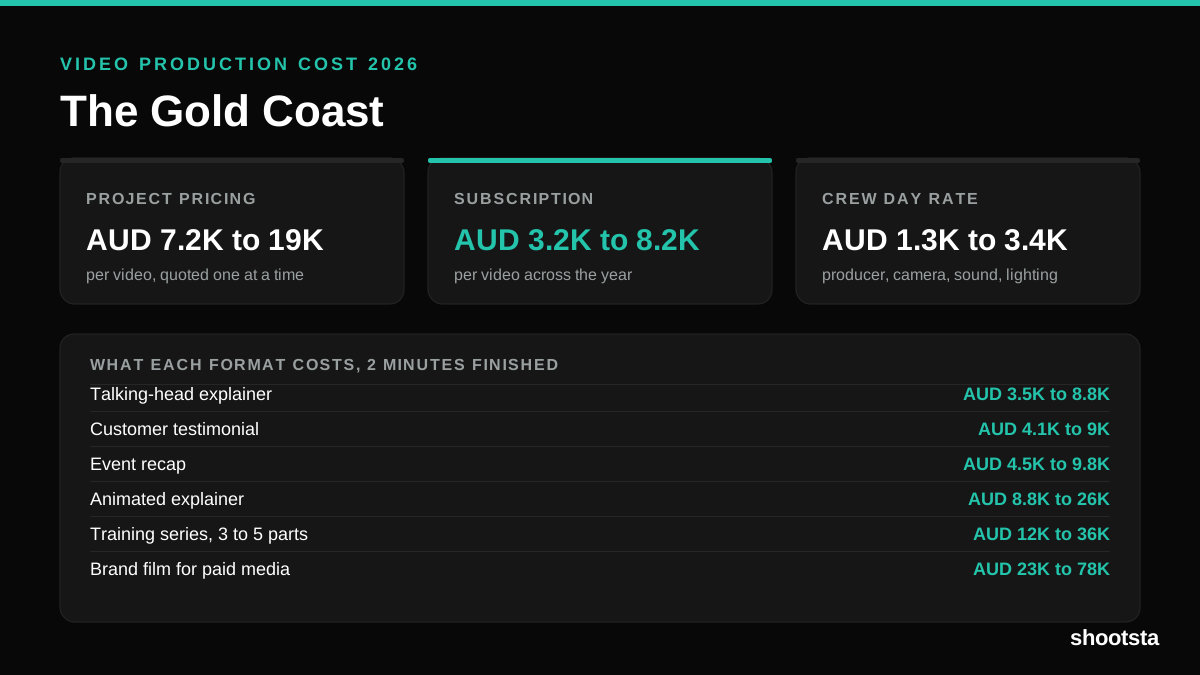
Video production in the Gold Coast costs AUD 3,200 to AUD 8,200 per finished video on a subscription model, and AUD 7,200 to AUD 18,500 for one-off project work. Here is what you are paying for, and how the three pricing models compare.
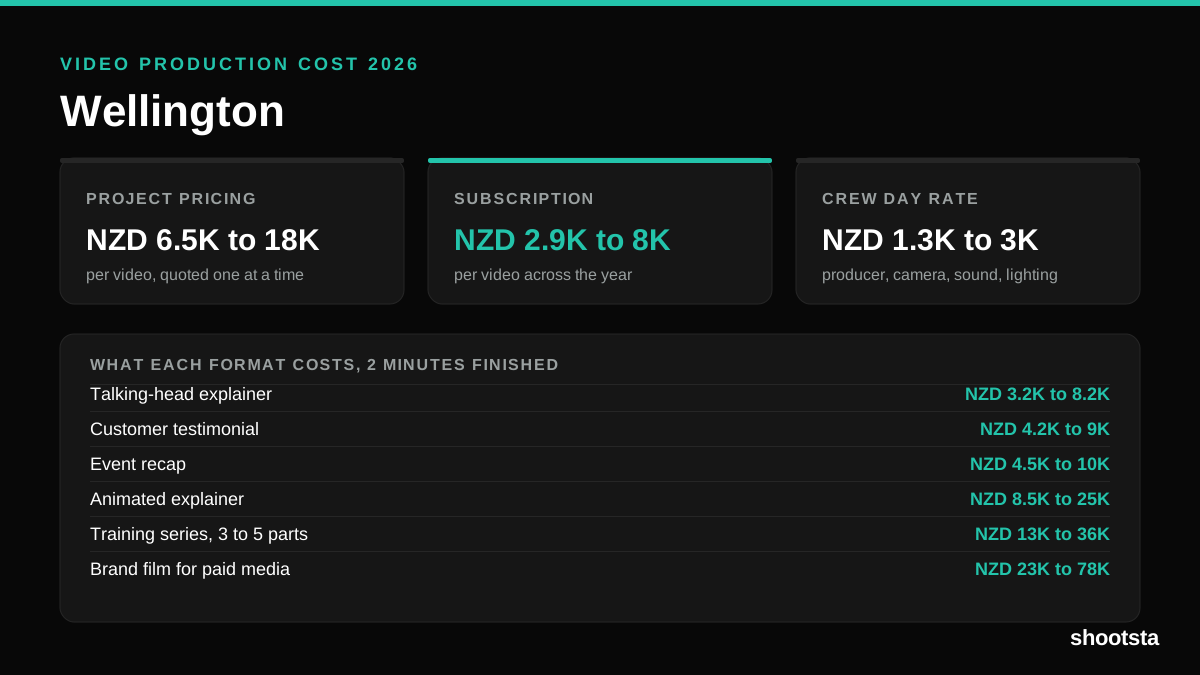
Video Production Cost in Wellington (2026)
Video production in Wellington costs NZD 2,900 to NZD 8,000 per finished video on a subscription model, and NZD 6,500 to NZD 18,000 for one-off project work. Here is what you are paying for, and how the three pricing models compare.
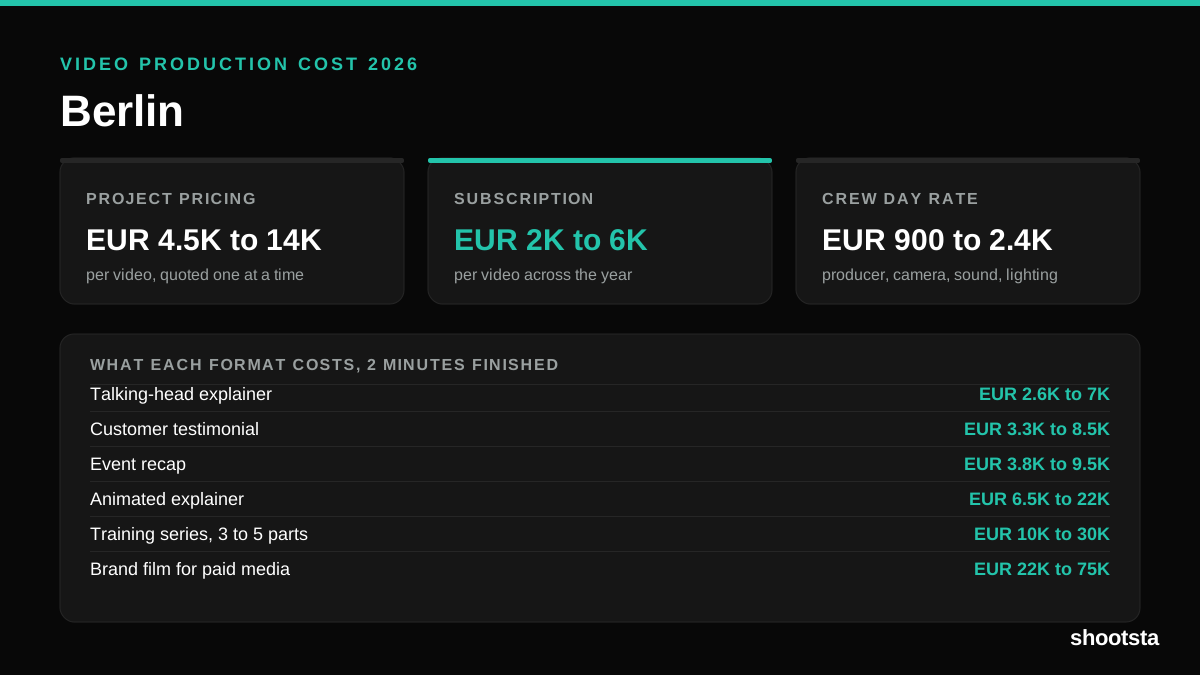
Video Production Cost in Berlin (2026)
Video production in Berlin costs EUR 2,000 to EUR 6,000 per finished video on a subscription model, and EUR 4,500 to EUR 13,500 for one-off project work. Here is what you are paying for, and how the three pricing models compare.