
Trade Enablement Video for Travel Agents and Tour Operators
shootsta.
Trade Enablement Video for Travel Agents and Tour Operators
By Shootsta · Published May 24, 2026 · Updated October 2026
US tourism boards reach international travelers through the travel trade. Travel agents and tour operators sell whichever destination is top-of-mind. Trade enablement video is how you stay there.
Why does trade enablement matter to tourism boards?
US tourism boards reach many international travelers through the travel trade. That means travel agents, tour operators, wholesalers and online travel agencies. Each partner sells hundreds of destinations and pushes the ones they remember first and can package easily.
Trade enablement video keeps your destination in those sales conversations. A good video turns a name on a list into a story an agent can tell a client. A weak one gets opened once and forgotten.
Who is the audience for trade enablement video?
The trade is three separate audiences, and boards often treat them as one. Each group sells differently.
Travel agents
Agents sell direct to travelers. They need short, visual videos built on facts that they can show on a client call or send by email. The most useful video for an agent is one they can forward to a client without rewriting the pitch.
Tour operators and wholesalers
Operators and wholesalers package destinations into products they can sell. They need detail on hotels, attractions and ground transport, plus the angles that make a tour worth booking. For them, the video works more like product training than marketing.
Meeting and event planners (MICE)
MICE planners run corporate and association events. They want video that covers venues, capacity and access, and shows how an event would run on the ground. Their checklist looks quite different from a leisure partner's.
Each of these audiences needs its own set of videos. A video built for all three misses each group's questions, so partners stop using it.
What format works best?
Short, specific videos work best. Aim for 60 to 90 seconds per video, and cover a single product, feature or experience in each one. Partners use these clips as building blocks in their own sales process.
Format options that perform well:
- Destination product walkthroughs (60 seconds each)
- "How to sell" videos featuring tips from successful agents
- Itinerary explainer videos showing day-by-day flow of a tour
- Hotel and attraction spotlights for inclusion in operator product training
- Seasonal updates explaining what is new this year
The co-op marketing video set
Many US tourism boards run co-op marketing programs, where member properties put money into joint campaigns. The video from a co-op campaign lives in two places at once. It runs on the board's own channels and in each property's marketing.
The most efficient approach is to film the destination once and edit several property cuts from it. The board pays for the destination footage, the music and the brand template. Each property then pays for the cut that features it. Each property pays far less than it would for its own standalone shoot.
IPW and trade show distribution
The trade show circuit includes IPW, ITB, WTM, Arabian Travel Market and China International Travel Mart. These shows are where US tourism boards put trade enablement video in front of the most buyers at once. A 90-second destination product video can play in every buyer appointment across the week of IPW.
Trade show video has its own format needs. It loops on booth screens and opens appointments, and buyers take it away on a USB drive or reach it through a QR code. Plan the edit around those moments. In a 20-minute booth appointment, buyers will sit through a 60-second cut but rarely a 3-minute branded film.
How do you measure trade enablement?
Two metrics matter here. The first is agent recall, which asks whether partners mention the destination unprompted when they talk to clients. The second is commercial uptake. That covers whether partners package the destination, recommend it and book it for clients.
Both are hard to measure directly, so boards track proxies instead. Useful ones include requests for video assets, downloads of training material, attendance at training sessions and follow-up appointments from trade events. For broader context on enterprise video programs, see the enterprise video playbook.
How fast does trade enablement video need to update?
Evergreen product video needs a refresh at least once a year. Seasonal videos about new openings, partnerships or market access need an update each quarter. Clips for trade newsletters run on a monthly cycle.
That pace is hard to keep up if each video is a separate agency project. Boards that manage it run trade enablement video as an ongoing program with one production partner. The budget holds up only when the brand and template work carries over to each quarterly release. See the Dual North America case study for a parallel example of partner-facing video at scale.
Where to start
Start by auditing the trade enablement video you have. Check each video's age, which audience group it serves and when it was last updated for a new market or product. Then pick the trade segment with the most volume, which is usually travel agents. Brief one new 90-second video that answers the question they ask most. Compare how agents engage with it against the old static product sheet. For more on production cadence and economics, see enterprise video production at scale.
Take this article with you
Read the latest at shootsta.com/blog/travel-trade-enablement-video-production
You might also like
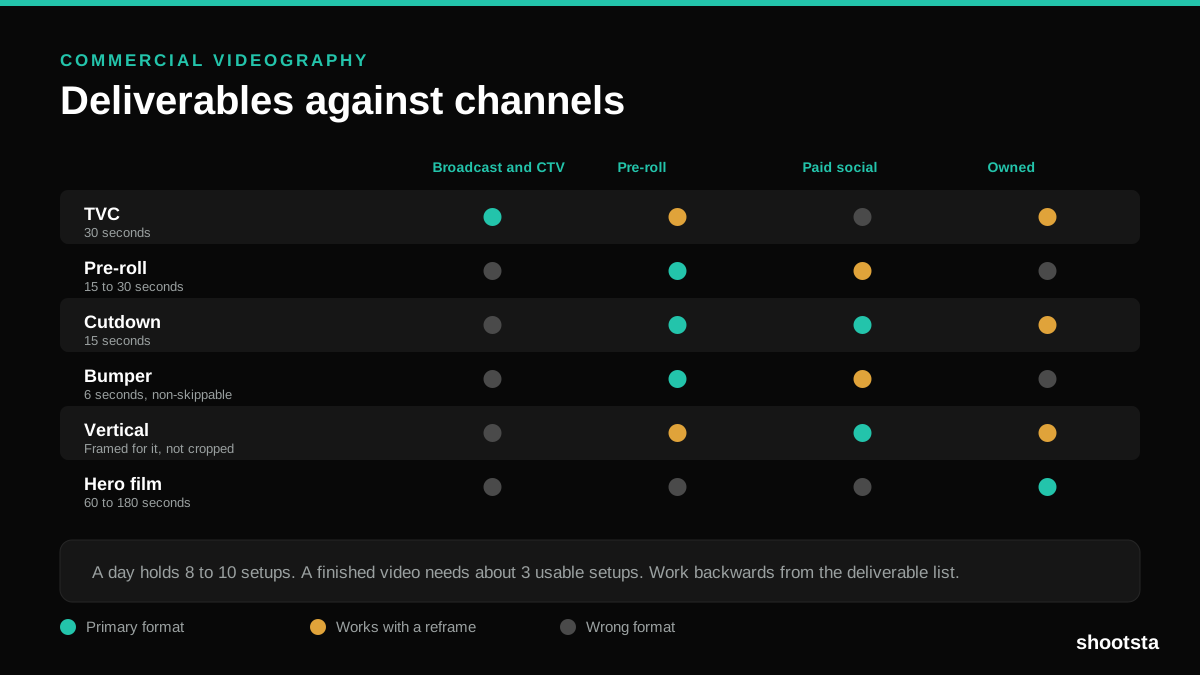
Commercial Videography: Cost and Scope
Commercial videography is priced by the day and judged by the deliverable. Most projects go wrong because those two numbers were never reconciled.
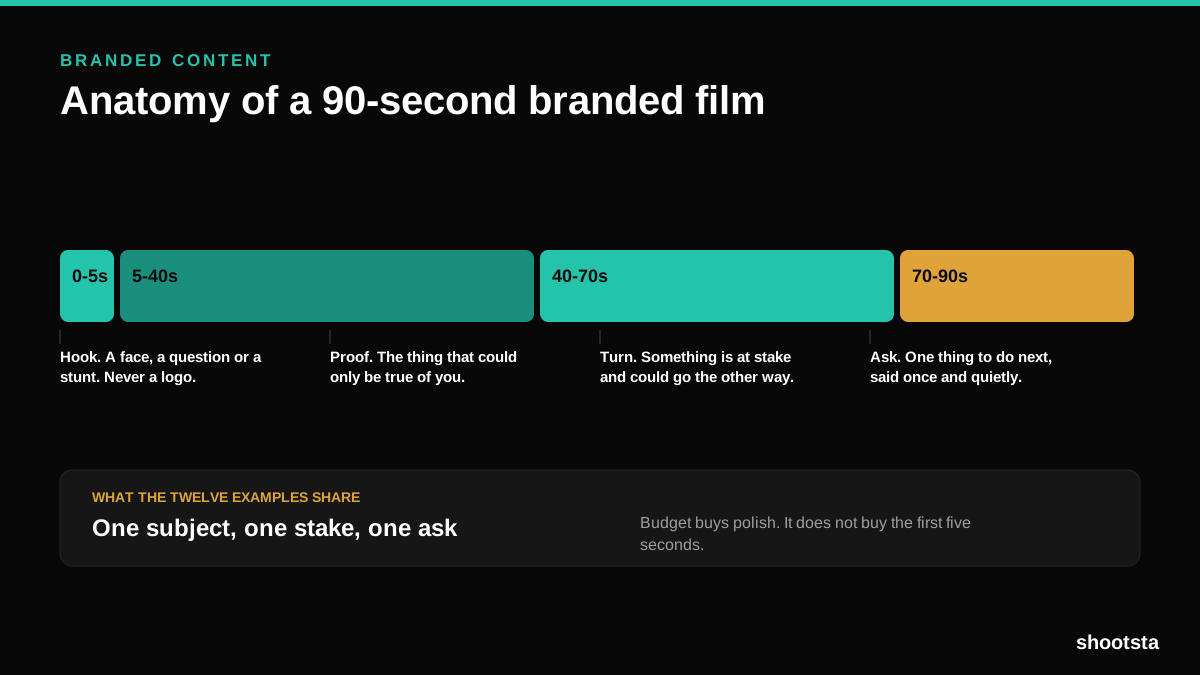
12 Branded Content Examples That Worked
Twelve pieces of branded content that people chose to watch, what each one got right, and the structure underneath all of them.
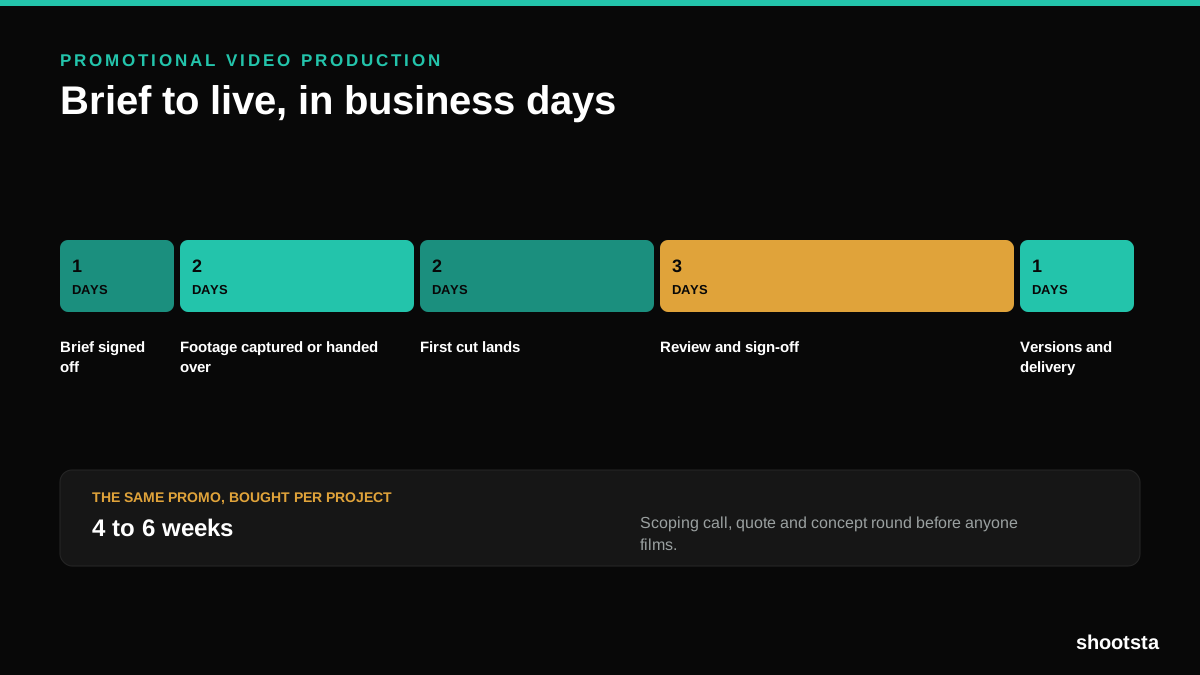
Promotional Video Production: Cost and Time
Most promotional video production schedules are not slow because of the edit. They are slow because of the approval chain. Here is where the days go.
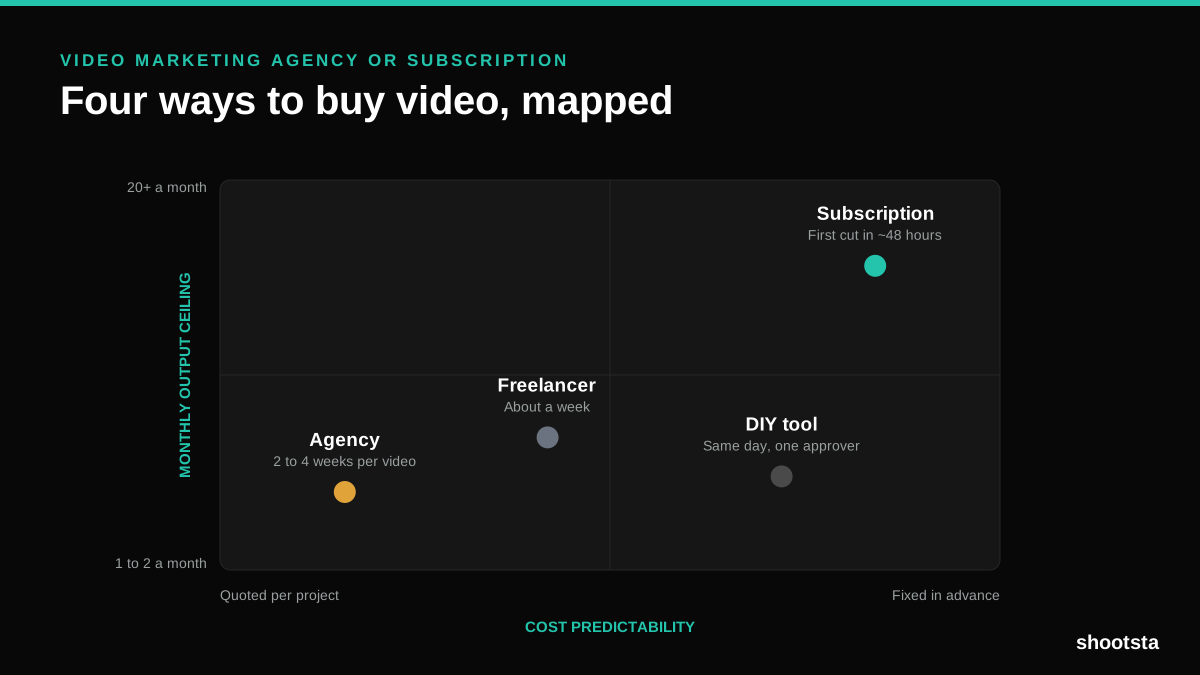
Video Marketing Agency or Subscription?
A video marketing agency prices per project and works in weeks. A subscription prices the year and works in days. Which one fits depends on how often you publish, not on which is better.

B2B Video Production: Costs and Buying Models
There are five ways to buy B2B video production. Each one works well up to a point and then breaks, usually at a volume nobody planned for. Here is what each costs and where the ceiling sits.
How to Measure Video Speed-to-Market
How to Measure Video Speed-to-Market
Speed-to-market is the lag between needing a video and publishing it. For marketing teams it is a revenue metric. Here is how to measure and improve it.