
5 Video Formats Every Insurer Should Be Producing in 2026
shootsta.
5 Video Formats Every Insurer Should Be Producing in 2026
By Shootsta · Published May 30, 2026 · Updated October 2026
Insurance marketing in 2026 has converged on five high-value video formats. Three of them are animation-led. Here is what to produce and how to prioritize.
What video formats matter in insurance marketing?
Insurance marketing video has settled on a handful of formats that drive measurable outcomes. The rest, such as broadcast TVCs, brand films and high-production hero pieces, still get made but rarely move the metrics insurance marketers are judged on. They can look good in an award submission while doing little for qualified pipeline or broker enablement.
Below are the five formats producing the most value across specialty insurance, commercial insurance, and life and health insurers in 2026. Three of them are animation-led and two are live action.
Format 1: Animated product explainers
This is the format that gives insurance marketers the most return for the effort. You make a 60 to 90 second animated explainer for each product or program, then embed it on the product page, send it in broker enablement kits and use it in customer onboarding.
Animation suits this job because insurance products are abstract. Coverage scope, exclusions, claim thresholds, eligibility and deductibles have no physical form you can film. Motion graphics can show all of it cleanly.
For production cadence, plan one explainer per product and refresh it each year. A mid-sized specialty insurer with 8 to 15 product lines would keep 8 to 15 animations in the library at any time. For more on the format, see our guide to explainer videos: when to use them and how to produce them.
Format 2: Claims process walkthroughs
Claims walkthroughs are the most undervalued format in insurance marketing. A 90-second video shows what a customer goes through when they file a claim, and you can use it in onboarding, in marketing materials and on the help center.
This works as either animation or live action. Choose animation if the focus is the process flow, and live action if the focus is the human experience of being supported through a claim.
The format matters because the claims experience has a large effect on whether insurance customers renew. Customers who know what a claim looks like before they need to file one tend to trust their insurer more, which makes a claims walkthrough video a retention tool.
Format 3: Broker and agent enablement videos
These are short videos of 60 to 90 seconds each, made for distribution partners. Each one covers a single product feature, selling situation or objection. They live in the partner portal and the broker email cadence.
The usual format is live action with motion graphics overlays. A subject matter expert from the insurer explains the topic while on-screen graphics reinforce the key points. Teams film 5 to 10 videos per shoot day to keep production efficient.
For an example of how a specialty insurer scales partner-facing video production, see the Dual North America case study.
Format 4: Animated internal communications
This format covers strategy updates, policy changes, system rollouts and AI tool introductions. Internal comms in insurance has long relied on the talking head. Animated motion graphics tend to hold staff attention better than a talking head on the same content, and they are easier to update when a policy changes.
Plan for animations of 90 seconds to 2 minutes, embedded in the staff portal, included in manager toolkits and pushed through internal communications channels. For more on the format choice, see our piece on animation vs live action for internal comms.
Format 5: Customer testimonials
This is the one format on the list that is always live action. Real customers describe on camera how they used their insurance, usually in 60 to 90 seconds. You can use the result in sales decks, on the website and in marketing campaigns.
Testimonials stay live action because they only work with a real face, and animated case studies do not carry the same credibility. The production challenge is finding willing customers and getting their stories on camera within a reasonable window. Insurance marketing teams often put testimonials off, then find they need them for an upcoming campaign.
Why three of the five are animation-led
Insurance is a category built on abstract concepts such as coverage, exclusions, thresholds, processes, regulations and organizational structures. Animation shows abstractions better than live action does. Live action wins in broker enablement and testimonials, where the value is the human on screen.
This is a change from a few years ago, when insurance marketing video was mostly live action and animation was kept for hero brand films. The economics have shifted. Animation is now more affordable and faster to produce, while the volume of video insurance marketing teams need keeps growing. For more on this shift, see why FSI marketing teams are bringing animation in-house.
How to prioritize if you are starting from zero
If you have no existing video library and need to start somewhere, this is the order that delivers value fastest:
- One animated product explainer for your top-selling product line
- One claims walkthrough for your highest-volume claim type
- Two to three broker enablement videos for your most-asked-about features
- One animated internal comms piece for the most recent change in the business
- One customer testimonial filmed during the next quarter
That is 6 to 7 videos in the first 90 days, covering the five formats with proven value. From there, expand each format in line with what your reporting shows is working.
What does this cost?
Cost depends on the mix of animation and live action and on how many videos you make each year. Shootsta customers who move agency work across typically pay 50-60% less per video than agency rates, with more videos coming out the other end. For a broader view of what an enterprise video program covers, see the enterprise video playbook.
For more on producing testimonials in particular, see our guide on producing testimonial videos at scale. Learn more about how this works in practice with Dual North America, or explore Shootsta for financial services and insurance.
For the frameworks behind scaling this kind of work, read The Business Animation Playbook.
Take this article with you
Read the latest at shootsta.com/blog/5-video-formats-insurers-2026-animation
You might also like
How to Plan Video Team Capacity Around Leave
Your only editor just booked two weeks off, and you already know which projects will slip. Chad Lakin explains how to plan video team capacity so the work keeps moving when someone is away.
Corporate Video Editing Standards: Full Guide
A two-page editing standard does more for consistency than a forty-page brand book. Here is what it should cover, who owns each part, and how to enforce it with an in-house editor or an outside partner.
Quality Control in Outsourced Video Editing
When editing leaves the building, quality has to be checked by a system rather than by whoever happens to look. Here is the system: acceptance criteria, two QA gates, counted revision rounds and a quarterly audit.
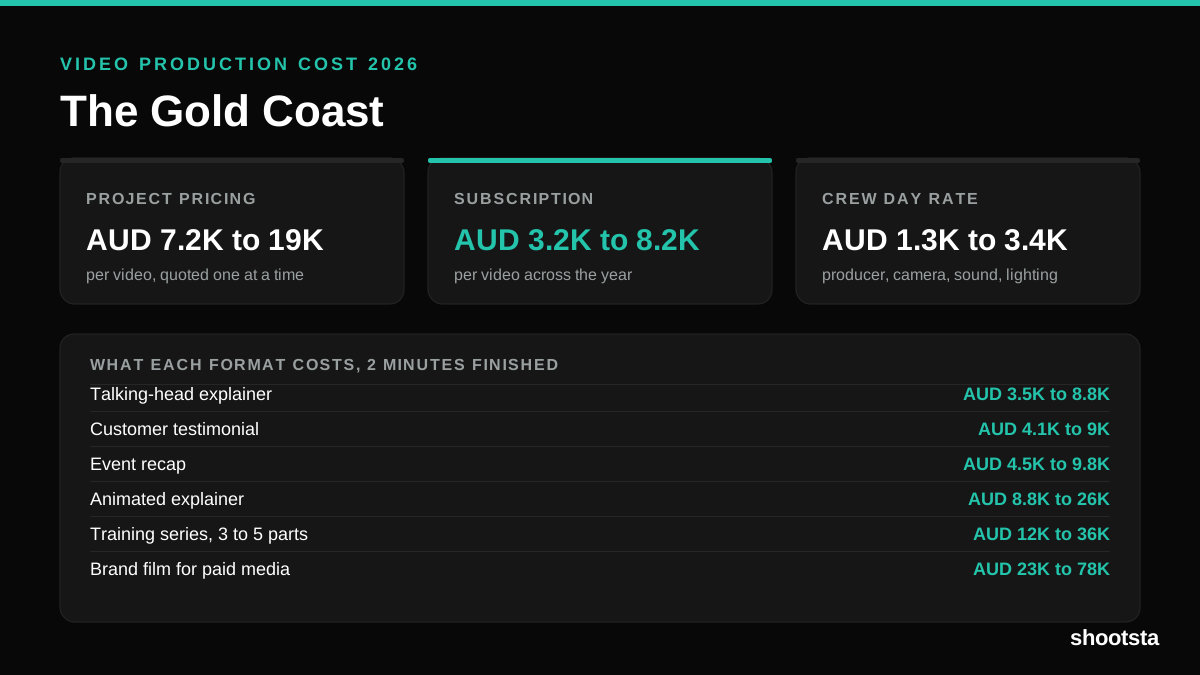
Video Production Cost on the Gold Coast 2026
Video production in the Gold Coast costs AUD 3,200 to AUD 8,200 per finished video on a subscription model, and AUD 7,200 to AUD 18,500 for one-off project work. Here is what you are paying for, and how the three pricing models compare.
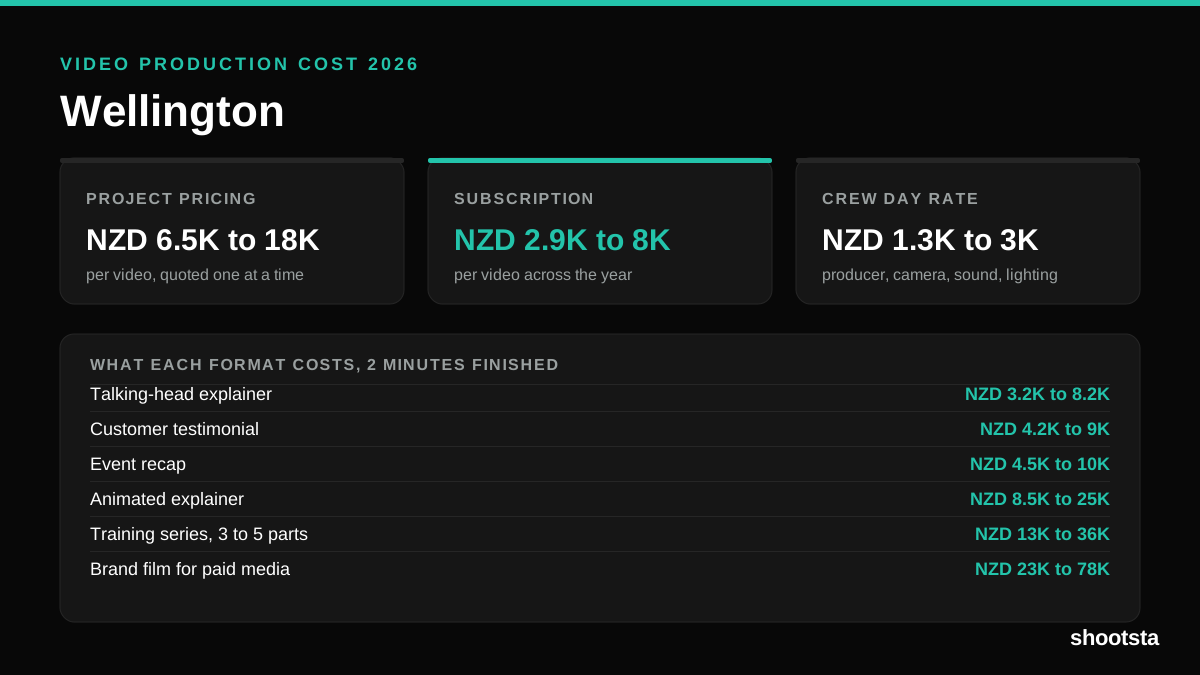
Video Production Cost in Wellington (2026)
Video production in Wellington costs NZD 2,900 to NZD 8,000 per finished video on a subscription model, and NZD 6,500 to NZD 18,000 for one-off project work. Here is what you are paying for, and how the three pricing models compare.
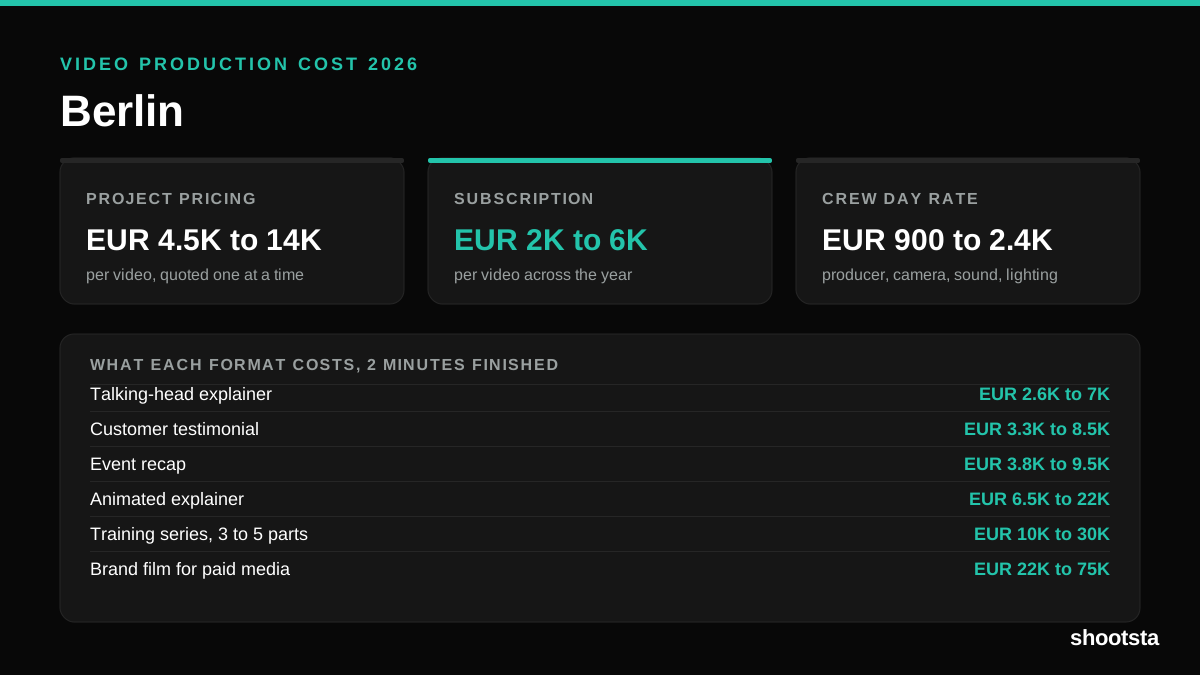
Video Production Cost in Berlin (2026)
Video production in Berlin costs EUR 2,000 to EUR 6,000 per finished video on a subscription model, and EUR 4,500 to EUR 13,500 for one-off project work. Here is what you are paying for, and how the three pricing models compare.