
Brand Consistency When Video Scales
shootsta.
Brand Consistency When Video Scales
By Shootsta · Published June 30, 2026 · Updated October 2026
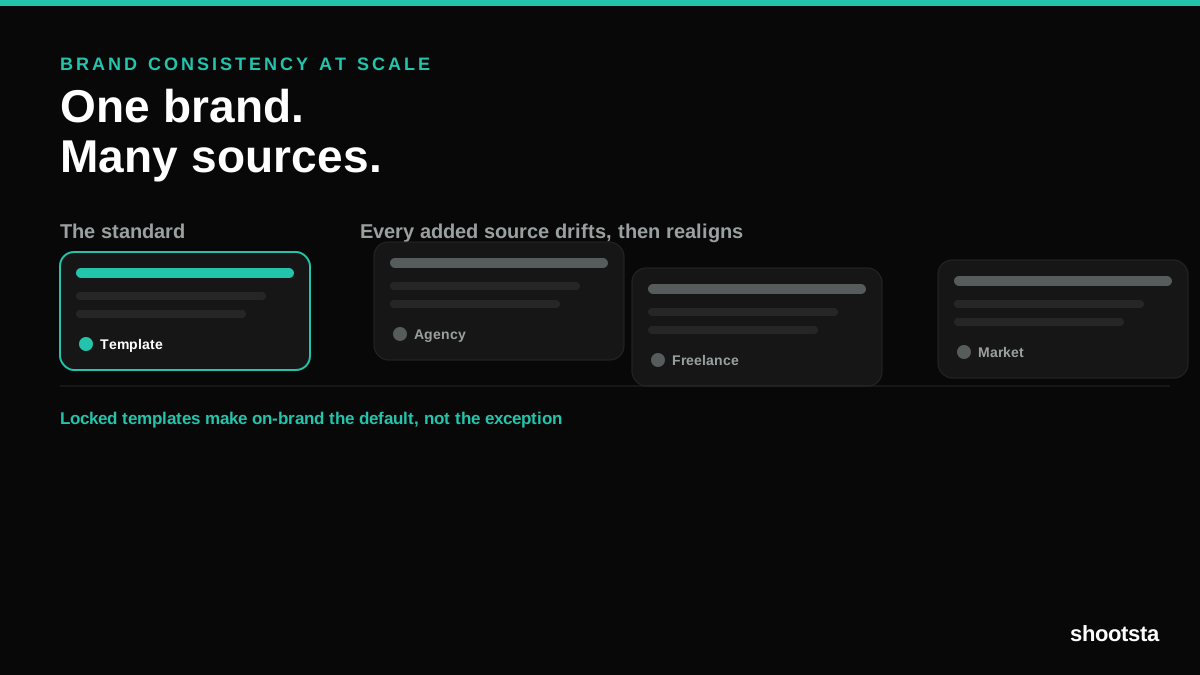
Brand consistency holds up when you make a dozen videos a year and one person checks every cut. It falls apart at scale, because every added vendor, freelancer, market and sub-brand is one more place the logo, lower-thirds, color and tone can drift. Here is why brand breaks down as video volume grows, and how to make on-brand the default instead of a policing job.
Short answer. Brand consistency breaks down as video scales because every added source - a new agency, a freelance pool, a fresh market, another sub-brand - is one more place the logo, lower-thirds, color, motion and tone can drift. When volume is low, a brand guardian can police it by hand. As volume rises, manual review cannot keep up and off-brand becomes normal. The fix is to make on-brand the default: one production pipeline, locked brand templates and asset kits, brand and legal pulled into the brief, and a single review standard applied to everything.
A brand director can hold the line on video when the program makes a dozen pieces a year. You see every cut, catch the off-palette title card and send it back for a fix. The standard lives in your head and your inbox, which works while the volume is small enough to inspect by hand.
Then the program grows. Every function wants video, more markets come online and the sub-brands multiply. To keep up, your team adds sources: an agency for launches, freelancers for social, a separate vendor for training and a regional partner for each market. Each addition makes sense on its own, but together they turn one brand into many readings of it. The person meant to protect brand equity ends up as a full-time reviewer who is always a step behind.
Why does brand consistency break down when video scales?
It breaks down because consistency was never built into the workflow in the first place. One or two people held it together by checking the output, and that approach has a ceiling. Once volume passes it, drift is the predictable result of asking many separate sources to read the same guidelines without a shared production standard. Nobody stopped caring; the method simply ran out of room.
Every added source is another point of drift
Each vendor makes its own reading of the logo, the safe area, the lower-third font, the motion style and the tone of voice. None of them is trying to go off-brand. Each one is making its best guess from a PDF of guidelines, and small differences add up across hundreds of assets. This is the same pattern we cover in how to keep brand consistency with outsourced video editing.
Markets and sub-brands multiply the surface area
Global sportswear and fashion houses feel this hardest. A single parent brand can sit above dozens of sub-brands, seasonal lines and regional campaigns, and each has its own team and vendors. Large multi-brand retailers run the same structure across categories and store formats. The more places a brand shows up, the more places it can slip, and in video every slip moves and gets shared.
WHERE BRAND DRIFTS AS VOLUME RISES
These variants come from every source reading the guidelines on its own, rather than from carelessness.
Manual policing does not scale
When the safeguard is a person watching every export, it breaks at peak volume, which is when you need it most. Reviews back up, off-brand work ships to hit a deadline, and the brand guardian burns out chasing fixes after the fact. Catching drift at the end costs more time and money than preventing it at the start.
What is brand drift in video production?
Brand drift is the slow gap between your brand standard and what ships, caused by many sources each reading the guidelines a little differently. In video it shows up as uneven logo placement and clear space, lower-thirds in the wrong font or position, and off-palette grades. You also see mismatched motion and transitions, and a tone that shifts from one editor to the next. No single asset looks broken, so the drift only becomes clear when you line up a quarter of output side by side.
How do you keep video on brand at scale?
You stop treating on-brand as something to check for and make it the default state of the pipeline. Research on brand consistency links a uniform presentation across touch-points to revenue gains, which makes this a commercial issue as well as a design one. Teams that hold the line at volume tend to share four practices.
Run one production pipeline, not a scattered vendor stack
When every request goes through one production model instead of a patchwork of agencies and freelancers, the standard is applied in one place. You keep your flexibility when you consolidate sources, because it now sits inside a system that already knows your brand. We work through the trade-offs in how to keep brand control with a video production partner.
Lock brand templates and asset kits
Templated intros and outros, preset lower-thirds, approved grades, logo lockups with correct clear space, licensed fonts and a shared music library remove the guesswork. An editor should not be able to place the logo wrong, because the correct lockup is the only one in the kit. Locked templates turn brand rules into defaults that are hard to break, so nobody has to remember a list of instructions.
Pull brand and legal into the brief
Drift tends to be caught late because brand and legal only see the near-final cut. Bring them into the brief instead. When the constraints, claims and asset rules are agreed before an editor starts, the first cut lands on brand and the review confirms the work instead of rescuing it. This is the same forward-loaded review that keeps a enterprise video operating model from stalling at sign-off.
Apply one review standard to everything
Use a single checklist and a named brand approver on every piece, whichever source produced it, and you get a consistent bar. Your vendors also get a clear target that stays put. Consistency is easier to hold when everyone aims at the same written standard instead of guessing what "on-brand" means this week.
Does consistency slow the team down?
Once the standard is built in, consistency speeds the team up. Manual policing is what slows you down, through rework, re-exports and reviews that stall while someone hunts for the right logo file. When templates and asset kits carry the brand, editors move faster because the decisions are already made, and on-brand work stops costing you speed. That is the reason to build the standard into the pipeline instead of bolting it on at the end. It is a common trap for teams already stretched thin, which we cover in why retail teams drown in video briefs.
DUAL, a specialty insurer, is a useful proof point here. By running video through one repeatable production model with locked templates, they ship a high volume of video that stays on brand across every piece. They do it without adding a large in-house team or briefing a new agency each time, because the system holds the consistency instead of a person checking each export.
Frequently asked questions
Why does brand consistency get harder as video volume grows?
At low volume, consistency is usually held together by a person inspecting the output, and that method has a ceiling. As you add vendors, freelancers, markets and sub-brands, each new source interprets the guidelines on its own, and manual review cannot keep pace. Drift becomes the default unless the standard is built into the production workflow itself.
What causes brand drift in video specifically?
Video has many small brand surfaces: logo placement and clear space, lower-third fonts and positions, grades, motion and transition styles, music and tone of voice. Every editor and vendor makes small decisions on all of them. Those differences add up across hundreds of assets, so the brand drifts even when no single piece looks wrong on its own.
Do locked templates limit creativity?
They limit variation in the mechanical brand elements and leave the creative work open. Templates fix lockups, lower-thirds, color and safe areas, so the creative energy goes into story, message and craft instead of rebuilding brand furniture each time. Editors tend to find it freeing to have the brand decisions already made.
Can you have both speed and brand consistency at scale?
Yes, and they reinforce each other once the standard is built in. Manual brand policing is the slow part: rework, re-exports and stalled reviews. When one pipeline applies locked templates and a single review standard, editors produce on-brand work faster because the guardrails are already in place. Speed and consistency only pull against each other when brand is checked at the end instead of designed in at the start.
Sources and further reading
The patterns above line up with how brand and marketing researchers describe the commercial value of consistency and the friction of scaling creative output. For wider context:
- Marq (formerly Lucidpress) brand consistency research on the revenue impact of presenting a brand consistently.
- McKinsey on growth, marketing and brand for how consistent brand experience shapes performance.
- Wistia State of Video report on rising video volume across businesses and teams.
On Shootsta's side, see how to keep brand consistency with outsourced video editing and how to keep brand control with a video production partner.
Where to go next
This is part of a series aimed at marketing and brand leaders. To see how one system holds the standard across a whole program, read the enterprise video operating model. For the day-to-day pressure that pushes teams toward drift, read why retail teams drown in video briefs. For the vendor question specifically, read how to keep brand control with a video production partner. For the written spec that stops the drift at the edit, covering formats, loudness, captions and sign-off, read corporate video editing standards.
Brand consistency is one of five measures that decide whether a video program holds together at scale. Score your program with the CMO video scorecard to see how it rates against the other four.
To pressure-test where your brand is drifting across video today, book a free consultation.
Take this article with you
Read the latest at shootsta.com/blog/brand-consistency-when-video-scales
You might also like

How to Plan Video Team Capacity Around Leave
Your only editor just booked two weeks off, and you already know which projects will slip. Chad Lakin explains how to plan video team capacity so the work keeps moving when someone is away.
Corporate Video Editing Standards: Full Guide
A two-page editing standard does more for consistency than a forty-page brand book. Here is what it should cover, who owns each part, and how to enforce it with an in-house editor or an outside partner.
Quality Control in Outsourced Video Editing
When editing leaves the building, quality has to be checked by a system rather than by whoever happens to look. Here is the system: acceptance criteria, two QA gates, counted revision rounds and a quarterly audit.
Video Production Cost on the Gold Coast 2026
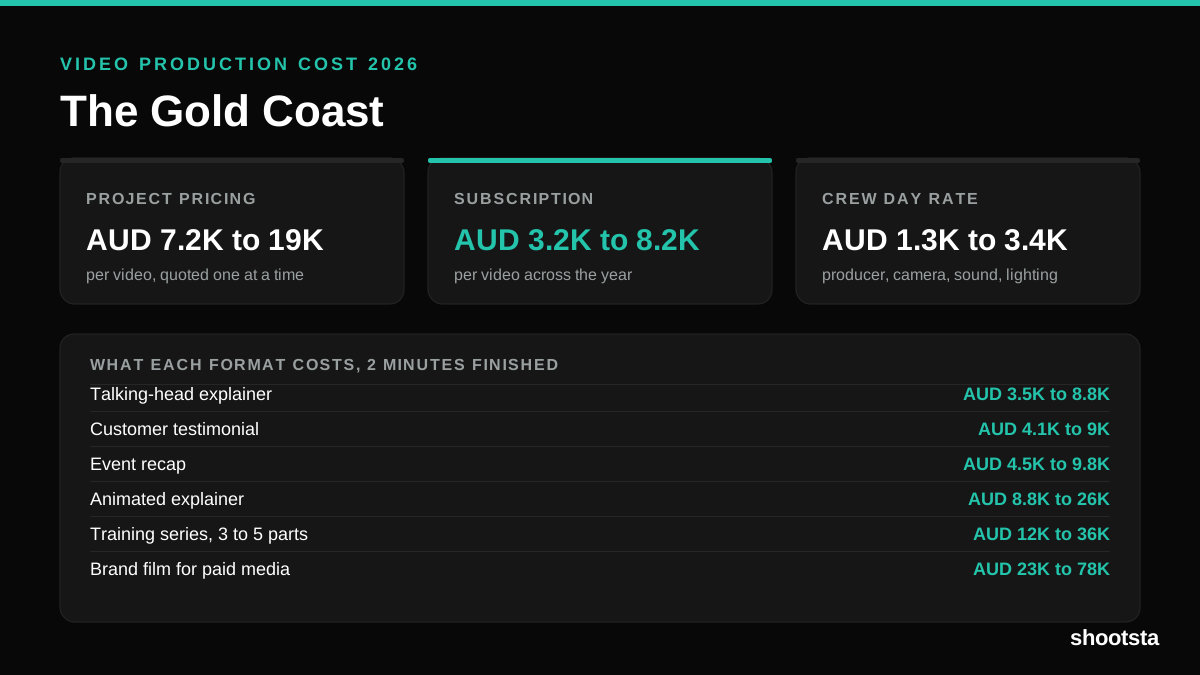
Video production in the Gold Coast costs AUD 3,200 to AUD 8,200 per finished video on a subscription model, and AUD 7,200 to AUD 18,500 for one-off project work. Here is what you are paying for, and how the three pricing models compare.
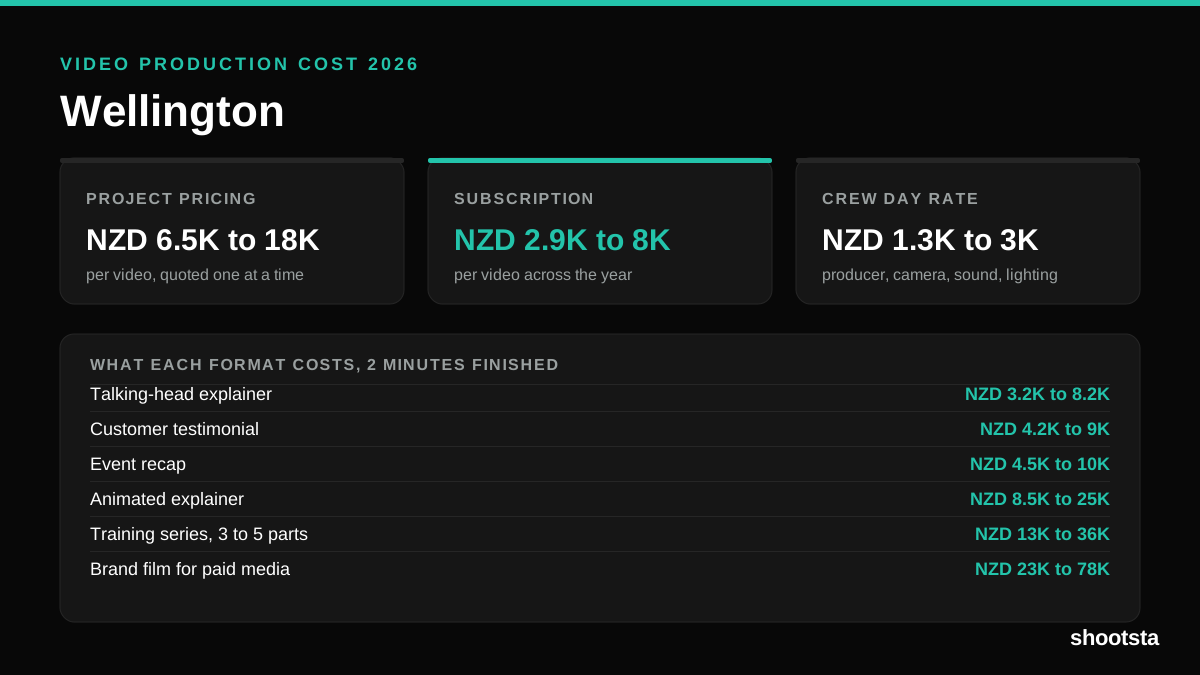
Video Production Cost in Wellington (2026)
Video production in Wellington costs NZD 2,900 to NZD 8,000 per finished video on a subscription model, and NZD 6,500 to NZD 18,000 for one-off project work. Here is what you are paying for, and how the three pricing models compare.
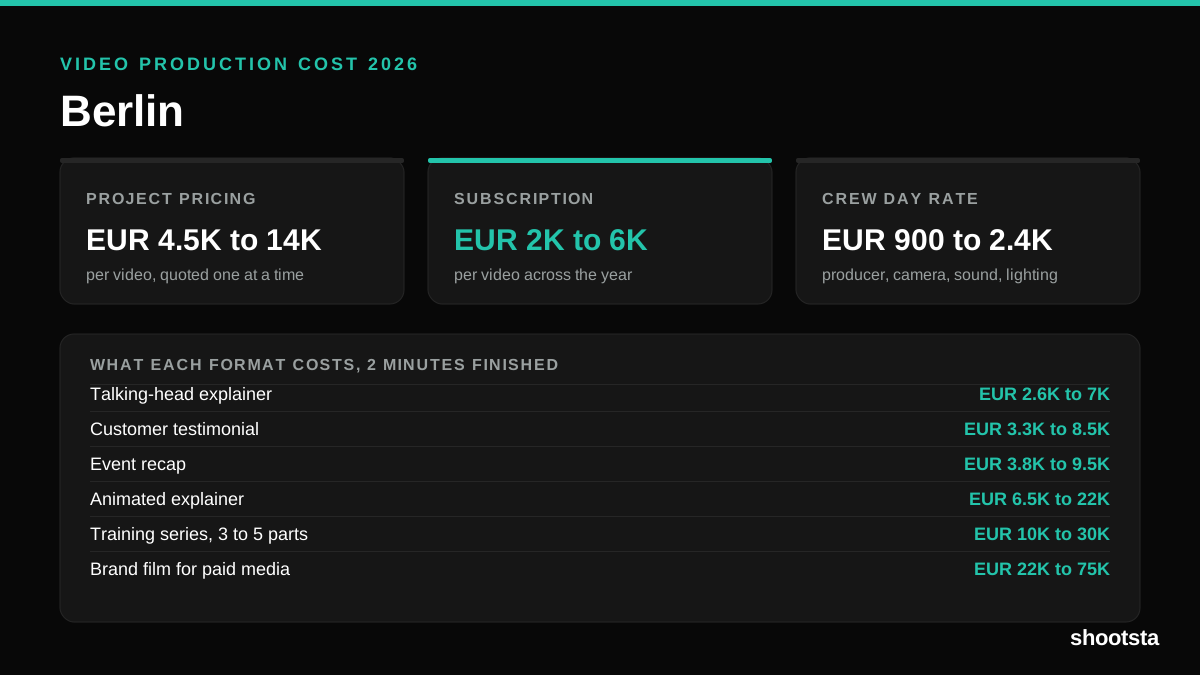
Video Production Cost in Berlin (2026)
Video production in Berlin costs EUR 2,000 to EUR 6,000 per finished video on a subscription model, and EUR 4,500 to EUR 13,500 for one-off project work. Here is what you are paying for, and how the three pricing models compare.