
How a video partner ships in 48 hours
shootsta.
How a video partner ships in 48 hours
By Shootsta · Published May 17, 2026 · Updated October 2026
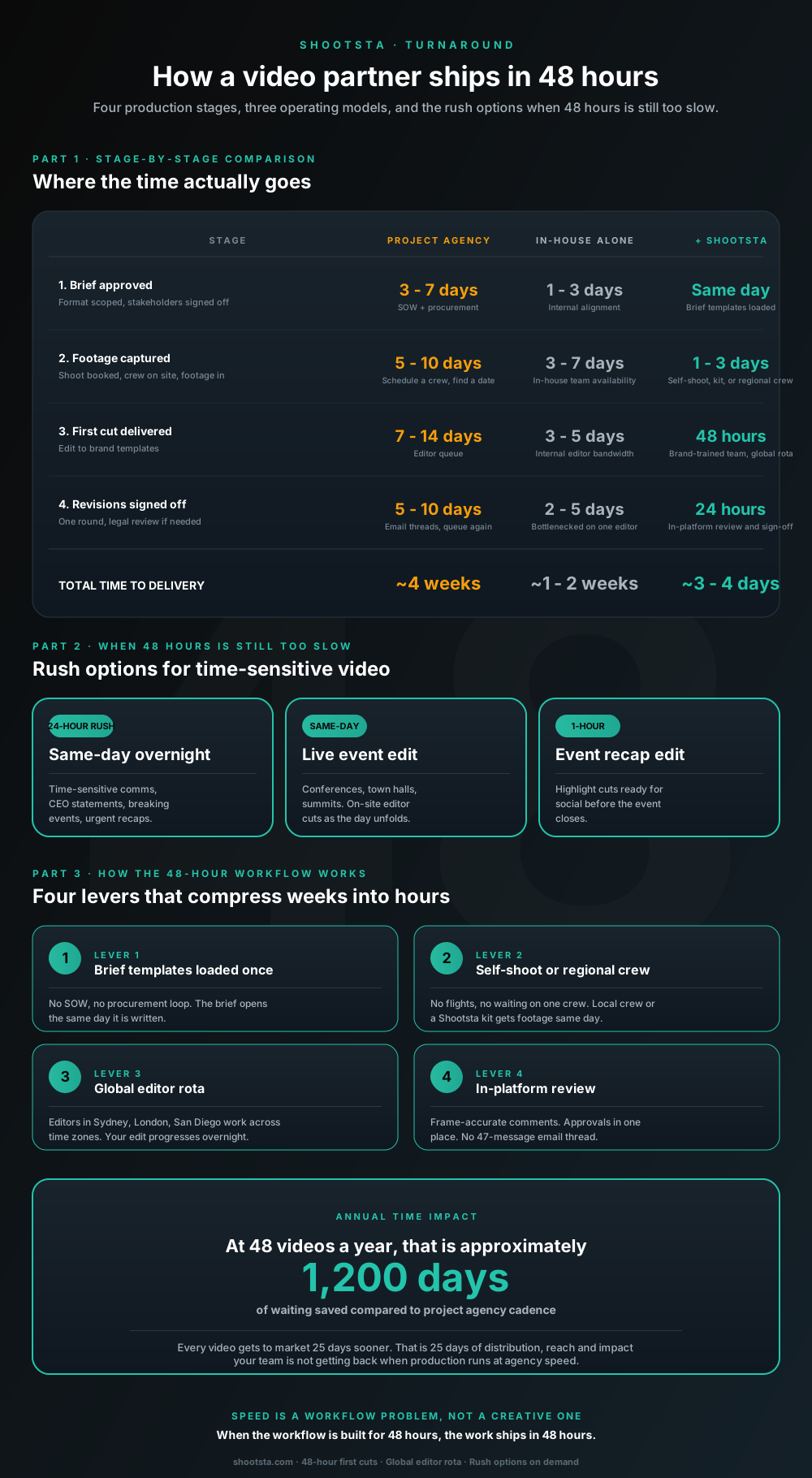
Project agencies need 3 to 4 weeks per video. In-house teams need 1 to 2 weeks. A subscription production partner ships first cuts in 48 hours. The difference is workflow, not creative talent. Here is how the 48-hour model works, where rush options take over, and what it adds up to across a year.
Why most video takes weeks, not hours
The standard project-agency turnaround for a corporate video sits at 3 to 4 weeks, brief to delivery. That timeline is rarely about creative work. The delay comes from workflow: SOW approval, procurement, crew scheduling, editor queues, email-based revisions and another sign-off cycle. The editing itself for a 2-minute corporate video is 4 to 8 hours of work, and the rest of the calendar is spent waiting.
In-house teams are faster, and 1 to 2 weeks is common, but they depend on a small number of editors with competing priorities. Hitting 48 hours has little to do with editor talent. It comes from a workflow built to ship in 48 hours.
Stage-by-stage: where the time goes
Video production breaks into four stages. Each one has a typical waiting time across the three operating models most enterprise buyers compare.
Stage 1: Brief approved
Project agency: 3 to 7 days while SOW, procurement and stakeholder sign-off cycle. In-house: 1 to 3 days for internal alignment. Subscription: same day, because brief templates and approval chains are already loaded into the production platform. There is no SOW and no new procurement round.
Stage 2: Footage captured
Project agency: 5 to 10 days while a crew is scheduled around their other clients. In-house: 3 to 7 days against the team's other priorities. Subscription: 1 to 3 days, either through a regional Shootsta crew, a self-shoot kit with trained staff, or footage uploaded directly into the platform from a phone or DSLR.
Stage 3: First cut delivered
Project agency: 7 to 14 days through the editor queue. In-house: 3 to 5 days on internal editor bandwidth. Subscription: 48 hours through a brand-trained team that already has your templates, voice and approval chain loaded. The edit progresses overnight when the work hands off across the global editor rota.
Stage 4: Revisions signed off
Project agency: 5 to 10 days as feedback bounces between email and a queue. In-house: 2 to 5 days bottlenecked on one editor. Subscription: 24 hours with frame-accurate comments inside the platform and one round built into the workflow.
Total time to delivery
A project agency takes about 4 weeks in total, and an in-house team working alone takes about 1 to 2 weeks. A subscription production partner takes about 3 to 4 days. That covers the 48-hour first cut plus a single round of revisions, end to end.
Interactive calculator
How many days of waiting could you save per year?
Move the sliders to compare your current turnaround against a 48-hour workflow at your annual volume. Time in market matters as much as cost per video.
Side-by-side turnaround
A 48-hour workflow ships your video 4.7x faster than your current cadence. Across the year, that compounds.
Days saved per video
11
brief to delivery
Days saved per year
528
24.0 work-months back
Speed multiple
4.7x
faster than today
What this means for the program
Every video reaches the audience 11 days sooner. At 48 videos a year, that is 528 days of distribution, reach and impact you are not getting back when production runs at agency speed. Cost matters. Time in market matters more.
See the 48-hour workflowAssumptions: 48-hour first-cut delivery plus one round of in-platform revisions yields a 3-day end-to-end average on subscription. Project agency turnaround estimated as a single stage; your end-to-end may include longer briefing and revision loops. Numbers are guides.
The four levers that make 48 hours possible
Getting from 4 weeks down to 48 hours is a matter of workflow, and four levers do most of the work.
Lever 1: Brief templates loaded once
You don't need a SOW or a new procurement loop for each project. Brief templates by format (CEO update, customer story, product explainer, training module, social cutdown) sit inside the production platform, pre-approved by your team. The brief opens the same day it is written and goes straight into the editor queue.
Lever 2: Self-shoot, regional crew, or kit on site
Nobody has to fly in, and you aren't waiting on a single crew. A regional Shootsta crew can handle the shoot the same day or the next. Your team can also self-shoot on a Shootsta kit, or a subject-matter expert can upload footage from their phone after a quick training. The footage reaches the platform within 24 to 72 hours instead of after 5 to 10 days of crew scheduling.
Lever 3: Global editor rota
Editors in Sydney, London and San Diego work across time zones on the same edit. When a Singapore brief lands at 5pm SGT, the Sydney team is winding down, London is starting, and by the time Singapore opens the next morning the first cut is sitting in the platform. That handoff is how a 4-hour edit gets delivered in 48 hours of wall-clock time instead of 5 working days.
Lever 4: In-platform review
Reviewers leave frame-accurate comments and approvals sit in one place, so there is no long email thread and no asking "which version did you mean". The reviewer drops a comment on the timecode and the editor adjusts. Then the approver signs off. The whole revision round usually lands in 24 hours instead of a week of back-and-forth email.
When 48 hours is still too slow: rush options
For time-sensitive comms, 48 hours is too slow. Three rush options sit alongside the standard workflow.
24-hour rush turnaround
This option covers time-sensitive CEO statements, breaking-event recaps, urgent crisis comms and end-of-day social cuts. The brief opens, the editor team is alerted to rush priority, and the first cut delivers within 24 hours. Enterprise comms teams use it most during quarterly results, major announcements and unexpected incidents.
Expedited turnaround
Expedited turnaround suits projects with a fixed deadline that the standard cadence would miss. Flag the deadline when you brief the work, and we agree the delivery time with you before the edit starts. Turnaround inside 48 hours is quoted separately, so ask for it when you brief.
Same-day highlight reels for events
Use this for conferences, town halls and partner summits where the recap loses value if it waits. Shootsta offers same-day highlight reels for time-sensitive events. Book the coverage when you plan the event, so the crew, the brief and the brand templates are ready on the day.
What the speed adds up to across a year
At 48 videos a year (a normal mid-range enterprise program), the difference between a 4-week project workflow and a 3-day subscription workflow is approximately 1,200 days of total waiting saved. Every video reaches the audience 25 days sooner. That gives each piece 25 extra days of distribution, search visibility, social reach and pipeline influence.
Cost per video still matters, but time in market matters more. That is especially true for sales enablement, recruitment, time-bound campaigns and competitive product launches. In those cases, a video that arrives last does about as much as a video that never arrives.
Where the 48-hour model does not fit
There are three honest exceptions. The first is hero brand films and broadcast TVCs that need creative direction, casting, location scouting and weeks of pre-production. That work belongs with Shootsta Premier or a boutique production house, because project work needs project timelines.
The second is animated explainers and complex motion design that need 5 to 10 days of animator time. The 48-hour bar applies to live-action and templated motion work; bespoke animation gets its own timeline.
The third is regulated content with mandatory legal review cycles, where the compliance review takes as long as it takes. The Shootsta workflow shortens production around the review, so the legal team gets cleaner cuts sooner. It does not shorten the legal team's own review window.
Frequently asked questions
Is 48 hours realistic from a quality standpoint?
Yes, for the everyday enterprise video formats: customer stories, internal comms, training modules, social cutdowns and product explainers. The same brand-trained editors produce the same finished quality at 48 hours as at 5 days, because brand templates and approval chains are loaded once and reused. The first cut is faster because brand setup is already done.
What happens if our brief is complex?
Complex briefs (3-language versions, 5 stakeholder reviewers, multi-day shoot, animation overlays) take longer. The 48-hour bar applies to the production stage, not to inherently long pre-production. We will scope that openly during onboarding and tell you which formats fit 48 hours and which need 5 to 10 days.
How does the rush queue work?
Rush requests sit in a separate priority queue staffed by senior editors. A job needed inside 48 hours is quoted separately when you brief it. If you expect to need rush work often, we plan for it with you when we scope the package.
What is the trade-off for going fast?
The trade-off falls on bespoke creative work rather than standard corporate video. If the brief calls for a specific director, a creative concept that needs storyboarding, or location work, it will take longer. The 48-hour workflow is built for the repeatable enterprise volume that makes up the bulk of a typical program.
How quickly does the 48-hour workflow start working after onboarding?
The first project usually ships in 2 to 3 weeks during setup. By the third or fourth piece, the team is at 48 hours consistently. Brand templates, voice, and the approval chain are loaded into the platform on day one, then refined over the first two projects. We covered this rhythm in how a video partner extends your in-house team.
Can in-house teams hit 48 hours?
Sometimes they can, for a single piece, when one editor is fully free. It is hard to keep up across 48 videos a year while the team also produces the other work it owns. Hitting 48 hours at volume needs a global rota that an in-house team cannot staff alone, which is why a partner that extends your team works well.
How we built the numbers in this post
The turnaround comparisons and time savings in this piece are anchored to published industry benchmarks and to planning estimates for typical workflows. We quote no Shootsta customer outcome figures, and the sources for each claim are below.
- 3 to 4 week project agency turnaround. Published industry benchmarks for corporate video production (IBISWorld, AdAge), confirmed against enterprise procurement teams that have moved from agency to subscription. Reflects calendar time including SOW, procurement and scheduling, not pure editing time.
- 4 to 8 hours of actual editing for a 2-minute corporate video. A planning estimate for hands-on editing time, and it varies by format complexity: a customer story with multiple cuts is closer to 8 hours; a templated cutdown is closer to 4.
- 1 to 2 week in-house turnaround. A planning estimate for a team with its own in-house editor, and it is not a measured customer average. It is faster than agency because internal alignment is shorter, but bottlenecked on editor bandwidth and competing priorities.
- 48-hour first cut on subscription. Shootsta returns a first cut in about 48 hours once onboarding is done, and edits come back within 24 to 48 hours depending on package. The pace comes from brand-trained editors working from pre-loaded templates and approval chains across the global rota.
- ~1,200 days saved at 48 videos a year. Calculated from the gap between project turnaround (~4 weeks) and subscription turnaround (~3 days), multiplied across an annual program. Every video reaches the audience ~25 days sooner, which compounds across distribution, search visibility and pipeline influence.
Editorial standards
- Numbers cited are the most up-to-date figures we had at the time of writing. The "last updated" date on this page is when the numbers and sources were last reviewed.
- External benchmarks come from publicly available salary, workforce and industry data. We name the source where possible and describe it where the underlying data sits behind a paywall.
- Figures and ranges come from the public sources cited on this page and from published market rates. We do not quote any Shootsta customer outcome figures here.
- Where ranges are given, they cover variability across sector, geography and program maturity. Treat them as starting hypotheses for your own program rather than as guarantees.
- Spotted a number you would challenge? Let our editorial team know what you are seeing in your business and the data behind it. Material updates get credited in the post footer.
Where to go next
If you want to see what 48 hours looks like alongside an in-house team, how a video partner extends your in-house team walks through the working pattern. For the budget framing leadership cares about, read the business case for enterprise video. To see the workflow end to end, the Shootsta platform page is the best starting point.
To scope your team's specific turnaround targets and rush requirements, book a free consultation.
Take this article with you
Read the latest at shootsta.com/blog/how-a-video-partner-ships-in-48-hours
You might also like
How to Brief an Animation Project
How to Brief an Animation Project
An animation brief is the document you send to your production partner before work starts. Get it right and you cut revision cycles in half. Get it wrong and you discover mid-production that everyone disagrees on what the video is for. This is what a complete brief looks like.
Animation for change management comms
Animation for change management comms
Animation handles change management communications better than live video for three reasons: no on-camera executives required during sensitive periods, scene-level updates when plans shift, and a single production that works across global teams with voiceover-only language swaps.
How sales leaders should use video at scale
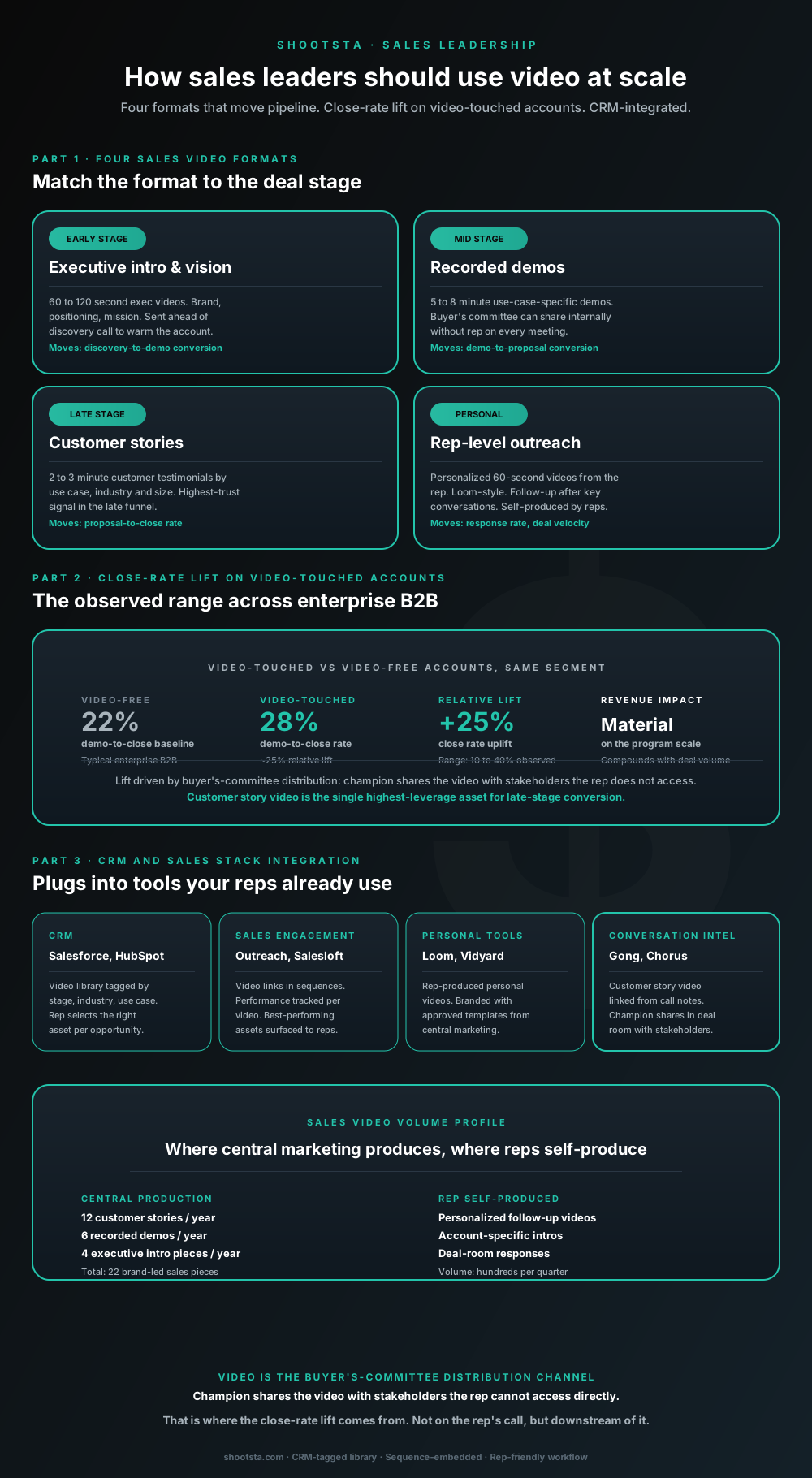
Sales leaders mostly think about video as personalized rep outreach (Loom, Vidyard) or as marketing-produced customer stories. Both are useful. The bigger opportunity is the buyer's-committee distribution layer: assets the champion shares internally with stakeholders the rep does not access directly. That is where the close-rate lift compounds.
How L&D leaders replace classroom with video
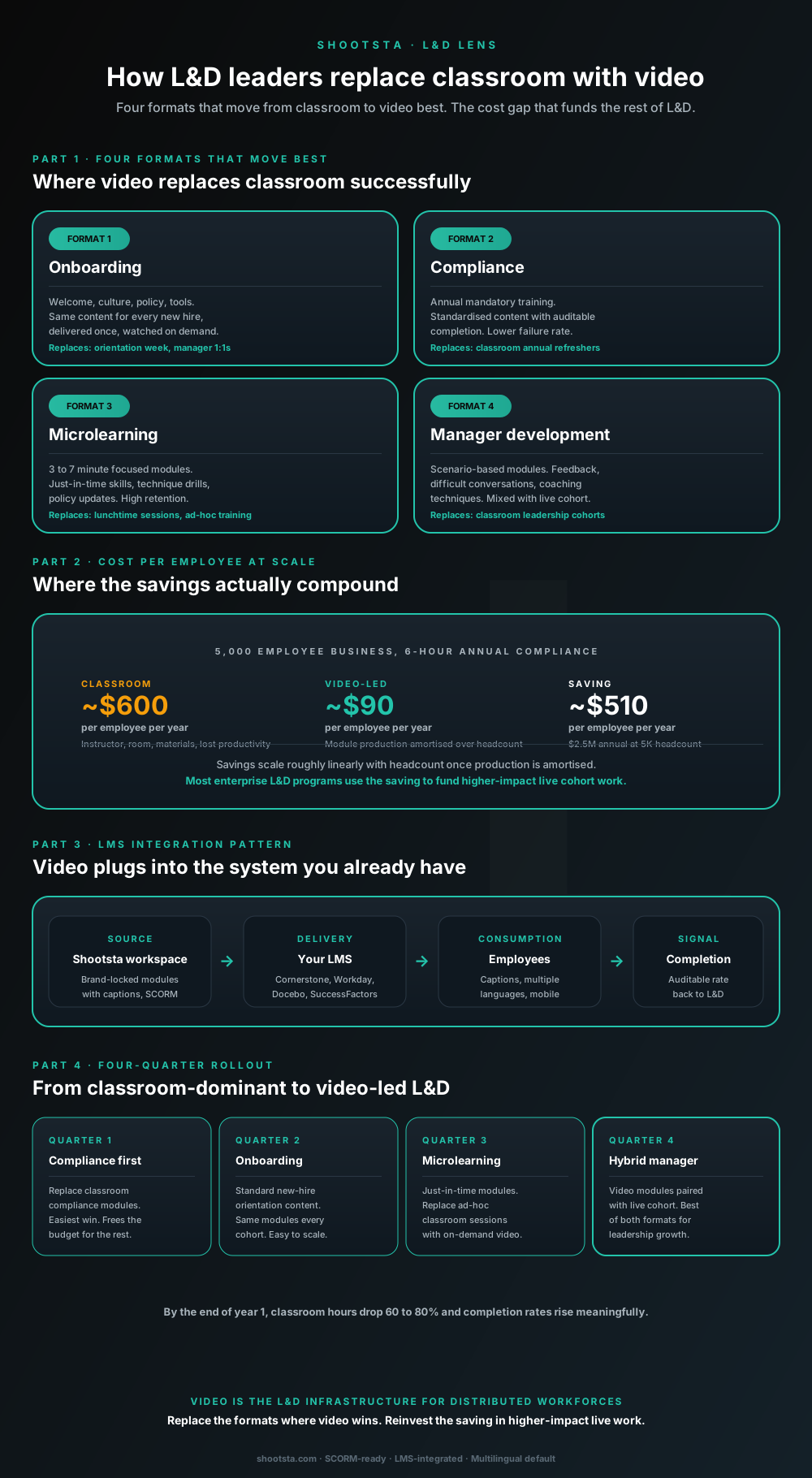
L&D leaders running classroom-heavy training programs typically have the largest single opportunity in the business to free budget through format change. Four training formats move from classroom to video cleanly; the savings fund higher-impact live work. Here is the rollout that compounds learner adoption over four quarters.
How customer success leaders should use video
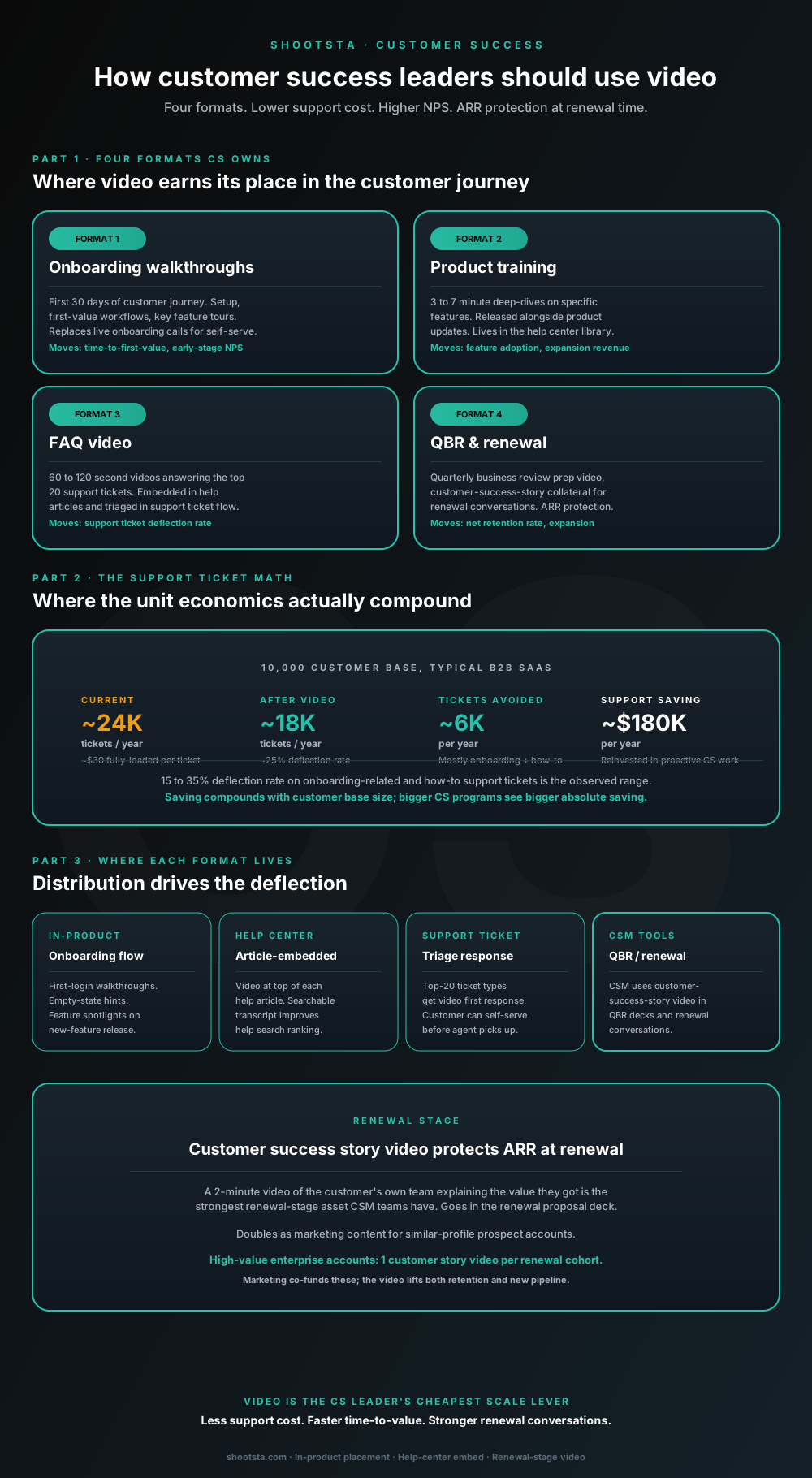
Customer success leaders are usually under-resourced for both reactive support volume and proactive retention work. Video is the cheapest lever to fix both - 15 to 35% deflection on onboarding and how-to tickets, faster time-to-value, and renewal-stage customer story video that lifts net retention. Here is the four-format model and where each piece earns its place.
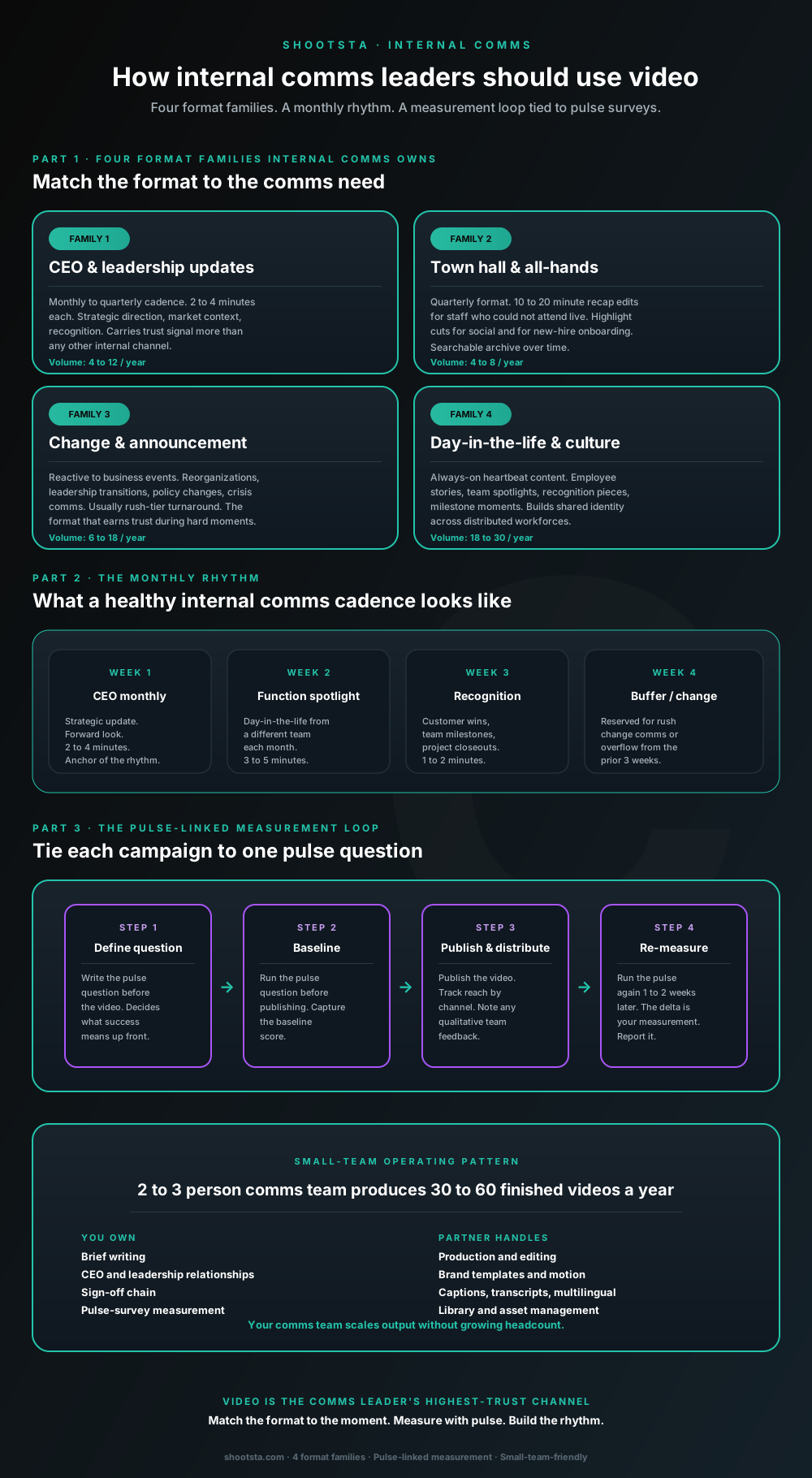
How internal comms leaders should use video
Internal comms leaders are usually under-resourced for the volume of video the business wants. The fix is not more headcount; it is structuring the program around four format families, a monthly rhythm, and a pulse-survey-linked measurement loop. Here is the operating pattern that lets a small comms team produce 30 to 60 finished videos a year.