
Quality Control in Outsourced Video Editing
shootsta.
Quality Control in Outsourced Video Editing
By Shootsta · Published September 25, 2026 · Updated October 2026
When editing leaves the building, quality has to be checked by a system rather than by whoever happens to look. Here is the system: acceptance criteria, two QA gates, counted revision rounds and a quarterly audit.
Short answer. Quality control in outsourced video editing is a system of checks that runs on both sides of the hand-off. Your partner runs a brand and technical pass before you see a cut. You run an accuracy pass on the things only you know. Acceptance criteria sit in the brief, revision rounds are counted, and a sample of the library is audited each quarter. Set up this way, quality stops depending on which editor picked up the job.
Handing editing to an outside team raises a fair question about who checks the work, and against what standard.
In-house, quality control tends to be informal. The editor sits near the marketing lead and problems get caught in passing. Outsourced, that proximity is gone. Quality has to be written down, measured and enforced by a process, or it drifts.
This guide covers what quality control in outsourced video editing involves, how it differs from in-house checking, where quality fails, and the seven controls that hold it at volume.
What is quality control in outsourced video editing?
Quality control in outsourced video editing is the set of checks that confirm a delivered video meets an agreed standard before it is published. The standard covers brand, accuracy, technical spec, captions and delivery format. The checks run at fixed points in the workflow rather than whenever someone has time.
The word "agreed" carries the weight. If the standard lives in your head, the partner cannot meet it and you cannot measure it. Once the standard is written down, both sides can check against it.
Quality assurance and quality control get used interchangeably. QA is the process that prevents defects, such as a locked brand kit or a brief template. QC is the inspection that catches defects, such as a pre-delivery checklist. An outsourced arrangement needs both, and it needs to be clear who owns each.
Outsourced video editing vs in-house quality control: what changes?
The checks are the same. What changes is who runs them, when they run, and how much has to be written down.
| What you are comparing | In-house quality control | Outsourced video editing quality control |
|---|---|---|
| Where the standard lives | Often in one editor's head | Written acceptance criteria in the brief |
| Who catches brand errors | Whoever walks past the edit suite | The partner's brand QA gate, before delivery |
| Who catches factual errors | The editor, from context | Your accuracy pass, using context the partner does not have |
| How defects are counted | Rarely | Per video, on a scorecard |
| What happens in a busy month | Checks get skipped | Gates run on every video because they are part of the process |
| Key-person risk | High, since one person holds the standard | Low, since the standard survives staff changes on both sides |
In-house quality control is more fragile than it looks, because it relies on people being available and on knowledge nobody wrote down. Outsourcing forces the standard onto paper. That is uncomfortable for a month and useful for years.
The comparison also cuts the other way. An outside editor has no context. They cannot know that a product name changed on Tuesday or that one executive left last week. That is why the accuracy check has to stay with you, whatever else moves.
Where does quality fail in outsourced video editing?
Across the programs we run, defects cluster in six places. Each one has a different owner and a different fix.
- Brand elements. Wrong logo version, substituted font, off-palette lower third. The cause is a brand kit sent as a PDF rather than loaded into the editor's workspace.
- Facts and names. Misspelled job titles, outdated product names, an old office address. The cause is a partner with no source of truth to check against.
- Technical spec. Loudness outside the target, wrong aspect ratio for the channel, a grade that shifts between clips. The cause is a brief with no delivery spec.
- Captions. Missing, mistimed, or burned in when a separate file was needed. The cause is captions treated as a finishing step rather than a deliverable.
- Music and rights. A track the partner could use but you could not, or a mood that fights the message. The cause is the absence of an approved music library.
- Versions. The wrong cut published because three files carried similar names. The cause is a review tool with no version control.
Five of the six quality control failures trace back to something missing from the brief or the setup. Only the facts category needs your team's knowledge at the point of checking. That is the shape of good quality control in outsourced video editing: front-load the setup so the checking stays light.
How do you set up quality control for an outsourced editing partner?
Here are seven quality control moves, in the order they pay back. Start with the first two, because the rest build on them.
1. Write acceptance criteria into the brief
An acceptance criterion is a sentence a reviewer can answer with a yes or a no. "On brand" fails that test. "Uses lower-third template B, brand blue, Inter Bold" passes it. Put six to ten of these in every brief, covering length, format, captions, music, brand elements and the call to action. The partner edits to them and you review against them. Every other quality control step depends on this one. Our guide to writing video briefs that editors get right covers the rest of the brief.
2. Lock the brand kit in the editor's workspace
Sending a brand PDF is the most common cause of brand defects. Load fonts, palette, logo files, lower thirds and end cards into the editing workspace, so the on-brand version is the fastest one to make. In our experience this one control removes more brand defects than any other. The full setup is in brand governance for outsourced video editing.
3. Require a QA gate on the partner's side
A good partner checks brand and technical spec before a cut reaches you. Ask what their checklist covers and who signs it. If the answer is that the editor looks it over, the gate does not exist. At Shootsta, the first cut is checked against your brand kit and delivery spec before it is sent for review. The 30-point checklist a gate like this should run is in the complete guide to video editing QA.
4. Keep the accuracy pass with your team
Your team has to check the names, titles, numbers, product names and legal wording. Your partner cannot check these, because the facts often change after the brief is written. Give the check to one named person and cap it at fifteen minutes per video. That is the whole of the in-house workload once the other controls are in place.
5. Count the revision rounds
Uncounted revisions hide quality problems. If a video takes four rounds, something upstream failed: the brief, the kit or the gate. Agree in the contract how rounds are counted and set a target of two. Then track the number per video. A rising average is the earliest signal that quality is slipping.
6. Keep a scorecard per video
| Measure | What it tells you | A working target |
|---|---|---|
| First-cut acceptance | Whether briefs and brand setup are working | First cut accepted with only minor notes |
| Revision rounds per video | Whether the review loop is clean | Two or fewer |
| Defects found after delivery | Whether the gates are working | No brand or technical defect reaches publish |
| On-time delivery | Whether capacity matches your volume | Every first cut inside the agreed turnaround |
| Caption accuracy | Whether accessibility is being met | Checked on every video that will be published externally |
Agree these targets with your partner before the first project. They are working targets for your program rather than published industry benchmarks, and the trend matters more than any single month.
7. Audit a sample each quarter
Pull twenty to thirty videos from the last quarter and check them against the brand kit and the delivery spec. Note every defect and its cause. The quality control audit catches slow drift. It is also where the standard itself gets updated, because the audit shows which rules the team has quietly changed in practice.
Interactive scorecard
How much of your outsourced editing quality is a system?
Ten statements about how quality is checked when an outside team cuts your video. Mark each one that is true today. The score tells you how much of your quality control is a process and how much is luck.
1. Every brief carries written acceptance criteria
Six to ten lines a reviewer can answer with a yes or a no, covering length, format, captions, music, brand elements and the call to action.
2. The brand kit is loaded into the editor's workspace
Fonts, palette, logo files, lower thirds and end cards exist as project assets the editor opens, rather than as a PDF they read.
3. The partner runs a brand and technical check before delivery
You have seen their checklist and you know who signs it off.
4. One named person on your side runs the accuracy pass
Names, titles, numbers and product names, capped at about fifteen minutes a video.
5. Revision rounds are counted against a target of two
The contract says what one round includes and the number is tracked per video.
6. First-cut acceptance and defects are logged per video
A simple sheet is enough. The trend over a quarter is what you are watching.
7. Turnaround is a written commitment
A first cut inside an agreed window, backed by an SLA, with the window stated in the contract.
8. Captions are a deliverable with their own accuracy check
Burned in or sidecar is decided per channel, and names in the captions are checked.
9. An approved music library exists and the partner uses it
Rights held by your company, with moods agreed by video type.
10. A sample of the library is audited each quarter
Twenty to thirty videos checked against the brand kit and the delivery spec, with defects logged by cause.
The ten statements are the controls described in the article. Nothing here is scored on your partner's skill or your budget, only on whether each check exists and has an owner.
What should the contract say about quality control?
Four clauses do the quality control work in a contract. Put them in writing before the first brief goes out.
- The turnaround, stated as a commitment. Shootsta's commitment is a first cut in about 48 hours.
- How revisions are counted and what one round includes.
- Who owns which QA gate, in one sentence each.
- What happens when a defect reaches publish: the fix, the timeline and who pays for it.
The wider contract checklist, including ownership of footage and project files, is in what to look for in video production contracts. Brand control and the review loop are two of the ten checks for corporate video editing services.
How does Shootsta handle quality control in outsourced video editing?
Your brand kit is locked at the editor level, so fonts, palette, logo and lower thirds are applied by the workspace rather than from memory. A named editor pool works on your account, so knowledge of your brand accumulates instead of resetting with each job.
Every first cut is checked against the brand kit and the delivery spec before it reaches your reviewers, and it comes back in about 48 hours. Review happens on the timeline with timestamped comments, so notes are specific and rounds stay countable. That is quality control in outsourced video editing as a system rather than a hope. Across 70,000+ videos, that system holds at 4.9 / 5 customer satisfaction across post-delivery surveys.
Frequently asked questions
What is quality control in outsourced video editing?
It is the set of checks that confirm a delivered video meets an agreed standard for brand, accuracy, technical spec, captions and delivery before it is published. The checks run at fixed gates on both sides of the hand-off, against acceptance criteria written into the brief.
Who is responsible for quality when video editing is outsourced?
Both sides, with a clear split. The partner owns brand and technical quality before delivery. You own accuracy, because only you know when a name or a number changed. Write the split into the contract so neither side assumes the other checked.
Is in-house quality control better than outsourced?
In-house checking is faster to arrange and harder to keep going. It depends on one or two people being available in a busy week. Outsourced quality control is slower to set up because the standard has to be written down, and then it runs on every video regardless of who is on leave. Past a handful of videos a month, the written system wins.
How many revision rounds are normal for outsourced video editing?
Two rounds is the normal count: one for substantive notes and one to confirm. Sensitive content sometimes needs a third. Four or more on a routine video means the brief or the brand setup failed, and the fix sits upstream of the edit.
How do you audit an outsourced video editing partner?
Run a quality control audit: sample twenty to thirty videos a quarter, check them against the brand kit and the delivery spec, and log every defect by cause. Pair that with the per-video scorecard so you can see both the trend and the detail. If the same defect keeps appearing, the rule is unclear or the template is missing.
We already have an in-house team that checks quality. Why would we outsource editing?
Keep them, and move the checking they do to the front of the process. An in-house team is best used on the accuracy pass and on the calls only they can make, such as whether a leadership message lands. An outsourced editing partner takes the volume, runs the brand and technical quality control gates, and returns cuts in about 48 hours. Your team then reviews finished work instead of producing it. The split is set out in how a video partner extends your in-house team.
Sources and further reading
- Technical standards: ITU-R BT.709, EBU R 128 loudness, ATSC A/85, SMPTE, Audio Engineering Society.
- Platform delivery specs: YouTube recommended upload encoding settings, IAB video guidelines, Netflix partner delivery specifications.
- Captions and accessibility: WCAG 2.2, W3C captions guidance, WebAIM, Section 508, DCMP Captioning Key.
- Quality management: ISO 9001, ASQ on quality assurance vs quality control, Lean Enterprise Institute, The Deming Institute on the PDSA cycle.
- Review and versions: Frame.io, Ziflow, Filestage.
- Rights and licensing: US Copyright Office, WIPO, IP Australia.
- Video volume and workflow: Wistia State of Video, Vidyard business video benchmarks, Content Marketing Institute research, Harvard Business Review on business communication.
Where to go next
For the checklist a QA gate should run, read the complete guide to video editing QA. For the brand half of the system, read brand governance for outsourced video editing. If you are still choosing a partner, run the ten checks for corporate video editing services and see the best outsourced video editing services for global teams.
If offshore editing is on the shortlist, how Shootsta compares with offshore video editing covers where quality control differs. To set up acceptance criteria and gates for your own program, book a free consultation.
About Shootsta
Shootsta is a global video production service that helps enterprises create on-brand videos at scale and operationalize video production across every business touch-point. We have produced 70,000+ videos for 920+ brands since 2014, with a first cut in about 48 hours and 4.9 / 5 customer satisfaction across post-delivery surveys. Editors work from offices in Sydney, London, Singapore and San Diego.
Last updated 25 September 2026.
Take this article with you
Read the latest at shootsta.com/blog/quality-control-outsourced-video-editing
You might also like
How to Plan Video Team Capacity Around Leave
Your only editor just booked two weeks off, and you already know which projects will slip. Chad Lakin explains how to plan video team capacity so the work keeps moving when someone is away.
Corporate Video Editing Standards: Full Guide
A two-page editing standard does more for consistency than a forty-page brand book. Here is what it should cover, who owns each part, and how to enforce it with an in-house editor or an outside partner.
Video Production Cost on the Gold Coast 2026
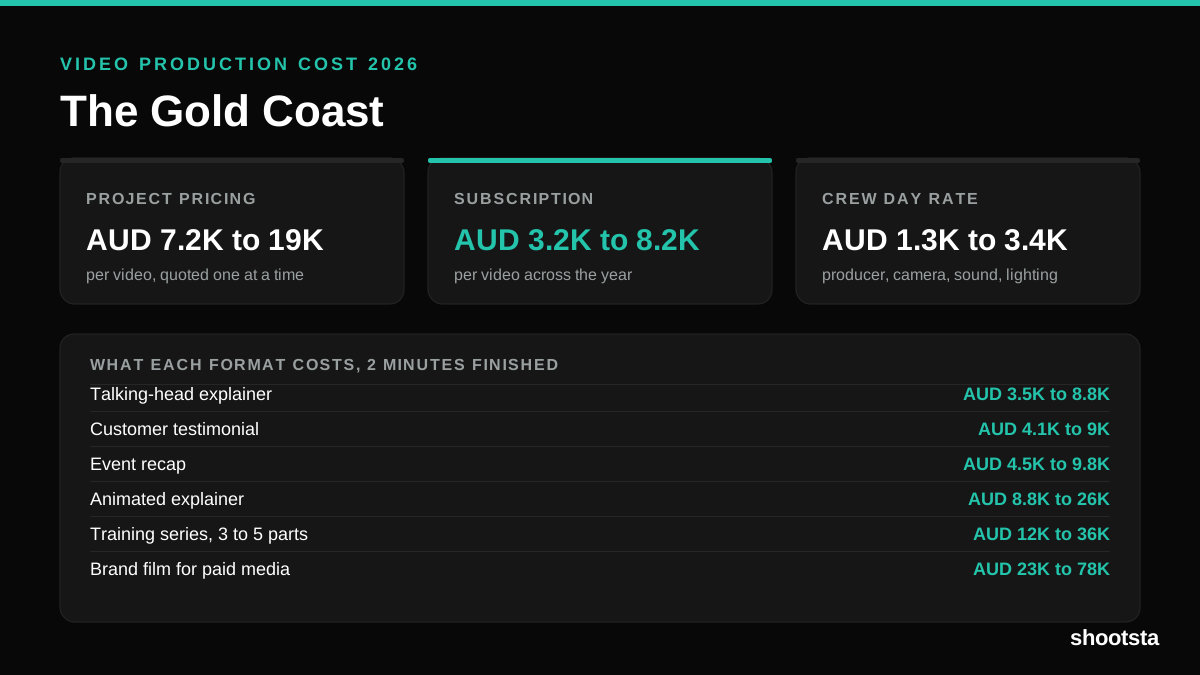
Video production in the Gold Coast costs AUD 3,200 to AUD 8,200 per finished video on a subscription model, and AUD 7,200 to AUD 18,500 for one-off project work. Here is what you are paying for, and how the three pricing models compare.
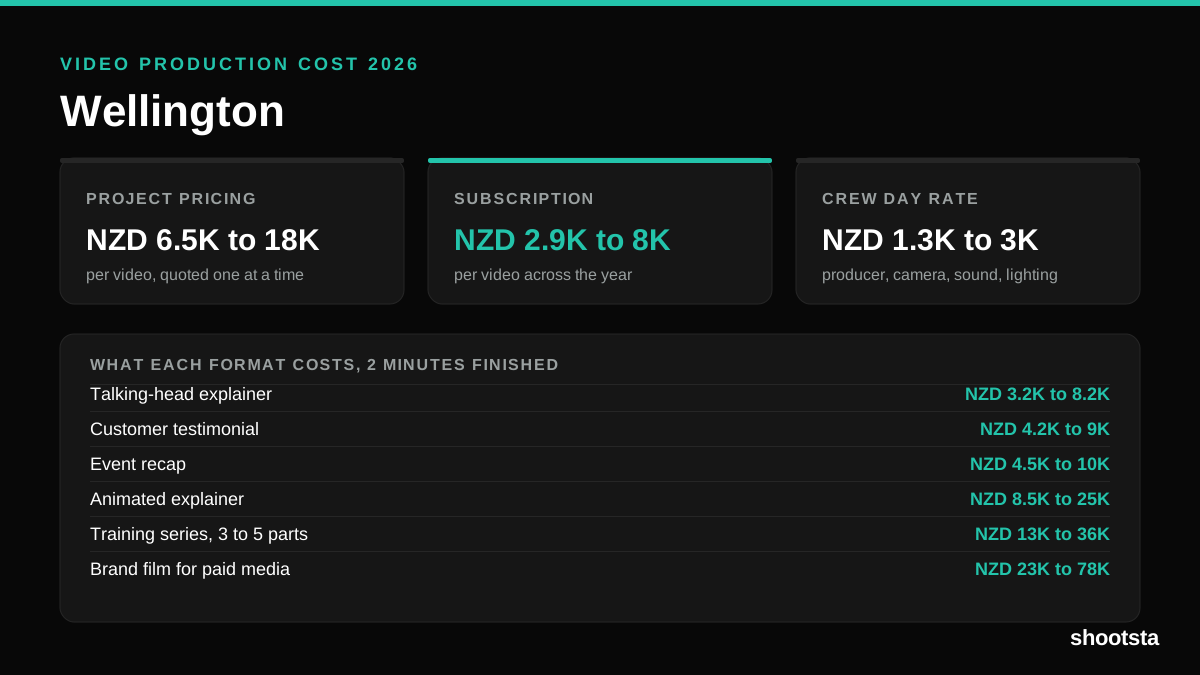
Video Production Cost in Wellington (2026)
Video production in Wellington costs NZD 2,900 to NZD 8,000 per finished video on a subscription model, and NZD 6,500 to NZD 18,000 for one-off project work. Here is what you are paying for, and how the three pricing models compare.
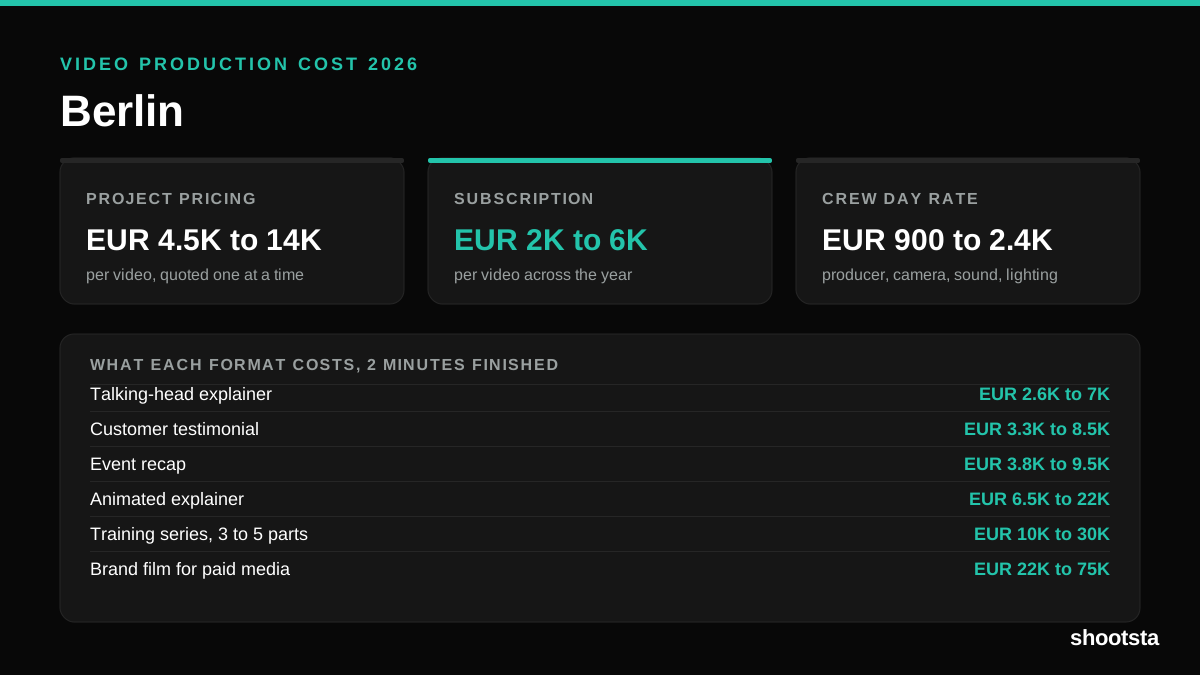
Video Production Cost in Berlin (2026)
Video production in Berlin costs EUR 2,000 to EUR 6,000 per finished video on a subscription model, and EUR 4,500 to EUR 13,500 for one-off project work. Here is what you are paying for, and how the three pricing models compare.
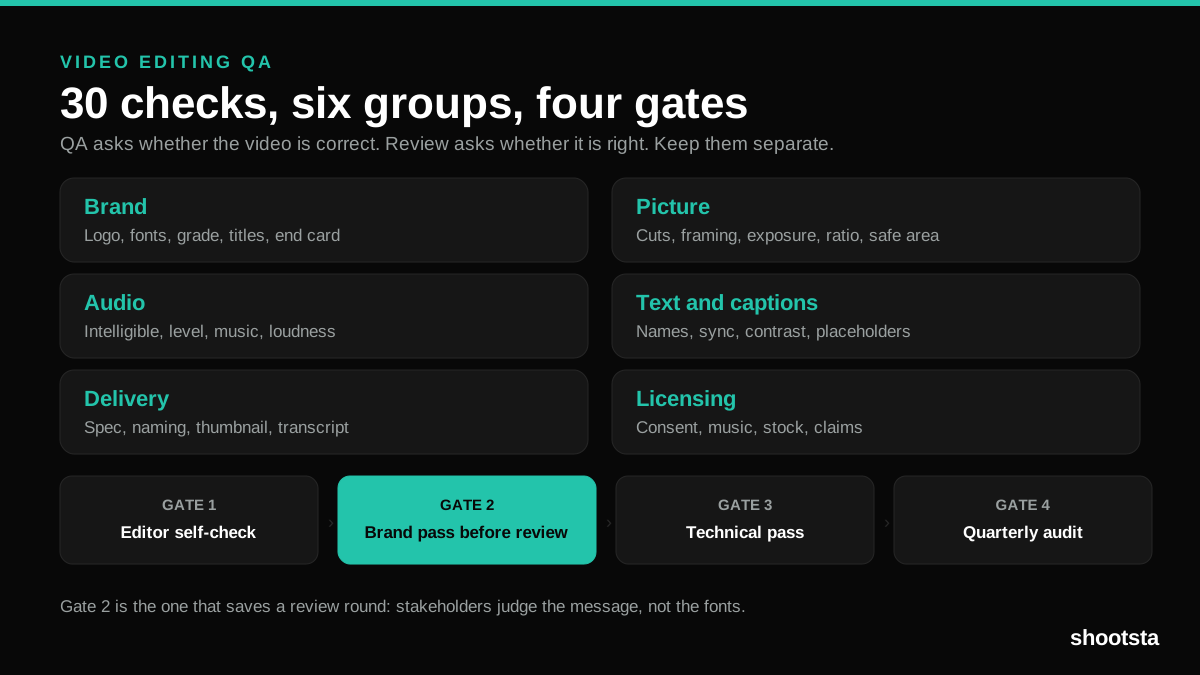
Video Editing QA: The Complete 2026 Guide
Video editing QA is the pass that catches brand drift, bad audio and wrong deliverables before stakeholders do. Here is the 30-point checklist, the four stage gates, and how to run it at 40 videos a month.