
How Many Videos Should an Enterprise Make?
shootsta.
How Many Videos Should an Enterprise Make?
By Shootsta · Published July 22, 2026 · Updated October 2026
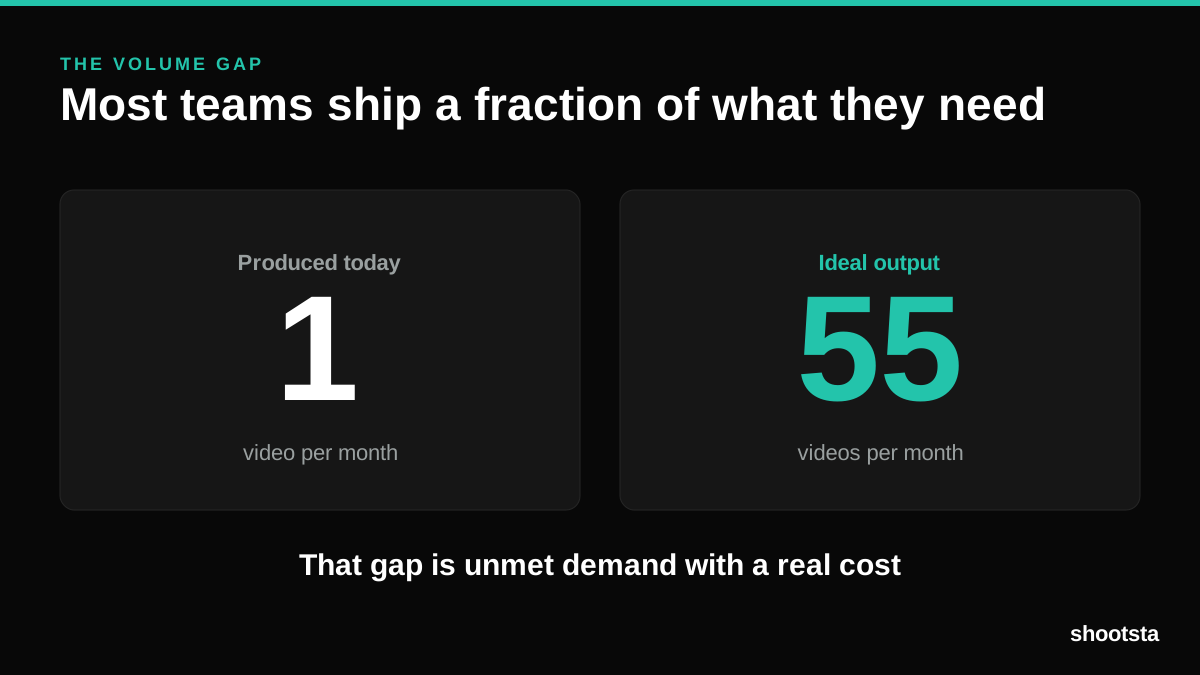
Most enterprise teams produce far fewer videos than they need. The gap between current and ideal output is unmet demand with a real cost. Here is how to size it.
How many videos should an enterprise team produce per month?
There is no single right number, because it depends on how many touchpoints across the business video could serve. The more useful figure is the gap between how many videos you produce now and how many you would produce if turnaround and cost were not holding you back. In large organizations that gap is often wide, and it is unmet demand with a cost you can measure.
Why the volume gap matters more than the absolute number
If your team produces one video a month and the business needs dozens, you are carrying a permanent backlog. Each video you cannot make leaves a campaign without support, a course unreleased or a message unsent. The gap is the clearest sign that production capacity is the bottleneck. You can size it directly in the enterprise video ROI calculator, which asks for both current and ideal output.
How do you work out your ideal output?
Start by counting every touchpoint, including the ones outside your campaign plan. Marketing, sales enablement, internal comms, training, product, recruitment and customer success each have a steady demand for video. Once you add them up, the realistic number for a large organization is often dozens of videos a month. The use-case breakdown is in animation use cases for enterprise teams.
What does the shortfall cost?
Use the measure that fits each missing video. A late campaign loses impact for every week it sits in the queue, which you can estimate from your own launch results. Delayed training means people work for longer without the knowledge, and you can cost that in hours. The shortfall still costs you money, even though nobody sends an invoice for it. The method for pricing it is in how to calculate the cost of video delays.
How do you close the gap?
Closing it is a question about your production model before it is a question about hiring. An in-house team reaches its limit as demand rises. A subscription or partner model extends that team, so output grows faster than cost. The cost comparison is in how much in-house video editing costs.
Where to start
Write down your current monthly output and your ideal output, then run the enterprise video ROI calculator to value the gap between them.
Sources
- Shootsta customer reporting across 70,000+ videos produced.
Take this article with you
Read the latest at shootsta.com/blog/how-many-videos-enterprise-per-month
You might also like

How to Plan Video Team Capacity Around Leave
Your only editor just booked two weeks off, and you already know which projects will slip. Chad Lakin explains how to plan video team capacity so the work keeps moving when someone is away.
Corporate Video Editing Standards: Full Guide
A two-page editing standard does more for consistency than a forty-page brand book. Here is what it should cover, who owns each part, and how to enforce it with an in-house editor or an outside partner.
Quality Control in Outsourced Video Editing
When editing leaves the building, quality has to be checked by a system rather than by whoever happens to look. Here is the system: acceptance criteria, two QA gates, counted revision rounds and a quarterly audit.
Video Production Cost on the Gold Coast 2026
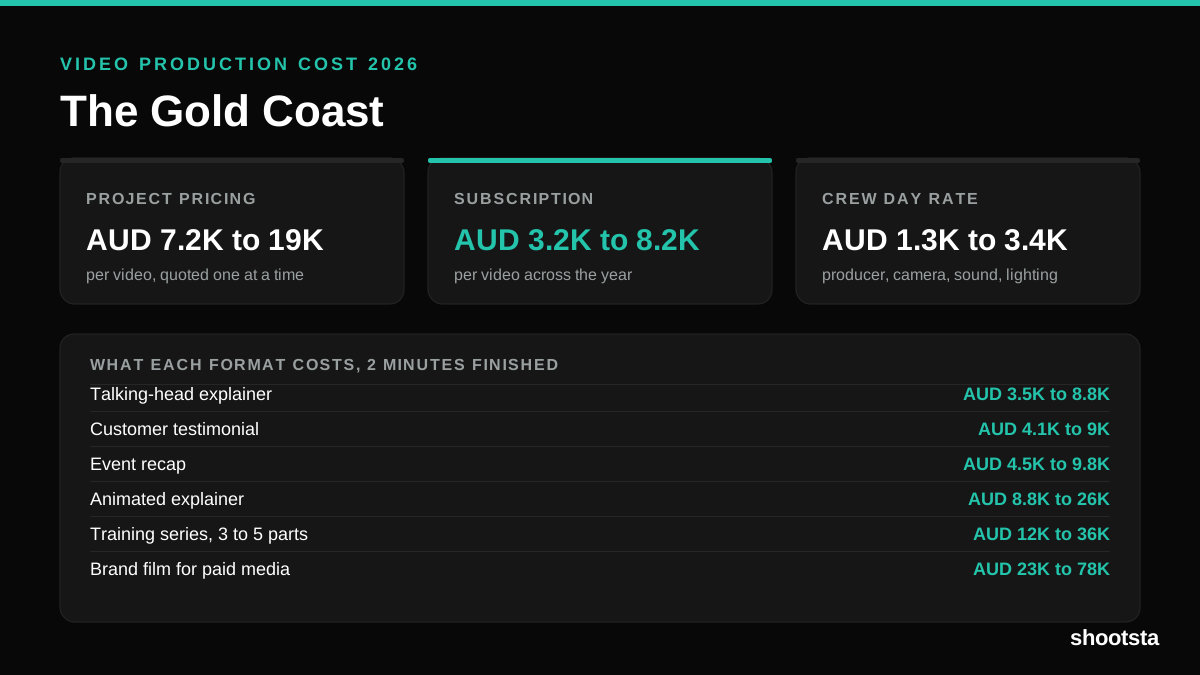
Video production in the Gold Coast costs AUD 3,200 to AUD 8,200 per finished video on a subscription model, and AUD 7,200 to AUD 18,500 for one-off project work. Here is what you are paying for, and how the three pricing models compare.
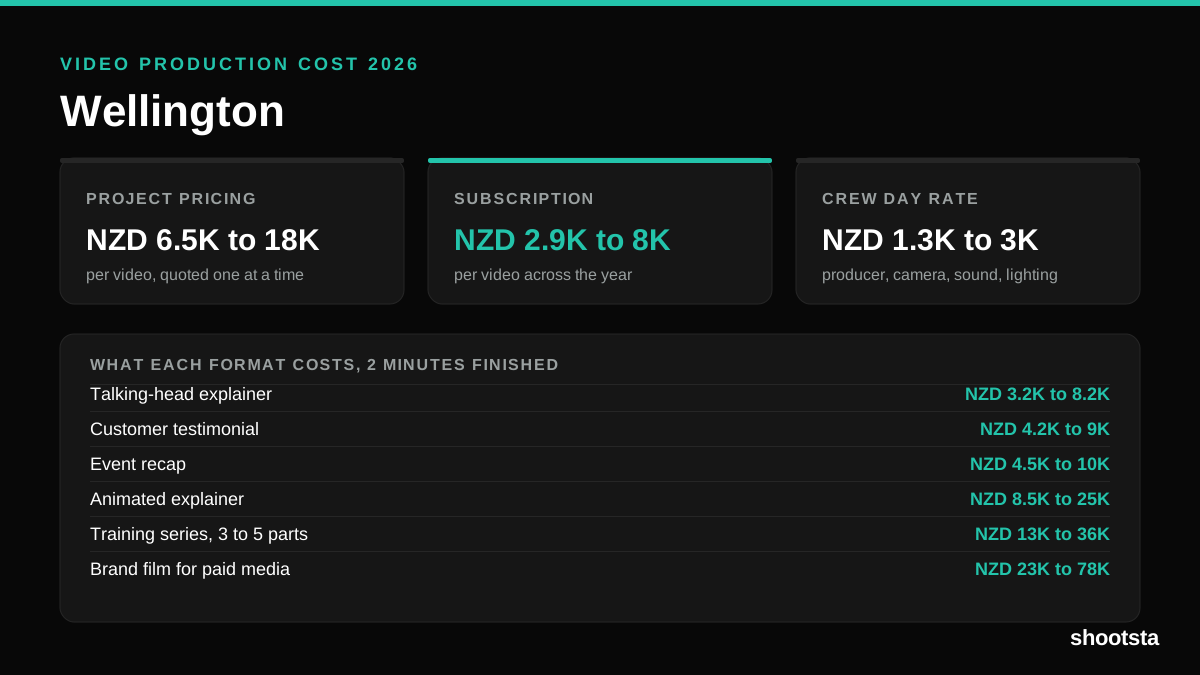
Video Production Cost in Wellington (2026)
Video production in Wellington costs NZD 2,900 to NZD 8,000 per finished video on a subscription model, and NZD 6,500 to NZD 18,000 for one-off project work. Here is what you are paying for, and how the three pricing models compare.
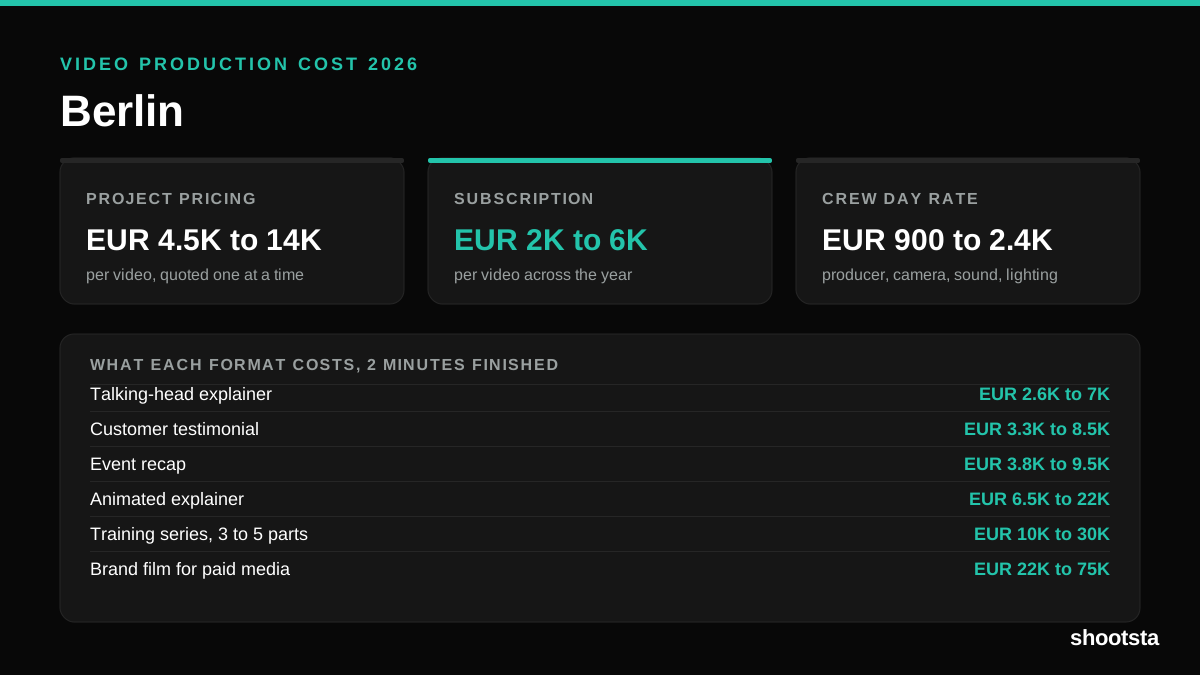
Video Production Cost in Berlin (2026)
Video production in Berlin costs EUR 2,000 to EUR 6,000 per finished video on a subscription model, and EUR 4,500 to EUR 13,500 for one-off project work. Here is what you are paying for, and how the three pricing models compare.